Event submissions
Published
 10.3390/ECA2021-09881 (registering DOI)
 This submission belongs to the session B. Antimicrobial Discovery, Development, Stewardship and Susceptibility Testing of the event The 1st International Electronic Conference on Antibiotics
Published date
05 May, 2021
Citation
Márió Gajdács, Klaudia Komáry, Katalin Burián, Edit Hajdú, Edit Paulik, Andrea Szabó, Development and pilot testing of a questionnaire to assess the knowledge-level and attitudes of junior doctors on infectious diseases and antimicrobial resistance, in Proceedings of The 1st International Electronic Conference on Antibiotics, 8 May–17 May 2021, MDPI: Basel, Switzerland, doi: 10.3390/ECA2021-09881
Share
Email
Facebook
Twitter
LinkedIn
Development and pilot testing of a questionnaire to assess the knowledge-level and attitudes of junior doctors on infectious diseases and antimicrobial resistance

Márió Gajdács 1
'%3e%3cpath%20d='M12.6647%2010.9104C12.4176%2010.325%2012.0589%209.7933%2011.6088%209.34485C11.16%208.89511%2010.6283%208.53653%2010.0432%208.28891C10.038%208.28629%2010.0327%208.28498%2010.0275%208.28236C10.8437%207.69282%2011.3743%206.73252%2011.3743%205.64907C11.3743%203.85423%209.92005%202.40002%208.12522%202.40002C6.33038%202.40002%204.87618%203.85423%204.87618%205.64907C4.87618%206.73252%205.40677%207.69282%206.22296%208.28367C6.21772%208.28629%206.21248%208.2876%206.20724%208.29022C5.62031%208.53783%205.09365%208.89287%204.64167%209.34616C4.19192%209.79496%203.83334%2010.3266%203.58573%2010.9117C3.34247%2011.4846%203.21128%2012.0987%203.19925%2012.721C3.1989%2012.735%203.20135%2012.7489%203.20646%2012.7619C3.21157%2012.7749%203.21924%2012.7868%203.22901%2012.7968C3.23877%2012.8068%203.25045%2012.8148%203.26334%2012.8202C3.27623%2012.8256%203.29007%2012.8284%203.30406%2012.8284H4.09012C4.14776%2012.8284%204.19362%2012.7825%204.19493%2012.7262C4.22113%2011.7148%204.62726%2010.7676%205.34519%2010.0497C6.08802%209.30686%207.07452%208.89811%208.12522%208.89811C9.17592%208.89811%2010.1624%209.30686%2010.9052%2010.0497C11.6232%2010.7676%2012.0293%2011.7148%2012.0555%2012.7262C12.0568%2012.7839%2012.1027%2012.8284%2012.1603%2012.8284H12.9464C12.9604%2012.8284%2012.9742%2012.8256%2012.9871%2012.8202C13%2012.8148%2013.0117%2012.8068%2013.0214%2012.7968C13.0312%2012.7868%2013.0389%2012.7749%2013.044%2012.7619C13.0491%2012.7489%2013.0515%2012.735%2013.0512%2012.721C13.0381%2012.0947%2012.9084%2011.4856%2012.6647%2010.9104ZM8.12522%207.90243C7.52388%207.90243%206.95792%207.66793%206.53214%207.24215C6.10636%206.81636%205.87185%206.2504%205.87185%205.64907C5.87185%205.04773%206.10636%204.48177%206.53214%204.05599C6.95792%203.63021%207.52388%203.3957%208.12522%203.3957C8.72655%203.3957%209.29252%203.63021%209.7183%204.05599C10.1441%204.48177%2010.3786%205.04773%2010.3786%205.64907C10.3786%206.2504%2010.1441%206.81636%209.7183%207.24215C9.29252%207.66793%208.72655%207.90243%208.12522%207.90243Z'%20fill='%235D1EE1'/%3e%3c/g%3e%3c/svg%3e)
Klaudia Komáry 2

Katalin Burián 3
Edit Hajdú 4
Edit Paulik 2
Andrea Szabó 2
1. Department of Oral Biology and Experimental Dental Research, Faculty of Dentistry, University of Szeged
2. Department of Public Health, Faculty of Medicine, University of Szeged, Szeged, Hungary
3. Department of Medical Microbiology and Immunobiology, Faculty of Medicine, University of Szeged
4. 1st Department of Internal Medicine, Ward of Infectious Diseases, Faculty of Medicine, University of Szeged, Szeged, Hungary
Abstract
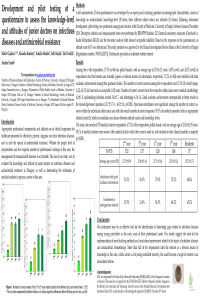
Appropriate professional competencies and attitudes are of critical importance for healthcare-personnel to effectively prevent, diagnose and treat infectious diseases, and to curb the spread of antimicrobial resistance. The aim of our study was to evaluate the knowledge and attitude of junior doctors on infectious diseases and antimicrobial resistance in Hungary. A self-administered, 47-item questionnaire was developed by an expert panel, including questions on demographic characteristics, source of knowledge on antimicrobials, knowledge-level (30 items, three different subject areas) and attitudes (10 items). Following instrument development, pilot testing was performed among junior doctors at the Faculty of Medicine, University of Szeged, between January-December 2018. Descriptive statistics and nonparametric tests were performed by IBM SPSS Statistics 22.0. Internal consistency measures (Cronbach’s α, Kuder–Richardson KR-20) and the test-retest analysis both showed acceptable reliability. Based on the responses to the questionnaire, an attitude score (0-7) was determined. Among the n=146 respondents, 57.5% (n=84) has polled female, with an average age of 29.1±3.2 years. 41.8% (n=61) and 42.5% (n=62) of respondents cited the Internet and scientific papers as relevant sources of information, respectively. 71.2% (n=104) were satisfied with their academic achievements during their graduate studies. The number of correct answers among the respondents were 15.5±3.8 overall (range: 2-22), 36.3% did not reach an acceptable (≥15) score. Number of correct answers from the respective subject areas were: medical microbiology 6.0±1.8, epidemiology/infection control 5.4±1.7, and infectology 4.3±1.6. Good academic achievements corresponded to better results in the knowledge-based questions (13.7±3.7 vs. 16.3±3.6; p<0.001). Spearman-correlations were significant among the number of correct answers within the individual subject areas and with the overall number of correct responses. 95.1% of residents presented with an appropriate attitude (score≥5), while no correlation was shown between attitude scores and knowledge levels. Our instrument may be an effective tool for the identification of knowledge gaps related to infectious diseases among young prescribers in the early years of their professional career.
Keywords
questionnaire development
healthcare professionals
knowledge-level
training
antibiotic stewardship
microbiology
epidemiology
infectiology
Manuscript
Gajdács_survey.pdf
Poster
Antibiotics_2021_ekonf.pdf
Novel Antifungal Peptaibols Emericellipsins A-E with Anticancer and Antibiofilm Potential from an alkalophilic fungus Emericellopsis alkalina
Information seeking behaviour regarding antibiotics and common infectious ailments: a Google Trends-based infodemiological study