Event submissions
Published
 10.3390/IECAG2021-09904 (registering DOI)
 This submission belongs to the session S8. Posters of the event The 1st International Electronic Conference on Agronomy
Published date
06 May, 2021
Citation
Vilma Naujokienė, Kristina Lekavičienė, Egidijus Šarauskis, Kęstutis Romaneckas, Simona Paulikienė, THE BIO-EFFECT ON COMPLEX OF DIFFERENT CHARACTERISTICS OF SOIL, TILLAGE AND YIELD IN CROP PRODUCTION, in Proceedings of The 1st International Electronic Conference on Agronomy, 3 May–17 May 2021, MDPI: Basel, Switzerland, doi: 10.3390/IECAG2021-09904
Share
Email
Facebook
Twitter
LinkedIn
THE BIO-EFFECT ON COMPLEX OF DIFFERENT CHARACTERISTICS OF SOIL, TILLAGE AND YIELD IN CROP PRODUCTION

Vilma Naujokienė 1

Kristina Lekavičienė 1
'%3e%3cpath%20d='M12.6647%2010.9104C12.4176%2010.325%2012.0589%209.7933%2011.6088%209.34485C11.16%208.89511%2010.6283%208.53653%2010.0432%208.28891C10.038%208.28629%2010.0327%208.28498%2010.0275%208.28236C10.8437%207.69282%2011.3743%206.73252%2011.3743%205.64907C11.3743%203.85423%209.92005%202.40002%208.12522%202.40002C6.33038%202.40002%204.87618%203.85423%204.87618%205.64907C4.87618%206.73252%205.40677%207.69282%206.22296%208.28367C6.21772%208.28629%206.21248%208.2876%206.20724%208.29022C5.62031%208.53783%205.09365%208.89287%204.64167%209.34616C4.19192%209.79496%203.83334%2010.3266%203.58573%2010.9117C3.34247%2011.4846%203.21128%2012.0987%203.19925%2012.721C3.1989%2012.735%203.20135%2012.7489%203.20646%2012.7619C3.21157%2012.7749%203.21924%2012.7868%203.22901%2012.7968C3.23877%2012.8068%203.25045%2012.8148%203.26334%2012.8202C3.27623%2012.8256%203.29007%2012.8284%203.30406%2012.8284H4.09012C4.14776%2012.8284%204.19362%2012.7825%204.19493%2012.7262C4.22113%2011.7148%204.62726%2010.7676%205.34519%2010.0497C6.08802%209.30686%207.07452%208.89811%208.12522%208.89811C9.17592%208.89811%2010.1624%209.30686%2010.9052%2010.0497C11.6232%2010.7676%2012.0293%2011.7148%2012.0555%2012.7262C12.0568%2012.7839%2012.1027%2012.8284%2012.1603%2012.8284H12.9464C12.9604%2012.8284%2012.9742%2012.8256%2012.9871%2012.8202C13%2012.8148%2013.0117%2012.8068%2013.0214%2012.7968C13.0312%2012.7868%2013.0389%2012.7749%2013.044%2012.7619C13.0491%2012.7489%2013.0515%2012.735%2013.0512%2012.721C13.0381%2012.0947%2012.9084%2011.4856%2012.6647%2010.9104ZM8.12522%207.90243C7.52388%207.90243%206.95792%207.66793%206.53214%207.24215C6.10636%206.81636%205.87185%206.2504%205.87185%205.64907C5.87185%205.04773%206.10636%204.48177%206.53214%204.05599C6.95792%203.63021%207.52388%203.3957%208.12522%203.3957C8.72655%203.3957%209.29252%203.63021%209.7183%204.05599C10.1441%204.48177%2010.3786%205.04773%2010.3786%205.64907C10.3786%206.2504%2010.1441%206.81636%209.7183%207.24215C9.29252%207.66793%208.72655%207.90243%208.12522%207.90243Z'%20fill='%235D1EE1'/%3e%3c/g%3e%3c/svg%3e)
Egidijus Šarauskis 1

Kęstutis Romaneckas 1
Simona Paulikienė 1
1. Vytautas Magnus university
Abstract
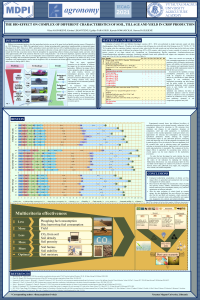
Different environmental analyses show that agricultural activities are one of the many local and global emissions sources (Notarnicola et al., 2017; Robertson et al., 2000). The agricultural sector is facing increasing public expectations regarding global environmental impact (Houshyar et al., 2017; Chen et al., 2010; Williams et al., 2011). Agriculture, forestry and other land use (24% of global greenhouse gas emissions): greenhouse gas emissions from this sector mostly come from agriculture (cultivation of crops and livestock) and deforestation. This estimate does not include the CO2 that ecosystems remove from the atmosphere by sequestering carbon in biomass, dead organic matter, and soils, which offset approximately 20% of the emissions from this sector. Crop production – one of the most important, expensive and fuel–consuming processes in agriculture. Thus, the use of strategically mixed compositions replaces the properties of soil and reduces fuel consumption during soil tillage and environmental pollution. The application of an innovative method in crop production can reduce the GWP (kg CO2 eq) (Fig. 3) and contribute to the implementation, renewal and development of EU environmental and climate policies and legislations, which would create added value for Europe. There are many specialized researches on the influence of different bio-impact on the various parameters in agriculture. Different bio-impact effects various properties and the composition of soil, plant residues, harvests, and technological processes, total Global warming potencial (GWP ) as well as the interactions between different parts of the soil, working machine tools, energy consumption and environmental pollution with harmful gases. To summarise wide coverage investigations of various aspects of different bio-impact parameters the main objective – to identify the best-case bio-impact scenario by accounting for many criteria in several aspects. Experimental research shows that different bio-effects of agricultural practices can be oriented towards a reduction in fuel consumption, followed by reductions in CO2 emissions from machinery and changes in soil properties, dynamics of composition, yield and other parameters. A multicriteria assessment of the essential parameters would give farmers new opportunities for reducing fuel consumption and increasing agricultural production, thereby reducing the negative environmental impact of soil cultivation processes, increasing yields and improving soil. Of all the properties investigated, from a practical point of view, the selection of the most important of all the essential links, such as reducing energy and expenditure, reducing environmental pollution, improving soil, and increasing yields and productivity, is reasonable. The evaluation of the bio-impact effects in agriculture by accounting many criteria in several aspects was the main objective of the multicriteria assessment
Keywords
bio-effect
complex
soil
environment
tillage
crop
Manuscript
sciforum-039168.pdf
Poster
Poster_MDPI2.pdf
Biotreatment impact on dynamics of manure composition and the reduction of ammonia emission from agriculture
Evaluation of fruit quality, chromatic parameters and anthocyanins content under foliar application of magnesium and potassium on sweet cherry (Prunus avium L.) cv. Burlat