Event submissions
Published

This submission belongs to the session S8. Posters of the event The 1st International Electronic Conference on Agronomy
Published date
06 May, 2021
Citation
André Monteiro, Carla Miranda, Henrique Trindade, Mediterranean lupines as an alternative protein source to soybean, in Proceedings of The 1st International Electronic Conference on Agronomy, 3 May–17 May 2021, MDPI: Basel, Switzerland, doi: 10.3390/IECAG2021-09911
Share
Email
Facebook
Twitter
LinkedIn
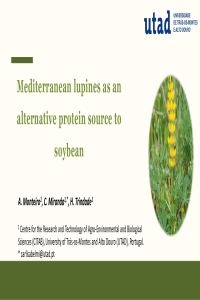
Mediterranean lupines as an alternative protein source to soybean
'%3e%3cpath%20d='M12.6647%2010.9104C12.4176%2010.325%2012.0589%209.7933%2011.6088%209.34485C11.16%208.89511%2010.6283%208.53653%2010.0432%208.28891C10.038%208.28629%2010.0327%208.28498%2010.0275%208.28236C10.8437%207.69282%2011.3743%206.73252%2011.3743%205.64907C11.3743%203.85423%209.92005%202.40002%208.12522%202.40002C6.33038%202.40002%204.87618%203.85423%204.87618%205.64907C4.87618%206.73252%205.40677%207.69282%206.22296%208.28367C6.21772%208.28629%206.21248%208.2876%206.20724%208.29022C5.62031%208.53783%205.09365%208.89287%204.64167%209.34616C4.19192%209.79496%203.83334%2010.3266%203.58573%2010.9117C3.34247%2011.4846%203.21128%2012.0987%203.19925%2012.721C3.1989%2012.735%203.20135%2012.7489%203.20646%2012.7619C3.21157%2012.7749%203.21924%2012.7868%203.22901%2012.7968C3.23877%2012.8068%203.25045%2012.8148%203.26334%2012.8202C3.27623%2012.8256%203.29007%2012.8284%203.30406%2012.8284H4.09012C4.14776%2012.8284%204.19362%2012.7825%204.19493%2012.7262C4.22113%2011.7148%204.62726%2010.7676%205.34519%2010.0497C6.08802%209.30686%207.07452%208.89811%208.12522%208.89811C9.17592%208.89811%2010.1624%209.30686%2010.9052%2010.0497C11.6232%2010.7676%2012.0293%2011.7148%2012.0555%2012.7262C12.0568%2012.7839%2012.1027%2012.8284%2012.1603%2012.8284H12.9464C12.9604%2012.8284%2012.9742%2012.8256%2012.9871%2012.8202C13%2012.8148%2013.0117%2012.8068%2013.0214%2012.7968C13.0312%2012.7868%2013.0389%2012.7749%2013.044%2012.7619C13.0491%2012.7489%2013.0515%2012.735%2013.0512%2012.721C13.0381%2012.0947%2012.9084%2011.4856%2012.6647%2010.9104ZM8.12522%207.90243C7.52388%207.90243%206.95792%207.66793%206.53214%207.24215C6.10636%206.81636%205.87185%206.2504%205.87185%205.64907C5.87185%205.04773%206.10636%204.48177%206.53214%204.05599C6.95792%203.63021%207.52388%203.3957%208.12522%203.3957C8.72655%203.3957%209.29252%203.63021%209.7183%204.05599C10.1441%204.48177%2010.3786%205.04773%2010.3786%205.64907C10.3786%206.2504%2010.1441%206.81636%209.7183%207.24215C9.29252%207.66793%208.72655%207.90243%208.12522%207.90243Z'%20fill='%235D1EE1'/%3e%3c/g%3e%3c/svg%3e)
André Monteiro 1

Carla Miranda 2

Henrique Trindade 1
1. CITAB, Universidade de Trás-os-Montes e Alto Douro, Vila Real, Portugal.
2. 1. 1H-TOXRUN-Toxicology Research Unit, University Institute of Health Sciences, CESPU, CRL., Avenida Central de Gandra 1317, 4585-116 Gandra PRD, Portugal;
Abstract
Soybean is the most commonly used protein supplement of plant origin in animal diets. However, its high price and environmental impacts of production and transport to global markets stimulate producer’s interest in alternative use of locally produced feed ingredients including grain legumes. Lupin is one of the major grain legumes economically cultivated in Europe. Their seeds are characterized by high protein and dietary fiber content, presenting a high nutritional value for animal feeding. There is the need for screening new alternatives that can replace soybean by traditional protein sources with nutritional and commercial value for human and animal consumption.
The aim of this study was to evaluate the effects of sowing date on the potential of 3 lupines varieties well adapted to Mediterranean climatic conditions and soils from North Portugal as an alternative protein source to human and animal feed. The species and varieties tested were white lupine (Lupinus albus L.), cv. Tango, narrow-leafed lupine (Lupinus angustifolius L.), cv. Estoril, and yellow lupine (Lupinus luteus L.), cv. Cardiga. Four sowing dates with 3-weeks interval were tested from early September to November. The sowing was performed manually in a split-plot completed randomized block design with plots of 10m2 each and 4 replications. The harvest was carried out during the month of June. Agronomic parameters like plant growth indicators, weed infestation, grain yield and protein content were evaluated.
Early sowing of Estoril yield more grain than Cardiga (2443 and 2138 kg ha-1, respectively). Late sowing dates significantly reduced (59-62%) yields compared to early sowing. In contrast, Tango showed always the lowest grain yield in all sowing dates with a reduction of 91% and the highest weed infestation in the last date compared to first one. The highest crude protein yield was obtained with Cardiga (618 kg ha-1) and Estoril (588 kg ha-1), while the lowest in Tango (144 kg ha-1). The grain protein content decreased from first to last sowing date, with a reduction to half in Estoril and Tango and Cardiga showing 59% less, in the last sowing.
In conclusion, Cardiga following by Estoril showed more adaptability to the region and may constitute an alternative protein source for feed industry.
Keywords
grain legumes
lupine varieties
Mediterranean lupines
sowing date
protein
Manuscript
960.pdf
Poster
Poster_960.pdf
Variability of selected traits in meadow fescue (Festuca pratensis Huds.) plants with different susceptibility to seed shattering
Origanum vulgare ssp. hirtum essential oil as inhibitors of Fusarium dry rot of potato