Event submissions
Published

This submission belongs to the session S2. Corrosion in Concrete and Porous Media of the event 1st Corrosion and Materials Degradation Web Conference
Published date
08 May, 2021
Citation
Nikolaos Chousidis, Aggeliki Zacharopoulou, Christos Zeris, George Batis, Effect of carbon nanotubes (CNTs) on chloride penetration resistance and physical-mechanical properties of cementitious materials., in Proceedings of 1st Corrosion and Materials Degradation Web Conference, 17 May–19 May 2021, MDPI: Basel, Switzerland, doi: 10.3390/CMDWC2021-09934
Share
Email
Facebook
Twitter
LinkedIn
Effect of carbon nanotubes (CNTs) on chloride penetration resistance and physical-mechanical properties of cementitious materials.

Nikolaos Chousidis 1,2
'%3e%3cpath%20d='M12.6647%2010.9104C12.4176%2010.325%2012.0589%209.7933%2011.6088%209.34485C11.16%208.89511%2010.6283%208.53653%2010.0432%208.28891C10.038%208.28629%2010.0327%208.28498%2010.0275%208.28236C10.8437%207.69282%2011.3743%206.73252%2011.3743%205.64907C11.3743%203.85423%209.92005%202.40002%208.12522%202.40002C6.33038%202.40002%204.87618%203.85423%204.87618%205.64907C4.87618%206.73252%205.40677%207.69282%206.22296%208.28367C6.21772%208.28629%206.21248%208.2876%206.20724%208.29022C5.62031%208.53783%205.09365%208.89287%204.64167%209.34616C4.19192%209.79496%203.83334%2010.3266%203.58573%2010.9117C3.34247%2011.4846%203.21128%2012.0987%203.19925%2012.721C3.1989%2012.735%203.20135%2012.7489%203.20646%2012.7619C3.21157%2012.7749%203.21924%2012.7868%203.22901%2012.7968C3.23877%2012.8068%203.25045%2012.8148%203.26334%2012.8202C3.27623%2012.8256%203.29007%2012.8284%203.30406%2012.8284H4.09012C4.14776%2012.8284%204.19362%2012.7825%204.19493%2012.7262C4.22113%2011.7148%204.62726%2010.7676%205.34519%2010.0497C6.08802%209.30686%207.07452%208.89811%208.12522%208.89811C9.17592%208.89811%2010.1624%209.30686%2010.9052%2010.0497C11.6232%2010.7676%2012.0293%2011.7148%2012.0555%2012.7262C12.0568%2012.7839%2012.1027%2012.8284%2012.1603%2012.8284H12.9464C12.9604%2012.8284%2012.9742%2012.8256%2012.9871%2012.8202C13%2012.8148%2013.0117%2012.8068%2013.0214%2012.7968C13.0312%2012.7868%2013.0389%2012.7749%2013.044%2012.7619C13.0491%2012.7489%2013.0515%2012.735%2013.0512%2012.721C13.0381%2012.0947%2012.9084%2011.4856%2012.6647%2010.9104ZM8.12522%207.90243C7.52388%207.90243%206.95792%207.66793%206.53214%207.24215C6.10636%206.81636%205.87185%206.2504%205.87185%205.64907C5.87185%205.04773%206.10636%204.48177%206.53214%204.05599C6.95792%203.63021%207.52388%203.3957%208.12522%203.3957C8.72655%203.3957%209.29252%203.63021%209.7183%204.05599C10.1441%204.48177%2010.3786%205.04773%2010.3786%205.64907C10.3786%206.2504%2010.1441%206.81636%209.7183%207.24215C9.29252%207.66793%208.72655%207.90243%208.12522%207.90243Z'%20fill='%235D1EE1'/%3e%3c/g%3e%3c/svg%3e)
Aggeliki Zacharopoulou 2

Christos Zeris 1
George Batis 3
1. School of Civil Engineering. Department of Structural Engineering. National Technical University of Athens.
2. School of Chemical Engineering. Department of Material Science & Technology. National Technical University of Athens.
3. 2School of Chemical Engineering. Department of Material Science & Technology. National Technical University of Athens.
Abstract
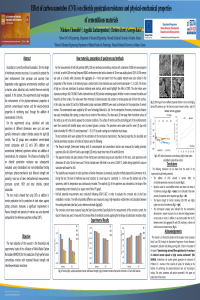
According to currently enforced Eurocode 2 for the design of reinforced concrete structures, it is essential to protect the steel reinforcement from corrosion and concrete from degradation under aggressive environmental conditions such as marine, urban, industrial, soils, to which these are normally exposed. In this context, this experimental study investigates the enhancement of the physico-mechanical properties of common cement-based mortars and the electro-chemical properties of reinforcing steel, through the addition of nanomaterials in the mix. For the experimental set- up, cylindrical and cubic specimens of different dimensions were cast and were partially immersed in sodium chloride solution for eight (8) months. Two (2) groups were considered: cement-based mortar composites with 0.5 wt.% CNTs addition and conventional (reference) specimens without any addition of nanomaterials, for comparison. The influence of adding CNTs on chloride penetration resistance was subsequently evaluated using standardized and non-standardized testing techniques: physico-mechanical tests (flexural strength and porosity), mass loss of steel, electrochemical measurements (corrosion current, HCP) and total chloride content calculation. The test results showed that using CNTs as addition in mortar production led to protection of steel rebars against pitting corrosion; moreover, a significant improvement in flexural strength and porosity of mortars was also observed compared to the reference specimens without CNTs.
Keywords
Carbon Nanotubes
Pitting Corrosion
Corrosion Current
Half-cell Potential
Porosity
flexural strength
Cement-based mortar
Manuscript
sciforum-044574_Template.pdf
Poster
Poster Presentation_2.pdf
Aluminum in dental implants: how to reduce a potential risk to patient´s health?
Data science framework to select corrosion inhibitors