Event submissions
Published
This submission belongs to the session S3. Animal Taxonomy of the event The 1st International Online Conference on Taxonomy
Published date
01 Dec, 2025
Academic Editor
'%3e%3cpath%20d='M12.6657%2010.9104C12.4185%2010.325%2012.0599%209.79327%2011.6097%209.34482C11.1609%208.89508%2010.6293%208.5365%2010.0442%208.28888C10.0389%208.28626%2010.0337%208.28495%2010.0285%208.28233C10.8446%207.69279%2011.3752%206.73249%2011.3752%205.64904C11.3752%203.8542%209.92103%202.39999%208.1262%202.39999C6.33136%202.39999%204.87715%203.8542%204.87715%205.64904C4.87715%206.73249%205.40774%207.69279%206.22393%208.28364C6.21869%208.28626%206.21345%208.28757%206.20821%208.29019C5.62129%208.5378%205.09463%208.89284%204.64265%209.34613C4.1929%209.79493%203.83432%2010.3266%203.58671%2010.9117C3.34345%2011.4845%203.21226%2012.0987%203.20023%2012.7209C3.19988%2012.7349%203.20233%2012.7488%203.20744%2012.7619C3.21255%2012.7749%203.22022%2012.7867%203.22998%2012.7968C3.23975%2012.8068%203.25142%2012.8147%203.26431%2012.8202C3.2772%2012.8256%203.29105%2012.8284%203.30504%2012.8284H4.09109C4.14874%2012.8284%204.19459%2012.7825%204.1959%2012.7262C4.2221%2011.7148%204.62823%2010.7676%205.34617%2010.0497C6.08899%209.30683%207.0755%208.89808%208.1262%208.89808C9.17689%208.89808%2010.1634%209.30683%2010.9062%2010.0497C11.6242%2010.7676%2012.0303%2011.7148%2012.0565%2012.7262C12.0578%2012.7838%2012.1037%2012.8284%2012.1613%2012.8284H12.9474C12.9613%2012.8284%2012.9752%2012.8256%2012.9881%2012.8202C13.001%2012.8147%2013.0126%2012.8068%2013.0224%2012.7968C13.0322%2012.7867%2013.0398%2012.7749%2013.0449%2012.7619C13.0501%2012.7488%2013.0525%2012.7349%2013.0522%2012.7209C13.0391%2012.0947%2012.9094%2011.4855%2012.6657%2010.9104ZM8.1262%207.9024C7.52486%207.9024%206.9589%207.6679%206.53312%207.24211C6.10733%206.81633%205.87283%206.25037%205.87283%205.64904C5.87283%205.0477%206.10733%204.48174%206.53312%204.05596C6.9589%203.63018%207.52486%203.39567%208.1262%203.39567C8.72753%203.39567%209.29349%203.63018%209.71927%204.05596C10.1451%204.48174%2010.3796%205.0477%2010.3796%205.64904C10.3796%206.25037%2010.1451%206.81633%209.71927%207.24211C9.29349%207.6679%208.72753%207.9024%208.1262%207.9024Z'%20fill='%235D1EE1'/%3e%3c/g%3e%3c/svg%3e) Mathias Harzhauser
Mathias HarzhauserCitation
José Vitor Costa, Fernando Carvalho, INTEGRATIVE TAXONOMY OF A NEW SPECIES OF HOPLIAS GILL (CHARACIFORMES: ERYTHRINIDAE) FROM THE UPPER PARANÁ RIVER BASIN, BRAZIL, in Proceedings of The 1st International Online Conference on Taxonomy, 3 December–4 December 2025, MDPI: Basel, Switzerland
Share
Email
Facebook
Twitter
LinkedIn
INTEGRATIVE TAXONOMY OF A NEW SPECIES OF HOPLIAS GILL (CHARACIFORMES: ERYTHRINIDAE) FROM THE UPPER PARANÁ RIVER BASIN, BRAZIL
'%3e%3cpath%20d='M12.6647%2010.9104C12.4176%2010.325%2012.0589%209.7933%2011.6088%209.34485C11.16%208.89511%2010.6283%208.53653%2010.0432%208.28891C10.038%208.28629%2010.0327%208.28498%2010.0275%208.28236C10.8437%207.69282%2011.3743%206.73252%2011.3743%205.64907C11.3743%203.85423%209.92005%202.40002%208.12522%202.40002C6.33038%202.40002%204.87618%203.85423%204.87618%205.64907C4.87618%206.73252%205.40677%207.69282%206.22296%208.28367C6.21772%208.28629%206.21248%208.2876%206.20724%208.29022C5.62031%208.53783%205.09365%208.89287%204.64167%209.34616C4.19192%209.79496%203.83334%2010.3266%203.58573%2010.9117C3.34247%2011.4846%203.21128%2012.0987%203.19925%2012.721C3.1989%2012.735%203.20135%2012.7489%203.20646%2012.7619C3.21157%2012.7749%203.21924%2012.7868%203.22901%2012.7968C3.23877%2012.8068%203.25045%2012.8148%203.26334%2012.8202C3.27623%2012.8256%203.29007%2012.8284%203.30406%2012.8284H4.09012C4.14776%2012.8284%204.19362%2012.7825%204.19493%2012.7262C4.22113%2011.7148%204.62726%2010.7676%205.34519%2010.0497C6.08802%209.30686%207.07452%208.89811%208.12522%208.89811C9.17592%208.89811%2010.1624%209.30686%2010.9052%2010.0497C11.6232%2010.7676%2012.0293%2011.7148%2012.0555%2012.7262C12.0568%2012.7839%2012.1027%2012.8284%2012.1603%2012.8284H12.9464C12.9604%2012.8284%2012.9742%2012.8256%2012.9871%2012.8202C13%2012.8148%2013.0117%2012.8068%2013.0214%2012.7968C13.0312%2012.7868%2013.0389%2012.7749%2013.044%2012.7619C13.0491%2012.7489%2013.0515%2012.735%2013.0512%2012.721C13.0381%2012.0947%2012.9084%2011.4856%2012.6647%2010.9104ZM8.12522%207.90243C7.52388%207.90243%206.95792%207.66793%206.53214%207.24215C6.10636%206.81636%205.87185%206.2504%205.87185%205.64907C5.87185%205.04773%206.10636%204.48177%206.53214%204.05599C6.95792%203.63021%207.52388%203.3957%208.12522%203.3957C8.72655%203.3957%209.29252%203.63021%209.7183%204.05599C10.1441%204.48177%2010.3786%205.04773%2010.3786%205.64907C10.3786%206.2504%2010.1441%206.81636%209.7183%207.24215C9.29252%207.66793%208.72655%207.90243%208.12522%207.90243Z'%20fill='%235D1EE1'/%3e%3c/g%3e%3c/svg%3e)
José Vitor Costa 1
Fernando Carvalho 2
1. Department of Biological Sciences, Institute of Biosciences, Letters and Exact Sciences (IBILCE), São José do Rio Preto Campus, São Paulo State University (UNESP), São José do Rio Preto, 15054-000, Brazil, Brazil
2. Três Lagoas Campus (CPTL), Federal University of Mato Grosso do Sul (UFMS), Três Lagoas, 79613-000, Brazil, Brazil
Abstract
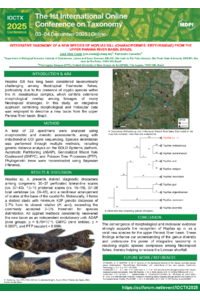
Hoplias Gill has long been considered taxonomically challenging among Neotropical freshwater fishes, particularly due to the presence of cryptic species within the H. malabaricus complex, which exhibits extensive morphological overlap among lineages of many Neotropical drainages. In this study, an integrative approach combining morphological and molecular data was employed to describe a new taxon from the upper Paraná River basin, Brazil. A total of 22 specimens were analyzed using morphometric and meristic assessments, along with mitochondrial COI gene sequencing. Species delimitation was performed through multiple methods, including genetic distance analysis on the BOLD Systems platform, Automatic Partitioning (ASAP), Generalized Mixed Yule Coalescent (GMYC), and Poisson Tree Processes (PTP). Phylogenetic trees were reconstructed using Bayesian inference. Hoplias sp. n. presents distinct diagnostic characters among congeners: 36–37 perforated lateral-line scales (vs. 37–43), 13–15 predorsal scales (vs. 15–19), 37–38 total vertebrae (vs. 39–45), and a rectilinear arrangement of scales at the base of the caudal fin. Molecularly, it forms a distinct clade with minimum K2P genetic distances of 3.7% from its closest relative (H. auri), exceeding the commonly accepted 2–3% threshold for species delimitation. All applied methods consistently recovered the new taxon as an independent evolutionary unit: ASAP (nine groups; p = 8.79×10⁻³), GMYC (nine entities; p = 0.0007), and PTP (support = 0.999). The convergence of morphological and molecular evidence strongly supports the recognition of Hoplias sp. n. as a valid new species for the upper Paraná River basin. These findings enhance our understanding of the genus diversity and underscore the power of integrative taxonomy in resolving cryptic species complexes among Neotropical fishes, thereby helping to reduce the Linnean shortfall.
Keywords
DNA barcoding
Morphological Diagnosis
COI
Neotropical fishes
Poster
BANNER - JVD.pdf
Morphological and genetic variation in Iguanodectes spilurus and I. purusi (Characiformes, Iguanodectidae) from the Amazon Basin
Lineage diversity and craniofacial disparity of Navajini (Apteronotidae, Gymnotiformes) in deep river channels of tropical South America