Event submissions
Published
This submission belongs to the session S6. Teacher Education of the event The 1st International Online Conference on Education Sciences
Published date
10 Jun, 2026
Academic Editor
'%3e%3cpath%20d='M12.6657%2010.9104C12.4185%2010.325%2012.0599%209.79327%2011.6097%209.34482C11.1609%208.89508%2010.6293%208.5365%2010.0442%208.28888C10.0389%208.28626%2010.0337%208.28495%2010.0285%208.28233C10.8446%207.69279%2011.3752%206.73249%2011.3752%205.64904C11.3752%203.8542%209.92103%202.39999%208.1262%202.39999C6.33136%202.39999%204.87715%203.8542%204.87715%205.64904C4.87715%206.73249%205.40774%207.69279%206.22393%208.28364C6.21869%208.28626%206.21345%208.28757%206.20821%208.29019C5.62129%208.5378%205.09463%208.89284%204.64265%209.34613C4.1929%209.79493%203.83432%2010.3266%203.58671%2010.9117C3.34345%2011.4845%203.21226%2012.0987%203.20023%2012.7209C3.19988%2012.7349%203.20233%2012.7488%203.20744%2012.7619C3.21255%2012.7749%203.22022%2012.7867%203.22998%2012.7968C3.23975%2012.8068%203.25142%2012.8147%203.26431%2012.8202C3.2772%2012.8256%203.29105%2012.8284%203.30504%2012.8284H4.09109C4.14874%2012.8284%204.19459%2012.7825%204.1959%2012.7262C4.2221%2011.7148%204.62823%2010.7676%205.34617%2010.0497C6.08899%209.30683%207.0755%208.89808%208.1262%208.89808C9.17689%208.89808%2010.1634%209.30683%2010.9062%2010.0497C11.6242%2010.7676%2012.0303%2011.7148%2012.0565%2012.7262C12.0578%2012.7838%2012.1037%2012.8284%2012.1613%2012.8284H12.9474C12.9613%2012.8284%2012.9752%2012.8256%2012.9881%2012.8202C13.001%2012.8147%2013.0126%2012.8068%2013.0224%2012.7968C13.0322%2012.7867%2013.0398%2012.7749%2013.0449%2012.7619C13.0501%2012.7488%2013.0525%2012.7349%2013.0522%2012.7209C13.0391%2012.0947%2012.9094%2011.4855%2012.6657%2010.9104ZM8.1262%207.9024C7.52486%207.9024%206.9589%207.6679%206.53312%207.24211C6.10733%206.81633%205.87283%206.25037%205.87283%205.64904C5.87283%205.0477%206.10733%204.48174%206.53312%204.05596C6.9589%203.63018%207.52486%203.39567%208.1262%203.39567C8.72753%203.39567%209.29349%203.63018%209.71927%204.05596C10.1451%204.48174%2010.3796%205.0477%2010.3796%205.64904C10.3796%206.25037%2010.1451%206.81633%209.71927%207.24211C9.29349%207.6679%208.72753%207.9024%208.1262%207.9024Z'%20fill='%235D1EE1'/%3e%3c/g%3e%3c/svg%3e) Daniel Muijs
Daniel MuijsCitation
Georgia Solomonidou, Yianna Danidou, Maria Meletiou-Mavrotheris, Efi Paparistodemou, Empowering Teachers to Foster Data Science Literacy for Civic Engagement and Social Justice: Design-Based Approach, in Proceedings of The 1st International Online Conference on Education Sciences, 15 June–17 June 2026, MDPI: Basel, Switzerland
Share
Email
Facebook
Twitter
LinkedIn
Empowering Teachers to Foster Data Science Literacy for Civic Engagement and Social Justice: Design-Based Approach
'%3e%3cpath%20d='M12.6647%2010.9104C12.4176%2010.325%2012.0589%209.7933%2011.6088%209.34485C11.16%208.89511%2010.6283%208.53653%2010.0432%208.28891C10.038%208.28629%2010.0327%208.28498%2010.0275%208.28236C10.8437%207.69282%2011.3743%206.73252%2011.3743%205.64907C11.3743%203.85423%209.92005%202.40002%208.12522%202.40002C6.33038%202.40002%204.87618%203.85423%204.87618%205.64907C4.87618%206.73252%205.40677%207.69282%206.22296%208.28367C6.21772%208.28629%206.21248%208.2876%206.20724%208.29022C5.62031%208.53783%205.09365%208.89287%204.64167%209.34616C4.19192%209.79496%203.83334%2010.3266%203.58573%2010.9117C3.34247%2011.4846%203.21128%2012.0987%203.19925%2012.721C3.1989%2012.735%203.20135%2012.7489%203.20646%2012.7619C3.21157%2012.7749%203.21924%2012.7868%203.22901%2012.7968C3.23877%2012.8068%203.25045%2012.8148%203.26334%2012.8202C3.27623%2012.8256%203.29007%2012.8284%203.30406%2012.8284H4.09012C4.14776%2012.8284%204.19362%2012.7825%204.19493%2012.7262C4.22113%2011.7148%204.62726%2010.7676%205.34519%2010.0497C6.08802%209.30686%207.07452%208.89811%208.12522%208.89811C9.17592%208.89811%2010.1624%209.30686%2010.9052%2010.0497C11.6232%2010.7676%2012.0293%2011.7148%2012.0555%2012.7262C12.0568%2012.7839%2012.1027%2012.8284%2012.1603%2012.8284H12.9464C12.9604%2012.8284%2012.9742%2012.8256%2012.9871%2012.8202C13%2012.8148%2013.0117%2012.8068%2013.0214%2012.7968C13.0312%2012.7868%2013.0389%2012.7749%2013.044%2012.7619C13.0491%2012.7489%2013.0515%2012.735%2013.0512%2012.721C13.0381%2012.0947%2012.9084%2011.4856%2012.6647%2010.9104ZM8.12522%207.90243C7.52388%207.90243%206.95792%207.66793%206.53214%207.24215C6.10636%206.81636%205.87185%206.2504%205.87185%205.64907C5.87185%205.04773%206.10636%204.48177%206.53214%204.05599C6.95792%203.63021%207.52388%203.3957%208.12522%203.3957C8.72655%203.3957%209.29252%203.63021%209.7183%204.05599C10.1441%204.48177%2010.3786%205.04773%2010.3786%205.64907C10.3786%206.2504%2010.1441%206.81636%209.7183%207.24215C9.29252%207.66793%208.72655%207.90243%208.12522%207.90243Z'%20fill='%235D1EE1'/%3e%3c/g%3e%3c/svg%3e)
Georgia Solomonidou 1

Yianna Danidou 2

Maria Meletiou-Mavrotheris 3
Efi Paparistodemou 4
1. European University Cyprus, Nicosia, 1516, Cyprus, Cyprus
2. Department of Computer Science and Engineering, European University Cyprus, Nicosia, 1516, Cyprus, Cyprus
3. Department of Education Sciences, European University Cyprus, Nicosia, 1516, Cyprus, Cyprus
4. Cyprus Pedagogical Institute, Nicosia, 1434, Cyprus, Cyprus
Abstract
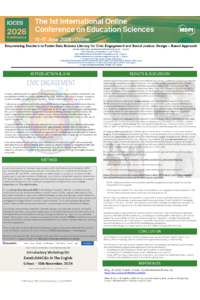
In today’s datafied world, the ability to critically interpret, analyze, and act on data is essential for civic participation and informed decision-making. However, data science literacy—recognized as both a scientific skill and a civic competency—remains underdeveloped in many school systems. The Erasmus+ project Data Science Education in STEAM for Civic Engagement and Social Justice from the Early Years (DataScEd4CiEn) (2023–2026) addresses this challenge by embedding data science into STEAM education for students aged 9–15. Coordinated by the European University Cyprus and funded by the Cyprus Foundation for the Management of European Lifelong Learning Programmes (IDEP), the project brings together partners from Cyprus, Greece, Ireland, Germany, and Spain to develop an innovative framework for integrating data science into STEAM curricula.
A central component of the project is a modular, blended professional development (PD) program designed to empower primary and secondary teachers to collaboratively design and implement data-rich STEAM learning scenarios addressing civic issues such as environmental justice, equity, and socio-economic challenges. Grounded in situated learning and a Communities of Practice approach, the PD program combines interactive workshops, case-based discussions, collaborative design activities, and hands-on exploration of digital tools such as CODAP, Gapminder, and Teachable Machine.
Using a design-based research (DBR) methodology, the study followed an iterative process involving two rounds of implementation and refinement of the PD program. Data from the first pilot implementation in Cyprus were collected through surveys, focus groups, teacher reflections, and classroom observations and analyzed to inform revisions to the course structure, content, and pedagogical strategies before the second implementation. This iterative process allowed the research team to refine the program based on classroom experiences and teacher feedback. Early findings indicate improved teacher confidence and capacity to foster students’ data science literacy, ethical reasoning, and civic awareness through interdisciplinary STEAM learning.
Keywords
STEAM
Data Science
Civic Engagement
Teacher Professional Development.
Poster
178705 (1).pdf
Teaching English for Research Publication Purposes (ERPP) based on discipline-specific corpus and Artificial Intelligent Method: A Case Study of Ocean Engineering
Understanding the gender gap in STEAM from a teaching perspective