Event submissions
Published
This submission belongs to the session S6. Teacher Education of the event The 1st International Online Conference on Education Sciences
Published date
10 Jun, 2026
Academic Editor
'%3e%3cpath%20d='M12.6657%2010.9104C12.4185%2010.325%2012.0599%209.79327%2011.6097%209.34482C11.1609%208.89508%2010.6293%208.5365%2010.0442%208.28888C10.0389%208.28626%2010.0337%208.28495%2010.0285%208.28233C10.8446%207.69279%2011.3752%206.73249%2011.3752%205.64904C11.3752%203.8542%209.92103%202.39999%208.1262%202.39999C6.33136%202.39999%204.87715%203.8542%204.87715%205.64904C4.87715%206.73249%205.40774%207.69279%206.22393%208.28364C6.21869%208.28626%206.21345%208.28757%206.20821%208.29019C5.62129%208.5378%205.09463%208.89284%204.64265%209.34613C4.1929%209.79493%203.83432%2010.3266%203.58671%2010.9117C3.34345%2011.4845%203.21226%2012.0987%203.20023%2012.7209C3.19988%2012.7349%203.20233%2012.7488%203.20744%2012.7619C3.21255%2012.7749%203.22022%2012.7867%203.22998%2012.7968C3.23975%2012.8068%203.25142%2012.8147%203.26431%2012.8202C3.2772%2012.8256%203.29105%2012.8284%203.30504%2012.8284H4.09109C4.14874%2012.8284%204.19459%2012.7825%204.1959%2012.7262C4.2221%2011.7148%204.62823%2010.7676%205.34617%2010.0497C6.08899%209.30683%207.0755%208.89808%208.1262%208.89808C9.17689%208.89808%2010.1634%209.30683%2010.9062%2010.0497C11.6242%2010.7676%2012.0303%2011.7148%2012.0565%2012.7262C12.0578%2012.7838%2012.1037%2012.8284%2012.1613%2012.8284H12.9474C12.9613%2012.8284%2012.9752%2012.8256%2012.9881%2012.8202C13.001%2012.8147%2013.0126%2012.8068%2013.0224%2012.7968C13.0322%2012.7867%2013.0398%2012.7749%2013.0449%2012.7619C13.0501%2012.7488%2013.0525%2012.7349%2013.0522%2012.7209C13.0391%2012.0947%2012.9094%2011.4855%2012.6657%2010.9104ZM8.1262%207.9024C7.52486%207.9024%206.9589%207.6679%206.53312%207.24211C6.10733%206.81633%205.87283%206.25037%205.87283%205.64904C5.87283%205.0477%206.10733%204.48174%206.53312%204.05596C6.9589%203.63018%207.52486%203.39567%208.1262%203.39567C8.72753%203.39567%209.29349%203.63018%209.71927%204.05596C10.1451%204.48174%2010.3796%205.0477%2010.3796%205.64904C10.3796%206.25037%2010.1451%206.81633%209.71927%207.24211C9.29349%207.6679%208.72753%207.9024%208.1262%207.9024Z'%20fill='%235D1EE1'/%3e%3c/g%3e%3c/svg%3e) Daniel Muijs
Daniel MuijsCitation
Ade Magaji, Glenys Hart, Nasko Stamenov, Can we just learn: Re-examining pedagogical changes and implications for teaching and learning, in Proceedings of The 1st International Online Conference on Education Sciences, 15 June–17 June 2026, MDPI: Basel, Switzerland
Share
Email
Facebook
Twitter
LinkedIn
Can we just learn: Re-examining pedagogical changes and implications for teaching and learning
'%3e%3cpath%20d='M12.6647%2010.9104C12.4176%2010.325%2012.0589%209.7933%2011.6088%209.34485C11.16%208.89511%2010.6283%208.53653%2010.0432%208.28891C10.038%208.28629%2010.0327%208.28498%2010.0275%208.28236C10.8437%207.69282%2011.3743%206.73252%2011.3743%205.64907C11.3743%203.85423%209.92005%202.40002%208.12522%202.40002C6.33038%202.40002%204.87618%203.85423%204.87618%205.64907C4.87618%206.73252%205.40677%207.69282%206.22296%208.28367C6.21772%208.28629%206.21248%208.2876%206.20724%208.29022C5.62031%208.53783%205.09365%208.89287%204.64167%209.34616C4.19192%209.79496%203.83334%2010.3266%203.58573%2010.9117C3.34247%2011.4846%203.21128%2012.0987%203.19925%2012.721C3.1989%2012.735%203.20135%2012.7489%203.20646%2012.7619C3.21157%2012.7749%203.21924%2012.7868%203.22901%2012.7968C3.23877%2012.8068%203.25045%2012.8148%203.26334%2012.8202C3.27623%2012.8256%203.29007%2012.8284%203.30406%2012.8284H4.09012C4.14776%2012.8284%204.19362%2012.7825%204.19493%2012.7262C4.22113%2011.7148%204.62726%2010.7676%205.34519%2010.0497C6.08802%209.30686%207.07452%208.89811%208.12522%208.89811C9.17592%208.89811%2010.1624%209.30686%2010.9052%2010.0497C11.6232%2010.7676%2012.0293%2011.7148%2012.0555%2012.7262C12.0568%2012.7839%2012.1027%2012.8284%2012.1603%2012.8284H12.9464C12.9604%2012.8284%2012.9742%2012.8256%2012.9871%2012.8202C13%2012.8148%2013.0117%2012.8068%2013.0214%2012.7968C13.0312%2012.7868%2013.0389%2012.7749%2013.044%2012.7619C13.0491%2012.7489%2013.0515%2012.735%2013.0512%2012.721C13.0381%2012.0947%2012.9084%2011.4856%2012.6647%2010.9104ZM8.12522%207.90243C7.52388%207.90243%206.95792%207.66793%206.53214%207.24215C6.10636%206.81636%205.87185%206.2504%205.87185%205.64907C5.87185%205.04773%206.10636%204.48177%206.53214%204.05599C6.95792%203.63021%207.52388%203.3957%208.12522%203.3957C8.72655%203.3957%209.29252%203.63021%209.7183%204.05599C10.1441%204.48177%2010.3786%205.04773%2010.3786%205.64907C10.3786%206.2504%2010.1441%206.81636%209.7183%207.24215C9.29252%207.66793%208.72655%207.90243%208.12522%207.90243Z'%20fill='%235D1EE1'/%3e%3c/g%3e%3c/svg%3e)
Ade Magaji 1
Glenys Hart 2
Nasko Stamenov 3
1. School of Education, Faculty of Education, Health and Human Sciences, Avery Hill, University of Greenwich, Eltham, London, SE9 2UG, UK, UK
2. Education Consultancy, Society of Education Consultants, Reading, RG2 7DT, UK, UK
3. Laboratory of Chemical Education, History and Philosophy of Chemistry, Department of physical chemistry, Faculty of chemistry and pharmacy, Sofia University, Sofia, 1164, Bulgaria, Bulgaria
Abstract
Introduction
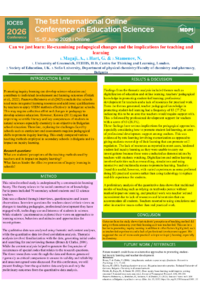
Promoting inquiry learning can develop science education and contribute to individual development and learning outcomes (Öztürk et al., 2022). Paunova-Hubenova et al. (2025) conclude that schools need more integrated learning resources and additional qualifications by teachers to apply STEM methods effectively in Bulgarian schools. This may require collective effort and changes in pedagogy to develop science education. However, Koleva (2011) argues that improving scientific literacy and key competences of students in natural sciences especially chemistry is an objective in Bulgarian school education. Therefore, exploring the challenges faced by schools such as curriculum and assessments requires pedagogical shifts to promote inquiry learning. This study compared various teaching methods employed in secondary schools in Bulgaria and its impact on inquiry learning.
Research questions:
What are students’ perceptions of the teaching methods used by teachers and its impact on inquiry learning?
What factors hinder the effective promotion of inquiry learning in schools?
Methodology
This mixed-method research is underpinned by a constructivist learning theory. Data was collected through interviews, questionnaires and lesson observations. The qualitative data was analyzed using thematic analysis and a correlation analysis for the quantitative data.
Results:
The outcomes from the qualitative data identified barriers to implementing scientific inquiry in the classrooms. They included a lack of teacher pedagogical knowledge and promoting student-led learning, tailored professional development and a lack of resources for practical work. A preliminary analysis of the quantitative data shows that traditional modes of teaching persist without marked impact on learning, and practical work was inconsistent and teacher-led.
Conclusion
The outcome from this study has informed pedagogical approaches and interventions by providing training opportunities for cost-effective micro-scale practical chemistry. However, we also suggest that teachers would benefit from enhanced pedagogical support through professional development and knowledge exchange practices.
Keywords
Inquiry learning
pedagogy
constructivist
professional development
Poster
Poster AM.pdf
Cost-Effective Authenticity: Generative AI as a Solution to Copyright and Environment Constraints in Vietnamese EFL Classes
Supporting Teachers in Crisis Contexts: INGO Interventions in Education and Health in Afghanistan (2020–2025)