Event submissions
Published
This submission belongs to the session S6. Teacher Education of the event The 1st International Online Conference on Education Sciences
Published date
10 Jun, 2026
Academic Editor
'%3e%3cpath%20d='M12.6657%2010.9104C12.4185%2010.325%2012.0599%209.79327%2011.6097%209.34482C11.1609%208.89508%2010.6293%208.5365%2010.0442%208.28888C10.0389%208.28626%2010.0337%208.28495%2010.0285%208.28233C10.8446%207.69279%2011.3752%206.73249%2011.3752%205.64904C11.3752%203.8542%209.92103%202.39999%208.1262%202.39999C6.33136%202.39999%204.87715%203.8542%204.87715%205.64904C4.87715%206.73249%205.40774%207.69279%206.22393%208.28364C6.21869%208.28626%206.21345%208.28757%206.20821%208.29019C5.62129%208.5378%205.09463%208.89284%204.64265%209.34613C4.1929%209.79493%203.83432%2010.3266%203.58671%2010.9117C3.34345%2011.4845%203.21226%2012.0987%203.20023%2012.7209C3.19988%2012.7349%203.20233%2012.7488%203.20744%2012.7619C3.21255%2012.7749%203.22022%2012.7867%203.22998%2012.7968C3.23975%2012.8068%203.25142%2012.8147%203.26431%2012.8202C3.2772%2012.8256%203.29105%2012.8284%203.30504%2012.8284H4.09109C4.14874%2012.8284%204.19459%2012.7825%204.1959%2012.7262C4.2221%2011.7148%204.62823%2010.7676%205.34617%2010.0497C6.08899%209.30683%207.0755%208.89808%208.1262%208.89808C9.17689%208.89808%2010.1634%209.30683%2010.9062%2010.0497C11.6242%2010.7676%2012.0303%2011.7148%2012.0565%2012.7262C12.0578%2012.7838%2012.1037%2012.8284%2012.1613%2012.8284H12.9474C12.9613%2012.8284%2012.9752%2012.8256%2012.9881%2012.8202C13.001%2012.8147%2013.0126%2012.8068%2013.0224%2012.7968C13.0322%2012.7867%2013.0398%2012.7749%2013.0449%2012.7619C13.0501%2012.7488%2013.0525%2012.7349%2013.0522%2012.7209C13.0391%2012.0947%2012.9094%2011.4855%2012.6657%2010.9104ZM8.1262%207.9024C7.52486%207.9024%206.9589%207.6679%206.53312%207.24211C6.10733%206.81633%205.87283%206.25037%205.87283%205.64904C5.87283%205.0477%206.10733%204.48174%206.53312%204.05596C6.9589%203.63018%207.52486%203.39567%208.1262%203.39567C8.72753%203.39567%209.29349%203.63018%209.71927%204.05596C10.1451%204.48174%2010.3796%205.0477%2010.3796%205.64904C10.3796%206.25037%2010.1451%206.81633%209.71927%207.24211C9.29349%207.6679%208.72753%207.9024%208.1262%207.9024Z'%20fill='%235D1EE1'/%3e%3c/g%3e%3c/svg%3e) Federico Corni
Federico CorniCitation
SANATAN DAS, KRITI RANJAN SAHU, Reframing the Concept of Gravity in Teacher Education: Bridging Vedic and Classical Sanskrit Insights with Newtonian and Quantum Theories, in Proceedings of The 1st International Online Conference on Education Sciences, 15 June–17 June 2026, MDPI: Basel, Switzerland
Share
Email
Facebook
Twitter
LinkedIn
Reframing the Concept of Gravity in Teacher Education: Bridging Vedic and Classical Sanskrit Insights with Newtonian and Quantum Theories
'%3e%3cpath%20d='M12.6647%2010.9104C12.4176%2010.325%2012.0589%209.7933%2011.6088%209.34485C11.16%208.89511%2010.6283%208.53653%2010.0432%208.28891C10.038%208.28629%2010.0327%208.28498%2010.0275%208.28236C10.8437%207.69282%2011.3743%206.73252%2011.3743%205.64907C11.3743%203.85423%209.92005%202.40002%208.12522%202.40002C6.33038%202.40002%204.87618%203.85423%204.87618%205.64907C4.87618%206.73252%205.40677%207.69282%206.22296%208.28367C6.21772%208.28629%206.21248%208.2876%206.20724%208.29022C5.62031%208.53783%205.09365%208.89287%204.64167%209.34616C4.19192%209.79496%203.83334%2010.3266%203.58573%2010.9117C3.34247%2011.4846%203.21128%2012.0987%203.19925%2012.721C3.1989%2012.735%203.20135%2012.7489%203.20646%2012.7619C3.21157%2012.7749%203.21924%2012.7868%203.22901%2012.7968C3.23877%2012.8068%203.25045%2012.8148%203.26334%2012.8202C3.27623%2012.8256%203.29007%2012.8284%203.30406%2012.8284H4.09012C4.14776%2012.8284%204.19362%2012.7825%204.19493%2012.7262C4.22113%2011.7148%204.62726%2010.7676%205.34519%2010.0497C6.08802%209.30686%207.07452%208.89811%208.12522%208.89811C9.17592%208.89811%2010.1624%209.30686%2010.9052%2010.0497C11.6232%2010.7676%2012.0293%2011.7148%2012.0555%2012.7262C12.0568%2012.7839%2012.1027%2012.8284%2012.1603%2012.8284H12.9464C12.9604%2012.8284%2012.9742%2012.8256%2012.9871%2012.8202C13%2012.8148%2013.0117%2012.8068%2013.0214%2012.7968C13.0312%2012.7868%2013.0389%2012.7749%2013.044%2012.7619C13.0491%2012.7489%2013.0515%2012.735%2013.0512%2012.721C13.0381%2012.0947%2012.9084%2011.4856%2012.6647%2010.9104ZM8.12522%207.90243C7.52388%207.90243%206.95792%207.66793%206.53214%207.24215C6.10636%206.81636%205.87185%206.2504%205.87185%205.64907C5.87185%205.04773%206.10636%204.48177%206.53214%204.05599C6.95792%203.63021%207.52388%203.3957%208.12522%203.3957C8.72655%203.3957%209.29252%203.63021%209.7183%204.05599C10.1441%204.48177%2010.3786%205.04773%2010.3786%205.64907C10.3786%206.2504%2010.1441%206.81636%209.7183%207.24215C9.29252%207.66793%208.72655%207.90243%208.12522%207.90243Z'%20fill='%235D1EE1'/%3e%3c/g%3e%3c/svg%3e)
SANATAN DAS 1
KRITI RANJAN SAHU 2
1. Department of Sanskrit, Bhatter College, Dantan(Autonomous), Dantan, Paschim Medinipur, West Bengal, 721426, India, India
2. Department of Physics, Bhatter College, Dantan(Autonomous), Dantan, Paschim Medinipur, West Bengal, 721426, India, India
Abstract
Introduction:
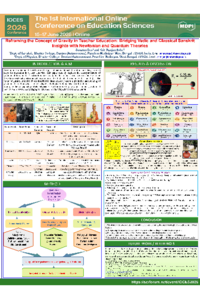
Re-examining fundamental scientific ideas through indigenous intellectual traditions provides significant scope for innovation in teacher education. This paper critically explores the conceptualization of gravitational force in the Sanskrit literature, tracing its development from Vedic cosmology in the Rigveda to systematic astronomical discussions in the Siddhanta Shiromani by Bhāskara II [1]. The notion of gurutva (attractive force) described in these sources presents a qualitative understanding of gravitational attraction, which may be pedagogically aligned with later scientific formulations.
Methods:
This study employs qualitative textual analysis and comparative hermeneutics. Primary Sanskrit sources were examined alongside foundational works of modern physics, including Philosophiæ Naturalis Principia Mathematica by Isaac Newton (1687) and the General Theory of Relativity proposed by Albert Einstein (1915). Conceptual correspondences were analyzed within a teacher education framework to evaluate their curricular and epistemological relevance for pre-service and in-service teacher training.
Results and Discussion:
The findings indicate that classical Sanskrit scholars articulated a reasoned qualitative account of the Earth’s attractive property and spherical structure. Although lacking mathematical formalization comparable to Newton’s inverse-square law (Newton, 1687) [2], these interpretations reflect an early awareness of centripetal attraction. Einstein’s relativistic reconceptualization of gravity as spacetime curvature further broadens the comparative dialogue. Integrating these historical–scientific perspectives into teacher education promotes interdisciplinary engagement, strengthens epistemological reflection, and supports culturally responsive science teaching.
Conclusions:
Incorporating Sanskrit perspectives on gravitational thought into teacher education enriches science curricula by situating modern physics within a broader global intellectual history. Bridging insights from Vedic and classical traditions with Newtonian mechanics and emerging quantum gravity discourse fosters reflective, inclusive, and conceptually integrated science pedagogy.
References
[1] Bhāskarācārya II. (12th century). Siddhāntaśiromaṇi.
[2] Newton, I. (1687) Philosophiæ Naturalis Principia Mathematica.
Keywords
Teacher Education
Gravitational Force
Sanskrit Astronomy
Indigenous Knowledge Systems
Science Pedagogy.
Poster
Poster_Das & Sahu_IOCES 2026.pdf
Supporting Teachers in Crisis Contexts: INGO Interventions in Education and Health in Afghanistan (2020–2025)
Teachers’ Socioemotional Competence in Continuous Professional Development: Insights from the Recent Literature