Event submissions
Published
This submission belongs to the session S6. Teacher Education of the event The 1st International Online Conference on Education Sciences
Published date
10 Jun, 2026
Academic Editor
'%3e%3cpath%20d='M12.6657%2010.9104C12.4185%2010.325%2012.0599%209.79327%2011.6097%209.34482C11.1609%208.89508%2010.6293%208.5365%2010.0442%208.28888C10.0389%208.28626%2010.0337%208.28495%2010.0285%208.28233C10.8446%207.69279%2011.3752%206.73249%2011.3752%205.64904C11.3752%203.8542%209.92103%202.39999%208.1262%202.39999C6.33136%202.39999%204.87715%203.8542%204.87715%205.64904C4.87715%206.73249%205.40774%207.69279%206.22393%208.28364C6.21869%208.28626%206.21345%208.28757%206.20821%208.29019C5.62129%208.5378%205.09463%208.89284%204.64265%209.34613C4.1929%209.79493%203.83432%2010.3266%203.58671%2010.9117C3.34345%2011.4845%203.21226%2012.0987%203.20023%2012.7209C3.19988%2012.7349%203.20233%2012.7488%203.20744%2012.7619C3.21255%2012.7749%203.22022%2012.7867%203.22998%2012.7968C3.23975%2012.8068%203.25142%2012.8147%203.26431%2012.8202C3.2772%2012.8256%203.29105%2012.8284%203.30504%2012.8284H4.09109C4.14874%2012.8284%204.19459%2012.7825%204.1959%2012.7262C4.2221%2011.7148%204.62823%2010.7676%205.34617%2010.0497C6.08899%209.30683%207.0755%208.89808%208.1262%208.89808C9.17689%208.89808%2010.1634%209.30683%2010.9062%2010.0497C11.6242%2010.7676%2012.0303%2011.7148%2012.0565%2012.7262C12.0578%2012.7838%2012.1037%2012.8284%2012.1613%2012.8284H12.9474C12.9613%2012.8284%2012.9752%2012.8256%2012.9881%2012.8202C13.001%2012.8147%2013.0126%2012.8068%2013.0224%2012.7968C13.0322%2012.7867%2013.0398%2012.7749%2013.0449%2012.7619C13.0501%2012.7488%2013.0525%2012.7349%2013.0522%2012.7209C13.0391%2012.0947%2012.9094%2011.4855%2012.6657%2010.9104ZM8.1262%207.9024C7.52486%207.9024%206.9589%207.6679%206.53312%207.24211C6.10733%206.81633%205.87283%206.25037%205.87283%205.64904C5.87283%205.0477%206.10733%204.48174%206.53312%204.05596C6.9589%203.63018%207.52486%203.39567%208.1262%203.39567C8.72753%203.39567%209.29349%203.63018%209.71927%204.05596C10.1451%204.48174%2010.3796%205.0477%2010.3796%205.64904C10.3796%206.25037%2010.1451%206.81633%209.71927%207.24211C9.29349%207.6679%208.72753%207.9024%208.1262%207.9024Z'%20fill='%235D1EE1'/%3e%3c/g%3e%3c/svg%3e) Federico Corni
Federico CorniCitation
Daniela Semião, Luis Tinoca, Maria João Mogarro, Rethinking Teacher Professional Development for Inclusive Practice: A Collaborative Design Approach, in Proceedings of The 1st International Online Conference on Education Sciences, 15 June–17 June 2026, MDPI: Basel, Switzerland
Share
Email
Facebook
Twitter
LinkedIn
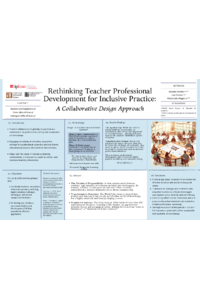
Rethinking Teacher Professional Development for Inclusive Practice: A Collaborative Design Approach

Daniela Semião 1,2

Luis Tinoca 2,3
'%3e%3cpath%20d='M12.6647%2010.9104C12.4176%2010.325%2012.0589%209.7933%2011.6088%209.34485C11.16%208.89511%2010.6283%208.53653%2010.0432%208.28891C10.038%208.28629%2010.0327%208.28498%2010.0275%208.28236C10.8437%207.69282%2011.3743%206.73252%2011.3743%205.64907C11.3743%203.85423%209.92005%202.40002%208.12522%202.40002C6.33038%202.40002%204.87618%203.85423%204.87618%205.64907C4.87618%206.73252%205.40677%207.69282%206.22296%208.28367C6.21772%208.28629%206.21248%208.2876%206.20724%208.29022C5.62031%208.53783%205.09365%208.89287%204.64167%209.34616C4.19192%209.79496%203.83334%2010.3266%203.58573%2010.9117C3.34247%2011.4846%203.21128%2012.0987%203.19925%2012.721C3.1989%2012.735%203.20135%2012.7489%203.20646%2012.7619C3.21157%2012.7749%203.21924%2012.7868%203.22901%2012.7968C3.23877%2012.8068%203.25045%2012.8148%203.26334%2012.8202C3.27623%2012.8256%203.29007%2012.8284%203.30406%2012.8284H4.09012C4.14776%2012.8284%204.19362%2012.7825%204.19493%2012.7262C4.22113%2011.7148%204.62726%2010.7676%205.34519%2010.0497C6.08802%209.30686%207.07452%208.89811%208.12522%208.89811C9.17592%208.89811%2010.1624%209.30686%2010.9052%2010.0497C11.6232%2010.7676%2012.0293%2011.7148%2012.0555%2012.7262C12.0568%2012.7839%2012.1027%2012.8284%2012.1603%2012.8284H12.9464C12.9604%2012.8284%2012.9742%2012.8256%2012.9871%2012.8202C13%2012.8148%2013.0117%2012.8068%2013.0214%2012.7968C13.0312%2012.7868%2013.0389%2012.7749%2013.044%2012.7619C13.0491%2012.7489%2013.0515%2012.735%2013.0512%2012.721C13.0381%2012.0947%2012.9084%2011.4856%2012.6647%2010.9104ZM8.12522%207.90243C7.52388%207.90243%206.95792%207.66793%206.53214%207.24215C6.10636%206.81636%205.87185%206.2504%205.87185%205.64907C5.87185%205.04773%206.10636%204.48177%206.53214%204.05599C6.95792%203.63021%207.52388%203.3957%208.12522%203.3957C8.72655%203.3957%209.29252%203.63021%209.7183%204.05599C10.1441%204.48177%2010.3786%205.04773%2010.3786%205.64907C10.3786%206.2504%2010.1441%206.81636%209.7183%207.24215C9.29252%207.66793%208.72655%207.90243%208.12522%207.90243Z'%20fill='%235D1EE1'/%3e%3c/g%3e%3c/svg%3e)
Maria João Mogarro 2,3
1. Escola Superior de Educação da Lusofonia (IPLUSO), Lisbon, Portugal, Portugal
2. UIDEF - Unidade de Investigação e Desenvolvimento em Educação, Lisbon, Portugal
3. Institute of Education, University of Lisbon, Lisbon, Portugal, Portugal
Abstract
Collaborative work among teachers is widely recognized as a key factor for professional identity and sustainable school change. When teachers collectively engage in reflecting on practice, developing alternative pedagogical approaches, and responding to daily challenges, they strengthen their professional autonomy and capacity to transform educational processes into concrete interventions. This perspective aligns with the vision of schools as learning communities, encompassing cognitive, ethical, and relational dimensions of learning. This study aimed to identify teachers' conceptions of inclusive practices and to develop a professional development plan grounded in effective approaches. The research addressed the following: teachers' conceptions of inclusive practices; challenges and advantages associated with their implementation; and strategies for student engagement. A mixed-methods design was adopted: a World Café with 22 teachers generated data to inform a continuous professional development plan, later validated by 10 teachers. Content analysis revealed that, although inclusion is widely recognized as essential, its enactment is frequently framed as contingent upon external conditions, indicating a tendency to position inclusion outside teachers’ immediate sphere of agency. These findings expose a critical gap between inclusive values and pedagogical action, suggesting that professional development must explicitly address underlying beliefs about responsibility, efficacy, and student diversity. Moreover, the results indicate that structured collaborative spaces can operate as transformative arenas where teachers not only exchange strategies but also critically interrogate assumptions, negotiate meanings, and reconstruct professional identities. The proposed plan integrates Differentiated Instruction and Universal Design for Learning as complementary, practice-oriented frameworks. Its positive evaluation (M = 3.9; SD = 0.51) suggests relevance and feasibility; however, its impact depends on sustained, context-sensitive implementation. The study further implies that effective professional development requires longitudinal engagement, distributed leadership, and organizational conditions that legitimize experimentation, risk-taking, and reflective inquiry. Ultimately, it reframes professional learning as a collective, inquiry-driven, and identity-forming process, central to fostering equitable and genuinely inclusive school cultures.
Keywords
Teacher Professional Development
Inclusive Practices
Student Participation
Professional Learning Communities
Poster
Poster IOCES_Semião et al..pdf
Teach One, Do One, Then Do It Again: Preparing a Practice-Ready Social Work Workforce Through Online Education
From Compliance to Reconfiguration: Reflective Writing and the Re-Education of Ethnic-Racial Relations in Pre-Service Teacher Formation at the Federal University of São Carlos (UFSCar), Brazil