Event submissions
Published
This submission belongs to the session S1. Insurance of the event The 1st International Online Conference on Risks
Published date
01 Jul, 2026
Academic Editor
'%3e%3cpath%20d='M12.6657%2010.9104C12.4185%2010.325%2012.0599%209.79327%2011.6097%209.34482C11.1609%208.89508%2010.6293%208.5365%2010.0442%208.28888C10.0389%208.28626%2010.0337%208.28495%2010.0285%208.28233C10.8446%207.69279%2011.3752%206.73249%2011.3752%205.64904C11.3752%203.8542%209.92103%202.39999%208.1262%202.39999C6.33136%202.39999%204.87715%203.8542%204.87715%205.64904C4.87715%206.73249%205.40774%207.69279%206.22393%208.28364C6.21869%208.28626%206.21345%208.28757%206.20821%208.29019C5.62129%208.5378%205.09463%208.89284%204.64265%209.34613C4.1929%209.79493%203.83432%2010.3266%203.58671%2010.9117C3.34345%2011.4845%203.21226%2012.0987%203.20023%2012.7209C3.19988%2012.7349%203.20233%2012.7488%203.20744%2012.7619C3.21255%2012.7749%203.22022%2012.7867%203.22998%2012.7968C3.23975%2012.8068%203.25142%2012.8147%203.26431%2012.8202C3.2772%2012.8256%203.29105%2012.8284%203.30504%2012.8284H4.09109C4.14874%2012.8284%204.19459%2012.7825%204.1959%2012.7262C4.2221%2011.7148%204.62823%2010.7676%205.34617%2010.0497C6.08899%209.30683%207.0755%208.89808%208.1262%208.89808C9.17689%208.89808%2010.1634%209.30683%2010.9062%2010.0497C11.6242%2010.7676%2012.0303%2011.7148%2012.0565%2012.7262C12.0578%2012.7838%2012.1037%2012.8284%2012.1613%2012.8284H12.9474C12.9613%2012.8284%2012.9752%2012.8256%2012.9881%2012.8202C13.001%2012.8147%2013.0126%2012.8068%2013.0224%2012.7968C13.0322%2012.7867%2013.0398%2012.7749%2013.0449%2012.7619C13.0501%2012.7488%2013.0525%2012.7349%2013.0522%2012.7209C13.0391%2012.0947%2012.9094%2011.4855%2012.6657%2010.9104ZM8.1262%207.9024C7.52486%207.9024%206.9589%207.6679%206.53312%207.24211C6.10733%206.81633%205.87283%206.25037%205.87283%205.64904C5.87283%205.0477%206.10733%204.48174%206.53312%204.05596C6.9589%203.63018%207.52486%203.39567%208.1262%203.39567C8.72753%203.39567%209.29349%203.63018%209.71927%204.05596C10.1451%204.48174%2010.3796%205.0477%2010.3796%205.64904C10.3796%206.25037%2010.1451%206.81633%209.71927%207.24211C9.29349%207.6679%208.72753%207.9024%208.1262%207.9024Z'%20fill='%235D1EE1'/%3e%3c/g%3e%3c/svg%3e) Annamaria Olivieri
Annamaria OlivieriCitation
Barathkumar Krishnan, From Engineering Risk to Insurance Decisions: A Risk-Based Premium Model for Energy Assets, in Proceedings of The 1st International Online Conference on Risks, 6 July–7 July 2026, MDPI: Basel, Switzerland
Share
Email
Facebook
Twitter
LinkedIn
From Engineering Risk to Insurance Decisions: A Risk-Based Premium Model for Energy Assets
'%3e%3cpath%20d='M12.6647%2010.9104C12.4176%2010.325%2012.0589%209.7933%2011.6088%209.34485C11.16%208.89511%2010.6283%208.53653%2010.0432%208.28891C10.038%208.28629%2010.0327%208.28498%2010.0275%208.28236C10.8437%207.69282%2011.3743%206.73252%2011.3743%205.64907C11.3743%203.85423%209.92005%202.40002%208.12522%202.40002C6.33038%202.40002%204.87618%203.85423%204.87618%205.64907C4.87618%206.73252%205.40677%207.69282%206.22296%208.28367C6.21772%208.28629%206.21248%208.2876%206.20724%208.29022C5.62031%208.53783%205.09365%208.89287%204.64167%209.34616C4.19192%209.79496%203.83334%2010.3266%203.58573%2010.9117C3.34247%2011.4846%203.21128%2012.0987%203.19925%2012.721C3.1989%2012.735%203.20135%2012.7489%203.20646%2012.7619C3.21157%2012.7749%203.21924%2012.7868%203.22901%2012.7968C3.23877%2012.8068%203.25045%2012.8148%203.26334%2012.8202C3.27623%2012.8256%203.29007%2012.8284%203.30406%2012.8284H4.09012C4.14776%2012.8284%204.19362%2012.7825%204.19493%2012.7262C4.22113%2011.7148%204.62726%2010.7676%205.34519%2010.0497C6.08802%209.30686%207.07452%208.89811%208.12522%208.89811C9.17592%208.89811%2010.1624%209.30686%2010.9052%2010.0497C11.6232%2010.7676%2012.0293%2011.7148%2012.0555%2012.7262C12.0568%2012.7839%2012.1027%2012.8284%2012.1603%2012.8284H12.9464C12.9604%2012.8284%2012.9742%2012.8256%2012.9871%2012.8202C13%2012.8148%2013.0117%2012.8068%2013.0214%2012.7968C13.0312%2012.7868%2013.0389%2012.7749%2013.044%2012.7619C13.0491%2012.7489%2013.0515%2012.735%2013.0512%2012.721C13.0381%2012.0947%2012.9084%2011.4856%2012.6647%2010.9104ZM8.12522%207.90243C7.52388%207.90243%206.95792%207.66793%206.53214%207.24215C6.10636%206.81636%205.87185%206.2504%205.87185%205.64907C5.87185%205.04773%206.10636%204.48177%206.53214%204.05599C6.95792%203.63021%207.52388%203.3957%208.12522%203.3957C8.72655%203.3957%209.29252%203.63021%209.7183%204.05599C10.1441%204.48177%2010.3786%205.04773%2010.3786%205.64907C10.3786%206.2504%2010.1441%206.81636%209.7183%207.24215C9.29252%207.66793%208.72655%207.90243%208.12522%207.90243Z'%20fill='%235D1EE1'/%3e%3c/g%3e%3c/svg%3e)
Barathkumar Krishnan 1
1. Asset Integrity & Process Safety (AIPS), Abu Dhabi National Oil Company (ADNOC), Abu Dhabi P.O. Box 898, United Arab Emirates, United Arab Emirates
Abstract
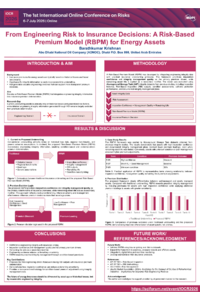
The energy sector depends on high-value, safety-critical assets where failures can result in severe human, environmental, and financial consequences. Although insurance provides financial risk transfer, current underwriting practices largely rely on historical loss data and regional benchmarks, often overlooking asset-specific integrity conditions and management effectiveness. Risk-Based Inspection (RBI) offers a structured engineering approach to quantify probability and consequence of failure at the asset level, yet its outputs are rarely integrated into insurance premium determination.
This study introduces a Risk-Based Premium Model (RBPM) framework that embeds RBI outputs and integrity management data directly into insurance pricing. The framework prioritizes inspection confidence and documented integrity management practices as primary premium drivers, with remaining asset life applied as a secondary modifier. Aboveground Storage Tank datasets from prior integrity studies, including inspection histories, condition assessments, and management plans, were used to test the model and compare premium outcomes across differing risk profiles.
Application of RBPM demonstrated clear differentiation between well-managed and poorly managed assets. Tanks with low remaining life but high inspection confidence and active integrity management plans were rated comparably to lower-risk assets, reflecting reduced uncertainty. Conversely, assets with unknown condition, limited inspection coverage, or absent management strategies attracted significant premium loadings. The model replaced generic actuarial assumptions with transparent, evidence-based engineering risk indicators.
RBPM establishes a direct link between integrity risk reduction and financial reward, promoting proactive asset management while reducing insurer uncertainty. By aligning engineering reliability with insurance economics, the framework enables fairer, condition-based premiums and incentivizes continuous integrity improvement. Future work includes integration with digital twins, real-time analytics, and standardized RBI–insurance protocols to further enhance risk-responsive underwriting.
Keywords
Risk-Based Premium Model
Risk-Based Inspection
Energy Assets
Insurance
Engineering Risk
Poster
From Engineering Risk to Insurance Decisions- A Risk-Based Premium Model (RBPM) for Energy Assets.pdf
CIRIS: A Multi-Project Risk Intelligence Framework for Operational Risk Mitigation and Supply Chain Resilience
Optimal Stochastic Control of Pension Asset Sustainability for Ghana’s Basic National Social Security Scheme