Event submissions
Published
This submission belongs to the session S8. Reactive/Smart Biomaterials of the event The 2nd International Online Conference on Functional Biomaterials
Published date
03 Jul, 2026
Academic Editor
'%3e%3cpath%20d='M12.6657%2010.9104C12.4185%2010.325%2012.0599%209.79327%2011.6097%209.34482C11.1609%208.89508%2010.6293%208.5365%2010.0442%208.28888C10.0389%208.28626%2010.0337%208.28495%2010.0285%208.28233C10.8446%207.69279%2011.3752%206.73249%2011.3752%205.64904C11.3752%203.8542%209.92103%202.39999%208.1262%202.39999C6.33136%202.39999%204.87715%203.8542%204.87715%205.64904C4.87715%206.73249%205.40774%207.69279%206.22393%208.28364C6.21869%208.28626%206.21345%208.28757%206.20821%208.29019C5.62129%208.5378%205.09463%208.89284%204.64265%209.34613C4.1929%209.79493%203.83432%2010.3266%203.58671%2010.9117C3.34345%2011.4845%203.21226%2012.0987%203.20023%2012.7209C3.19988%2012.7349%203.20233%2012.7488%203.20744%2012.7619C3.21255%2012.7749%203.22022%2012.7867%203.22998%2012.7968C3.23975%2012.8068%203.25142%2012.8147%203.26431%2012.8202C3.2772%2012.8256%203.29105%2012.8284%203.30504%2012.8284H4.09109C4.14874%2012.8284%204.19459%2012.7825%204.1959%2012.7262C4.2221%2011.7148%204.62823%2010.7676%205.34617%2010.0497C6.08899%209.30683%207.0755%208.89808%208.1262%208.89808C9.17689%208.89808%2010.1634%209.30683%2010.9062%2010.0497C11.6242%2010.7676%2012.0303%2011.7148%2012.0565%2012.7262C12.0578%2012.7838%2012.1037%2012.8284%2012.1613%2012.8284H12.9474C12.9613%2012.8284%2012.9752%2012.8256%2012.9881%2012.8202C13.001%2012.8147%2013.0126%2012.8068%2013.0224%2012.7968C13.0322%2012.7867%2013.0398%2012.7749%2013.0449%2012.7619C13.0501%2012.7488%2013.0525%2012.7349%2013.0522%2012.7209C13.0391%2012.0947%2012.9094%2011.4855%2012.6657%2010.9104ZM8.1262%207.9024C7.52486%207.9024%206.9589%207.6679%206.53312%207.24211C6.10733%206.81633%205.87283%206.25037%205.87283%205.64904C5.87283%205.0477%206.10733%204.48174%206.53312%204.05596C6.9589%203.63018%207.52486%203.39567%208.1262%203.39567C8.72753%203.39567%209.29349%203.63018%209.71927%204.05596C10.1451%204.48174%2010.3796%205.0477%2010.3796%205.64904C10.3796%206.25037%2010.1451%206.81633%209.71927%207.24211C9.29349%207.6679%208.72753%207.9024%208.1262%207.9024Z'%20fill='%235D1EE1'/%3e%3c/g%3e%3c/svg%3e) Serena Danti
Serena DantiCitation
sunita saha, Dharmesh Jinagal, Saroj Saroj, Akbar Ali, Debashish Paul, Sanjay Kumar Gupta, Tatini Rakshit, Suchetan Pal, Glucose-Responsive G-quartet/Protein hydrogels for Smart Insulin Delivery, in Proceedings of The 2nd International Online Conference on Functional Biomaterials, 8 July–10 July 2026, MDPI: Basel, Switzerland
Share
Email
Facebook
Twitter
LinkedIn
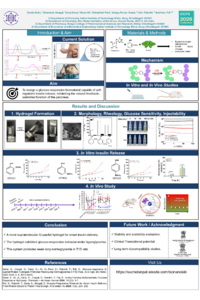
Glucose-Responsive G-quartet/Protein hydrogels for Smart Insulin Delivery
'%3e%3cpath%20d='M12.6647%2010.9104C12.4176%2010.325%2012.0589%209.7933%2011.6088%209.34485C11.16%208.89511%2010.6283%208.53653%2010.0432%208.28891C10.038%208.28629%2010.0327%208.28498%2010.0275%208.28236C10.8437%207.69282%2011.3743%206.73252%2011.3743%205.64907C11.3743%203.85423%209.92005%202.40002%208.12522%202.40002C6.33038%202.40002%204.87618%203.85423%204.87618%205.64907C4.87618%206.73252%205.40677%207.69282%206.22296%208.28367C6.21772%208.28629%206.21248%208.2876%206.20724%208.29022C5.62031%208.53783%205.09365%208.89287%204.64167%209.34616C4.19192%209.79496%203.83334%2010.3266%203.58573%2010.9117C3.34247%2011.4846%203.21128%2012.0987%203.19925%2012.721C3.1989%2012.735%203.20135%2012.7489%203.20646%2012.7619C3.21157%2012.7749%203.21924%2012.7868%203.22901%2012.7968C3.23877%2012.8068%203.25045%2012.8148%203.26334%2012.8202C3.27623%2012.8256%203.29007%2012.8284%203.30406%2012.8284H4.09012C4.14776%2012.8284%204.19362%2012.7825%204.19493%2012.7262C4.22113%2011.7148%204.62726%2010.7676%205.34519%2010.0497C6.08802%209.30686%207.07452%208.89811%208.12522%208.89811C9.17592%208.89811%2010.1624%209.30686%2010.9052%2010.0497C11.6232%2010.7676%2012.0293%2011.7148%2012.0555%2012.7262C12.0568%2012.7839%2012.1027%2012.8284%2012.1603%2012.8284H12.9464C12.9604%2012.8284%2012.9742%2012.8256%2012.9871%2012.8202C13%2012.8148%2013.0117%2012.8068%2013.0214%2012.7968C13.0312%2012.7868%2013.0389%2012.7749%2013.044%2012.7619C13.0491%2012.7489%2013.0515%2012.735%2013.0512%2012.721C13.0381%2012.0947%2012.9084%2011.4856%2012.6647%2010.9104ZM8.12522%207.90243C7.52388%207.90243%206.95792%207.66793%206.53214%207.24215C6.10636%206.81636%205.87185%206.2504%205.87185%205.64907C5.87185%205.04773%206.10636%204.48177%206.53214%204.05599C6.95792%203.63021%207.52388%203.3957%208.12522%203.3957C8.72655%203.3957%209.29252%203.63021%209.7183%204.05599C10.1441%204.48177%2010.3786%205.04773%2010.3786%205.64907C10.3786%206.2504%2010.1441%206.81636%209.7183%207.24215C9.29252%207.66793%208.72655%207.90243%208.12522%207.90243Z'%20fill='%235D1EE1'/%3e%3c/g%3e%3c/svg%3e)
sunita saha 1
Dharmesh Jinagal 1
Saroj Saroj 2
Akbar Ali 1
Debashish Paul 2
Sanjay Kumar Gupta 3
Tatini Rakshit 2
Suchetan Pal 1
1. Indian Institute of Technology Bhilai, Chhattisgarh, India, India
2. Shiv Nadar Institution of Eminence, Greater Noida, 201314, UP, India., India
3. Department of Pharmacy, Rungta College of Pharmaceutical Sciences and Research, Bhilai 490024, Chhattisgarh, CG, India., India
Abstract
The rising global burden of diabetes necessitates the development of advanced therapeutic strategies beyond conventional insulin therapies, which often fail to achieve precise glycemic control and are associated with pain and inconvenience to patients. This limitation is predominantly observed in Type 1 diabetes, an autoimmune disease that destroys insulin-producing β cells, leading to a lifelong dependence onexogenous insulin administration. These challenges underscore the critical need for glucose-responsive systems capable of autonomous and precise insulin delivery. In an effort to address this challenge, we have designed an injectable, glucose-responsive G-quartet/protein hydrogel (GPHG) engineered via supramolecular self-assembly and dynamic iminoboronate chemistry for smart insulin delivery. The system involves a supramolecular interaction (such as pi-po interaction) as well as dynamic iminoboronate ester chemistry to enable selective insulin release under hyperglycemic conditions, as evidenced by a insulin release assay/self-regulated pulsatile release pattern under cyclic glucose concentration. GPHGs demonstrate tunable viscoelasticity ranging from 10 to 50 kPa depending on the phenyl boronic acid-based crosslinkers. The developed system exhibits injectability, shear thinning behavior, non-cytotoxicity, mechanical flexibility, and controlled insulin release under physiologically relevant conditions. Furthermore, in vivo studies and histological investigations demonstrate effective glycemic regulation without adverse effects, highlighting its potential as a minimally invasive, translational platform for smart insulin delivery.
Keywords
Hydrogel
Diabetes
Glucose-Responsive Insulin
Smart Biomaterial
Poster
iocfb 2026.pdf
Top-Down and Bottom-Up Biofabrication of Biomimetic Cartilage Scaffolds for Regenerative Applications
Multiscale Design of Piezoelectric PLA/BaTiO₃ Composites for Electrically Active Bone Grafts