
Agronomy Webinar | Main Innovations in the Revised FAO56 Guidelines for Computing Crop Water Requirements
the chair
Dear Colleagues,
It is my pleasure to welcome you to this webinar organized by Agronomy, dedicated to the “Main Innovations in the Revised FAO Irrigation and Drainage Paper 56 Guidelines for Computing Crop Water Requirements”.
Over recent decades, FAO56 has become a worldwide reference for estimating crop evapotranspiration and computing crop water requirements under a wide range of conditions. At the same time, major advances in scientific knowledge, data availability, and modelling capabilities, together with increasing pressure from climate variability and water scarcity, have made an update necessary. The revised guidelines respond to this context by integrating significant scientific and technical developments, including improved procedures for meteorological data assessment and correction, expanded crop coefficient information, updated approaches for estimating actual crop evapotranspiration, and the use of new data sources such as gridded weather datasets and remote sensing.
This webinar brings together researchers and practitioners who are investigating evapotranspiration, crop water requirements, and agricultural water management to discuss the main innovations introduced in the revised guidelines, their scientific basis, and their practical implications. By linking methodological developments with field applications, the webinar contributions will help highlight how these advances can support more accurate water management decisions and the more efficient use of agricultural water resources.
We hope this session will be both useful and stimulating for your research and professional activities, and we warmly invite you to join the discussion.
Time: 10:00 am (CEST) | 4:00 pm (CST Asia)
Meet Our Chair
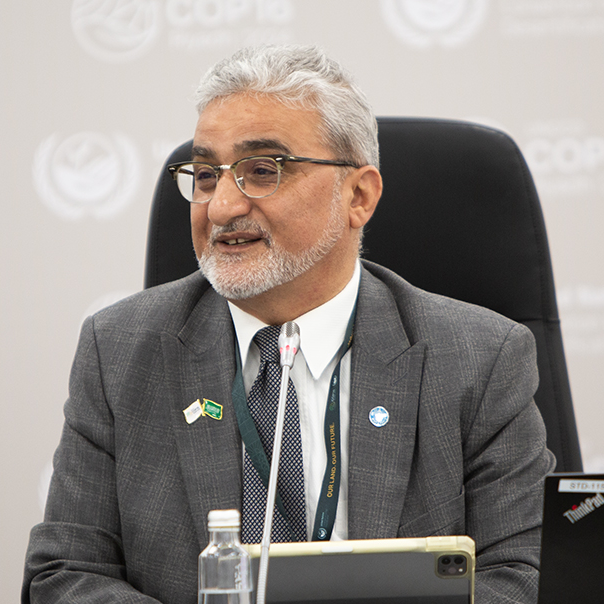
Land and Water Division FAO, Italy;Maher Salman has nearly 30 years of experience in international assistance and technical and policy development in agricultural water resource management that geographically extends to all regions. Currently, he is the Senior Land and Water Officer and the Team Lead of Agricultural Water Management at the UN Food and Agriculture Organization (FAO), leading programs and engagements on irrigation modernization, crop water productivity, water use efficiency, transboundary water management, water policy, natural resource-driven fragility, and integrated drought management. He leads the transitioning into the digital era of FAO’s tools and norms in Agricultural Water Management. Mr Salman also acts as the Coordinator of Adaptation Fund at FAO as well as the focal point to a number of organizations, including ICID, UNCCD, and multilateral development banks. He received his graduate studies from Syria and the UK in civil and water engineering.
Meet Our Speakers
University of Idaho, USA, Retired;Richard Allen has 40 years experience in ET measurement and calculation, remote sensing and irrigation technology. He has been a pioneer in developing surface energy balance determination by satellite and is codeveloper of the METRIC, eeFLUX and eeMETRIC Landsat-based processing systems. Allen has applied METRIC to a wide range of applications, including thirty US States, eight countries and within the OpenET system. Allen has taught university courses and training workshops on irrigation design, hydraulics, hydrology, ET, crop coefficients, micrometeorology and surface energy balance. He has published more than 170 refereed papers and has an H-index of 81. He was lead author of the 1998 edition of the FAO56 publication on Crop Evapotranspiration.
University of Lisbon, Portugal;Paula Paredes, Assistant Professor, of Agricultural Engineering at the School of Agriculture, University of Lisbon, with a solid scientific background in crop growth and irrigation requirements modelling. Has been conducting research on crop water requirements, soil water modelling, and irrigation scheduling using real-time data and weather forecasts. She has also been working on crop growth modelling, particularly the FAO AquaCrop model at field scale, and water productivity. She has contributed to the development of the soil water balance model SIMDualKc, which adopts the dual crop coefficient approach. This model is used operationally and for research by various institutions in several countries, and has been the subject of numerous publications focusing on crop water use, irrigation scheduling, transpiration, yield, water productivity, and the impact of water stress and salinity. Her work integrates mainly field experimentation with computational modelling. She has also been an external evaluator of project proposals and an Associate editor of the three ISI journals.
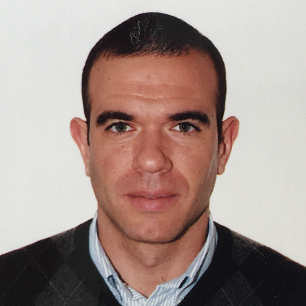
Spanish National Research Council (CSIC), Desertification Research Centre (CIDE), CSIC-UV-GVA, Spain;Dr. Ramón López-Urrea (PhD in Agricultural Engineering, UCLM, Spain, 2004). He is currently a Research Scientist with the Desertification Research Center (CIDE), CSIC-UV-GVA, in Valencia, Spain. His expertise (27-year career) includes determining crop evapotranspiration, optimization of irrigation scheduling and improving water use efficiency and productivity in farming systems. Recently, he has focused on remote sensing-based phenotyping methods to asses crop ET, biophysical variables and water status of wine grapes. During 2015-2017, he was Director of two Spanish research and extension institutions (ITAP and FUNDESCAM). He has authored 68 papers in peer-reviewed journals with impact factor (indexed in JCR). He has been an Associate Editor for the scientific journal Irrigation Science since July 2018 (Editorial Contribution Award 2025). He is an evaluator of research proposals for various national (Spanish Research Agency) and international organizations and a Reference for the Fulbright Specialist Program. He is currently responsible for the Water and Crops research group.


In this section, you will find the recordings of this webinar to watch, re-watch and share with your colleagues!
The “Revised FAO56 Guidelines for Computing Crop Water Requirements” webinar provided an opportunity to reflect on the main scientific developments introduced in the FAO56-REV publication, through valuable contributions from its co-authors. It was further enriched with a fruitful discussion that highlighted how these innovations reinforce the scientific basis for estimating crop water requirements, while addressing current challenges in agricultural water management, particularly regarding data quality, remote sensing applications, and crop-specific considerations.
Edited by Anita Ierna and Paula Paredes