Animals Webinar | Primatology and the Achievement of the UN 2030 Sustainable Development Goals
the chair
2nd Animals Webinar
Primatology and the Achievement of the UN 2030 Sustainable Development Goals
Dear Colleagues,
The 17 UN 2030 Sustainable Development Goals (SDGs) are a call to action for an integrated approach and concrete measures to pursue a necessary global shift to a new social, economic, and environmental paradigm (https://sdgs.un.org/goals). Developing countries, where most non-human primate species’ geographic range is found, are facing significant socioeconomic challenges with disruptive consequences on the environment, leading to conservation issues such as habitat loss, illegal harvesting and hunting, human–wildlife conflict, and invasive species, to name a few. Long-term research is known for its importance in the study of long-living primate species and providing information for the implementation of conservation plans. In addition, it offers stable and continuous collaborations with local governments and public and private institutions, as well as economic growth, support, and empowerment of local communities.
As primatologists working on species inhabiting developing countries, we are facing social and ethical responsibilities acknowledging the urgent need of socioeconomic development as the viable way to achieve conservation goals. In response to the need to identify and share effective strategies and metrics for a global, balanced, and inclusive development, you are invited to join this Webinar which aims to highlight the instrumental role that long-term research studies on primates’ biology and conservation have in promoting sustainable growth.
Date: 14 April 2022
Time: 10:00 pm CEST | 4:00 pm EDT | 4:00 am CST Asia
Webinar ID: 836 4442 6502
Webinar Secretariat: animals.webinar@mdpi.com
Meet Our Speakers
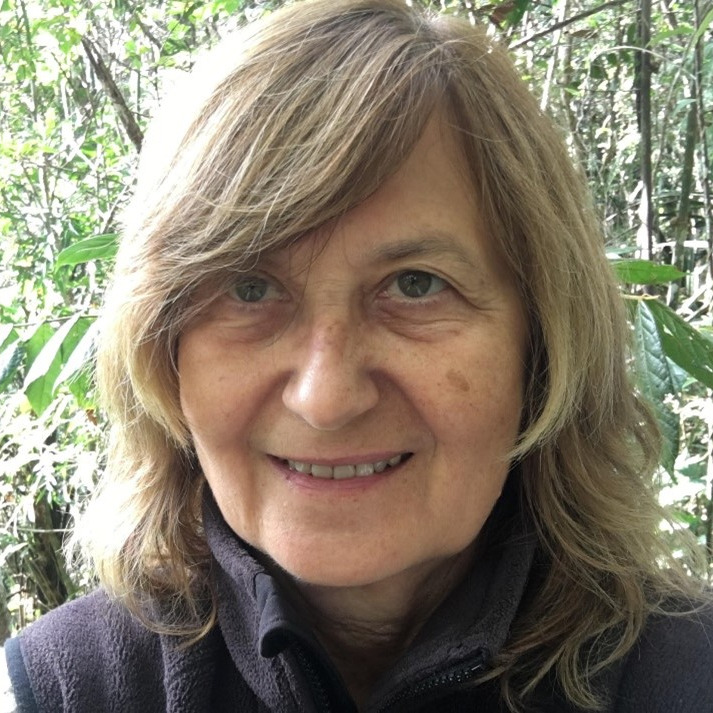
Department of Life Sciences and Systems Biology, Università degli Studi di Torino, Torino, Italy;Cristina Giacoma is a full professor of Zoology at Torino University in Italy, where she coordinates the international PhD program “Sustainable development and cooperation” involving the University of Antananarivo in Madagascar and the Italian Universities of Torino and Piemonte Orientale - https://phdsustainability.campusnet.unito.it/do/home.pl. She is also the president of the Italian zoological Society - http://www.uzionlus.it/. Research areas: Conservation biology of Amphibians, Reptiles, Cetaceans and Primates, with focus on the impact of human activities on their welfare and survival. She coordinated many European cooperation projects in Madagascar and Comoros. At the moment she coordinates the “Research field station of Maromizaha in Madagascar” where she studies the potential of field stations in leading local conservation activities in one of the most critically endangered environments, the rainforest, together with promoting economic and social development by actively involving local communities. She published more than 200 scientific papers.

Department of Anthropology, Washington University in St. Louis, MO, USA;Giovanna Bonadonna is a primatologist specializing in behavioral ecology and conservation; her current research focuses on the effects of fragmentation and habitat degradation on the behavioral ecology, population genetics, and health of wild lemur populations in Madagascar. Giovanna Bonadonna's research uses a multidisciplinary approach that includes spatial and behavioral ecology, bioacoustics, and population genetics to address questions regarding primates' social and mating systems and provide data to plan conservation efforts. At Washington University, she is working with Drs. Krista Milich and Emily Wroblesky to study the behavior, ecology, genetic diversity, and health of critically endangered species of lemurs living in rainforests affected by different levels of fragmentation and ecological disturbance in eastern Madagascar. Dr. Bonadonna previous research work focused on the behavioral, social, and ecological factors regulating inter and intragroup dynamics of another critically endangered lemur: the indri. Because of her experience studying critically endangered species in one of the hottest spots for biodiversity, she is dedicated to conserving and protecting species that are disappearing mainly because of habitat loss.

On Thursday 14 April 2022, MDPI and the Journal Animals organized their 2nd webinar, entitled “Primatology and the Achievement of the UN 2030 Sustainable Development Goals”
The introduction was held by the Chairs of the webinar, Prof. Dr. Cristina Giacoma from the Department of Life Sciences and Systems Biology, Università degli Studi di Torino, Torino, Italy and Dr. Giovanna Bonadonna from the Department of Anthropology, Washington University in St. Louis, MO, USA.
The first speaker to kick off this webinar was Prof. Dr. Patricia Wright from the Department of Anthropology, University Stony Brook, NY, USA. Her presentation was entitled “Extinction and Sustainability in Madagascar: Lemurs, Reforestation and a Sustainable Economy”. Dr. Wright has spearheaded the Centre ValBio, an award-winning “green, sustainable” research station on the edge of the rainforest with molecular and infectious disease laboratories, high speed internet and modern facilities.
The second presentation with the title "Primate Conservation Efforts in Ecuador, Combining Research, Education and Capacity Building to Empower Local Involvement" was held by Prof. Dr. Stella de la Torre from the School of Biology, Universidad San Francisco de Quito, Quito, Ecuador. Her research is mainly focused on the following species: Cebuella pygmaea in Ecuadorian Amazonia, and Alouatta palliata and Cebus aequatorialis in western Ecuador.
The third unexcepted speaker who joined the webinar was Prof. Dr. Jonah Ratsimbazafy from the Department of Paleontology and Biological Anthropology, University of Antananarivo, Madagascar. Prof. Ratsimbazafy discussed how the Madagascar Lemurs Portal will contribute to the UN 2030 SDGs. He is the co-vice chair, Madagascar section, International Union for Conservation of Nature, Species Survival Commission (IUCN/SSC) Primate Specialist Group; the director of Houston Zoo, Madagascar Program; and the president of the Madagascar Primate Research Group.
The last presentation with the title "The Contribution of Primate Tourism Toward SDG Achievement in Indonesia" was held by Prof. Dr. Jatna Supriatna from the Department of Biology Faculty of Mathematics and Science (Conservation Biology), Climate Change University, Depok, Indonesia. Aside from serving as Senior lecturer at the Biology Dept., Director of Biodiversity and Conservation Studies, Coordinator of Graduate Program on Conservation Biology of the University of Indonesia, he also became a chief editor of Tropical Biodiversity since 1992, Editor of Asia Primate Journal (2008), Board of editor of the International Journal of Wildlife Policy and Law, board of editor of Tropical Ecology, Consulting editor of Biosphere Conservation and board of Advisor of Earthwatch Institute (2002).
The presentations were followed by a Q&A and a discussion, moderated by the Chairs. The webinar was offered via Zoom and required registration to attend. The full recording can be found here on Sciforum website. In order to stay updated on the next webinars on Animals, be sure to sign up for our newsletter by clicking on “Subscribe” at the top of the page.
Primatology and the Achievement of the UN 2030 Sustainable Development Goals
Guest Editors: Prof. Dr. Christina Giacoma & Dr. Giovanna Bonadonna
Deadline for manuscript submissions: 15 November 2022