
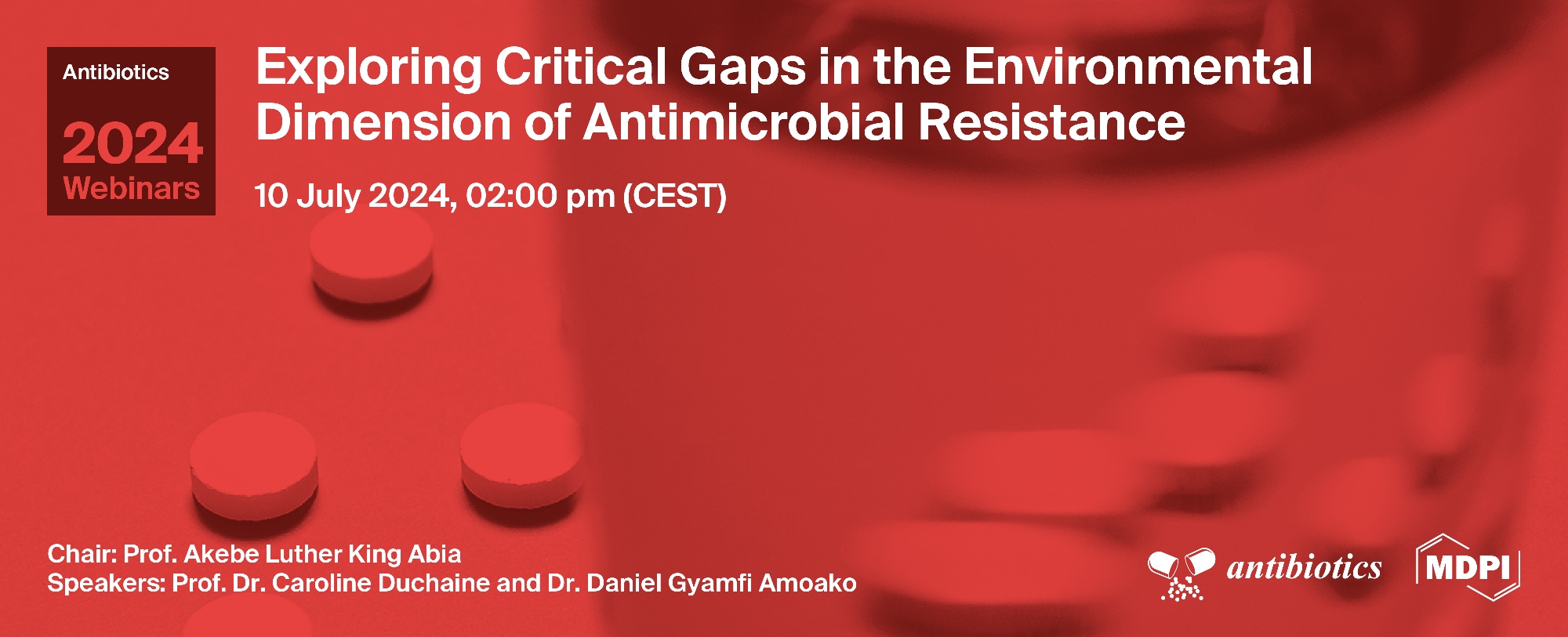
Exploring Critical Gaps in the Environmental Dimension of Antimicrobial Resistance
the chair
4th Antibiotics Webinar
Exploring Critical Gaps in the Environmental Dimension of Antimicrobial Resistance
The importance of the One Health approach in tackling health issues globally cannot be overemphasized. However, while the implementation of this approach has been heavily geared toward humans and animals, the environmental sector still has not received the same attention. This is particularly true when considering antimicrobial resistance (AMR).
It is now evident that the environment plays a crucial role as a reservoir and transmission route for antimicrobial-resistant microorganisms and their associated resistance genes. Furthermore, the environment presents a favourable setting for the interaction between microorganisms and pharmaceuticals and their residues, creating selection pressure that leads to the development of resistance. Despite this knowledge and the increasing number of studies on the environmental dimension of AMR, much remains to be carried out. For example, the use of genomics in the identification and characterization of AMR in the environment is still limited to some parts of the world, notably the developed countries, due to their cost and the need for trained experts to analyze the big data originating from genomic studies. Also, while environmental studies focus mostly on the aquatic and terrestrial environments, the atmospheric dimension has not yet been fully explored. These all create critical gaps in the fight against AMR in the environment, calling for more research and evidence-based publications in this field. This webinar, therefore, seeks to address some of the critical gaps regarding the environmental dimensions of AMR.
Date: 10 July 2024
Time: 2:00 pm CEST | 8:00 am EDT | 8:00 pm CST Asia
Webinar ID: 823 5514 9588
Webinar Secretariat: journal.webinar@mdpi.com
Meet Our Chair
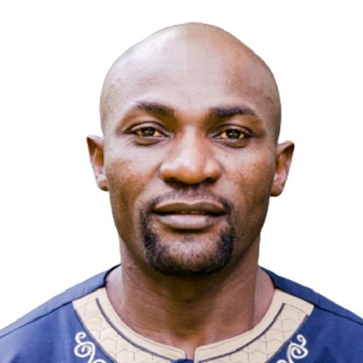
Antimicrobial Research Unit, College of Health Sciences, University of KwaZulu-Natal, Durban 4000, South Africa;Prof. Abia currently lead the Molecular and Environmental Surveillance of Antimicrobial Resistance section of the Antimicrobial Research Unit at the University of KwaZulu-Natal. Here, his research focuses on, but is not limited to, antimicrobial resistance in the environment and how this relates to resistance in humans and animals. This is done through the One Health approach using culture and molecular techniques, including metagenomics and whole-genome sequencing. In doing this, he also supervise postgraduate students (PhD and MSc). He hold a PhD in Water Care with a focus on Environmental Microbiology from the Tshwane University of Technology, South Africa. In the past 5 years, he have worked as a microbiologist in many projects in South Africa and Egypt, on monitoring water quality (rivers, rainwater, boreholes) and soil for human pathogenic bacteria; dynamics of microbial pathogens in riverbed sediments and how this relates to climate change and human health; nanomaterials as alternative water- and wastewater-treatment tools; the impact of human cemeteries on the microbial quality of groundwater; molecular epidemiology of antimicrobial-resistant bacteria in humans and animals; and monitoring and development of guidelines for rainwater harvesting as an alternative water source for human consumption.
Meet Our Speakers

Département de Biochimie, de Microbiologie et de Bio-Informatique, Faculté des Sciences et de Génie, Université Laval, Québec, QC G1V 0A6, Canada;Caroline Duchaine is a full professor in the Department de biochemistry, microbiology et bio- informatics at Université Laval, Quebec City, Canada, and holds the Canada Research Chair (Tier 1) in Bioaerosols. Her work focuses on the study of bioaerosols in a variety of contexts: human, animal and industrial health, as well as on the development of analytical strategies for both natural and in vitro environments. She has co-authored over 700 abstracts, research papers, reports and book chapters. She has conducted 135 funded research projects and participated in the training of 150 graduate students. She has won several awards, both for her research and her teaching. Her research is transdisciplinary and involves collaboration with various experts, including physicists, medical doctors, veterinarians, engineers and bioinformaticians.

Department of Pathobiology, University of Guelph, Guelph, Ontario, Canada;College of Health Sciences, University of KwaZulu-Natal, Durban, South Africa;Dr. Daniel Amoako is a researcher at the Department of Pathobiology at the University of Guelph, Canada, and the College of Health Sciences at the University of KwaZulu-Natal, South Africa. He has a longstanding interest in microbial bioinformatics; his research applies genome sequencing and data analytics to better understand emerging pathogens and their mechanisms of resistance and virulence. He has been involved in many large-scale bacterial whole-genome sequencing projects and actively translates microbial genomic data into genomic epidemiology for the benefit of the public, private, food, animal, and environmental health sectors (One-Health Context) globally. He has been working with several organizations such as the Africa Pathogen Genomics Initiative (Africa PGI)/Africa CDC, Centre for Respiratory Diseases and Meningitis at the National Institute for Communicable Diseases, SEQAFRICA-Fleming Fund, Network for Genomic Surveillance in South Africa (NGS-SA), COG-Train/COVID-19 Genomics UK Consortium, Southern African Training & Research Network for Genomic Surveillance of Antimicrobial Resistance (SAGESA-SA), Mobilome Ontology (MOBIO) working group, etc., spearheading training and implementation of bioinformatics worldwide. To date, Amoako has authored/co-authored over 100 publications in leading peer-reviewed journals, with over 7000 citations and an H-index of 32. Additionally, he has successfully supervised/co-supervised 15 PhD/MSc students, contributing to the advancement of scientific knowledge in his field.


In this section, you will find the recordings of this webinar to watch, re-watch and share with your colleagues!
This impactful webinar addressed some critical gaps in the environmental dimension of antimicrobial resistance. Two key outcomes included (1) the need to include bioaerosols in environmental studies and (2) the need to establish a unified database for clinically relevant antibiotic resistance genes present in the environment.
Antimicrobial Resistance and Environmental Health, 2nd Edition
Edited by Akebe Luther King Abia
Deadline for manuscript submissions: 1 August 2024