Antibiotics Webinar | Structural Aspects of AMPs and Antimicrobials
the chair
8th Antibiotics Webinar
Structural Aspects of AMPs and Antimicrobials
The World is facing an important challenge regarding the fight against multi-drug resistant micro-organisms. According to the World Health Organization (WHO), infection by micro-organisms resistant to available antibiotics and antimicrobial may lead to millions of death every year by 2050 if advances are not made.
Various molecules have been explored as potential replacements and/or adjuvants to conventional antimicrobials. Among them, antimicrobial peptides (AMPs) and other antimicrobial polymers seems very promising due to their membranolytic activity, leading to fast and selective killing, limiting the development of resistance. In addition, contrarily to conventional antibiotics, AMPs possess additional activities (including antiviral, antifungal, anticancer, anti-inflammatory and/or wound healing activities), making them able to potentially fight many human diseases. Indeed, many AMPs have already been used in medicine or tested in clinical trials.
The urgency to find a new antimicrobial treatment has also lead to the characterization of hundreds of natural or synthetic moleculesand the repurposing of molecules that were not initially identified as antimicrobial ones.
The objective of the webinar series “Structural Aspects of Antimicrobial Peptides and Antimicrobials” is to present and discuss important finding regarding the structure–activity relationship (SAR) of antimicrobial molecules, including AMPs, but also other natural, synthetic or repurposed antimicrobial compounds.
Date: 3 December 2024
Time: 2:00 pm CET | 10:00 am Brazil | 9:00 pm CST Asia
Webinar ID: 812 9184 0835
Webinar Secretariat: journal.webinar@mdpi.com
Meet Our Chair
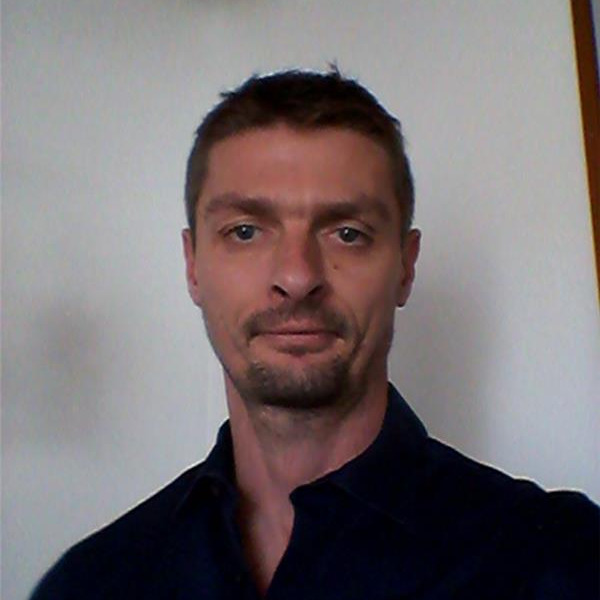
Institut des Sciences Moléculaires de Marseille (ISM2) – BiosCiences – UMR 7313 CNRS Aix Marseille Université, France;Dr. Marc Maresca is currently a researcher at the Aix-Marseille Université. He received his P.h.D in Biochemistry at the Université Paul Cézanne (France, 2003) on food contaminants named mycotoxins. In 2003, he moved to England to work on enteropathogenic E coli in Brendan Keny’s lab. Then, he moved back to France to continue his work on mycotoxins and their effects on human health. He is currently working at the Aix-Marseille Université, and his research, in addition to work on mycotoxins, aims to identify and develop new molecules—natural, synthetic, or bio-inspired ones—with antimicrobial properties. He focuses on antimicrobial peptides and their mimics, as well as on plant derivatives, in addition to their antimicrobial effects, as they may have anti-inflammatory and anti-tumorigenic effects.
Meet Our Speakers
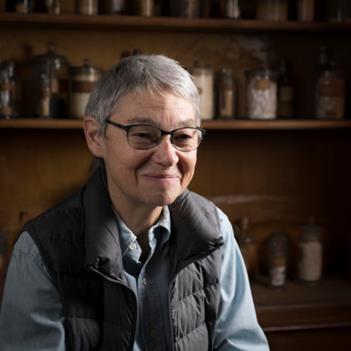
Prof. Sylvie Rebuffat
Laboratoire Molécules de Communication et Adaptation des Microorganismes (MCAM), Muséum national d’Histoire naturelle (MNHN), Paris, France;Sylvie Rebuffat studied chemistry and biochemistry at the University Pierre and Marie Curie-Paris 6 (currently Sorbonne University) in Paris. She obtained a Professor position at the National Museum of Natural History in Paris in 1997. In 2007, she founded the Laboratory Molecules of Communication and Adaptation of Microorganisms (MCAM) at the MNHN, that she directed over ten years. She set up in 2011 the Direction of Research, Expertise and Technology transfer of the MNHN that she directed until 2016. She is associate Professor at the University Laval (Québec, Canada) since 2017 and Professor emeritus of the MNHN in the MCAM laboratory since 2020. Over years Sylvie Rebuffat studied the structures and mechanisms of action of several groups of toxic or antimicrobial compounds from fungi and bacteria, such as mycotoxins from Penicillium, antifungal peptides of the peptaibol group from Trichoderma fungi and microcins from Enterobacteria. She contributed to studies on metabolites from gliding bacteria at the Gesellschaft für Biotechnologische Forschung in Braunschweig (Germany). Since 2000 she is studying with her group at MCAM the molecular aspects of the competition mechanisms developed by bacteria, and more specifically the antimicrobial peptides (AMPs) that bacteria use as weapons (microcins and other bacteriocins) in various ecosystems, such as the gut microbiota. Studies concern the structural aspects and mechanisms of action of these AMPs and the enzymatic systems responsible for their biosynthesis and posttranslational modifications. Their ecological roles and their applications in human or veterinary medicine are currently considered. S. Rebuffat is the author of over 170 publications recorded in the Web of Science and published in international journals or book chapters.

Center for Proteomics and Biochemical Analysis, Postgraduate Program in Genomic Sciences and Biotechnology, Catholic University of Brasília, Brasília, DF, Brazil;Postgraduate Program in Biotechnology, S-Inova Biotech, Dom Bosco Catholic University, Campo Grande, MS, Brazil;Octávio Luiz Franco holds a degree in Biological Sciences from the Federal University of Ceará (1998) and a PhD in Biological Sciences (Molecular Biology) from the University of Brasília (2001). He conducted his initial post-doctoral research in 2001 at Embrapa, followed by another at the University of Edinburgh in Scotland. He has undertaken work missions in numerous countries, including Australia, Israel, Portugal, Cuba, and the Netherlands. Dr. Franco completed his first sabbatical at the University of Wisconsin (USA) and the second at the University of British Columbia (Canada), focusing on infectious disease control. Currently, he serves as a professor at Universidade Catolica de Brasilia and University Catolica Dom Bosco. Additionally, he coordinates the National Institute of Science and Technology Bioinspir for bioinspired products. Dr. Franco holds the position of Researcher 1A and serves as a consultant to the National Council for Scientific and Technological Development (CNPq). Furthermore, he is a member of the Brazilian Society of Biochemistry and Molecular Biology (SBBq), The American Society for Biochemistry and Molecular Biology (ASBMB), ASM (American Society of Microbiology), and the American Association for the Advancement of Science (AAAS). His research is concentrated on developing bioproducts and bioprocesses, with a particular emphasis on controlling pathogenic microorganisms. Dr. Franco has authored nearly 500 papers, advised hundreds of students, and held dozens of patents for products that have entered the cosmetic and animal health markets.

In this section, you will find the recordings of this webinar to watch, re-watch and share with your colleagues!
Editorial Board Members' Collection Series: Structural Aspects of AMPs and Antimicrobials
Edited by Michael Conlo, Marc Maresca, Bong-Jin Lee and Aurélie Tasiemski