Applied Sciences Webinar | Biomass and Clean Energy: Innovation for the Green Transition and Emission Reduction
the chair
23th Applied Sciences Webinar
Biomass and Clean Energy: Innovation for the Green Transition and Emission Reduction
It is with great pleasure and honor that we invite you to the webinar “Biomass and Clean Energy: Innovation for the Green Transition and Emission Reduction.”
This event provides an important platform for dialogue and collaboration among researchers, institutions, and industry representatives united by a shared commitment to addressing one of the most pressing challenges of our time: the transition to sustainable energy systems and the reduction of harmful emissions.
Biomass and clean energy are not only technological solutions, but also opportunities to rethink our production models, strengthen our responsibility toward the environment, and promote new paths of development that are both innovative and sustainable.
On behalf of the speakers, I would like to extend sincere gratitude to all participants, and partners whose contributions make this meeting possible, along with my personal gratitude to all speakers for their kind participation. May the exchange of ideas and experiences during these days inspire new collaborations and guide us toward concrete actions for a greener future.
Together, with vision and determination, we can transform innovation into progress and hope into reality.
Date: 26 November 2025
Time: 10:00 am CET | 5:00 pm CST Asia
Webinar ID: 878 6075 0255
Webinar Secretariat: journal.webinar@mdpi.com
Meet Our Chair
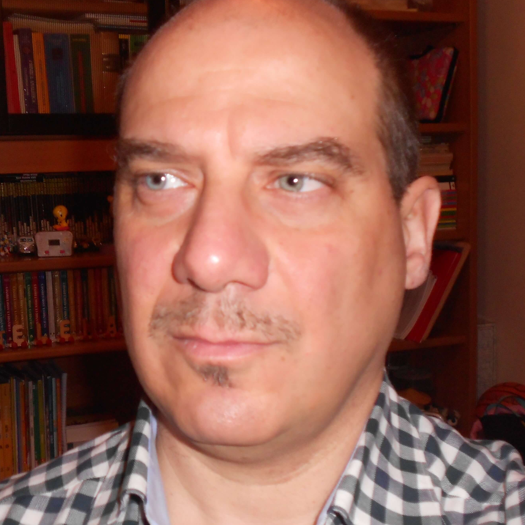
Department of Agriculture, Environmental and Food Science, University of Molise, Via Francesco De Sanctis, Campobasso, Italy;Pasquale Avino received his Ph.D. in Chemical Sciences from the University of Rome “La Sapienza” in 1997. He was appointed as a Post-Doc (1997-1998) at the Department of Chemistry of the University of California, Irvine (UCI) in the Rowland-Blake group. In 1998, he was at the ISPESL/INAIL research center as a Researcher until 2017, after which he moved to the University of Molise where he is currently an Associate Professor in Analytical Chemistry and Environmental Chemistry. His scientific activity is devoted to the development of innovative analytical methodologies for the extraction, concentration and determination of organic micropollutants by gas chromatography–mass spectrometry in food and environmental matrices; the assessment of air quality in indoor and outdoor environments; the identification and evaluation of microplastics in food and environmental matrices; and biomass and gasification issues in the context of ecological transition. He was the recipient of the “Group Achievement NASA Award” in 1998. In 1998, he was awarded with the “Next Generation Award” during the 22nd International Symposium on Chromatography. In 2003, he was the recipient of the “Environmental Sapio” Award for his research in the environmental field. In 2022, he received the Medal for Ecology from the Moldavian Chemical Society. In 2024, he received the highest honor of the Institute of Ecotoxicology and Environmental Sciences (IE&ES), the “Fellowship Award” for his outstanding contribution to the society through the field of environmental science. Prof. Avino is an author and co-author of different scientific publications including original papers published in national and international journals and books (Microplastics in Agriculture and Food Science, 2025, Elsevier, ISBN 9780443222108; New Perspectives in Indoor Air Quality, 2025, Elsevier, ISBN 9780443266430). Website: https://analyticalchemistrygroup.unimol.it/people/pasquale-avino/
Meet Our Speakers
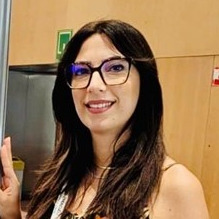
Department of Agriculture, Environmental and Food Science, University of Molise, Via Francesco De Sanctis, Campobasso, Italy;Debora Mignogna holds a degree in Food Sciences and Technologies, obtained in 2021, and she is currently pursuing a PhD in Agricultural Technology and Biotechnology. Her research focuses on the use of emerging biomass in the ecological transition process, aiming to characterize its properties and assess its environmental impacts through comparison with traditional and renewable energy sources. She is the author of two scientific articles published in international peer-reviewed journals. Website: https://analyticalchemistrygroup.unimol.it/people/debora-mignogna/
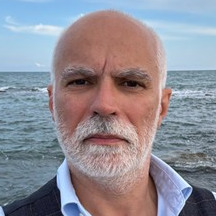
Institute of Atmospheric Pollution Research, Division of Rome, c/o Ministry of Environment and Energy Security, Rome, Italy;Paolo Ceci graduated in with a degree in Industrial Chemistry (1994), and is a member of the National Research Council of Italy (CNR) - Institute of Atmospheric Pollution Research (IIA), Division of Rome, c/o Ministry of Environment and Energy Security (1998). He currently has the role of Technologist Director. Since November 2008, he has held the titles of Scientific Manager, Project Engineer, Implementation Manager, Technical Referent, and Work Package Manager for various Conventions and Collaboration Agreements in the areas of the prevention and control of major accident risks, the Integrated Prevention and Reduction of Pollution, air pollution (emissions and air quality), the registration, evaluation, authorization and restriction of chemical substances (REACH Regulation), the Classification, labelling and packaging of chemical substances (CLP Regulation), Green Public Procurement (GPP), Minimum Environmental Criteria (CAM), and the Circular Economy and Ecological Transition. He is a member of the Italian delegation to the Committee of Competent Authorities for the control of major accident risks and the Expert Group under the “Seveso Directive” (2000-2016). He is a member of some Technical Working Groups of the European Commission on Best Available Techniques (BAT), on Industrial Risk and on Registration, Classification, Labelling and Packaging of chemical (2004-2019). He is a member of the Italian technical Commission for Integrated Environmental Authorizations AIA/IPPC (2012-2024). From 2014 to 2022, he was part of the National Contact Point (NCP) for the UNECE Helsinki Convention on the Transboundary Effects of the Industrial Accidents (TEIA Convention and member of the Italian delegations for the Conference of the Party (CoP). Dr. Paolo Ceci is an author and co-author of different scientific publications, including original papers published in national and international journals. Website: https://iris.cnr.it/cris/rp/rp04385
Department of Energy, System, Territory and Construction Engineering (DESTEC), University of Pisa, Largo Lucio Lazzarino, Pisa, Italy;Stefano Frigo graduated with a degree in Mechanical Engineering in 1991 from the University of Pisa and received a PhD in Energetics from the University of Genoa in 1994. He currently holds the position of Associate Professor at the Department of Energy, Systems, Land, and Construction Engineering (DESTEC) at the University of Pisa, conducting research primarily in the field of fluid machines and energy and environmental systems, with a focus on the use of alternative fuels in internal combustion engines and the energy recovery of biomass. Stefano Frigo is the co-inventor of two patents and the author or co-author of over 70 international scientific articles, mainly on the following topics: - Innovative injection systems for internal combustion engines; - Use of alternative fuels in internal combustion engines; - Use of biomass in cogeneration plants; - Innovative systems for the conversion of woody biomass into biofuels.


Biomass represents one of the most versatile and strategic components of the renewable energy mix, thanks to its ability to provide programmable, manageable energy that can be integrated with other non-programmable clean sources such as solar and wind. Its value in the energy transition goes beyond simply replacing fossil fuels: biomass contributes to the construction of circular, resilient, and regionally sustainable energy models. In our opinion, this event provided an important platform for dialogue and collaboration among researchers, institutions, and industry representatives united by a shared commitment to addressing one of the most pressing challenges of our time: the transition to sustainable energy systems and the reduction of harmful emissions.
The webinar was hosted via Zoom and required registration to attend. The full recording can be found below. In order to learn about future webinars, you can sign up to our newsletter by clicking “Subscribe” at the top of the page.
>