
Applied Sciences Webinar | Reassessing Fractional Epidemic Models: Methodological Limitations and Challenges in Practical Implementation
the chair
Applied Sciences Webinar
Reassessing Fractional Epidemic Models: Methodological Limitations and Challenges in Practical Implementation
This webinar explores the growing use of fractional calculus in epidemic modeling, with particular attention to its methodological foundations and practical limitations. Fractional derivatives, such as the Riemann–Liouville and Caputo formulations, extend the classical concept of differentiation to non-integer orders and are often introduced into compartmental epidemic models to represent memory effects or history dependence. In recent years, such approaches have been applied to the study of diseases including dengue, Ebola, HIV, and COVID-19, often with the claim that they provide greater flexibility and improved agreement with observed data.
Despite their increasing popularity, important conceptual and practical questions remain unresolved. What exactly does “memory” mean in an epidemiological context? How should the non-local nature of fractional operators be interpreted biologically? Are these models methodologically justified, and how should issues such as initialization and physical relevance be addressed? The webinar critically examines these questions, highlighting recent work linking Caputo-type epidemic models to non-Markovian processes, hazard functions, and transition risks.
This webinar also considers the relationship between fractional formulations and delay differential equations, which naturally encode temporal dependence, in order to clarify both the connections and distinctions between these approaches. Overall, the webinar aims to provide a critical reassessment of fractional epidemic models and to stimulate discussion on their validity, interpretability, and usefulness in practical epidemiological applications.
Date: 22 May 2026
Time: 10:00 pm EDT | 4:00 pm CEST
Webinar ID: 823 1965 6596
Webinar Secretariat: journal.webinar@mdpi.com
Meet Our Chair
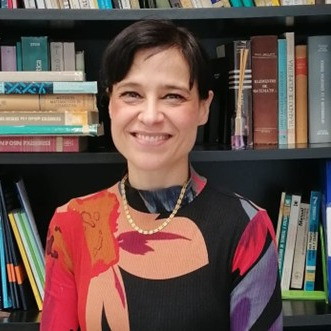
Mathematics, School of Engineering, Polytechnic of Porto, Porto, Portugal;Dr. Carla M.A. Pinto is an Associate Professor with Habilitation at the School of Engineering, Polytechnic of Porto, Portugal. She holds a Ph.D. in Mathematics, awarded in January 2004. Her primary research area is mathematical epidemiology, with a broader interest in mathematical modeling and its applications to public health policy. Dr. Pinto has a strong background in Nonlinear Dynamics and Bifurcation Theory. Her previous research includes the analysis of Central Pattern Generators for animal and robotic locomotion, coupled cell networks, and neuron-like systems such as the Hodgkin–Huxley, Fitzhugh–Nagumo, and Morris–Lecar equations. She currently serves as Editor of Chaos, Solitons and Fractals and Chaos X, and as Associate Editor for Computational and Applied Mathematics (Springer) and the International Journal of Dynamics and Control (Springer). Dr. Pinto is also a member of the editorial boards of Mathematical Methods in the Applied Sciences and International Journal of Advanced Robotic Systems, among others. She has chaired and organized numerous international conferences in applied mathematics. Since 2017, Dr. Pinto has also been actively involved in mathematics education research, participating in several Erasmus+ projects. She has served as the Coordinator for MATH-DIGGER and DrIVE-MATH, and as Local Coordinator of other Erasmus+ projects at P.PORTO. As of August 2022, she is the Coordinator of the Teaching and Learning Lab at the Polytechnic Institute of Porto.
Meet Our Speakers

School of Mathematics and Statistics, UNSW Sydney, Australia;Christopher Angstmann is an applied mathematician in the School of Mathematics and Statistics at UNSW Sydney, where he currently serves as Deputy Head of School. With a background in physics and actuarial science, his research lies broadly at the intersection of complex dynamical systems and stochastic modelling. His work is driven by a strong interest in both the mathematical development of models and their application to real-world phenomena. A central theme of his research has been the use of stochastic processes to understand the emergence of fractional derivatives in mathematical models. This has led to the development of novel models for anomalous diffusion and new frameworks for fractional order compartment models. His work has found applications across a range of physical, biological, and financial systems.

IMS Laboratory, Université de Bordeaux, Bordeaux, France;Jocelyn Sabatier is a Professor at Bordeaux University in the IMS Laboratory. He has been working in the field of fractional systems since 1993. For more than 20 years, his research activities have focused on fractional behaviour modelling and on analysis, simulation, and identification of fractional models. He has several industrial collaborations with national and international companies for the application of his research results. He is the author and co-author of more than 200 publications in this field. He has helped develop several events for the promotion of fractional calculus and systems. In particular, he initiated the creation of the FDA Workshop in 2004, which later became ICFDA. For the past 10 years, faced with some physical inconsistencies, he has chosen to take a critical stance towards fractional calculus and models. He continues his research by focusing on fractional physical behaviours with modelling tools other than fractional models, their analysis, identification, control and applications. This approach could lead to a renewal in the field and open up countless avenues of research.
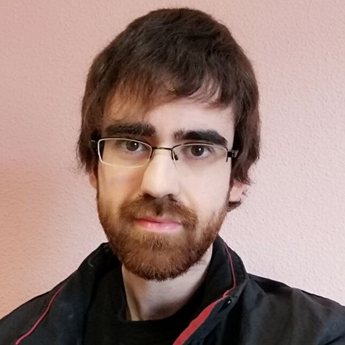
Prof. Dr. Marc Jornet
International University of La Rioja, Spain;Marc Jornet Sanz graduated with a degree in Mathematics from the University of Valencia and holds a PhD in applied mathematics from the Technical University of Valencia, Spain, since 2020. Currently, he works as a professor at the International University of La Rioja, Spain. His research is focused on random, stochastic, and fractional differential equations and their applications in modeling (epidemiology, population growth, physics, etc.). You can check his publications at https://orcid.org/0000-0003-0748-3730.


Summary
This webinar critically examines the application of fractional calculus within epidemic modelling frameworks.
It addresses key methodological limitations, issues of biological interpretability, and challenges associated with practical implementation in real-world disease contexts.
Particular attention is given to memory effects, Caputo-type compartmental models, non-Markovian processes, and their relationship to delay differential equations.
Overall, the webinar seeks to reassess the theoretical validity and practical utility of fractional epidemic models in contemporary epidemiological research.
The full recording can be found below. In order to learn about future webinars, you can sign up to our newsletter by clicking “Subscribe” at the top of the page.