Atmosphere Webinar | Seveso 1976–2026: Environmental Legacy, Regulatory Impact, and Lessons for the Future
the chair
The Seveso disaster is widely regarded as one of the most severe environmental catastrophes globally, often compared to Chernobyl for its regional impact, and it marked a pivotal moment in raising awareness about environmental protection and industrial safety across Italy and Europe.
The incident, which occurred on July 10, 1976, at 12:28 p.m., was caused by an uncontrolled reaction inside a chemical reactor, which released a toxic dioxin cloud into the atmosphere. More than 200 individuals, primarily children, developed serious skin conditions, and in the decades that followed there was a rise in cancers—especially of the pancreas and bladder—as well as leukemia. Environmentally, the disaster caused the death of thousands of animals, the destruction of vegetation, and required the removal of heavily contaminated soil. Together with the Toulouse accident, this event prompted the adoption of the “Seveso Directive” (82/501/EEC and later amendments), a European framework establishing strict safety measures to prevent major industrial accidents.
Atmosphere has thought that it's important and appropriate to remember such an event: although it was a dramatic situation, the scientific community has learned a great deal, both in terms of understanding dioxin itself as a chemical compound and its impact on health and the safety of high-risk facilities. For this reason, this webinar would like to remember that event and a lot of information and facts occurred after.
On the behalf of the speakers, I would like to extend sincere gratitude to all participants, and partners whose contributions make this webinar possible along with my personal gratitude to all speakers for their kind participation. May the exchange of ideas and experiences during this event inspire new collaborations and guide us toward concrete actions for a safe and greener future.
Date: 10 July 2026
Time: 12:00 pm CEST | 6:00 pm CST Asia
Webinar ID: 838 6695 8033
Webinar Secretariat: journal.webinar@mdpi.com
Meet Our Chair
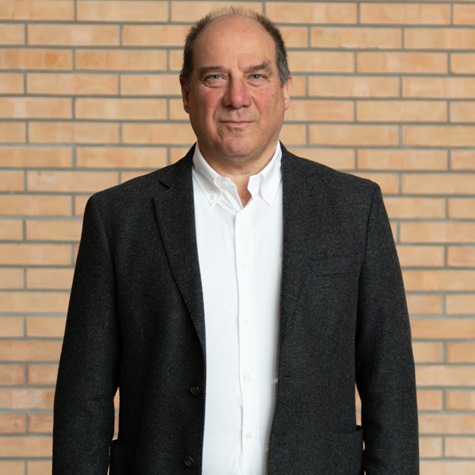
Department of Agricultural, Environmental and Food Sciences (DiAAA), University of Molise, Via de Sanctis, Campobasso, Italy <a href="https://analyticalchemistrygroup.unimol.it/people/pasquale-avino/">Website</a>;Division of Rome, Institute of Atmospheric Pollution Research, c/o Ministry of Environment and Energy Security, Rome, Italy;Pasquale Avino received his Ph.D. in Chemical Sciences at the University of Rome “La Sapienza” in 1997. He was appointed as Post-Doc (1997-1998) at the Department of Chemistry of the University of California, Irvine (UCI) in the Rowland-Blake group. In 1998 he was at ISPESL/INAIL research center as Researcher until 2017, after he moved to the University of Molise where he is currently Associate Professor in Analytical Chemistry and Environmental Chemistry. His scientific activity is devoted to the development of innovative analytical methodologies for the extraction, concentration and determination of organic micropollutants by gas chromatography-mass spectrometry in food and environmental matrices; to the assessment of air quality in indoor and outdoor environments; to the identification and evaluation of microplastics in food and environmental matrices; biomass and gasification issues in the context of ecological transition. He was the recipient of the “Group Achievement NASA Award” in 1998. In 1998 he was awarded with the “Next Generation Award” during the 22nd International Symposium on Chromatography. In 2003 he was the recipient of the “Environmental Sapio” Award for his research in the environmental field. In 2022 he received the Medal for Ecology from the Moldavian Chemical Society. In 2024 he received the highest honor of the Institute of Ecotoxicology and Environmental Sciences (IE&ES), the “Fellowship Award” for your outstanding contribution to the society through the field of environmental science. Prof. Avino is author and co-author of different scientific publications including original papers published on national and international journals and books (Microplastics in Agriculture and Food Science, 2025, Elsevier, ISBN 9780443222108; New Perspectives in Indoor Air Quality, 2025, Elsevier, ISBN 9780443266430).
Meet Our Speakers
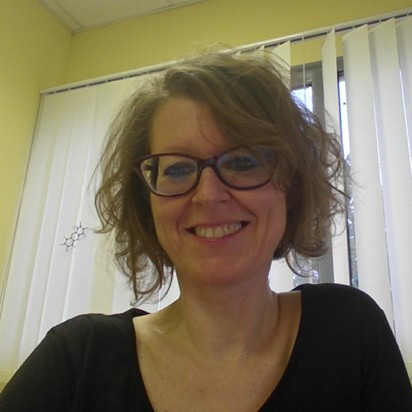
Institute for Atmospheric Pollution Research, Italian National Research Council (CNR-IIA), Montelibretti, Rome, Italy;Dr Silvia Mosca, PhD, is an analytical chemist with a background in environmental and applied chemistry, focusing on organic micropollutants in the atmosphere, including industrial emissions and ambient air. Since 2004, she has been working on dioxins at the CNR Institute of Atmospheric Pollution Research, developing analytical methodologies across the entire workflow, from sampling to data analysis. She holds a degree in Chemistry (analytical track) from the Sapienza University of Rome and a PhD in Industrial and Environmental Hygiene, and has been a permanent Researcher at the CNR since 2011. Her expertise includes GC/MS determination of dioxins, furans, PCBs, PAHs and VOCs, combined with extensive field experience across multiple environmental matrices. She contributes to national and international technical bodies (UNI, UNICHIM, CEN) on air quality, serves as a reviewer for international journals, and is actively involved in academic supervision. Her work has resulted in publications in peer-reviewed journals, monographs and conference proceedings.
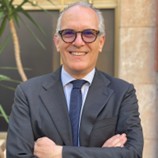
Exposure to Air Contaminant, Department of Environment and Health, Italian National Institute of Health, Rome, Italy;Senior Researcher, Director Exposure to Air Contaminant Unit. at the Italian National Institute of Health (Istituto Superiore di Sanità, ISS). Produced institutional contributions and opinions both in the fields of risk assessment, regulatory affairs, and environmental emergencies. Assessing the impact of chemical pollutants on the environment and human health. Exposure and risk assessment. Development and scientific coordination ISS of research programs in the field of public health. Coordinator of study groups on indoor air quality. Development of sampling and analysis methodologies for macro and micro pollutants in indoor environments (schools, offices, hospitals, etc.).
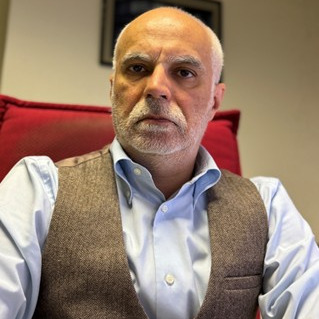
Institute of Atmospheric Pollution Research, Division of Rome, c/o Ministry of Environment and Energy Security, Rome, Italy https://iris.cnr.it/cris/rp/rp04385;Paolo Ceci is Graduated in Industrial Chemistry (1994), member of the National Research Council of Italy (CNR) - Institute of Atmospheric Pollution Research (IIA), Division of Rome, c/o Ministry of Environment and Energy Security (1998), Currently with the role of Technologist Director. Since November 2008 he held and hold the role of Scientific Manager, Project Engineer; Implementation Manager; Technical Referent, Work Package Manager, for various Conventions and Collaboration Agreements in the areas of prevention and control of major accident risks; Integrated Prevention and Reduction of Pollution, air pollution (emissions and air quality), registration, evaluation, authorization and restriction of chemical substances (REACH Regulation), Classification, labelling and packaging of chemical substances (CLP Regulation), Green Public Procurement (GPP), Minimum Environmental Criteria (CAM), Circular Economy and Ecological Transition. Member of the Italian delegation to the Committee of Competent Authorities for the control of major accident risks and e Expert Group under the “Seveso Directive” (2000-2016). Member of some Technical Working Groups of the European Commission on Best Available Techniques (BAT), on Industrial Risk and on Registration, Classification, Labelling and Packaging of chemical (2004-2019). Member of the Italian technical Commission for Integrated Environmental Authorizations AIA/IPPC (2012-2024). From 2014 to 2022 National Contact Point (NCP) for the UNECE Helsinki Convention on the Transboundary Effects of the Industrial Accidents (TEIA Convention and member of the Italian delegations for the Conference of the Party (CoP) Dr. Paolo Ceci is author and co-author of different scientific publications including original papers published on national and international journals.
In this section, you will find the recordings of this webinar to watch, re-watch and share with your colleagues!
| Speaker | Presentation | Time (CEST) | Time (CST Asia) |
|---|---|---|---|
| Dr. Pasquale Avino (Chair) | Chair Introduction | 12:00–12:10 pm | 6:00–6:10 pm |
| Dr. Silvia Mosca | Dioxins: Evolution of the Analytical Workflow | 12:10–12:30 pm | 6:10–6:30 pm |
| Dr. Gaetano Settimo | Dioxins and Human Health: Lessons Learned from the Seveso Disaster | 12:30–12:50 pm | 6:30–6:50 pm |
| Dr. Paolo Ceci | From 1976 to 2026: EU Legislation on the Control of Major-Accident Hazards | 12:50–1:10 pm | 6:50–7:10 pm |
| Q&A | 1:10–1:25 pm | 7:10–7:25 pm | |
| Dr. Pasquale Avino | Closing Remarks | 1:25–1:30 pm | 7:25–7:30 pm |