Biology Webinar | Chronobiology and Chronomedicine: From Bench to Bedside
the chairs
5th Biology Webinar
Chronobiology and Chronomedicine: From Bench to Bedside
Chronobiology is the scientific discipline that explores and quantifies the mechanisms of biological time structure and its relationship to the rhythmic manifestations in living beings. Due to rotation on its axis, the surface of the Earth is rhythmically exposed to the solar irradiation, leading to light/darkness alternance and day/night cycles, called circadian (from the Latin circa diem meaning ‘about a day’) which affect the physiology of most living organisms. Biological clocks originally evolved in single-celled organisms to orchestrate cellular metabolism and adapt to geophysical cycles and anticipate cyclical, recurrent and predictable changes in their environmental niche.
Over the past three decades, growing scientific data regarding humans confirmed the fundamental involvement of circadian mechanisms in the regulation of physiological and behavioral rhythms as well as in the pathophysiological processes underlying the most common metabolic, inflammatory, neurodegenerative, and neoplastic diseases, along with the aging process. The use of chronobiological methodology is crucial in basic, preclinical, and clinical research. It is now essential to implement a paradigm shift in scientific research and clinical practice (from bench to bedside), using chronobiological methodology to improve the quality of basic scientific research and develop appropriately timed therapeutic interventions that take in account the temporal dimension of drug kinetics and dynamics, the circadian timing of the pharmacological target, and the temporal organization of the human organism. Chronomedicine and chronotherapy can significantly improve the results of basic research, the success of clinical trials, and ultimately, patients’ care.
In order to spread interest in and knowledge of chronobiological methodology, in 2025, Prof. Gianluigi Ubaldo Mazzoccoli and Prof. Giovanni Damiani founded the Italian Study Group in Chronobiology and Chronomedicine (GIS-CRONO).
We dedicate this webinar to the memory of Paolo Sassone-Corsi, a distinguished scientist and chronobiologist.
Date: 29 November 2025
Time: 9:30 a.m. CET | 4:30 p.m. CST Asia
Webinar ID: 862 1051 8020
Webinar Secretariat: journal.webinar@mdpi.com
Meet Our Chairs
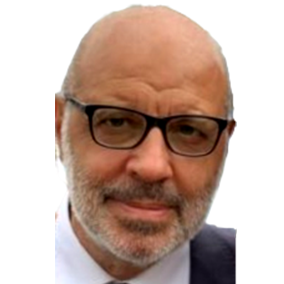
Chronobiology Laboratory, Fondazione IRCCS Casa Sollievo della Sofferenza, Opera di Padre Pio da Pietrelcina, San Giovanni Rotondo, Italy;Master's degree in Medicine and Surgery at the University of Florence, Italy, in 1987. Board of Internal Medicine, University of Florence, Italy, in 1993. Since 1991 attending Physician and Researcher at the Department of Medical Sciences, Division of Internal Medicine, Scientific Institute and Regional General Hospital (IRCCS) “Casa Sollievo della Sofferenza”, Opera di Padre Pio da Pietrelcina, San Giovanni Rotondo, Italy. Since 2011, Research Leader of the Chronobiology Laboratory at the IRCCS “Casa Sollievo della Sofferenza”, Opera di Padre Pio da Pietrelcina, San Giovanni Rotondo, Italy. From 2011 to 2013, Visiting Scientist at the Institute of Hepatology, Foundation for Liver Research and Birkbeck College, University of London, UK. From 2014 to 2017 Visiting Scientist at the University College London, lnstitute for Liver and Digestive Health, Division of Medicine, The Royal Free Hospital, London, UK. Since 2022, Adjunct Professor for teaching of the Chronobiology Course at the master’s degree Course in Medicine and Surgery of the University of Foggia, Italy. Since 2023, Adjunct Professor for teaching of Chronobiology at the Ph.D. course in Basic and Clinical Neuroscience, master’s degree course in Molecular Biology, Department of Clinical and Experimental Medicine, University of Foggia, Foggia, Italy. Author of more than 200 papers in peer-reviewed international journals with more than 7000 citations. H index 42 (Scopus). Fields of interest and study: chronobiology, chronomedicine, genetics and genomics, oncology, immunology, endocrinology, pathophysiological mechanisms of aging, regenerative medicine, complex systems analysis, biological systems modeling.
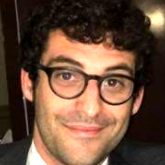
Center of Coordinated Research in Precision Medicine and Chronic Inflammation, University of Milan, Milan, Italy;Master's degree in Medicine and Surgery at the University of Brescia in 2013 (Mark: 110/110 with honors) with a thesis titled "Physio-pathological and clinical relevance of fraction of exhaled nitric oxide in psoriatic patients". Board in Dermatology and Venereology at the University of Milan in 2019 (Mark: 70/70) with a thesis titled "The metabolomic signature of non-lesional psoriatic skin: and advanced approach with artificial neural networks". Associate Professor in Dermatology at the University of Milan, with a PhD in Pharmacology (2020-2024) at the University of Padua (IT), a MSc in Pharmacovigilance, pharmacoepidemiology, pharmacoeconomics and real world evidence (2024-2025) at the University of Verona (IT), and two Postodcs in "Dermato-Immunology"(2018-2020) at Case Western Reserve University and "Immunology of Oral diseases" (2020-2022) at the University of Milan. As a dermatologist, I strongly believe in the role of a "Physician Scientist" that combines clinical evidence and research to solve challenging cases. I built my expertise on pathogenesis and pharmacological treatments of cutaneous immune-mediated diseases (i.e., psoriasis, hidradenitis suppurativa and atopic dermatitis). My efforts concretized in 2019 in the Italian Center for Precision Medicine and Chronic Inflammation at the University of Milan in which different skills and professions (i.e., biologists, bioinformaticians, doctors) collaborate to improve daily clinical practice through translational research.
Meet Our Speakers
Department of Clinical and Experimental Medicine, University of Foggia, Italy;Born: Bari, 07/02/1956 Graduation: Biological Science Work experience: Researcher and Associate Professor at the University of Bari, Bari, Italy (1985-2000) Full Professor of Biochemistry at the University of Foggia, Foggia, Italy (2000 – present)
Department of Medicine and Surgery, University of Perugia, Italy;Marina Bellet is an Associate Professor of General Pathology at the University of Perugia, Italy. She obtained her MD in 2003 and her PhD in 2014 at the University of Perugia, Italy. At the end of her specialization in Clinical Pathology in 2008, she joined the Department of Pharmacology at the University of California, Irvine, as a post-doctoral researcher, where she started her studies in the circadian field. Her research activity is mostly focused on the study of chronobiology and circadian medicine.
Prof. Carolina Greco
Humanitas Research Hospital/Humanitas University, Department of Biomedical Sciences Via Levi-Montalcini 4, Pieve Emanuele, Italy;Carolina Greco is junior group leader at the Humanitas Research Hospital, where she leads the Circadian Metabolism Lab, and she is an Associate Professor at Humanitas University. Her research focuses on circadian biology and metabolism in cardiovascular disease, mainly heart failure (HF).
Assoc. Prof. Paola Tognini
Health Science Interdisciplinary Center. Scuola Superiore Sant’Anna, Pisa, Italy;Neuroscientist who earned her PhD from Scuola Normale Superiore in Pisa, Italy in 2012. During her PhD studies, she explored the impact of micro-RNA and epigenetic mechanisms on neuronal cortical plasticity in postnatal neurodevelopment in mice. Her findings identified micro-RNA and DNA methylation as novel molecular factors involved in the experience-dependent refinement of cortical circuits. In 2013, Dr. Tognini received two prestigious fellowships (from EMBO and HFSP), and relocated to the University of California Irvine. There, she conducted post-doctoral research on the connection between circadian rhythms, gut microbiota, and metabolism, discovering how nutrition affects circadian function through the gut microbiota. In September 2017, Dr. Tognini returned to Italy thanks to a European Union Marie Sklodowska Curie fellowship. From October 2019 to 2023, she worked at Pisa University as an Assistant Professor of Physiology. Since January 2024 she has been an Assistant Professsor at Scuola Superiore Sant’Anna in Pisa. Her team's current focus is on understanding how signals from the gut microbiota and peropheral organs shape brain function and plasticity during neurodevelopment and adulthood in mice. Additionally, they are investigating the involvement of circadian rhythms in neurodevelopmental disorders and in the crosstalk between heart and brain. Her findings have been published in esteemed journals such as Nature, Neuroscience , Cell Metabolism, Cell Reports, and PNAS.
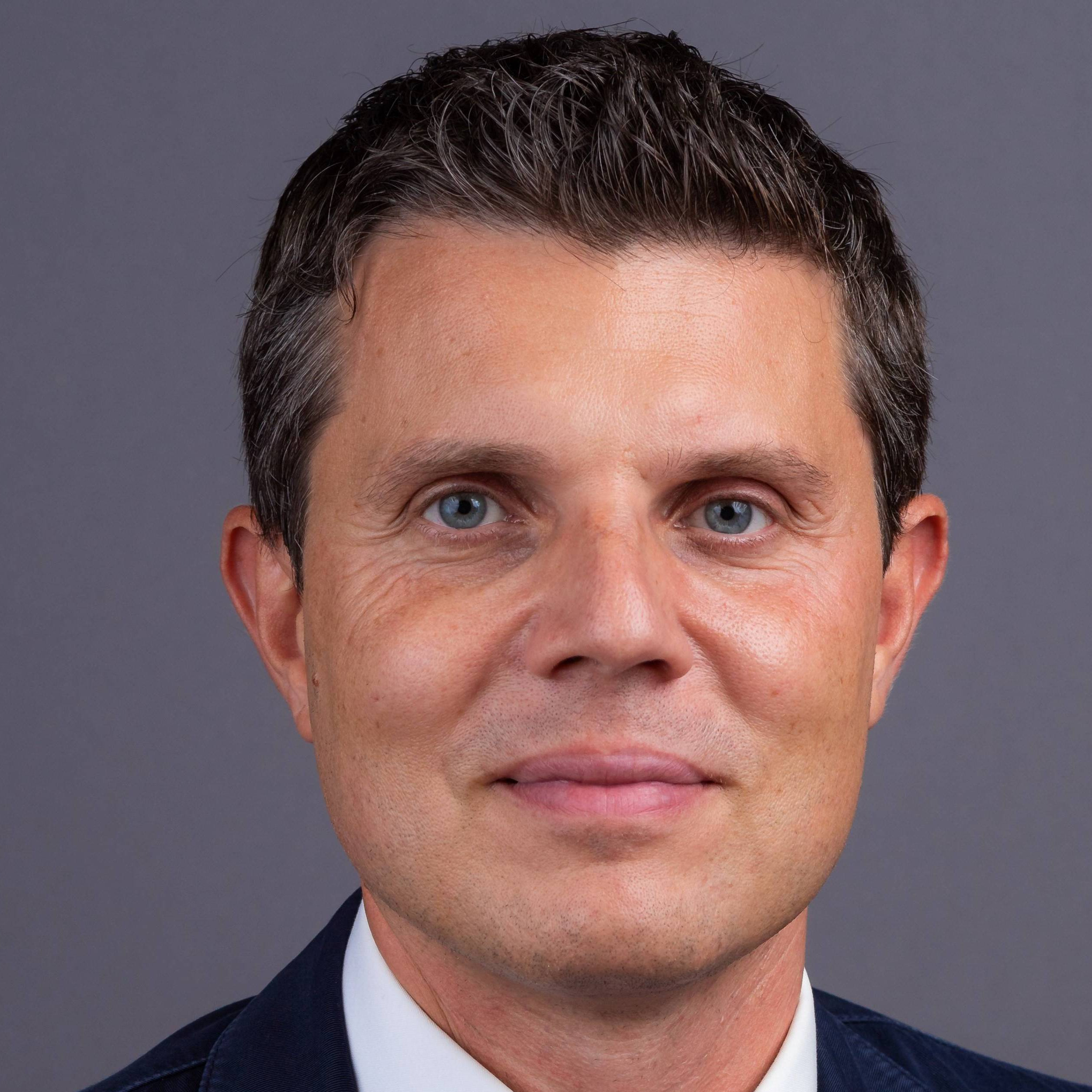
Division of Cardiovascular Research, School of Medicine, University of Dundee, Dundee, UK;Hypertension Research Centre (HRC) and Medicines Monitoring Unit (MEMO Research), School of Medicine, Dundee, UK.;CURRENT POSITIONS • Clinical Senior Lecturer (Teaching and Research) and Honorary Consultant Physician, Division of Cardiovascular Research. • Senior Tutor in Clinical Skills and Consultation and Communication Skills, Undergraduate Medicine, University of Dundee, UK. EDUCATION and PROFESSIONAL QUALIFICATIONS • Master’s degree in medicine and surgery, University of Parma, Parma, Italy (2007) • Board of Cardiology, University of Parma, Parma, Italy (2012) • PhD in molecular medicine, University of Parma, Parma, Italy (2017) Main research interests: chronotherapy, circadian medicine, hypertension and cardiovascular prevention.

In this section, you will find the recordings of this webinar to watch, re-watch and share with your colleagues!
Biological Rhythms and Molecular Clockworks in Physiology and Pathology (2nd Edition)
Guest editors: Prof. Gianluigi Ubaldo Mazzoccoli, Dr. Marina Maria Bellet.
Deadline for manuscript submissions: 31 January 2027
Biological Rhythms and Molecular Clockworks in Physiology and Pathology (1st Edition)
Guest editors: Prof. Gianluigi Ubaldo Mazzoccoli, Dr. Marina Maria Bellet