
Buildings Webinar | Resilience-Driven Approaches for Structural Investigation and Repair
the chair
10th Buildings Webinar
Resilience-Driven Approaches for Structural Investigation and Repair
Structural engineering is facing new pressures caused by ageing assets, climate-induced hazards, changing construction practices, and the rapid introduction of digital tools. These pressures create challenges, yet they also present research opportunities to improve the reliability and service life of buildings and infrastructure. Resilience-oriented thinking provides a helpful unifying thread. It encourages us to examine not only how structures behave under loads or deterioration but also how investigation, decision-making, and intervention strategies can be organized to produce safer and more adaptable systems.
During this session—which precedes the XXII International Conference on Building Pathology and Construction Repair (CINPAR 2026) that will be held at the Instituto Superior Técnico, Lisbon, from 15 to 17 July 2026—we will consider how inspection routines, defect identification, material assessment, and performance modeling can be integrated into a more responsive framework for structural evaluation. We will examine how emerging sensing technologies, data-driven approaches, and simulation methods can improve the accuracy and timeliness of diagnosis. We will also consider the connection between investigation outcomes and the planning of rehabilitation works, including the assessment of load paths, repair options, and long-term performance.
Special attention will be given to the influence of natural hazards and environmental exposure. These factors continue to shape the way we appraise risk, select materials, and choose intervention strategies. The same applies to built heritage, where resilience must account for conservation principles as well as engineering requirements. In all these areas, current research is offering new insights, and some of these insights will be shared at this session.
As the Chair of this webinar, I hope it will encourage critical reflection on current methods and stimulate the discussion of alternative approaches that could improve the quality and reliability of our practice. You are invited to question assumptions, propose new lines of investigation, and share evidence from your own work. Perspectives from different subfields, whether focused on infrastructure, material behavior, monitoring strategies, or management and standards, are all essential to this conversation.
I look forward to the exchange of ideas and to the progress that this session’s collective reflection can generate.
Date: 18 December 2025
Time: 4:00PM CET | 10:00AM EDT | 11:00PM CST (Asia)
Webinar ID: 833 2685 5219
Webinar Secretariat: journal.webinar@mdpi.com
Meet Our Chair
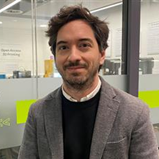
Instituto Superior Técnico (IST), University of Lisbon, Portugal;Prof. Tiago Miguel Ferreira is an Assistant Professor in the Scientific Area of Structural Mechanics and Structures within the Department of Civil Engineering, Architecture and Environment at Instituto Superior Técnico (IST), University of Lisbon, Portugal. Prof. Ferreira’s academic work centers on the structural vulnerability of historical buildings and urban areas exposed to both natural and anthropogenic hazards, including earthquakes, fires, floods, and landslides. His recent research extends to examining the interactions between these hazards and their combined impacts on both physical and social vulnerability. He also explores the integration of digital technologies to support decision-making and enhance community engagement. He has been ranked among the top 2% most influential scientists worldwide by Elsevier BV and Stanford University (from 2021 to 2025). Prof. Ferreira is the co-author of 200+ publications, including 90+ articles in leading international journals. Over the past decade, he has actively contributed to 13 R&D projects, securing over €14.1 million in total funding. Prof. Ferreira is a Fellow of the Higher Education Academy, a member of the British Council, and serves on the EPSRC College of Reviewers. He also sits on the editorial boards of several internationally recognized journals.
Meet Our Speakers
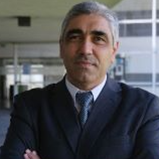
Faculty of Engineering, University of Porto, Portugal;Humberto Varum is full professor at the Civil Engineering Department of the Faculty of Engineering of the University of Porto (FEUP), Portugal. Since 2022 he has served as the president of the National Council of Civil Engineers. Since October 2010, he has been an Honorary Lecturer at the Department of Civil, Environmental and Geomatic Engineering, University College of London (UCL), London, United Kingdom. He is also the director of the PhD program in Civil Engineering at FEUP. He has been served as a National Expert to the European Commission, at the ELSA laboratory, Joint Research Centre, Italy, in the period of July 2009 to August 2010. Varum is an Integrated Member of the CONSTRUCT research unit: Institute of R&D in Structures and Construction. Since May 2015, he his been a member of the directorate body of the Construction Institute of the University of Porto, as well as its president since 2019. He is a Member of the National Committee of the International Council on Monuments and Sites (ICOMOS) (since 2009) and an Expert Member of the ICOMOS’s International Scientific Committee of Earthen Architectural Heritage (ISCEAH). He is also a member of the PROTERRA Iberian–American Network (since 2012); a member of the Project Team 2 for the development of the 2nd generation of EN Eurocodes (SC8.T2—material-dependent sections of EN 1998-1); a member of the "Seismic" action group of fib's TG10.1, for the development of the Model Code 2020; a member of the IABSE Working Group 7 ‘Earthquake Resistant Structure’ (Task Group 1.1); a Member of the Mexican Academy of Engineering (since 2018); and a member of the International Scientific Board (ISB) of AdMaS (Advanced Materials, Structures and Technologies) Centre of the Faculty of Civil Engineering, Brno University of Technology, Czech Republic (since 2013). Varum has participated in post-earthquake field reconnaissance missions in L’Aquila (Italy, 2009), Lorca (Spain, 2011), Emilia-Romagna (Italy, 2012), Gorkha (Nepal, 2015), and Puebla (Mexico, 2017).
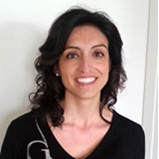
Department of Civil and Environmental Engineering, University of Perugia, Italy;Dr. Ilaria Venanzi is currently an Associate Professor at the University of Perugia, Italy. She received her Ph.D. in Civil Engineering in 2006 and subsequently held positions as a postdoctoral researcher and Assistant Professor at the University of Perugia. In 2004, she was a visiting researcher at Columbia University in New York. Dr. Venanzi is currently the Chair of the Master's program in Civil Engineering at the University of Perugia. Highlights of her career include significant contributions to structural dynamics and structural health monitoring, with over 50 high-impact articles in scientific journals. She is an internationally recognized researcher with collaborations at institutions such as Northeastern University, Iowa State University, Technion University, University of Granada, Trinity College Dublin, and the University of Sheffield, as evidenced by her co-authored articles. She is a member of the Advisory Board of two Italian Ph.D. programs at the University of Perugia and the University of Pisa. Currently, she leads a research group with 5 doctoral students and 3 postdoctoral researchers. Dr. Venanzi has participated in over 45 conferences as a presenter and organizer of special sessions and has been responsible for several R&D projects funded by public and private institutions. Since 2009, she has taught various courses at the bachelor's, master's, and doctoral levels. Currently, she represents the University of Perugia in the Italian research consortium FABRE for the evaluation and monitoring of bridges and other infrastructure.
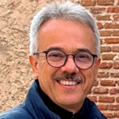
Federal Institute of Education, Science and Technology of Paraíba, Rua Deputado Balduíno Minervino de Carvalho, Brazil;Professor Gibson Rocha Meira holds a degree in Civil Engineering from the Federal University of Paraíba (1989), a Master’s degree in Production Engineering from the same institution (1995), and a PhD in Civil Engineering from the Federal University of Santa Catarina (2004), which included a research placement at the Eduardo Torroja Institute of Construction Science in Spain. He is currently a Full Professor at the Federal Institute of Education, Science and Technology of Paraíba. He also serves as a faculty member of the Postgraduate Program in Civil and Environmental Engineering at the Federal University of Paraíba (UFPB) and as a collaborator in the Postgraduate Program in Civil Engineering at the Federal University of Pernambuco (UFPE). Professor Meira has participated in an inter-laboratory research project involving 16 countries, coordinated by RILEM TC 178-TMC, as well as in two inter-institutional projects coordinated by UFRGS and UFSC, each involving eight institutions. He served as institutional coordinator for the INOVATEC project, funded by FINEP, under the general coordination of the University of São Paulo (USP), with participation from 11 institutions. He is a member of the National Institute of Science and Technology (INCT) project on Advanced Eco-efficient Technologies in Cementitious Products, coordinated by USP and involving nine institutions. He also contributes to the RILEM Technical Committee On-Site Corrosion Condition Assessment, Monitoring and Prediction (OCM), which includes 29 members from 14 countries. His ongoing research collaborations include work with the Eduardo Torroja Institute of Construction Science (Spain), University of Minho (Portugal), Pontifical Catholic University of Santiago (Chile), National Technological University of Córdoba (Argentina), Tecnológico de Monterrey (Mexico), and several Brazilian institutions including the Federal Universities of Espírito Santo, Pernambuco, Campina Grande, Rio Grande do Sul, São Paulo, and Paraíba.