Cancers Webinar | Quantitative Imaging in Oncology: The Role of Radiomics in Solid Tumours
14th Cancers Webinar
Quantitative Imaging in Oncology: The Role of Radiomics in Solid Tumours
Radiomics aims at extracting quantitative data (features) from medical images that would otherwise go unnoticed to the human eye. By leveraging on artificial intelligence and machine learning algorithms, radiomics can generate prediction models capable of assisting medical professionals in the clinical decision-making—for instance diagnosis, risk stratification and therapy planning.
The translation of radiomics into clinical practice, however, still faces some hurdles, such as standardisation and reproducibility issues, lack of data for training the models, interpretability problems (explainable AI) as well as legal and ethical constraints. Additionally, radiomics is a very interdisciplinary science, requiring close collaboration among specialists from different areas, such as clinicians, biologists, engineers and computer scientists.
Moving from the Special Issue “Radiomics in Cancer Imaging: Theory and Applications in Solid Tumours”—MDPI Cancers, this webinar wants to bring together experts from different fields to discuss challenges, discoveries, and opportunities of radiomics in the field of solid tumours.
Date: 21 September 2026
Time: 3:00 pm CEST | 9:00 am EDT | 9:00 pm CST Asia
Webinar ID: 838 2637 2487
Webinar Secretarial: journal.webinar@mdpi.com
the chairs
14th Cancers Webinar
Quantitative Imaging in Oncology: The Role of Radiomics in Solid Tumours
Radiomics aims at extracting quantitative data (features) from medical images that would otherwise go unnoticed to the human eye. By leveraging on artificial intelligence and machine learning algorithms, radiomics can generate prediction models capable of assisting medical professionals in the clinical decision-making—for instance diagnosis, risk stratification and therapy planning.
The translation of radiomics into clinical practice, however, still faces some hurdles, such as standardisation and reproducibility issues, lack of data for training the models, interpretability problems (explainable AI) as well as legal and ethical constraints. Additionally, radiomics is a very interdisciplinary science, requiring close collaboration among specialists from different areas, such as clinicians, biologists, engineers and computer scientists.
Moving from the Special Issue “Radiomics in Cancer Imaging: Theory and Applications in Solid Tumours”—MDPI Cancers, this webinar wants to bring together experts from different fields to discuss challenges, discoveries, and opportunities of radiomics in the field of solid tumours.
Date: 21 September 2026
Time: 3:00 pm CEST | 9:00 am EDT | 9:00 pm CST Asia
Webinar ID: 838 2637 2487
Webinar Secretarial: journal.webinar@mdpi.com
Meet Our Chairs
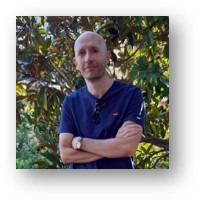
Department of Engineering, Università degli Studi di Perugia;Francesco Bianconi is an Associate Professor in the Department of Engineering at the University of Perugia, Italy. He has held visiting positions at the University of Vigo (Spain), the University of East Anglia (UK), Queen Mary University of London (UK) and City University of London (UK). He is the author of one book, two book chapters, one edited book and over 120 Scopus-indexed scholarly papers. His research interests cover computer vision, visualisation, image processing, and pattern recognition, with a particular focus on texture and colour analysis for industrial and biomedical applications. Francesco is an IEEE senior member and chartered Engineer.
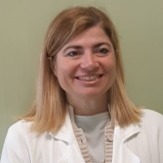
Section of Nuclear Medicine and Health Physics, Department of Medicine and Surgery, Università degli Studi di Perugia;Barbara Palumbo is an Associate Professor of Nuclear Medicine with the Section of Nuclear Medicine and Health Physics, Department of Medicine and Surgery, Università degli Studi di Perugia, Italy and coordinator of the degree Radiological Technologists of the University of Perugia. She has held visiting positions at the Medical University of Vienna (Austria) and the West Virginia University School of Medicine (USA), and is currently regional representative of the Italian Association of Nuclear Medicine, Molecular Imaging and Therapy (AIMN), member of the AIMN AI/radiomics Study Group. She was the National Secretary (2019-2022) of the Italian Association of Nuclear Medicine, Molecular Imaging and Therapy (AIMN) and the head of the AI/radiomics Study Group of AIMN (2021-2026). Prof. Palumbo’s research activity covers molecular imaging techniques for oncological and neurodegenerative disorders, radiopharmaceuticals investigation, applications of artificial intelligence in medicine and radiomics. Her scientific throughput is documented by over 130 Scopus-indexed scholarly papers.
Meet Our Speakers
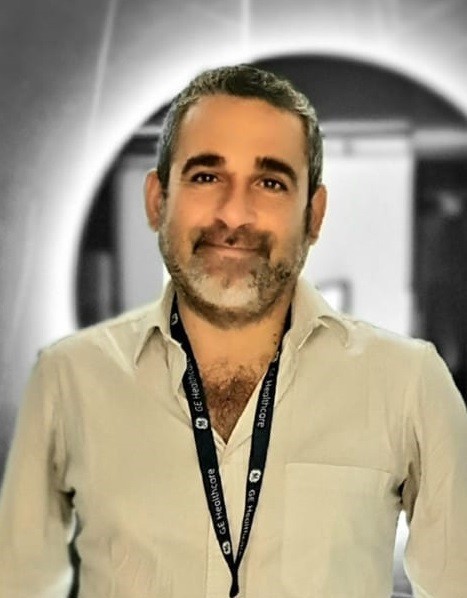
Department of Biomedicine and Prevention, University of Rome Tor Vergata;Luca Filippi is an Associate Professor of Nuclear Medicine with the Department of Biomedicine and Prevention at the University of Rome Tor Vergata, Rome, Italy. His research interests cover molecular and metabolic imaging PET/SPECT and targeted therapy, with specific focus, in recent years on multi-tracer imaging (18F-choline/18F-FACBC/PMSA-ligands) for the study of prostate carcinoma, applications of PET/CT with 18F-FDG in skin tumors undergoing treatment with immune checkpoint inhibitors and applications of artificial intelligence and radiomics. Prof. Filippi is head of the AI/radiomics Study Group of the Italian Association of Nuclear Medicine, Molecular Imaging and Therapy (AIMN) and editor-in-chief of Expert Review of Medical Devices. He promotes academic and corporate teaching initiatives aimed at engaging youth in hybrid imaging, theranostics and radiomics. His scholarly contributions include five book chapters and over 230 Scopus-indexed papers.
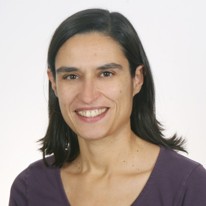
Faculty of Medicine, Universidade do Porto;Inês Domingues is an Assistant Professor at the Faculty of Medicine of the University of Porto and a researcher at CI-IPOP and RISE-Health. Her work lies at the intersection of Artificial Intelligence, Data Science, Medical Imaging, and Health Decision Support Systems. Her research focuses on AI-driven biomedical and oncological image analysis, with applications in cancer diagnosis and prognosis, radiomics, medical imaging, and healthcare data science. She has authored more than 60 scientific publications, participated in several funded research projects, and served on more than 70 scientific committees. Alongside her research activities, she is strongly committed to teaching, supervision, and pedagogical innovation. She also contributes actively to the scientific community through editorial roles, peer review, conference organization, and involvement in professional associations, including APRP and IAPR.
Department of Neurosurgery, Río Hortega University Hospital, Specialized Group in Biomedical Imaging and Computational Analysis (GEIBAC); Instituto de Investigación Biosanitaria de Valladolid (IBioVALL;Santiago Cepeda, MD, PhD, is a consultant neurosurgeon at Hospital Universitario Río Hortega in Valladolid, Spain, working at the intersection of neurosurgical oncology and computational medical imaging. He completed his residency in neurosurgery at Hospital Universitario 12 de Octubre in Madrid, earned his doctorate cum laude from Universidad Complutense de Madrid, and holds a postgraduate diploma in translational oncology from the same university. He leads GEIBAC, a research group dedicated to biomedical imaging and computational analysis, where he develops and clinically validates artificial intelligence systems for neuro-oncology and neurovascular disease, writing and deploying the code behind them himself. Several of these tools are openly available and integrated into routine clinical workflows. Dr. Cepeda is the principal investigator of investigator-initiated clinical trials in neuro-oncology and intraoperative imaging, funded by the Instituto de Salud Carlos III and regional agencies, and coordinates multicenter collaborations across Europe and North America. His current work focuses on artificial intelligence applied to intraoperative ultrasound, spatial mapping of tumor infiltration, and the biological validation of AI-derived imaging biomarkers.
Radiomics in Cancer Imaging: Theory and Applications in Solid Tumours
Edited by Dr. Francesco Bianconi and Dr. Barbara Palumbo
Deadline for manuscript submissions: 31 October 2026
This is a FREE webinar. After registering, you will recieve a confirmation email containing information on how to join the webinar. Registrations with academic institutional email addresses will be prioritized.
Certificates of attendance will be delivered ot those who attend the live webinar.
Can't attend? Register anyway and we'll let you know when the recording is available to watch.
-6a75b5437eaf7.png)