Cells Webinar | Nervous System Development and Plasticity in Model Organisms VI
the chair
14th Webinar on Cells
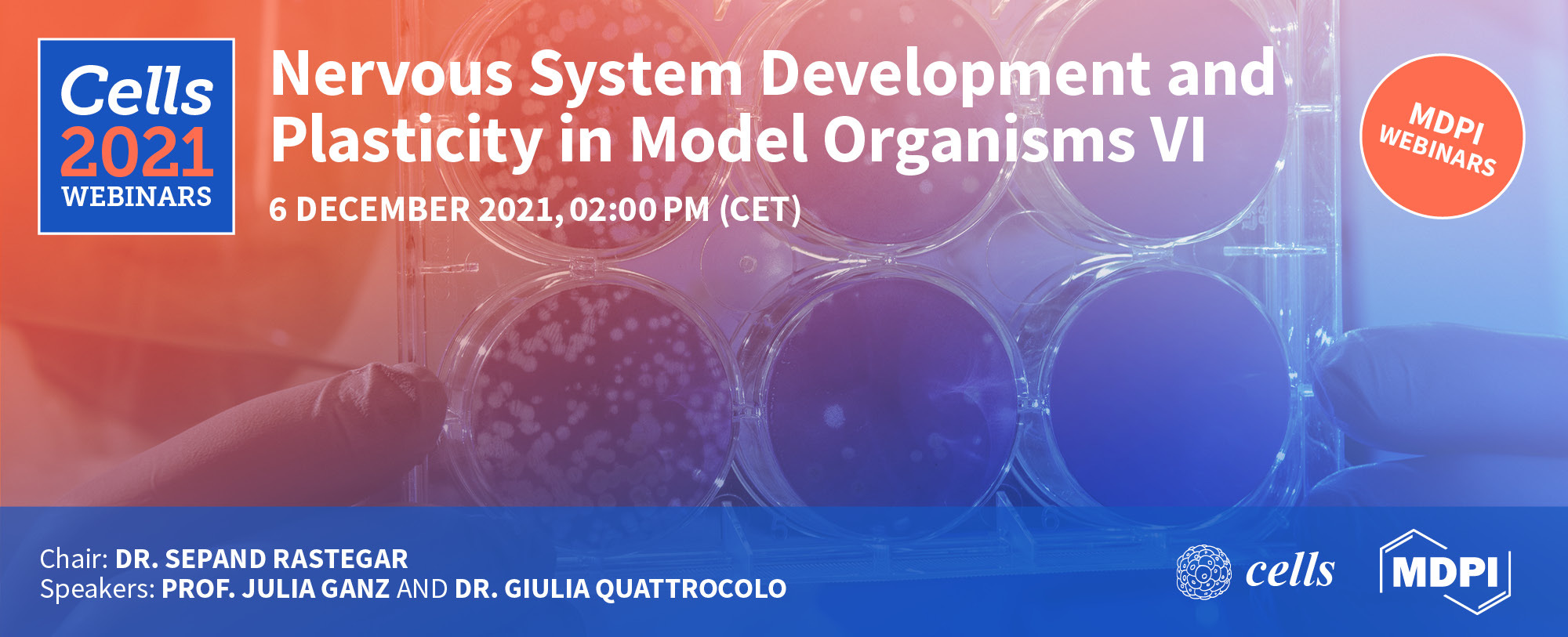
Nervous System Development and Plasticity in Model Organisms VI
The nervous system is essential for receiving, transferring, and processing information, which allows us to make important decisions and carry out everyday tasks. It is composed of two main cell populations: the neurons and the glial cells.
As the central part of the nervous system, neurons process incoming information and transmit it to different parts of the body. Glial cells provide support and protection for neurons and are necessary for neural development, synapse and myelin formation, and proper function of neurons. They also maintain the homeostasis of the nervous system as some populations of glial cells can behave as neural stem cells during embryonic development and in adult stages.
During the development of an organism, the nervous system undergoes significant changes, not only regarding its structure but also its function. Neurons, glial cells, and the numerous molecular signals and components that are part of the nervous system can play various roles during different stages of development and in different parts of the nervous system.
This webinar features several eminent experts in the field of nervous system development, maintenance and regeneration in different model organisms.
Date: 6 December 2021
Time: 2:00 pm CET | 8:00am EST | 9:00pm CST Asia
Webinar ID: 870 0932 2936
Webinar Secretariat: cells.webinar@mdpi.com
Meet Our Speaker
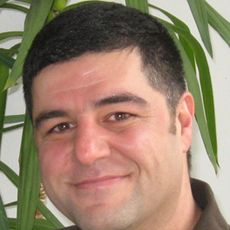
Institute of Biological and Chemical Systems-Biological Information Processing (IBCS-BIP), Karlsruhe Institute of Technology (KIT), Karlsruhe, Germany;I Studied Biology at the University of Strasbourg, France, where I obtained my diploma degree in 1996. I completed my PhD in the laboratory of Prof. Walter Knöchel at the University of Ulm, Germany. In 2000, I moved back to Strasbourg to do a two-year post-doctoral research program with Prof. Uwe Strähle at the IGBMC. In 2002, I obtained a permanent position at the French National Institute of Health and Medical Research (INSERM). In 2005, I decided to move to Germany to work at the Karlsruhe Institute of Technology (KIT). Currently, I am investigating the molecular mechanisms that regulate zebrafish neurogenesis and regeneration. My models are the embryonic spinal cord and the adult telencephalon. My full list of publications available at: https://orcid.org/0000-0003-4411-5646

On Monday, 6 December 2021, MDPI and the Journal Cells organized the 14th webinar on Cells, entitled "Nervous System Development and Plasticity in Model Organisms VI".
The introduction was held by the Chair of the webinar, Dr. Sepand Rastegar. He studied Biology at the University of Strasbourg, France, and completed his PhD at the University of Ulm, Germany. Then, obtained a permanent position at the French National Institute of Health and Medical Research (INSERM). In 2005, he moved to Germany to work at the Karlsruhe Institute of Technology (KIT). Currently, he is investigating the molecular mechanisms that regulate zebrafish neurogenesis and regeneration.
The first presentation was held by Prof. Dr. Julia Ganz, with her presentation "The brain in the gut - enteric nervous system development and function in zebrafish". She carried out her undergraduate education in Biology at the University of Konstanz and at the University of Freiburg, Germany. In her graduate work, she identified and characterized the stem cell niches in the adult zebrafish brain. For her postdoctoral work, Prof. Dr. Ganz joined the lab of Dr. Judith Eisen at the University of Oregon, where she studied the genetic and environmental influences that regulate the development of the enteric nervous system. Since 2016, Julia is an Assistant Professor in the Department of Integrative Biology at Michigan State University.
The second presentation with the title "Contribution of Cajal-Retzius cells to the maturation of the hippocampal circuit" was held by Dr. Giulia Quattrocolo. After obtaining a bachelor’s degree in Biology and a Master’s in Neurobiology from the Università di Pavia, in Italy, she moved to Northwestern University, Chicago, to complete her Ph.D. in Neuroscience. In 2017, she moved to Norway to work at the Kavli Institute for Systems Neuroscience, where she continued to investigate the role of Cajal-Retzius cells in the maturation of the hippocampal circuit. Since 2021, Dr. Quattrocolo is a group leader of the Circuit Development lab at the Kavli Institute for Systems Neuroscience.
The presentations were followed by a Q&A and a discussion, moderated by the Chair Dr. Sepand Rastegar. The webinar was offered via Zoom and required registration to attend. The full recording can be found here on Sciforum website. In order to stay updated on the next webinars on Cells be sure to sign up for our newsletter by clicking on “Subscribe” at the top of the page.
Guest Editors: Dr. Sepand Rastegar & Ms. Luisa Lübke
Deadline for manuscript submissions: 28 February 2022