
Cells Webinar | Signaling Pathways in Cell Generation and Reprogramming
the chair
16th Webinar on Cells
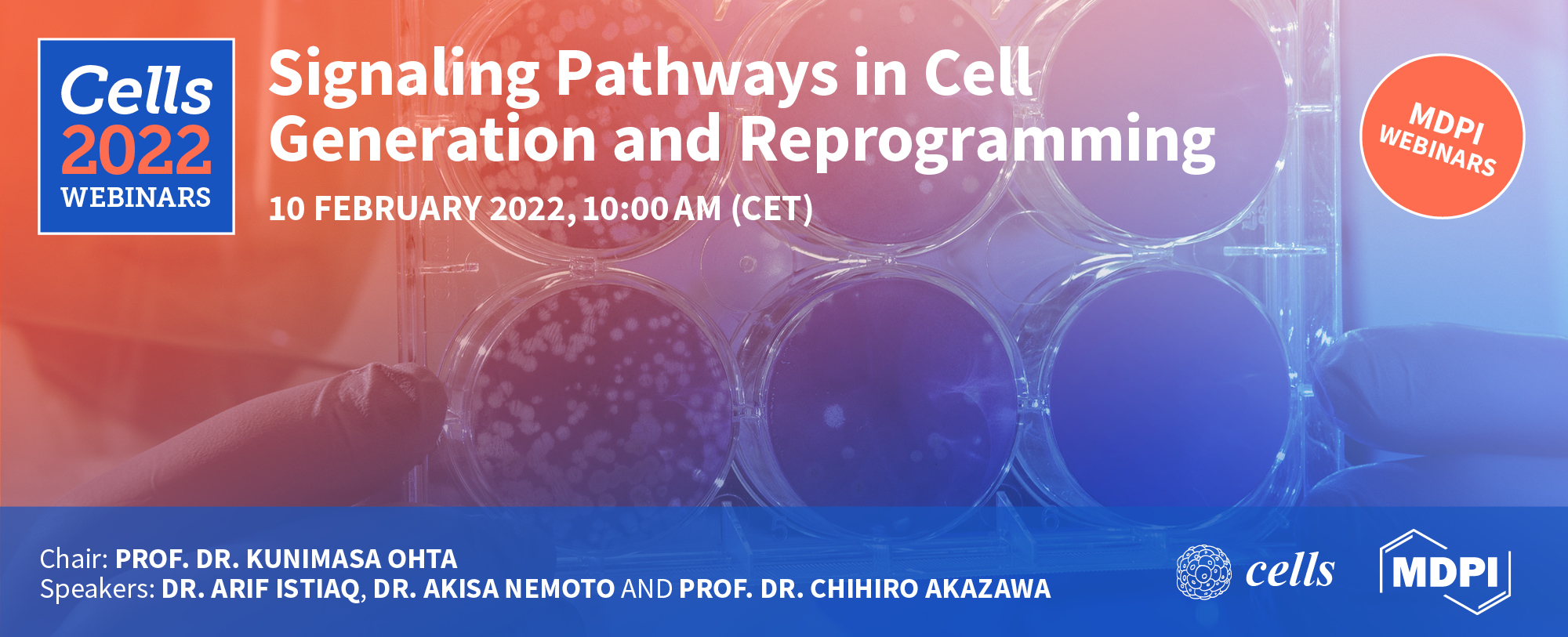
Signaling Pathways in Cell Generation and Reprogramming
In this Webinar, the focus will be on the creation of multipotent cells by using extrinsic materials. Recently, multipotent cells can be generated by several different kinds of methods: forced expression of specific transcription factors, incorporating ribosomes into fibroblasts, infection of leprosy bacilli into adult Schwann cells, applying a cocktail of small-molecule compounds or cell-penetrating peptides to fibroblasts, etc. Though these cells have both advantages and disadvantages for use in basic research or clinical applications, we realize that even terminally differentiated cells possess the potential to be reprogrammed by extrinsic materials. Therefore, understanding the precise knowledge of the specific cellular and molecular signaling behind such reprogramming is a priority for the scientific community.
Date: 10 February 2022
Time: 10:00am CET | 4:00am EST | 5:00pm CST Asia | 6:00pm JST
Webinar ID: 814 1733 8493
Webinar Secretariat: cells.webinar@mdpi.com
Meet Our Speaker
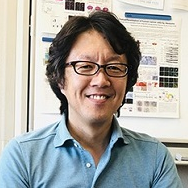
Department of Stem Cell Biology, Faculty of Arts and Science, Kyushu University, Fukuoka, Japan;Kunimasa Ohta studied Biology under the supervision of Prof. Hiromichi Morita at Kyushu University. After studying Axon Guidance (PhD Supervisor, Prof. Hajime Fujisawa) at Nagoya University and (headed by Prof. Hideaki Tanaka) at Kumamoto University and Neurobiology (Post.Doc, Host Prof. Roger Keynes) at the University of Cambridge, he returned to Kumamoto University and became a Principal Investigator as an Associate Professor. In 2020, his group transferred to the Faculty of Arts and Science at Kyushu University, where he is now a Professor. His research group focused on the molecular regulation of stem cells. There are two major research projects in his group. First, his group investigates how ribosome derived from infected bacteria regulates the gene expression pattern of host cells and transdifferentiates them into multipotent cells. The other one is the elucidation of the molecular function of the secreted protein Akhirin (Akhi is the Bengali translation for eye) as a niche molecule during mouse brain formation.


On Thursday, 10 February 2022, MDPI and the Journal Cells organized the 16th Webinar on Cells, entitled "Signaling Pathways in Cell Generation and Reprogramming”. This online seminar was chaired by Prof. Dr. Kunimasa Ohta from Department of Stem Cell Biology, Faculty of Arts and Science, Kyushu University, Fukuoka, Japan.
The first speaker to kick off the webinar was Dr. Arif Istiaq from the Department of Stem Cell Biology, Faculty of Arts and Science, Kyushu University, Fukuoka, Japan. He presented his research on the generation of novel kind multipotent cells with ribosomes. Dr. Akisa Nemoto, from the Department of Physiology, School of Medicine, Keio University, Japan, followed with her presentation on the direct reprogramming of common marmoset fibroblasts into neurons. Finally, Prof. Dr. Chihiro Akazawa, from Juntendo University Graduate School of Medicine, Intractable Disease Research Center, Tokyo, Japan, showed how to obtain meat organoids from bovine skeletal tissues. The three presentations were followed by Q&A sessions moderated by the chair. The webinar clearly demonstrated that final differentiated cells can be transdifferentiated into a completely different kind of cells by a mixture of signalling pathways.
The webinar was offered via Zoom and required registration to attend. The full recording can be found below. In order to stay updated on the next webinars on Cells, be sure to sign up for our newsletter by clicking on “Subscribe” at the top of the page.
Guest Editor: Dr. Kunimasa Ohta
Deadline for manuscript submissions: 10 May 2022