Chemistry Webinar | What’s under the Hood of Astrochemistry?
the chair
1st Chemistry Webinar
What’s under the Hood of Astrochemistry?
Welcome everyone to our discussion of what’s under the hood of astrochemistry. In many ways chemistry is the fingerprint of astrophysics. Chemistry is the study of matter, and this matter interacts with light. This light is what we observe in telescopes and even with space probes. Hence, the precepts of chemistry are essential for explaining how astronomical matter evolves and changes and how the physical conditions of an astronomical region affect the matter therein. Our presentations today will discuss vital molecules and chemical processes for understanding how different astronomical objects grow and evolve. This pertains to the molecular origins of life as well as how the universe continues to evolve and our ability to observe it.
Meet Our Chair
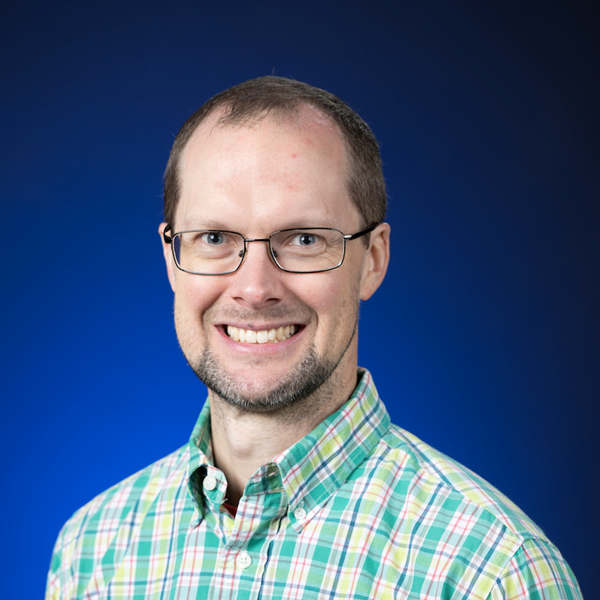
Department of Chemistry and Biochemistry, University of Mississippi, University, MS 38677, USA;Ryan C. Fortenberry is Associate Professor and Graduate Program Coordinator of Chemistry at the University of Mississippi. He was previously Assistant Professor of Chemistry at Georgia Southern University beginning in 2013, earning tenure in 2018 before departure. Ryan earned a BS in Mathematics working in chemistry research with Prof. David H. Magers and a MS in Communication from Mississippi College working with Prof. Cliff Fortenberry; received a Ph.D. at Virginia Tech in Theoretical Chemistry working with Prof. T. Daniel Crawford; and was a NASA Postdoctoral Program Fellow at the NASA Ames Research Center in Mountain View, California working under the supervision of the late Dr. Timothy J. Lee. Ryan has previously been Chair of the ACS Astrochemistry Subdivision and the Ole Miss Campus Coordinator for the Mississippi Space Grant Consortium. Ryan has over 200 peer-reviewed scientific publications, received several NASA research grants, was selected as the Virginia Tech College of Science 2019-2020 Outstanding Recent Alumni Award, the Mississippi College Dr. Cliff Fortenberry Department of Communication Alumnus of the Year in 2021, has been published in Scientific American as well as featured in C&E News, and is the author of Complete Science Communication, a text on how to write and talk about science both to expert and nonexpert audiences alike. When not doing science, Ryan enjoys the outdoors, travel, and time with family (including coaching soccer and conducting children’s choir). He has dreams of climbing the highest point in each of the 50 states. He’s currently at 45 (plus Puerto Rico).
Meet Our Speakers

Prof. Susanna Widicus Weaver
Departments of Chemistry and Astronomy, University of Wisconsin-Madison, Madison, WI 53706, USA;Susanna Widicus Weaver, Vozza Professor of Chemistry and Astronomy at the University of Wisconsin, is an expert in prebiotic astrochemistry. Her research, combining laboratory spectroscopy, observational astronomy, and chemical modeling, is aimed at understanding the mechanisms driving interstellar chemistry and the pathways for the formation of life. She received a bachelor’s degree in chemistry at Illinois Wesleyan University (2000) and her Ph.D. in chemistry at Caltech (2005). She was a postdoctoral fellow in Chemistry and Astronomy at the University of Illinois from 2005-2008. Before moving to Wisconsin, she was a Professor of Chemistry at Emory University.
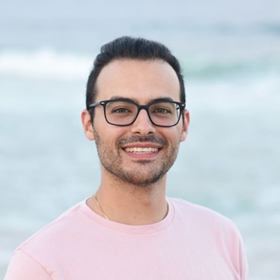
Dr. Vincent J. Esposito
Astrophysics Branch, NASA Ames Research Center, USA;Dr. Vincent J. Esposito recently joined the Astrophysics & Astrochemistry lab as a NASA Postdoctoral Program Fellow focusing on the infrared (IR) spectroscopy of polycyclic aromatic hydrocarbons (PAHs). His research focuses on incorporating anharmonicity in the IR absorption and emission spectra of PAHs. With the recent launch of JWST, new high spatial and spectral resolution IR observations in expanded wavelength ranges necessitates more accurate computational predictions to assist in analysis of these data. Vincent's ultimate goal is to populate The NASA Ames PAH IR Spectra Database (PAHdb) with anharmonic data for PAHs of different sizes as well as PAHs that include astronomically-relevant substituents. Vincent earned his PhD. in Physical Chemistry from the University of Pennsylvania. He was co-advised by Dr. Marsha Lester and Dr. Joseph Francisco. During his graduate studies, Vincent used computational methods to study the rotational, vibrational, and electronic spectroscopy of small, metal-bearing molecules of astrochemical interest as well as their photochemical pathways. Additionally, he studied the reaction dynamics and photochemistry of Criegee intermediates via experimental and computational methods. Before that, he obtained his bachelor’s degree in chemistry from the University of South Carolina. There, he worked with Dr. Susan Richardson studying disinfection by-products in drinking water. During his undergraduate studies, Vincent spent a summer at the NASA Goddard Space Flight Center (GSFC) working with the Dynamic Response of the Environments at Asteroids, The Moon, and moons of Mars (DREAM2); a part of SSERVI. There, under the direction of Dr. Bill Farrell, he studied the dynamics of the solar wind implantation into the Lunar surface.


In this section, you will find the recordings of this webinar to watch, re-watch and share with your colleagues!
In “What’s Under the Hood of Astrochemistry” Prof. Widicus Weaver gives an excellent overview of the field and discusses the search for prebiotic molecules and the molecular origins of life in gas clouds, hot cores, protoplanetary disks, and exoplanets among other astronomical regions. Dr. Esposito shows how computers can be utilized to predict infrared spectra of polycyclic aromatic hydrocarbons for comparison to various NASA missions including JWST. These discussions highlight the interdisciplinary nature of astrochemistry and how the asking of novel questions in this field can have profound influence on our view of ourselves and how answers to such difficult questions can provide new insights and technologies.