Children Webinar | Novel Precision Medicine and Translational Based Approaches, Treatments and Prevention Strategies in Neonatal, Pediatric, Adolescent, and Transition Endocrinology
the chair
9th Children Webinar
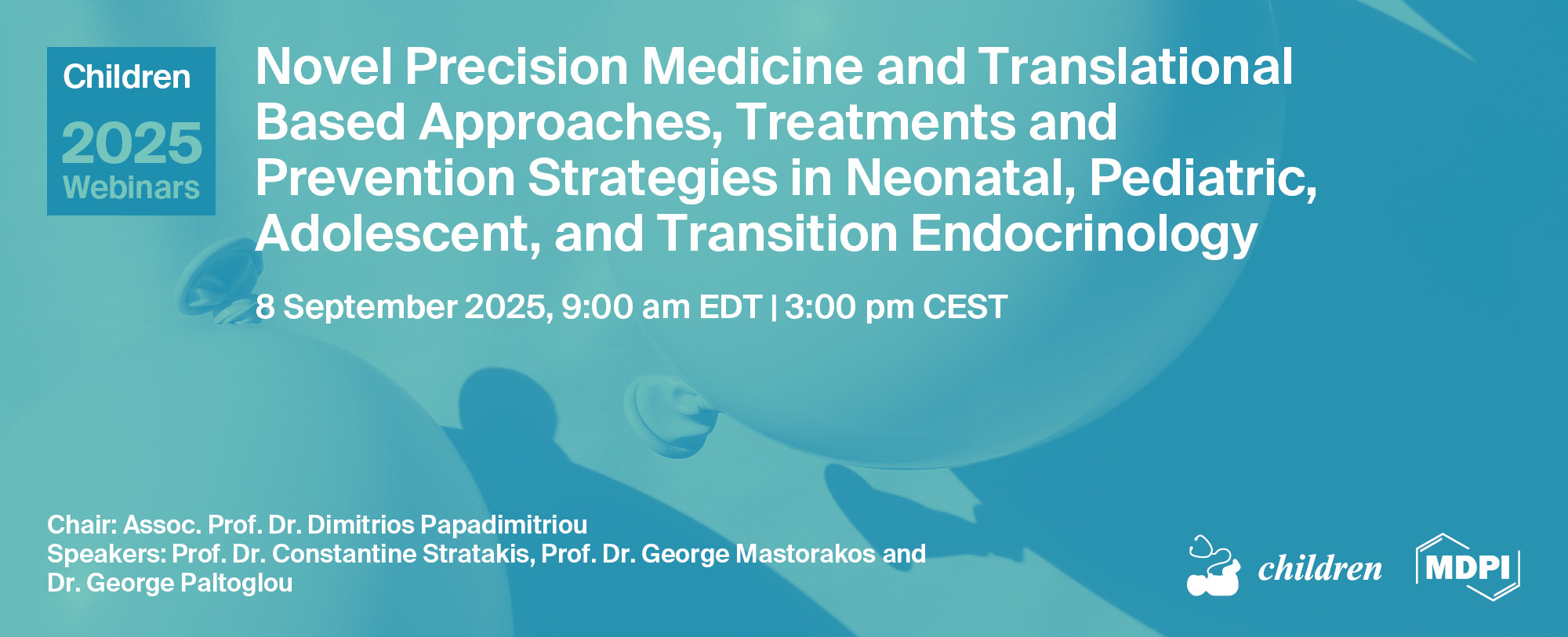
Novel Precision Medicine and Translational Based Approaches, Treatments and Prevention Strategies in Neonatal, Pediatric, Adolescent, and Transition Endocrinology
Neonatal, paediatric, and adolescent endocrinology are undergoing a rapid transformation driven by breakthroughs in molecular genetics, pharmacogenomics, and translational science. This new era is defined by precision-based diagnostics, targeted therapeutics, and individualized care but also prevention strategies across the full developmental continuum—from pre-conception, in-utero and neonates to young adults in transition. The understanding of the Hippocratic “Physis” and the deepening in mechanisms of genetic predisposition and endocrine disruption are rapidly changing the landscape of pediatric endocrine practice.
Date: 08 September 2025
Time: 3:00 p.m. CEST | 9:00 a.m. EDT
Webinar ID: 889 9028 4530
Webinar Secretariat: journal.webinar@mdpi.com
Meet Our Chair

Associate Professor of Pediatrics and Pediatric Endocrinology, University General Hospital of Larissa, Faculty of Medicine, University of Thessaly, Larissa 41334, Greece.;Director, Pediatric Endocrine Clinics IKE;Scientific Director, Pediatric Endocrine Division, Athens Medical Group.;Dimitris Papadimitriou received his Medical Degree in Medicine and his Doctoral Dissertation on Pediatric Endocrinology at the Faculty of Medicine of the School of Health Sciences of the University of Patras, Greece. He had official training in Pediatric Endocrinology in St Vincent de Paul University Hospital in Paris, France, and served as Chef de Clinique des Universites at CHU-Grenoble, Joseph-Fourier University. In June 2024 he was elected Associate Professor of Pediatrics and Pediatric Endocrinology at the Faculty of Medicine, School of Health Sciences, University of Thessaly, Larisa, Greece.
Meet Our Speakers

2nd Department of Pediatrics of the National and Kapodistrian University of Athens, "P. & A. Kyriakou" Children's Hospital, Athens, Greece;Institute of Molecular Biology and Biotechnology of the Foundation for Research and Technology Hellas;National Institute of Health, Eunice Kennedy Shriver National Insttute of Child Health and Human Development (NICHD);Professor of Pediatrics at the National and Kapodistrian University of Athens and co-founder and Director of ASTREA Health, he is an internationally known medical geneticist, endocrinologist, translational investigator and executive leader. He has served as the Chief Scientific Officer of ELPEN, in Athens (2021-2024) and directed the efforts to build their Research Institute that is due to open in 2025. He is currently the Director of human genetics and precision medicine at IMBB, FORTH and coordinates the Hellenic Network for Precision Medicine in Molecular Oncology. His training was in medicine, pediatrics, endocrinology and medical genetics and holds a Medical Doctor’s, a Doctorate, two honorary PhD degrees and is a graduate of the University of Maryland School of Public Policy Executive Leadership program. In the USA, he led the NIH/NICHD genetics and endocrinology programs and NICHD intramural research (2009-2021). As a researcher, Prof. Dr. Stratakis worked on tumor genetics; he described a number of genetic defects, including a disease that bears his name (Carney-Stratakis syndrome). He received many awards including the 2009 Ernst Oppenheimer Award (US Endocrine Society), NIH Merit and Director’s Awards, and Visiting Professorships in academic centers around the world. Prof. Dr. Stratakis served as the 2018-2019 President of the Society of Pediatric Research (SPR). He is an elected member of American Pediatric Society (APS), the American Society for Clinical Investigation (ASCI) and the Association of American Physicians (AAP) and serves as the Editor-in-Chief of HORMONES. Prof. Dr. Stratakis is dedicated to the application of human genetics and new technologies in the prevention of disease, the betterment of human life and experience, and the holistic approach to health, all principles and goals of ASTREA.
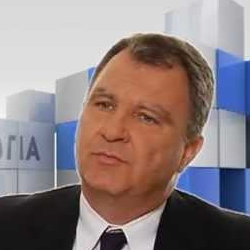
Division of Endocrinology, Aretaieion Hospital, School of Medicine, National and Kapodistrian University of Athens, 11528, Greece;Prof. Dr. Mastorakos received his PhD on a Doctorate Thesis from the Athens University Medical School. He specialized in Internal Medicine and Endocrinology in the Lariboisière Hospital and in the Cochin Hospital and received the “Assistant Etranger” degree from the “University Paris Nord”. He was a Visiting Fellow in the International Fogarty Centre in the Department of Developmental Endocrinology of NICHD, at the NIH, Bethesda. He has worked as scientific consultant of the department of endocrinology of the University of Athens and in 2002, 2009 and 2015 he was elected, respectively, Assistant, Associate and Full Professor of Endocrinology at the University of Athens. He is Director of the post-graduate University Master Research in Female Reproduction at the National and Kapodistrian University of Athens and Visiting Professor at Belgrade University. His main publications deal with peripheral CRH, endogenous and exogenous interleukin-6 in the Hypothalamic–Pituitary–Adrenal axis, somatostatin in inflammation, various aspects of the immune-inflammatory systems in Neuroendocrinology, PCOS in adolescence and menopause, and, recently, with metabolic aspects of pregnancy and exercise as a stress model. His editorial experience includes: editorship in the New York Academy of Sciences, associate editorship in the Pubmed-indexed journal HORMONES as well as Endocrine Connections; membership in the International Advisory Panel in ENDOCRINE REVIEWS, the Editorial Board of JES, the Editorial Board of ENDOCRINE, and the Editorial Board of Reviews in Endocrine and Metabolic Disorders. He is a member of the European, American, French and Hellenic Societies of Endocrinology (HES). He served as president of the HES and as elected representative of the European Council of Affiliated Societies (ECAS) within the ESE and ex officio member of the ExCo of the ESE. He is a working as a co-opt member of the ECAS for the creation of a European Network for Research and Education in Endocrinology as well as a member of the committee in Endo-ERN appointed by the ESE ExCo.
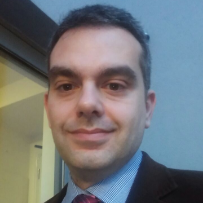
Division of Endocrinology, Diabetes and Metabolism, 2nd Department of Pediatrics of the National and Kapodistrian University of Athens, "P. & A. Kyriakou" Children's Hospital, Athens, Greece.;Dr George Paltoglou is a Consultant Paediatric Endocrinologist and Diabetologist practicing in Athens, Greece. He is an Academic Scholar of the Second Department of Pediatrics of the National and Kapodistrian University of Athens (NKUA). He is also a member of the European Society of Pediatric Endocrinology (ESPE) Clinical Practice Committee. In summary, he has earned his MD and PhD degrees from the National and Kapodistrian University of Athens, Greece (NKUA). His PhD Thesis was entitled: “Study of endocrine and oxidative stress markers in pre-pubertal children, in relation to exercise”. He also holds a BSc in Medical Laboratory Technology from the University of West Attika, Athens, Greece. After completing his Pediatrics Specialty Training in the First Department of Paediatrics of the National and Kapodistrian University of Athens at “Aghia Sophia” Children’s Hospital (Athens, Greece), he started a Fellowship in Pediatric Endocrinology, Diabetes and Metabolism in the same Department. Subsequently, he continued his Fellowship in the Department of Pediatric and Endocrinology of Great Ormond Street Hospital (London, UK), in the Department of Metabolic Medicine of Great Ormond Street Hospital (London, UK) and in the Department of Pediatric and Adolescent Endocrinology of University College London Hospital (London, UK). Following his Fellowship training he has worked as a Consultant Paediatric Endocrinologist in the Department of Paediatric Endocrinology of the Evelina London Children’s Hospital (London, UK).


The Topical Collection, “Novel Precision Medicine- and Translational-Based Approaches, Treatments and Prevention Strategies in Neonatal, Pediatric, Adolescent and Transition Endocrinology”, highlights major advances in pediatric and adolescent endocrinology through precision medicine and translational research, including the following:
- Precision diagnostics and therapies: use of molecular genetics, pharmacogenomics, and genomic sequencing for rare endocrine and gynecological conditions.
- Innovative treatments: enzyme replacement for hypophosphatasia, natriuretic peptide analogues for growth, repurposed drugs for rare diseases like Wolfram syndrome, and evolving hormone replacement regimens (e.g., rPTH, rLH/rFSH).
- New formulations: long-acting growth hormone, modified-release hydrocortisone, and improved adherence strategies.
- Prenatal and reproductive health: non-invasive prenatal testing for congenital adrenal hyperplasia, and aromatase inhibitors for fertility and hormonal management.
- Immunoprevention and modulation: preventive strategies in gynecological cancers and type 1 diabetes, with vitamin D/calcitriol analogues under study in autoimmune diseases.
- Complex conditions: multidisciplinary approaches needed for puberty, gender identity, hypothalamic amenorrhea, endometriosis, and PCOS.
The webinar chaired by Assoc. Prof. Dimitrios Papadimitriou featured talks by Prof. Constantine Stratakis (precision medicine), Prof. George Mastorakos (endocrine disruption), and Dr. George Paltoglou (emerging treatments). Guest editor Prof. Antonis Voutetakis also contributes to the Topical Collection, which is published in Children (MDPI) and welcomes new submissions.
The webinar was hosted on Zoom and required prior registration to attend. The full recording can be accessed below. In order to learn about future webinars, you can sign up for our newsletter by clicking “Subscribe” at the top of this page.
Edited by Assoc. Prof. Dr. Dimitris T. Papadimitriou, Dr. George Paltoglou, Prof. Dr. Antonis Voutetakis, Prof. Dr. George Mastorakos