
MDPI's Journal Cluster of Ecosystem and Resource Management Healthy Biosphere, Healthy Humans Session 2
the chair
MDPI's Journal Cluster of Ecosystem and Resource Management
Healthy Biosphere, Healthy Humans (Session 2)
MDPI's Journal Cluster of Ecosystem and Resource Management | Healthy Biosphere, Healthy Humans (Session 2)
I am very pleased to moderate and introduce the distinguished speakers for this webinar focused on "Healthy Biosphere, Healthy Humans". We benefit from nature through the air we breathe, the water we drink, the food we eat, and the clothes we wear, as well as a whole host of other indirect benefits we derive from other species that are also dependent and supported by nature.
Scientists and practitioners throughout the world are developing methods and tools to determine the value of such benefits and their loss due to adverse impact of complex environmental issues such as extreme weather conditions and climate change, loss of biodiversity, and environmental pollution. The intent is to quantitatively determine the value of such benefits and services and the cost of their loss, as Natural Capital. The result is a new concept of inclusive health and wealth that accounts for the value of nature, its services, and benefits. We are fortunate to have three distinguished speakers to share their perspectives with us today. The webinar will begin with brief introductions of all three speakers and their topics, followed by individual presentations of 20 minutes each, a 15-minute question-and-answer session, and concluding remarks.
Date: 24 November 2026
Time: 17:00 CET (Central Europe) | 11:00 EST
Webinar ID: 890 8060 4220
Webinar Secretariat: journal.webinar@mdpi.com
Meet Our Chair
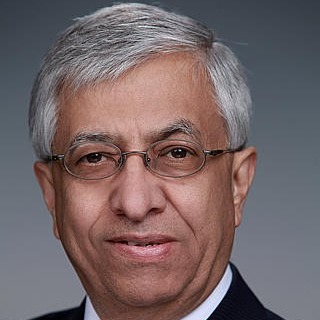
iCREST Environmental Education Foundation, CA, USA;Dr. Asrar currently serves as Executive Chairman of the iCREST Foundation (iCREST FOUNDATION), an organization dedicated to enabling and empowering youth to become stewards and ambassadors for environmental resilience and sustainability. He has more than forty years of experience and has held key positions in the U.S. government, international organizations, and academia. From 2019 to 2022, he served as Senior Vice President for Science at the Universities Space Research Association Universities Space Research Association (USRA), where he provided leadership and strategic direction for science and education programs focused on Earth and space sciences research, education, and workforce development. Between 2013 and 2019, he was the Director of the Joint Global Change Research Institute (Joint Global Change Research Institute) of the Pacific Northwest National Laboratory, located at the University of Maryland in College Park, Maryland. Prior to this role, he was Director of the World Climate Research Program World Climate Research Program (WCRP) from 2008 to 2013 in Geneva, Switzerland. He served as Deputy Administrator for Natural Resources and Agricultural Systems with the Agricultural Research Service (ARS) of the U.S. Department of Agriculture from 2006 to 2008. Earlier in his career, from 1987 to 2005, Dr. Asrar held several key positions at the U.S. National Aeronautics and Space Administration (NASA).
Meet Our Speakers
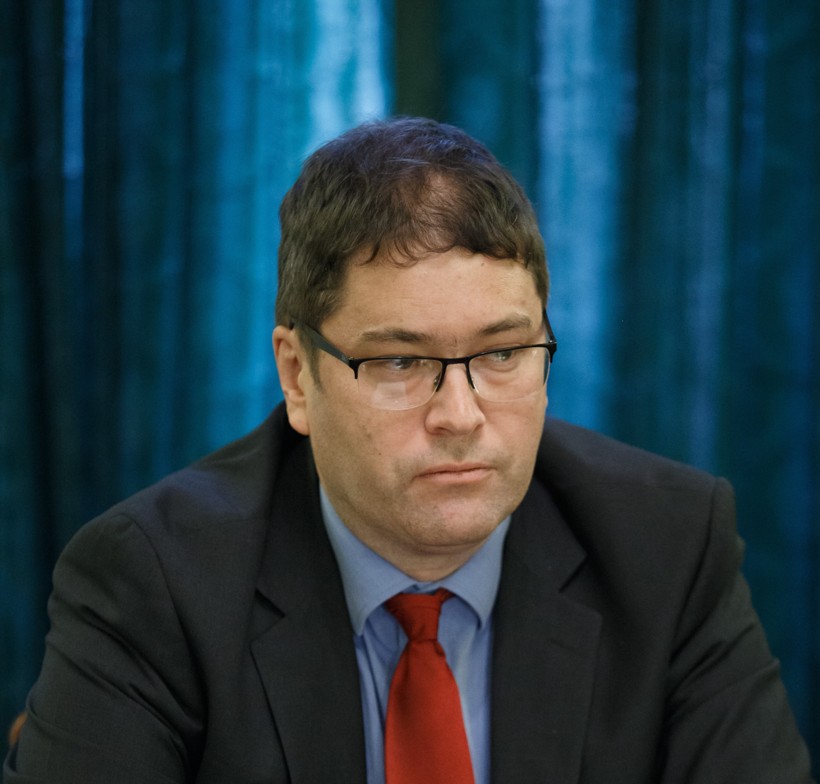
Biotehnical Faculty, University of Ljubljana, Jamnikarjeva, Ljubljana, Slovenia;Miha Humar is a Full Professor at the University of Ljubljana, Biotechnical Faculty, Department of Wood Science and Technology, where he has also served in senior academic leadership positions. His research focuses on wood durability, wood protection and modification, fungal degradation, service-life prediction, and the performance of wood in buildings and cultural heritage. He leads the research programme Wood and Lignocellulosic Composites and has coordinated or participated in numerous national and European research projects. His work combines laboratory research with long-term field testing, non-destructive assessment, moisture monitoring, and advanced analytical techniques. A significant part of his recent research addresses climate-change impacts on wood performance, the valorisation of damaged timber, and sustainable preservation of wooden cultural heritage. He is actively involved in international research networks, particularly the International Research Group on Wood Protection (IRGWP), where he has held several leadership roles, and contributes extensively to scientific publishing, education, doctoral supervision, and knowledge transfer.
School of Chemical Engineering, University of Birmingham, Birmingham, UK ;The Green Institute, Ondo, Nigeria;Dr. Adenike A. Akinsemolu is an environmental sustainability scholar, educator, researcher and advocate whose work spans science, sustainability, education, policy and community development. She is the Founder and Global Director of The Green Institute and an Honorary Associate Professor at the University of Birmingham. She is the pioneer of Green Microbiology and Founding President of the Society for Green Microbiology, advancing the field as an interdisciplinary framework for harnessing microbial systems to address sustainability challenges across climate change, food security, water systems, environmental restoration and human well-being. She is also co-editor of Green Microbiology: Sustainability, Climate Change, Food, and Water, published by Academic Press, Elsevier. Dr. Akinsemolu is a Lead Author of the United Nations Environment Programme’s Global Environment Outlook (GEO-7), a National Geographic Educator, and a member of the UN Sustainable Development Solutions Network. She is the author of Principles of Green and Sustainability Science (Springer, 2020) and other works on sustainability and green education. Through her scholarship, institutional leadership and pioneering work in Green Microbiology, Dr. Akinsemolu advances interdisciplinary approaches to building a more sustainable, resilient and regenerative future.
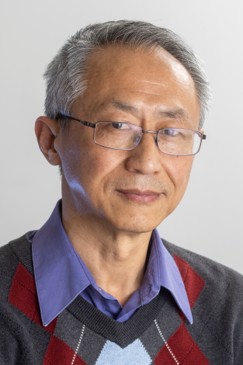
Department of Biological Sciences, Tennessee State University, Nashville, USA;Dr. Dafeng Hui is a Professor in the Department of Biological Sciences at Tennessee State University in Nashville, Tennessee, USA. His research spans plant ecology, global change ecology, ecosystem ecology, agroecology, and ecological modeling. He has authored one book, several book chapters, and more than 300 scientific journal publications, including articles in Nature, PNAS, Global Change Biology, Ecology, and New Phytologist. Dr. Hui serves as an associate or academic editor for Plant Ecology, Journal of Plant Ecology, and The Crop Journal and as an editorial board member for several journals, including Geoderma and Global Change Biology. His research has been supported by the National Science Foundation (NSF), the U.S. Department of Agriculture (USDA), and the U.S. Department of Energy (DOE).







| Speaker | Time (CET) | Time (EST) |
| Dr. Ghassem R. Asrar Chair Introduction |
17:00 - 17:10 | 11:00 - 11:10 |
| Dr. Adenike Akinsemolu Green Microbiology for a Healthy Biosphere and Healthy Humans |
17:10 - 17:30 | 11:10 - 11:30 |
| Prof. Dr. Miha Humar Climate Change, Forest Disturbances, and Wood Quality: From Damaged Forests to Resilient Wood Utilization |
17:30 - 17:50 | 11:30 - 11:50 |
| Prof. Dr. Dafeng Hui Effect of Sustainable Agricultural Practices and Climate Change on Crop Production and Soil Health |
17:50 - 18:10 | 11:50 - 12:10 |
| Q&A | 18:10 - 18:25 | 12:10 - 12:25 |
| Dr. Ghassem R. Asrar Closing of Webinar |
18:25 - 18:30 | 12:25 - 12:30 |
This is a FREE webinar. After registering, you will receive a confirmation email containing information on how to join the webinar. Registrations with academic institutional email addresses will be prioritized.
Certificates of attendance will be delivered to those who attend the live webinar.
Can’t attend? Register anyway and we’ll let you know when the recording is available to watch.
Register for free here!
Forestry Economy Sustainability and Ecosystem Governance
Guest Editors: Prof. Dr. Fanbin Kong and Dr. Caiyao Xu
Deadline for Manuscript Submission: 30 April 2027
Biodiversity, Ecology and Conservation of Tropical Forests and Plantations
Guest Editor: Dr. Pablo Martínez-Zurimendi
Deadline for Manuscript Submission: 30 April 2027
Current Soil and Water Conservation Strategies: Pathways Toward Sustainable Food Systems and Climate Resilience
Guest Editor: Prof. Dr. Gabrijel Ondrasek
Deadline for Manuscript Submission: 31 December 2026