
MDPI's Journal Cluster of Analysis and Sensing Technologies Webinar | Analytical and Sensing Technologies for Marine Toxin Detection
the chair
MDPI's Journal Cluster of Analysis and Sensing Technologies
Analytical and Sensing Technologies for Marine Toxin Detection
Welcome to the “Analytical and Sensing Technologies for Marine Toxin Detection” webinar, organized by MDPI’s Journal Cluster of Analysis and Sensing Technologies.
Marine toxins produced by certain microalgae during harmful algal blooms are a growing concern worldwide. They can accumulate in shellfish and fish, which poisons humans and forces harvesting closures, ultimately resulting in economic losses for aquaculture and coastal communities. Climate change and the spread of toxic species to new regions are making these events more frequent and less predictable, increasing the need for effective monitoring.
Nevertheless, reliable detection of marine toxins remains a challenge. Reference methods such as liquid chromatography–mass spectrometry offer high sensitivity and selectivity, but they require well-equipped laboratories and trained personnel. At the same time, there is a strong demand for rapid, low-cost and portable tools, such as biosensors and immunoassays, that allow screening on site and support early warning systems.
In this webinar, our speakers will present recent advances in both analytical and sensing technologies for marine toxin detection, from method development to real-world applications in monitoring programs. We hope this session will encourage an engaging exchange of knowledge between researchers, regulators and end users and look forward to your questions.
Date: 10 December 2026
Time: 9:00 am WET | 10:00 am CET | 5:00 pm CST Asia
Webinar ID: 867 8233 4889
Webinar Secretariat: webinar@mdpi.com
Meet Our Chair

Center for Environmental and Marine Studies (CESAM) and Chemistry Department, University of Aveiro, Aveiro, Portugal;Alisa Rudnitskaya is a researcher at the Department of Chemistry and the Centre for Environmental and Marine Studies (CESAM) at the University of Aveiro, Portugal. Her research focuses on the development of electronic tongue multisensor systems, sensing materials for electrochemical sensors, chemometric data analysis and hyperspectral imaging. She is credited with 353 publications, including 109 articles and 8 book chapters, with an associated h-index of 45. Over her career, she has participated in and coordinated several research projects funded by Portuguese agencies, as well as international funding programs such asEEA Grants and Horizon Europe. She serves as Chair of the Technical Program Committee for the International Symposium on Olfaction and Electronic Noses (ISOEN) 2024 and 2026 and is an Editor for the Biosensors and Sensors journals (MDPI).
Meet Our Speakers
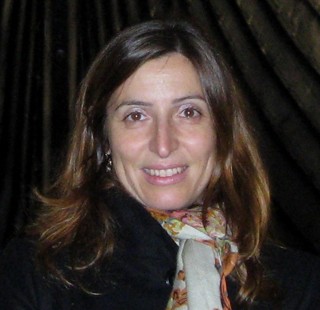
Laboratory of Marine Biotoxins, Department of the Sea and Marine Resources, IPMA-Portuguese Institute for the Sea and Atmosphere, Portugal;M. João Botelho earned a Master’s degree in Chemical Engineering from the University of Lisbon in 2009 and a PhD in Environment from the NOVA University of Lisbon in 2014. She is a researcher at the Portuguese Institute for Sea and Atmosphere (IPMA), Division of Oceanography and Marine Environment, where she heads the National Reference Laboratory for Marine Toxins. In her current position, she is responsible for toxin analytical chemistry testing in shellfish from harvesting areas in Portugal. Dr. M. João Botelho is a member of the Contaminant Pathways and Interactions with Marine Organisms team within the Marine Environment group at the Interdisciplinary Centre of Marine and Environmental Research (CIIMAR). She specializes in the accumulation and biotransformation mechanisms of marine toxins in bivalves; her research focuses on the availability and pathways of these compounds in the marine environment, as well as the development of biosensors for toxin detection. Dr. M. João Botelho has participated in more than 30 research projects and contracts and has published more than 45 peer-reviewed articles.
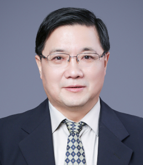
Director of Biosensor National Special Laboratory, Department of Biomedical Engineering, Zhejiang University, Hangzhou, China;Dr. Ping Wang is Professor of Biomedical Engineering at Zhejiang University in Hangzhou, China. There, he directs the Biosensor National Special Laboratory and the Smart Sensor and High-end Medical Equipment Laboratory of Zhejiang Province. He received his B.S., M.S. and Ph.D. degrees in electrical engineering from the Harbin Institute of Technology. He then joined Zhejiang University as a postdoctoral fellow in 1992, and has been a visiting scholar at Case Western Reserve University and the University of Arkansas. Dr. Ping Wang’s research covers biosensors and chemical sensors, electronic and bioelectronic noses and tongues, cell- and organoid-based biomimetic chips, and Bio-MEMS/NEMS. His group develops cell-based biosensors for fast functional detection of marine toxins such as saxitoxin and brevetoxin. In addition, Dr. Ping Wang has published widely in the field, including a highly cited Chemical Reviews article on cell-based biosensors. He also co-authored the book Bioinspired Smell and Taste Sensors.
This is a FREE webinar. After registering, you will receive a confirmation email containing information on how to join the webinar. Registrations with academic institutional email addresses will be prioritized.
Certificates of attendance will be delivered to those who attend the live webinar.
Can’t attend? Register anyway and we’ll let you know when the recording is available to watch.
Register for free here!
edited by Dr. Giulia Gorla and Dr. Miriam Medina-García
Deadline for manuscript submissions: 20 February 2027
Optical Biosensors for Environmental Monitoring
edited by Dr. Lijun Luo, Dr. Xin Li, Dr. Xuechao Xu and Dr. Hengjia Zhu
Deadline for manuscript submissions: 25 May 2027
Green and Advanced Analytical Approaches for Emerging Contaminants and Environmental Risk Assessment
edited by Prof. Dr. Bogusław Buszewski and Dr. Reda Kubiliūtė
Deadline for manuscript submissions: 30 June 2027
edited by Dr. Vasileios M. Pappas and Dr. Jin Shang
Deadline for manuscript submissions: 15 July 2027
edited by Dr. Maria Luisa Astolfi
Deadline for manuscript submissions: 31 August 2027
https://www.mdpi.com/journal/chemosensors/special_issues/YU3BX89Y17?webinar_id=517&_utm_from=e72b5a9a39
Development of a Textile Solid-Phase Extraction Method Employing the Marine Sulfated Polysaccharide Ulvan for the Extraction and Analysis of Cationic Dyes
by Ivo Safarik et al.
Harnessing in Silico Design for Electrochemical Aptasensor Optimization: Detection of Okadaic Acid (OA)
by Margherita Vit et al.
Modified GAPI (MoGAPI) Tool and Software for the Assessment of Method Greenness: Case Studies and Applications
by Fotouh R. Mansour, Justyna Płotka-Wasylka and Marcello Locatelli
Impact of Mining and Processing of Critical Raw Materials on Water Quality—A Case Study of the Luda Yana River, Bulgaria
by Kristina Gartsiyanova
Innovative Microfluidic Technologies for Rapid Heavy Metal Ion Detection
by Muhammad Furqan Rauf et al.