Computation Webinar | Open Source Software Applications in CFD
the chair
4th Computation Webinar
Open Source Software Applications in CFD
Computational Fluid Dynamics (CFD) has become an indispensable tool in modern engineering and scientific research, enabling the numerical investigation of complex fluid flow, heat transfer, and related physical phenomena. Since the 90s, CFD applications have relied heavily on commercial software packages, which provide comprehensive simulation environments but often involve substantial licensing costs and limitations regarding access to source code and numerical implementation details.
In recent years, open-source CFD software has gained considerable attention and established itself as an increasingly attractive alternative and complement to commercial solutions. By providing access to source code, open-source platforms offer researchers and engineers considerable flexibility in developing, modifying, and extending numerical methods and physical models. They also facilitate reproducibility, collaborative research, and the exchange of scientific knowledge.
Among the most prominent examples is OpenFOAM, which has become a widely used platform for a broad range of CFD applications. In addition, several other open-source tools and libraries have emerged, addressing specific numerical methods, physical phenomena, and engineering disciplines.
The applications of open-source CFD software cover a wide spectrum of topics, including turbulent flows, heat and mass transfer, combustion, multiphase flows, aerodynamics, environmental flows, and energy systems. Beyond their application in research and industrial engineering, these tools also offer valuable opportunities in academic education and the training of future engineers.
Nevertheless, open-source CFD solutions also present challenges. These include software usability, computational efficiency, validation and verification, documentation, and the availability of technical support. Furthermore, selecting an appropriate software platform and ensuring the reliability of numerical results require a sound understanding of the underlying physical models and numerical methods.
This webinar aims to explore the current capabilities, applications, and future perspectives of open-source software in Computational Fluid Dynamics. Contributions addressing practical applications, methodological developments, software comparisons, validation studies, and experiences from research, education, and industry are particularly welcome.
Date: 26 November 2026
Time: 9:00 CET | 16:00 CST Asia
Webinar ID: 881 3288 0726
Webinar Secretariat: journal.webinar@mdpi.com
Meet Our Chair

Center of Flow Simulation (CFS), Department of Mechanical and Process Engineering, Duesseldorf University of Applied Sciences, Duesseldorf, Germany;Prof. Dr. Ali Cemal Benim received his B.Sc. and M.Sc. degrees in Mechanical Engineering at the Boğaziҫi University, Istanbul, Turkey. He received his Ph.D. degree at the University of Stuttgart, Germany, on the topic “Finite Element Modeling of Turbulent Diffusion Flames” with “Degree of Distinction”. Following a post-doctoral period at the University of Stuttgart, he joined ABB Turbo Systems Ltd. in Baden, Switzerland, where he was the manager of the “Computational Flow and Combustion Modeling” group. Since 1996, he has served as Professor of Energy Technology and the Head of Center of Flow Simulation at the Düsseldorf University of Applied Sciences, Düsseldorf, Germany. He is also a Professor in the Department of Mechanical Engineering at Bursa Technical University, as a member of the COSAM Lab, Bursa, Turkey, and holds an Adjunct Professor position in the Department of Mechanical Engineering at Vel Tech University, Chennai, India. He authored an co-authored more than 300 papers ranging from journal papers to book chapters and conference papers, He is the Editor-in-Chief of Computation, Section Editor-in-Chief of Fire, Executive Editor of Progress in Computational Fluid Dynamics, and has editorial function in a number of further journals and scientific publications. He has organizational roles in a number of conferences, including the conference series International Conference on Computational Heat and Mass Transfer and ASME Turbo Expo.
Meet Our Speakers
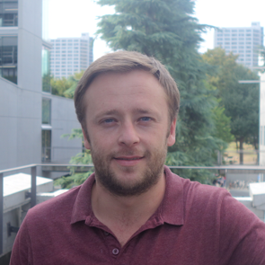
Department of Mechanical Engineering & COSAM (Center of Open-Source Software Applications in Mechanics), Bursa Technical University, Türkiye;Levent Aydinbakar is an Assistant Professor in the Department of Mechanical Engineering at Bursa Technical University, Türkiye, and a co-founder of COSAM (Center of Open-Source Software Applications in Mechanics). He received his MSc from Cranfield University (Bedfordshire, UK) in 2016, working on the implementation and validation of LES and ILES methods in the UCNS3D code. He earned his PhD from Waseda University (Tokyo, Japan) in 2021, working within the T*AFSM group on space–time variational multiscale (ST-VMS) methods and isogeometric analysis for turbomachinery flows. His research centers on open-source computational fluid dynamics, with particular interest in multiphase and viscoplastic free-surface flows, space–time and multigrid methods, and in-solver machine-learning acceleration. At COSAM, he leads the development of several in-house open-source OpenFOAM solvers and applies open-source tools (OpenFOAM, FEniCS) to a range of scientific and industrial flow problems.
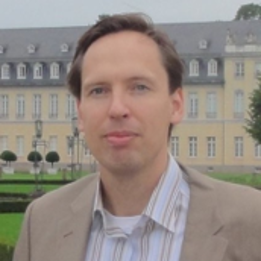
CSC-IT Center for Science, Espoo, Finland;Peter Råback leads the Elmer developer team at CSC – IT Center for Science, Finland. He holds a D.Sc. (Tech) from Helsinki University of Technology, Department of Engineering Physics. His work focuses on real-world problems of computational science and engineering, particularly related to multiphysics simulation and parallel computing, with applications ranging from electrical machines to computational glaciology. Råback has given several keynotes in international conferences and has a h-index of 23.
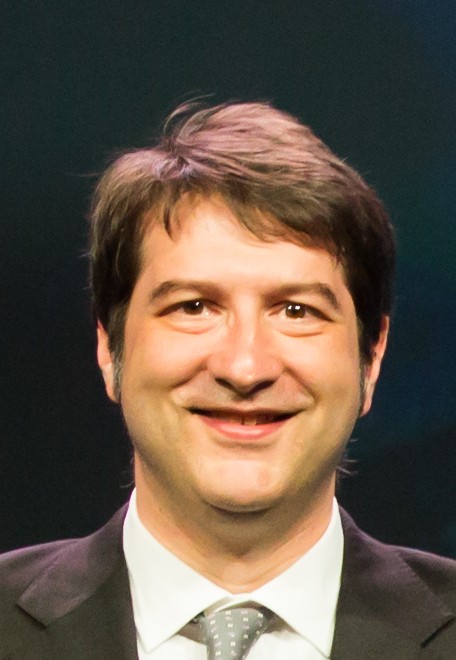
Energy Department, Politecnico di Milano, Italy;Tommaso Lucchini’s research is focused on numerical simulation of thermal and fluid dynamic processes in internal combustion engines. In particular, he works on multi-dimensional modeling (CFD) of in-cylinder flow processes such as gas-exchange, fuel-air mixing and combustion. His work has an international reputation which was gained over the years by a constructive discussion with the experts and consolidated by the different industrial and academic collaborations he has been carrying out. To achieve the proposed objectives, Tommaso Lucchini has developed specific libraries and solvers (Lib-ICE) using the OpenFOAM technology since 2004. His work covers the following research areas: Mesh management for internal combustion engine simulations; fuel–air mixing in direct-injection engines; spark-ignition combustion; compression-ignition combustion; acceleration techniques to handle detailed kinetics in complex CFD simulations; and alternative fuels (hydrogen, ammonia, DME). Tommaso Lucchini supervised 9 PhD theses in the 2014-2026 period and he is the author of 159 documents (source Scopus) with an H-index of 18. In the last 10 years, Tommaso Lucchini participated in different national and international research projects focused on the study of innovative internal combustion engines operated with conventional or alternative fuels. The CFD tools implemented by Tommaso Lucchini are used by different companies in the field of internal combustion engines.
This is a FREE webinar. After registering, you will receive a confirmation email containing information on how to join the webinar. Registrations with academic institutional email addresses will be prioritized.
Certificates of attendance will be delivered to those who attend the live webinar.
Can't attend? Register anyway, and we'll let you know when the recording is available to watch.