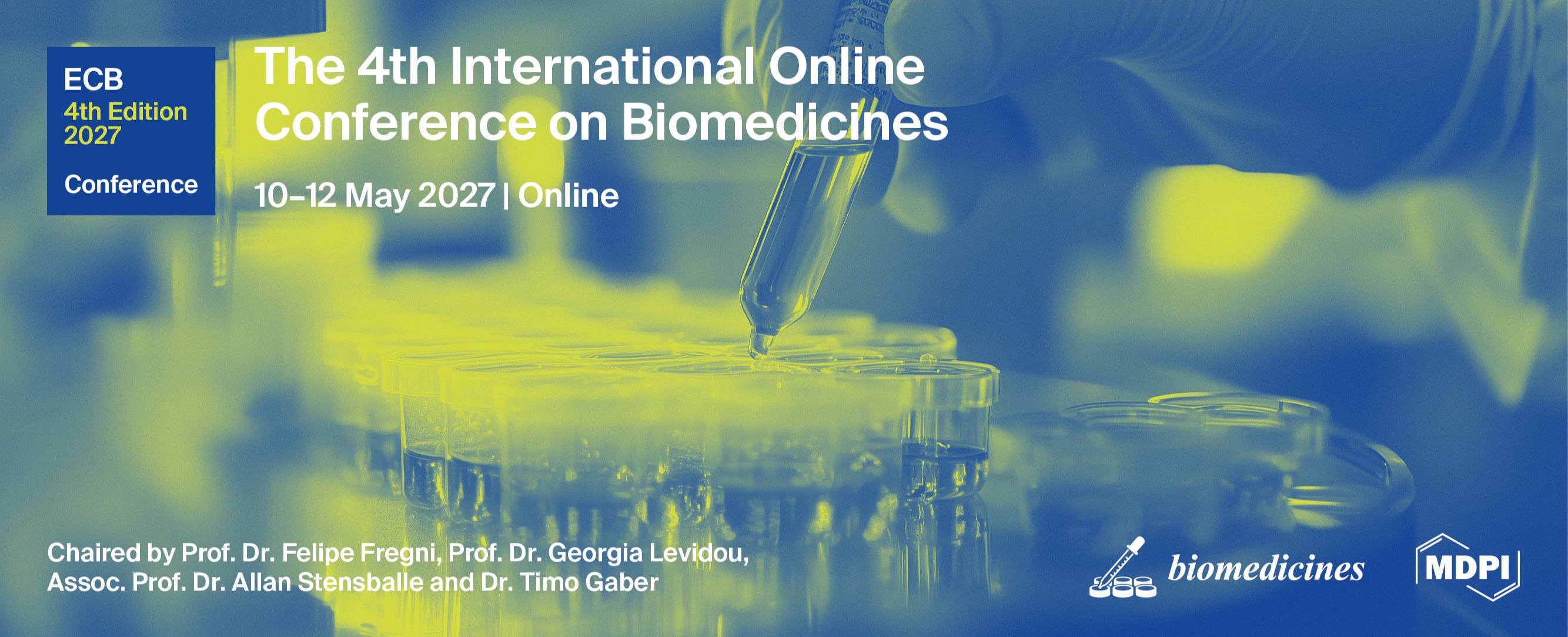
The 4th International Online Conference on Biomedicines
Part of the International Electronic Conference on Biomedicines series
10–12 May 2027
15 January 2027
15 March 2027
5 May 2027
Immunology, Metabolic Diseases, Neuroscience, Cardiovascular Disease, Cancer Biology, Regenerative Medicine, Translational Medicine, Nanomedicine, Artificial Intelligence in Biomedicines
- Go to the Sessions
-
- S1. Immune System, Tumor Immunology and Autoimmune Disease
- S2. Diabetes, Obesity and Metabolic Diseases
- S3. Neuroscience and Neurodegeneration
- S4. Cardiology and Cardiovascular Diseases
- S5. Cancer Molecular Biology and Precision Medicine
- S6. Bone Biology and Regenerative Medicine
- S7. Translational Medicine and Nanomedicine
- S8. AI in Biomedicines
- Event Details
The ECB 2027 Conference is Now OPEN for Abstract Submission and Registration.
Submit your abstracts HERE.
Instructions for authors are available online.
For any inquiries, please contact us at ecb@mdpi.com.
Welcome from the Chairs
Dear Colleagues,
Building on the success of the 2025 edition, we are pleased to announce the 4th International Online Conference on Biomedicines (ECB 2027). This event will once again bring together leading researchers from around the world to share the latest advances in biomedicine. The conference will take place online from 10 to 12 May 2027, organized by the journal Biomedicines (ISSN: 2227-9059; Impact Factor: 3.9; CiteScore: 6.8), a peer-reviewed open access journal published by MDPI.
The conference aims to provide a global platform for scientists and researchers to exchange ideas, discuss emerging challenges, and present recent research achievements in the field of biomedicine. The program will include, but is not limited to, the following topics:
S1. Immune System, Tumor Immunology and Autoimmune Disease
S2. Diabetes, Obesity and Metabolic Diseases
S3. Neuroscience and Neurodegeneration
S4. Cardiology and Cardiovascular Diseases
S5. Cancer Molecular Biology and Precision Medicine
S6. Bone Biology and Regenerative Medicine
S7. Translational Medicine and Nanomedicine
S8. AI in Biomedicines
We warmly invite researchers to submit their abstracts. All submissions will undergo MDPI’s standard peer-review process. After the conference, authors will be invited to submit a full proceeding paper (4–8 pages in length), which will be published in Medical Sciences Forum (ISSN 2673-9992) free of charge. In addition, participants are encouraged to submit a full manuscript to the conference’s Special Issue in Biomedicines, with a 20% discount on the article processing charge (APC).
To acknowledge the support of the conference's esteemed authors and to recognize their outstanding scientific accomplishments, we are pleased to announce that the conference will provide six awards, including Best Oral Presentation Awards and Best Poster Awards. The winners will each receive a certificate and 200 CHF.
We look forward to your contribution in this exciting event.
Best regards,
Conference Chairs
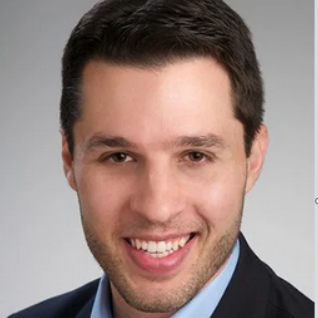
Prof. Dr. Felipe Fregni
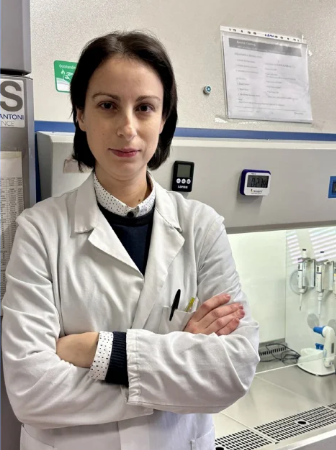
Prof. Dr. Georgia Levidou
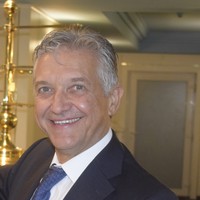
Assoc. Prof. Dr. Allan Stensballe
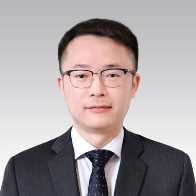
Dr. Timo Gaber

Event Chairs
Physical Medicine and Rehabilitation, Harvard Medical School, USA
Prof. Dr. Fregni is a Professor of epidemiology at Harvard T.H. Chan School of Public Health and PM&R at Harvard Medical School. He leads a large clinical research laboratory (Spaulding Neuromodulation Center) funded by major NIH grants and is currently investigating techniques to guide and measure neuroplasticity in brain injury. He has been at the forefront of advancing neurorehabilitation science to treat conditions such as stroke, Parkinson’s disease, and chronic pain. In recognition of his outstanding contributions, he has been awarded the highest honor bestowed by the United States government to outstanding scientists and engineers in the U.S.: the Presidential Early Career Award for Scientists and Engineers (PECASE).
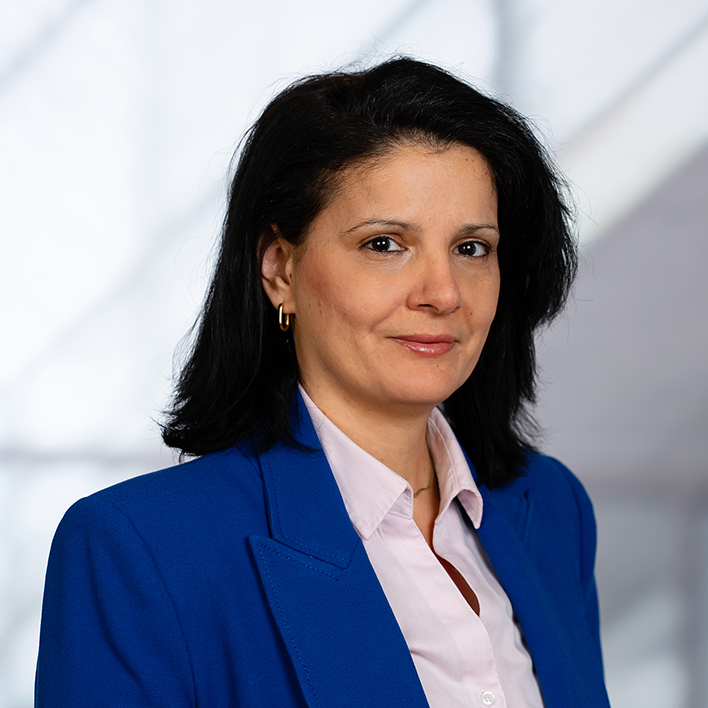
Department of Pathology, Paracelsus Medical University, Nuremberg, Germany
Prof. Dr. Georgia Levidou is a consultant Pathologist at the Department of Pathology, Paracelsus medical university in Nuremberg, Germany. She received her medical degree (MD), PhD and MSc in Biostatistics at the University of Athens, Greece. She has a twenty years’ experience on pathology and research acquired in leading research centers and is an author of more than 87 peer-reviewed articles. Her research interests span both cancer diagnostics, cellular and molecular pathology as well as tumor prognostic and therapeutic biomarkers. Prof. Levidou has a special interest in hematopathology and is currently working especially on the field of thymic epithelial tumors.
Honorary Associate Professor, Australian National Phenome Centre, Murdoch University, Australia
Assoc. Prof. Dr. Allan Stensballe is a prominent figure in the fields of proteomics, systems biology, inflammation, biomarker discovery, and omics data analysis. His expertise is deeply rooted in proteomics and the application of proteomics for understanding human disease pathology, especially in the context of precision medicine. He has played a key role in leading precision health research initiatives, fostering technology-driven innovation and strengthening collaboration between academia and industry to address important challenges in global health and wellness.
Department of Medicine, Division of Rheumatology and Clinical Immunology, Charité – Universitätsmedizin Berlin, Berlin, Germany
Dr. Timo Gaber is specializing in inflammatory and autoimmune diseases, with a focus on immunometabolism, cellular signaling, and the molecular mechanisms underlying chronic inflammation. His work explores how metabolic processes influence immune cell function, contributing to the development of targeted therapeutic strategies in rheumatology and clinical immunology.
Session Chairs
Assoc. Prof. Allan Stensballe
Honorary Associate Professor, Australian National Phenome Centre, Murdoch University, Australia
Assoc. Prof. Dr. Allan Stensballe is a prominent figure in the fields of proteomics, systems biology, inflammation, biomarker discovery, and omics data analysis. His expertise is deeply rooted in proteomics and the application of proteomics for understanding human disease pathology, especially in the context of precision medicine. He has played a key role in leading precision health research initiatives, fostering technology-driven innovation and strengthening collaboration between academia and industry to address important challenges in global health and wellness.
S1. Immune System, Tumor Immunology and Autoimmune Disease
Prof. Dr. Georgia Levidou
Department of Pathology, Paracelsus Medical University, Nuremberg, Germany
Prof. Dr. Georgia Levidou is a consultant Pathologist at the Department of Pathology, Paracelsus medical university in Nuremberg, Germany. She received her medical degree (MD), PhD and MSc in Biostatistics at the University of Athens, Greece. She has a twenty years’ experience on pathology and research acquired in leading research centers and is an author of more than 87 peer-reviewed articles. Her research interests span both cancer diagnostics, cellular and molecular pathology as well as tumor prognostic and therapeutic biomarkers. Prof. Levidou has a special interest in hematopathology and is currently working especially on the field of thymic epithelial tumors.
S5. Cancer Molecular Biology and Precision Medicine
Prof. Dr. Serafino Fazio
Internal Medicine, Federico II University School of Medicine, Naples, Italy
Dr. Serafino Fazio obtained his MD in Medicine and Surgery from the University of Naples Federico II in 1974 and subsequently specialized in Internal Medicine and Cardiology. He served as a university researcher and later as Associate Professor of Internal Medicine at the University of Naples Federico II, School of Medicine, from 1975 to 2012, and is now retiredDr. Fazio has authored over 170 publications in leading journals, including The New England Journal of Medicine, Nature Medicine, Annals of Internal Medicine, and Circulation. His research interests include the interaction between hormones and the cardiovascular system, heart failure, metabolic syndrome, nutraceuticals, and, more recently, COVID-19 treatment. His H-index is 49 (Google Scholar).
S2. Diabetes, Obesity and Metabolic Diseases
Prof. Dr. Matthew R Pincus
SUNY Downstate Medical Center, SUNY Downstate Health Sciences University New York, USA.
Prof. Matthew R. Pincus specializes in biochemistry, genetics, molecular biology, medicine, chemistry, immunology, microbiology, pharmacology, toxicology, and materials science. His research focuses on interdisciplinary biomedical sciences and cancer-related studies, contributing extensively to molecular medicine and translational health research.
S7. Translational Medicine and Nanomedicine
Prof. Dr. Songwei Tan
School of Pharmacy, Tongji Medical College, Huazhong University of Science & Technology, Wuhan, China
Prof. Dr. Songwei Tan is a Professor in Pharmaceutics at Tongji School of Pharmacy, Huazhong University of Science and Technology. His research focuses on biomedical polymer materials and novel drug delivery systems. He has led multiple national and local research projects, published over 30 SCI papers (4 ESI highly cited), and holds 3 invention patents. His work aims to advance innovative pharmaceutical formulations for clinical applications.
S7. Translational Medicine and Nanomedicine
Prof. Dr. Hongxu Lu
Shanghai Institute of Ceramics, Chinese Academy of Sciences, China
Prof. Dr. Hongxu Lu is specializing in organoids, organ-on-chip systems, biomaterials, and regenerative medicine. His work focuses on developing advanced in vitro models and bioactive materials for biomedical applications.
S7. Translational Medicine and Nanomedicine
Prof. Dr. Jianping Li
Department of Cardiology at Peking University First Hospital, Beijing, China
Prof. Dr. Jianping Li is a cardiovascular medicine specialist with extensive expertise in clinical cardiology and cardiovascular research. His work focuses on improving the prevention, diagnosis, and treatment of cardiovascular diseases.
S4. Cardiology and Cardiovascular Diseases
Assoc. Prof. Dr. Ping Mu
Department of Urology and Pathology, Yale Biomedical Imaging Institute, Yale School of Medicine, USA
Dr. Ping Mu is an Associate Professor at Yale University specializing in cancer biology, prostate cancer, and therapeutic resistance mechanisms. His research integrates organoids, single-cell sequencing, spatial transcriptomics, and AI-driven omics approaches to develop innovative cancer therapies. In 2025, he received the Prostate Cancer Foundation Challenge Award for research on long-term remission and adoptive cell immunotherapy in metastatic prostate cancer.
S8. AI in Biomedicines
Assoc. Prof. Dr. Stefano Bacci
Department of Biology, University of Florence, 50121 Florence, Italy
Assoc. Prof. Dr. Stefano Bacci specializes in wound healing, acute and chronic wounds, lesion vitality, mast cells, and dendritic cells. His research focuses on tissue repair and inflammatory responses in histology and embryology, contributing extensively to biomedical and regenerative research.
S6. Bone Biology and Regenerative Medicine
Assoc. Prof. Yadi Wu
University of Kentucky, Department of Pharmacology and Nutritional Sciences, Lexington, United States
Dr. Yadi Wu is an Associate Professor in the Department of Pharmacology and Nutritional Sciences at the University of Kentucky College of Medicine and a researcher at the Markey Cancer Center. Her research focuses on cancer biology, particularly breast cancer metastasis, tumor microenvironment, and epigenetic regulation. Her work has contributed to understanding key molecular pathways involved in cancer progression and immune evasion, with the goal of identifying new therapeutic targets for cancer treatment
S8. AI in Biomedicines
Dr. Maria-Ioanna (Marianna) Christodoulou
1. Department of Life Sciences, European University Cyprus, Nicosia 2404, Cyprus 2. School of Infection and Immunity, University of Glasgow, Glasgow G12 8TA, UK
Dr. Maria-Ioanna (Marianna) Christodoulou is affiliated with the Department of Life Sciences at European University Cyprus and the School of Infection and Immunity at the University of Glasgow. Her research focuses on immunology and cancer, particularly exploring how the immune system interacts with tumor cells to influence cancer progression and treatment outcomes. She is engaged in collaborative research between Cyprus and the UK, contributing to advancements in cancer immunotherapy.
S1. Immune System, Tumor Immunology and Autoimmune Disease
Dr. Chun Ming Wong
Department of Pathology The University of Hong Kong Pokfulam, Hong Kong, China
Dr. Chun Ming Wong is affiliated with the Department of Pathology at The University of Hong Kong. His research focuses on molecular pathology, cancer biology, and translational medicine, with particular interest in the molecular mechanisms underlying tumor development and progression. He has contributed to numerous peer-reviewed publications and is actively involved in advancing research and education in pathology.
S5. Cancer Molecular Biology and Precision Medicine
Dr. Qin Fu
Proteomics and Metabolomics Facility, Cornell University, 526 campus road, Ithaca, NY, USA
Dr. Qin Fu specializes in LC-MS/MS, proteomics, peptidomics, and metabolomics. His research focuses on advanced mass spectrometry applications for biomolecular analysis and systems biology. He has an H-index of 17 and contributes to interdisciplinary biotechnology and analytical chemistry research.
S3. Neuroscience and Neurodegeneration
Prof. Dr. Yuanshan Zhu
Department of Medicine, Weill Cornell Medicine, New York, NY 10065, USA
Dr. Yuanshan Zhu specializes in long non-coding RNAs (lncRNAs), prostate cancer, and molecular genetics. His research focuses on the role of noncoding RNAs in gene regulation and human diseases, contributing extensively to molecular and translational medicine research.
S8. AI in Biomedicines
Event Committee
Biomedicines; Cancer; Drug Delivery; Nanomedicines; Pharmaceuticals
Department of Health Science, Digestive Surgery Unit, Medical School, University “Magna Graecia”, Viale Europa, Germaneto, 88100 Catanzaro, Italy
surgical oncology; angiogenesis and lymph angiogenesis in gastrointestinal tumor; molecular aspects; translational research in surgery
Department of Biology, University of Florence, 50121 Florence, Italy
wound healing; acute wounds; chronic wounds; lesions vitality; mast cells; Dendritic cells
Department of Cardiology, The University of Texas MD Anderson Cancer Center, Houston, TX, USA
rna sequencing; MAGI1
Department of Medicine, University of Connecticut Health Center, Farmington, CT 06030, USA
Proteomics and Metabolomics Facility, Cornell University, 526 campus road, Ithaca, NY, USA
lc-ms/ms, proteomics, peptiomics, metabolomics
Department of Hematology, The Seventh Affiliated Hospital, Sun Yat-sen University, Shenzhen, Guangdong, China
hematopoietic malignancies; protein phosphorylation; small molecule targeted drugs; rare blood disorders
Musculoskeletal Pathology and Oncology Laboratory, Department of Surgery, Oncology and Gastroenterology (DISCOG), University of Padova, 35129 Padova, Italy
inflammation; molecular biology; cell biology; osteoarthritis; cartilage; musculoskeletal diseases; bone cancer; synovium; infrapatellar fat pad; chodrosarcoma
Clinical and Translational Science Center(CTSC), Department of Medicine, Weill Cornell Medicine, New York, NY 10065, USA
LncRNAs; prostate cancer, long non-coding rnas
Internal Medicine, UniCamillus, International Medical University in Rome, Italy,
Department of Medicine and Sciences of Aging, University of G. d’Annunzio Chieti and Pescara, Chieti, Italy. (Retired)
allergy; immunodeficiencies; autoimmunity; neurodegenerative diseases; ageing; mesenchymal stem cells; lymphocyte subsets; cytokines
magnetic resonance imaging; human brain mapping; meta-research; connectomics; brain connectivity; computational neuroscience; Bayesian statistics; fMRI; meta-analysis; clinical trials; DTI; default mode network; Alzheimer’s disease; biological psychiatry;
Department of Experimental and Clinical Medicine, University of Florence, Florence, Italy
colorectal cancer; pancreatic; Immune response - Cancer - Microbioma - T cells - autoimmunity - infectious diseases - probiotics; the cancer and in detail, the anti-cancer immune response and the role of cancer microenvironment
oligonucleotides-based therapeutics; peptide (cell penetrating peptides)-based delivery vectors; antisense oligonucleotides cellular trafficking
Keynote Speakers
Hangzhou Institute of Medicine, Chinese Academy of Sciences: Hangzhou, Zhejiang, China
Cancer Biology, Cancer Pharmacology, TCM Pharmacology, Natural Product Chemistry
Sessions
S2. Diabetes, Obesity and Metabolic Diseases
S3. Neuroscience and Neurodegeneration
S4. Cardiology and Cardiovascular Diseases
S5. Cancer Molecular Biology and Precision Medicine
S6. Bone Biology and Regenerative Medicine
S7. Translational Medicine and Nanomedicine
S8. AI in Biomedicines
Registration
The registration for ECB 2027 will be free of charge! The registration includes attendance to all conference sessions.
If you are registering several people under the same registration, please do not use the same email address for each person, but their individual university email addresses. Thank you for your understanding.
Please note that the submission and registration are two separate parts. Only scholars who registered can receive a link to access the conference live streaming. The deadline for registration is 5 May 2027.
Instructions for Authors
ECB 2027 will accept abstracts only. The accepted abstracts will be available online on Sciforum.net during and after the conference.
Important Deadline
Deadline for abstract submission: 15 January 2027
Abstract acceptance notification: 15 March 2027
You will be notified of the acceptance of an oral/poster presentation in a separate email after the abstract has been accepted.
Please note:
An abstract acceptance email only confirms that your abstract has been accepted. Oral or poster presentation invitations are determined separately by the conference chairs, and you will receive an additional email with the presentation result.
Abstract submissions should be completed online by registering with www.sciforum.net and using the "Submit Abstract" function once logged into the system.
If you do not have an account, please register at www.sciforum.net. After logging in, submit your abstract using the “Submit Abstract” button on the conference homepage. No template is required.
Abstract Requirements
1. Types of Submissions
- Accepted: Original research abstracts; systematic reviews or meta-analyses abstracts (must comply with PRISMA 2020).
- Not accepted: Narrative, scoping, comparative, perspective, opinion, or essay-style reviews.
2. Content Requirements
- Length: 200–300 words.
- Structure: Introduction, Methods, Results, Conclusions.
- Language: Clear, publication-ready English.
- Originality: Must be original and unpublished; previously published abstracts will not be considered.
3. Authorship
All listed authors must have made substantial contributions to the work, participated in drafting or critically revising the abstract, and approved the final version. The submitting (presenting) author is responsible for ensuring that all co-authors have reviewed and approved the submission, including its content and authorship order.
Requests for changes to authorship (including the addition, removal, or reordering of authors) after submission must be submitted using a signed Authorship Change Form, with written consent from all affected authors. Such requests are subject to review and approval by the Conference Organizing Team. All authors share collective responsibility for the accuracy, integrity, and ethical compliance of the submitted work.
Authors may submit multiple abstracts, but only one abstract per author may be selected for an oral presentation.
Important Notes:
1. We only accept live presentations for oral presentation.
2. As for the poster type, please be informed that there is no LIVE presentation required for this type. Your poster will only be displayed exclusively in the Poster Gallery since the event date.
The slot for the oral presentation is 15 mins including 3 minutes of discussion. We advise that your presentation lasts for a maximum of 12 mins, leaving at least 3 mins for the Q&A session.
Authors are encouraged to prepare presentations using PowerPoint or equivalent software for online display alongside their abstract. If provided, slides will be presented directly on the conference website via the Sciforum.net slide viewer and should be prepared in the same format as a traditional conference presentation of research results. All slides must be converted to PDF format prior to submission to ensure accurate online display.
Each presentation should:
- Communicate the research question or objective, methodology, key results, and scientific novelty;
- Use a clear and logical structure, typically Introduction-Methods-Results&Discussion structure (IMRaD) or a field-appropriate alternative;
- Emphasize the relevance of the work;
- Support key findings with clear figures or tables where appropriate;
- Conclude with a critical interpretation of the results and their impact.
Note: Only live presentations are accepted; recorded presentations are not allowed. Please confirm your participation at least two weeks before the event date.
Presentation Requirements
1. Each abstract must designate one presenter. To change the presenter, please contact us after you receive the oral/poster presentation invitation.
2. Only live presentations are accepted.
3. Presenters who do not attend the live session will not be eligible for awards or presentation certificates.
Posters should be designed to allow independent understanding of the research and clearly present the essential elements of the study.
Each poster should include:
- Title, authors, affiliations, and contact details (clearly displayed at the top);
- Brief introduction outlining the research objective;
- Concise methodology summary;
- Main results, supported by clear, well-labeled figures or tables where appropriate;
- Short conclusion summarizing key findings and their relevance.
All authors are welcome to submit a poster after their abstract has been accepted. The poster should be uploaded to the Sciforum website at least two weeks before the conference dates. We will contact you closer to the event with further details.
Please be informed that there is no LIVE presentation required for this type. Your poster will only be displayed exclusively in the Poster Gallery since the event date. However, poster submissions are still eligible for the Best Poster Award.
Technical specifications:
Dimensions (cm): 84.1 × 118.9 (A0 - portrait)
Resolution: 300 dpi
Pixel size (portrait, 300 dpi): 9933 × 14043 px
Minimum font size: ≥24
Examples of successful submissions can be viewed here at the following links: (1), (2), (3).
The poster template can be downloaded HERE.
Note: The uploaded poster may be used as provided and serves as a reference. However, as long as the technical specifications are followed, scholars are welcome to use any poster template of their choice.
Certificates of Participation
The certificate will be available in your logged-in area of Sciforum.net, under "My Certificates" after the conference.
Authors must disclose any financial, professional, or personal relationships that could reasonably be perceived as influencing the integrity, interpretation, or presentation of their work. Failure to provide accurate disclosures may result in the removal of the abstract from the conference program and associated publications.
If there is no conflict, please state "The authors declare no conflicts of interest." This should be conveyed in a separate "Conflict of Interest" statement preceding the "Acknowledgments" and "References" sections at the end of the manuscript. Any financial support for the study must be fully disclosed in the "Acknowledgments" section.
1. Copyright Ownership
In accordance with Swiss copyright law, you, as the author, are the original creator of your work and retain full copyright ownership of your submitted abstract.
2. License Grant
By submitting your abstract for publication on the Sciforum.net platform, you grant MDPI, the platform’s publisher, a worldwide, royalty-free, non-exclusive license to:
- Publish, reproduce, and distribute the abstract online.
- Make the abstract publicly available in connection with the conference.
3. Author’s Retained Rights
This license is non-exclusive. As you retain full copyright, you are free to:
- Reuse, republish, and build upon your work in any way.
- Develop the abstract into a full paper for submission to other journals or publications.
- Enter into subsequent agreements, including granting an exclusive license or transferring copyright to another publisher for a future version of the work.
4. Author’s Responsibility
You remain solely responsible for complying with the policies of any other journal or publisher to which you may submit a subsequent version of your work, particularly concerning prior publication rules. MDPI and Sciforum.net bear no responsibility for any conflicts arising from your future submissions.
Any request concerning abstract or proceedings paper withdrawal should be communicated to the Conference Organizing Team as early as possible, preferably prior to final acceptance and confirmation of the conference program. Please note that once abstracts are published in the Conference Report or once Proceedings papers are published in the Proceedings journal and assigned a DOI, they become part of the permanent scholarly record and cannot be fully removed.
The responsible use of generative AI tools in the preparation of abstracts, posters, and presentations is permitted; however, any such use must be clearly disclosed, specifying the tool employed and its role. Authors retain full responsibility for the accuracy and integrity of their work.
Event Awards
To acknowledge the support of the conference's esteemed authors and recognize their outstanding scientific accomplishments, we are pleased to announce that the conference will provide 6 awards including the Best Oral Presentation Award and the Best Poster Award.
The Awards
Number of Awards Available: 6
The winners of Best Oral Presentation and Best Poster Award will receive a certificate with 200 CHF each.
Terms and Conditions:
1. Eligibility
- Awards are open to all participants who present their work at the ECB 2027 Conference in the eligible presentation categories (e.g., oral or poster presentations), unless otherwise specified.
- Only presentations that are delivered as scheduled during the conference will be considered.
2. Evaluation Process
- All eligible presentations will be evaluated based on scientific quality, originality, clarity of presentation, and relevance to the conference themes.
- The evaluation will be conducted by the assigned session chair(s) and reviewed and confirmed by the event chair(s).
3. Decision Authority
- The final decision regarding award recipients is subject to the professional judgment and approval of the session chair(s) and event chair(s).
- All decisions are final and not subject to appeal.
4. Announcement of Awards
- Award recipients will be announced after the conclusion of the ECB 2027 Conference.
- The official announcement will be made through the conference website and via direct email notification to the awardees.
5. Amendments
- The ECB 2027 Organizing Committee reserves the right to amend these Terms and Conditions at any time, if necessary, with appropriate notice.
Publication Opportunities
-
Biomedicines Journal Publication
Participants in this conference are cordially invited to contribute a full manuscript to the conference's Special Issue(to be updated), published in Biomedicines (ISSN: 2227-9059, Impact Factor 3.9), with a 20% discount on the publication fee. Please note, if you have IOAP/association discounts, conference discounts will be combined with IOAP/association discounts. Conference discounts cannot be combined with reviewer vouchers. All submitted papers will undergo MDPI’s standard peer-review procedure. The abstracts should be cited and noted on the first page of the paper.
-
Proceeding Paper Publication
Authors of accepted abstracts are highly encouraged to submit an extended proceeding paper (ideally 4–8 pages in length) for the conference's dedicated proceedings volume in the Medical Sciences Forum Journal (ISSN 2673-9992) for free. Please submit it after the conference.
Proceeding paper submission deadline: 26 June 2027 (45 days after the conference)
Please click HERE to submit your proceeding paper to the Medical Sciences Forum Journal, and be sure to disclose the conference information in your cover letter or mention the conference name in your submission.
ECB2027_proceeding_paper-template.dotPublication Notice: Proceeding papers will undergo peer-review procedure. Acceptance at the conference does not ensure final publication.
Conference Secretariat
Suriwipa Chuachaina
Coco Hou
Eastern Zhuang
Liane Zhong
For inquiries regarding submissions and sponsorship opportunities, please feel free to contact us.
Email: ecb@mdpi.com
S1. Immune System, Tumor Immunology and Autoimmune Disease
The immune system is central to human health, with its dysregulation driving cancer and autoimmune disorders. This session welcomes cutting-edge research aligned with Biomedicines journal, covering immune regulation, tumor immunology, immunotherapy, inflammation, and autoimmune diseases. We encourage studies on molecular mechanisms, biomarkers, and translational approaches. Join us to share your latest findings and engage with global experts.
To submit your abstract, please click this button
Session Chairs
Assoc. Prof. Allan Stensballe, Department of Health Science and Technology, Aalborg University, Denmark
Mr. Maria-Ioanna (Marianna) Christodoulou, Department of Life Sciences, European University Cyprus, Nicosia 2404, Cyprus, School of Infection and Immunity, University of Glasgow, Glasgow G12 8TA, UK
S2. Diabetes, Obesity and Metabolic Diseases
Metabolic disorders such as diabetes and obesity represent major global health challenges, closely linked to cardiovascular complications and chronic diseases. This session welcomes innovative research aligned with Biomedicines journal, covering metabolic regulation, insulin resistance, lipid metabolism, and therapeutic strategies. We encourage studies on disease mechanisms, biomarkers, and translational approaches to improve prevention, diagnosis, and treatment.
To submit your abstract, please click this button
Session Chair
Prof. Dr. Serafino Fazio, Internal Medicine, Federico II University School of Medicine, Naples, Italy
S3. Neuroscience and Neurodegeneration
Neurological disorders and neurodegenerative diseases are among the leading causes of disability worldwide, with complex mechanisms involving neuronal dysfunction, inflammation, and protein aggregation. This session welcomes innovative research aligned with Biomedicines journal, covering neuroscience, neurodegeneration, biomarkers, and therapeutic strategies. We encourage studies on disease mechanisms and translational approaches to improve diagnosis and treatment.
To submit your abstract, please click this button
Further updates will be provided soon. Please stay tuned.
S4. Cardiology and Cardiovascular Diseases
Cardiovascular diseases remain a leading cause of morbidity and mortality worldwide, driven by complex interactions between genetics, lifestyle, and metabolic factors. This session welcomes innovative research aligned with Biomedicines journal, covering cardiac biology, vascular function, biomarkers, and therapeutic strategies. We encourage studies on disease mechanisms and translational approaches to improve prevention, diagnosis, and treatment.
To submit your abstract, please click this button
Further updates will be provided soon. Please stay tuned.
S5. Cancer Molecular Biology and Precision Medicine
Cancer is driven by complex molecular alterations that enable personalized, targeted care. This session welcomes innovative research aligned with Biomedicines journal, covering oncogenic signaling, genomics, tumor microenvironment, biomarkers, and targeted therapies. We encourage studies on molecular mechanisms and precision medicine approaches to improve diagnosis, prognosis, and treatment outcomes.
To submit your abstract, please click this button
Session Chairs
Prof. Dr. Georgia Levidou, Department of Pathology, Paracelsus medical University, Nuremberg, Germany
Dr. Chun Ming Wong, Department of Pathology The University of Hong Kong Pokfulam, Hong Kong, China
S6. Bone Biology and Regenerative Medicine
Bone disorders and tissue degeneration pose significant clinical challenges, driving the need for advanced regenerative strategies. This session welcomes innovative research aligned with Biomedicines journal, covering bone biology, tissue engineering, stem cells, biomaterials, and regenerative therapies. We encourage studies on molecular mechanisms and translational approaches to enhance repair, regeneration, and clinical outcomes.
To submit your abstract, please click this button
Further updates will be provided soon. Please stay tuned.
S7. Translational Medicine and Nanomedicine
Translational medicine bridges basic research and clinical application, while nanomedicine enables precise diagnostics and targeted therapies. This session welcomes innovative research aligned with Biomedicines journal, covering drug delivery systems, nanomaterials, imaging technologies, and therapeutic innovations. We encourage studies that accelerate bench-to-bedside translation and improve clinical outcomes through advanced biomedical approaches.
To submit your abstract, please click this button
Further updates will be provided soon. Please stay tuned.
S8. AI in Biomedicines
Session Chair
Assoc. Prof. Yadi Wu, University of Kentucky, Department of Pharmacology and Nutritional Sciences, Lexington, United States