
Energies Webinar | Positive Energy Districts as a Strategic Path Towards Decarbonization
the chair
15th Energies Webinar
Positive Energy Districts as a Strategic Path Towards Decarbonization
The primary objective of the webinar is to explore the potential of physics-informed visio-numerical primitives to extend the mathematical and computational frameworks for image algebra into the symbolic domain, recalling the pioneering woks of Ritter et al., (1990), Boole, G. (1847), Fermi, E. (1938) and von Newman (1993). We present the SYM-Fractron for interdisciplinary discussion—a physics-informed hybrid computational pipeline that integrates statistical and geostatistical meta-algorithms within the Digital Transformer (DiT) scheme and Digital Twins. This software enables position-preserving (geodesic) visualization and classification of measurements by jointly encoding the physical, numerical, visual, geometric, and topological attributes underlying the Big Data Architecture of Complexity. Statistical and geostatistical image operations draw upon tools from diverse areas of information mathematical representation and supergraphic theory and applications, as an integrated computational framework. Examples from fundamental scientific and industry applications, particularly to geosciences, social sciences, and archeology, will be presented for discussion. A fundamental question remains open and will be brought forward for discussion: How can we decode the messages of nature imprinted in different natural materials—particularly rocks—through diverse morpho-shaping physics-informed processes. The need to integrate computational physics and unconventional and high-performance computing will be discussed, with particular attention to the ancient symbolic and numerical systems of Indigenous Australian visual–symbolic approach, Mesoamerican numeral systems, and ancient Chinese oracle-bone inscription and special attention paid to Maya numbers. As a practical application of this approach, we will present the results of fracture modeling and classification in real-world geological systems, particularly petroleum reservoirs, raising a fundamental question: Can a physics-informed computational framework capture the multiscale complexity of geological and physical reality with precision, or are we still missing fundamental elements of its underlying mathematical representation? To address this question, we revisit the seminal work of A. Einstein, B. Podolsky, and N. Rosen (1935), together with N. Bohr’s response (1935), focusing on the question of whether physical quantities represented by non-commuting operators can be simultaneously determined with arbitrary precision. Does precise knowledge of one physical quantity necessarily preclude equally precise knowledge of another? This question provides a conceptual starting point for investigating uncertainty in seismic characterization of petroleum reservoirs, where estimates of subsurface depth and geological patterns remain inherently uncertain. Can these uncertainties be reduced by integrating seismic observations with higher-resolution data obtained from Formation Microimaging (FMI) logs, tomographic imaging, and electron microscopy? To investigate the compatibility and comparability of these measurements and models, considering their dual visual and numerical representations and underlying primitives, we revisited the principles of Mesoamerican numeral systems and scripts, beginning with Maya numerical systems. This exploration led us to develop a visuo-numerical arithmetic framework for the construction of a genetic taxonomy of fracture systems.
Date: 07 December 2026
Time: 2:30 pm CET | 9:30 pm CST (Asia) | 8:30 am EST
Webinar ID: 829 1659 9504
Webinar Secretariat: journal.webinar@mdpi.com
Meet Our Chair
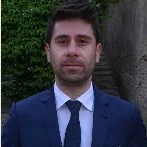
Mechanical, Energy and Management Engineering Department, University of Calabria, Rende, Italy;Piero Bevilacqua is currently a researcher in tenure track at the University of Calabria, Department of Mechanical, Energy and Management Engineering. He received his PhD in Mechanical Engineering in 2014. He also holds a Master’s degree in Energy Engineering obtained in 2011. He has co-authored several papers in peer-reviewed international journals and three book chapters. He has participated in numerous national and international research projects dealing with energy efficiency and renewable sources. He is a recognized reviewer in peer-reviewed international journals and an editor of two books and several Special Issues. His interests include innovative air-conditioning plants, integrated thermal storage systems, solar cooling, green roofs, photovoltaic systems, thermal comfort of indoor spaces, NZEB in Mediterranean area, thermal properties of building materials, and experimental analysis. He has been a speaker at national and international congresses on Energy systems and Building Physics and authored/co-authored over 100 scientific papers, of which 60 are published in Scopus-indexed journals. He is, and has been, an Editorial Board Member for several international peer-reviewed journals in the field of energy. He has participated in several national research projects. He has been a visiting professor and invited lecturer at the University of Panama, the Slovak University of Technology, and the Wroclaw University of Science and Technology.
Meet Our Speakers

Engineering Department, University of Palermo, Palermo, Italy;Francesco Guarino is an associate professor in the Department of Engineering of the University of Palermo (UNIPA), where he chairs the Building Modeling & Design Lab (BMD LAB). His research covers building and urban energy simulation, life cycle assessment and eco-design, and resilient cooling in Mediterranean climates, within an integrated environmental, economic, and social framework. He leads international projects funded through the EU landscape, including EU joint partnerships, as well as national projects, on topics ranging from urban-scale energy modeling and sustainability assessment to the climate resilience of the built environment. He was an operating agent of IEA EBC Annex 83 and co-chair of the EU SET-Plan IWG5.

Energy resilient buildings and districts, VTT Technical Research Centre of Finland, Espoo, Finland;Rakesh Ramesh is a research scientist at the VTT Technical Research Centre of Finland, where he has been part of the Energy Resilient Buildings and Districts team for the past five years. He holds a double Master's degree in Innovative Sustainable Energy Engineering from Aalto University, Finland, and the KTH Royal Institute of Technology, Sweden, completed in 2021. He is currently pursuing a PhD at Aalto University. His research brings together building physics, energy modelling and energy systems, with a focus on energy resilience and flexibility, renewable energy integration, and Positive Energy Districts. He has contributed to several peer-reviewed international journal and conference publications and participated in national and international research projects, including EU-funded and Academy of Finland initiatives. He has also been a visiting researcher at the Norwegian University of Science and Technology (NTNU) in Trondheim, Norway. His doctoral research investigates the thermal resilience of Finnish buildings during prolonged winter power outages.
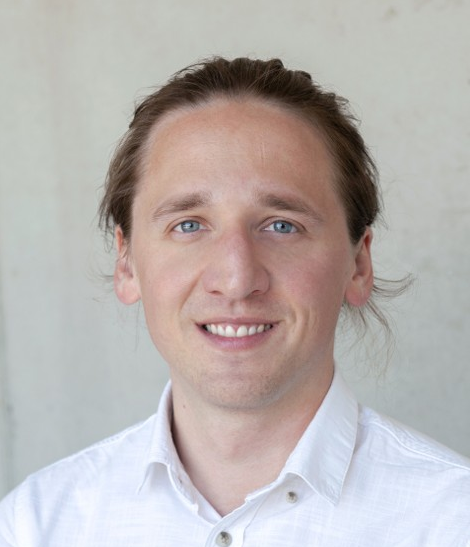
Dr. Nikola Pokorny
Energy Systems & Infrastructure Resilience, UCEEB CVUT in Prague, Czech Republic;Nikola Pokorny is a researcher at UCEEB CTU in Prague, specializing in building and urban energy systems, district heating, renewable-energy integration, and energy-system simulation. His applied research experience includes energy concepts for positive-energy districts, district-heating network modelling, power-to-heat integration, and photovoltaic–thermal (PVT) systems.