
AI-Powered Material Science and Engineering 2025
Meet Our Speakers

Department of Civil and Environmental Engineering, Politecnico di Milano;Stefano Mariani received an M.S. degree (cum laude) in civil engineering in 1995 and a Ph.D. degree in structural engineering in 1999; both degrees are from the Polytechnic University of Milan. He is currently a professor at the Department of Civil and Environmental Engineering of the Polytechnic University of Milan. He was a research scholar at the Danish Technical University in 1997, an adjunct professor at Penn State University in 2007, and a visiting professor at the Polytechnic Institute of New York University in 2009. He is a member of the Editorial Boards of Algorithms, International Journal on Advances in Systems and Measurements, Inventions, Machines, Micro and Nanosystems, Micromachines, and Sensors. He has been a recipient of the Associazione Carlo Maddalena Prize for graduate students (1996) and the Fondazione Confalonieri Prize for PhD students (2000). His main research interests are the following: the reliability of MEMS that are subject to shocks and drops; structural health monitoring via machine and deep learning strategies; numerical simulations of ductile fracture in metals and of quasi-brittle fracture in heterogeneous and functionally graded materials; extended finite element methods; the calibration of constitutive models via extended and sigma-point Kalman filters; and multi-scale solution methods for dynamic delamination in layered composites.
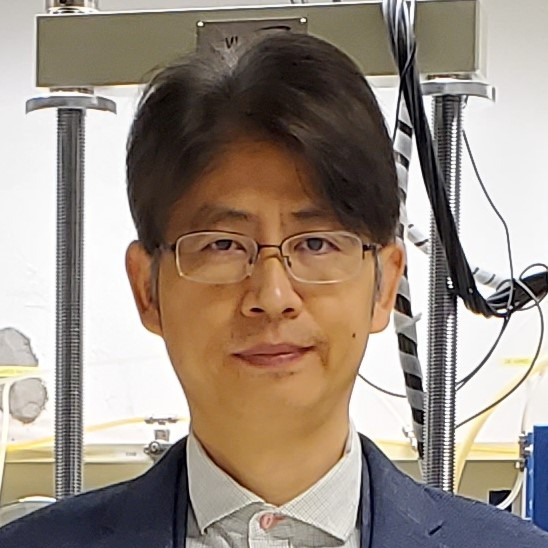
Department of Architecture and Civil Engineering, City University of Hong Kong;Prof. Wang is currently a professor at the Department of Architecture and Civil Engineering at City University of Hong Kong. Prof. Wang is an internationally renowned expert in the field of micro-macro-mechanics of granular materials. His research aims to explore the multiscale physics and mechanics underlying the macroscopic soil behavior using X-ray computed tomography (CT), discrete element method (DEM) simulation and machine learning methods. His works over the past 20 years include the X-ray CT characterization of micro-structures and micro-morphologies of geomaterials, as well as the DEM modeling and analysis of fundamental soil behaviors of crushable sands and their applications in various kinds of geotechnical engineering problems such as pile foundation, slope stability and retaining structures, etc. In particular, he has recently developed novel pattern recognition techniques for tracking crushed and uncrushed sand particles within CT sand specimens using an interdisciplinary approach that combines experimental geomechanics, artificial intelligence, and computer vision technologies. Prof. Wang has received a number of prestigious international research awards including the following: Scott Sloan Best Paper Award 2023 (Computers and Geotechnics), 2025 Top 0.5% ScholarGPS (#99 in X-ray), 2022-2024 World's Top 2% Scientists (Stanford's list), 2023 Excellent Editorial Board Member Award from Journal of Rock Mechanics and Geotechnical Engineering, VEBLEO Fellow, International Association of Advanced Materials (IAAM) Award, 2011 Geotechnical Research Medal (UK Institution of Civil Engineers), and 2010 Higher Education Institutions Outstanding Research Award—Natural Science Award (the Ministry of Education of China).


Welcome Message
The MDPI webinar on AI-Powered Material Science and Engineering brings together leading experts to explore how artificial intelligence is accelerating the discovery, characterization, and modeling of advanced materials across different scales. AI-driven tools now enable researchers to predict material behavior, interpret complex structural data, and significantly accelerate innovation compared with traditional experimental methods. This webinar features Prof. Dr. Jian Feng Wang from City University of Hong Kong, an internationally recognized expert in the micro–macro mechanics of granular materials; his work integrates X-ray CT, discrete element modeling, and machine learning-based pattern recognition to reveal the multiscale physics governing soil behavior. Also joining the webinar is Prof. Dr. Stefano Mariani from the Polytechnic University of Milan, whose research spans the reliability of MEMS, structural health monitoring using machine learning and deep learning, advanced fracture simulations, and multiscale modeling, supported by extensive experience across international research institutions. Together, they will demonstrate how AI enhances our understanding from particle-scale mechanics to complex structural systems.
MDPI has 115 journals under the subject of "Chemistry & Materials Science", please click here for further details.
Date: 1 December 2025
Time: 8:00 am CET | 3:00 pm CST Asia
Webinar ID: 826 5862 3549
Webinar Secretariat: webinar@mdpi.com
In this section, you will find the recordings of this webinar to watch, re-watch and share with your colleagues!
The MDPI webinar on AI-Powered Material Science and Engineering brought together leading experts to showcase how artificial intelligence is transforming the discovery, characterization, and modeling of advanced materials across multiple scales. AI-driven tools now allow researchers to predict material behavior, interpret complex structural data, and accelerate innovation far beyond traditional experimental methods. The webinar featured Prof. Dr. Jian Feng Wang from the City University of Hong Kong, an internationally recognized expert in the micro–macro mechanics of granular materials. He highlighted how his work, integrating X-ray CT, discrete element modeling, and machine learning-based pattern recognition, reveals the multiscale physics governing soil behavior. Prof. Dr. Stefano Mariani from the Polytechnic University of Milan also presented his research on the reliability of MEMS, structural health monitoring using machine learning and deep learning, advanced fracture simulations, and multiscale modeling, drawing on extensive international experience. Together, the speakers demonstrated how AI enhances understanding from particle-scale mechanics to complex structural systems, illustrating the significant impact of AI-driven approaches on materials research and engineering.
Artificial Intelligence and Machine Learning for Material Design, Discovery, and Optimization
Guest editors: Dr. Craig Hamel, Dr. Devin J. Roach.
Deadline for manuscript submissions: 20 May 2026