
19th International Conference on Experimental Mechanics 2022
the chairs
COVID update
Dear Colleagues and Friends,
The number of people infected by the coronavirus in Europe and all over the world is still rising at a very quick and worrying rate. I deeply hope you and your families are healthy and well.
The Organizing Committee of the 19th ICEM with agreement of the EuraSEM Council Members regret to announce that, due to the high risks associated with the ongoing global COVID-19 situation, it has been decided to postpone the 19th International Conference on Experimental Mechanics (scheduled on July from 5th to 9th, 2020; firstly postponed from 4th - 8th July 2021) until 17- 21 July 2022.
The main concern of the Organizing Committee is the health and safety of all conference participants and society members and we all are convinced that it is our responsibility to help prevent the spread of the virus.
Let me to apologize for any inconvenience this decision may cause, but I do believe this is the best solution to protect realization of the conference objectives and, more importantly, to assure the possibly safe health conditions of our Experimental Mechanics Community. I would like to convince you that the health and safety of all of you constitute the top priority for the Conference Organizers.
Since we are planning to organize the 19th ICEM next year in the same place as it was planned initially, the Organizing Committee has decided to keep the conference fee in the already paid amount without any increase due to possible inflation.
If a Participant would like to get refund we will arrange it with a deduction of 50 Euros. The deduction of 50 Euros is necessary due to the costs that have been already covered by the Organizers. Please do understand our position at this difficult moment. However, we do encourage all of you to leave your already paid conference fee for the 19th ICEM.
On behalf of the Organizing Committee I would like to express my sincere thanks to all participants and sponsors for their continuous support. The majority of them have already expressed their ongoing commitment and cooperation for the 19th ICEM in July 2022.
Now, the most important aim of the Organizing Committee is to work together to make the 19th ICEM in Krakow, July 17 - 21, 2022, a big success of the whole Experimental Mechanics Community.
Registration to the 19th ICEM and abstract submission remain open on www.icem19.org.
Thank you very much for your understanding and I am looking forward to meet all of you in Krakow next year.
With my best regards,
Zbigniew L. Kowalewski
Chairman of the 19th ICEM
19th International Conference on Experimental Mechanics Kraków, Poland, July 17 - 21, 2022
Organized by: European Society for Experimental Mechanics (EuraSEM),
Polish Society of Theoretical and Applied Mechanics,
Institute of Fundamental Technological Research,
Polish Academy of Sciences
Chairman: Professor Zbigniew L. Kowalewski
Co-chairman: Professor Elżbieta A. Pieczyska
Conference Office: IPPT PAN, 5B Pawińskiego St., 02-106 Warsaw, Poland
Phone: (+48 22) 826 98 34
E-mail: icem19@ippt.pan.pl
International Conferences on Experimental Mechanics have a long tradition (1959 Delft, 1962 Paris, 1966 Berlin, 1970 Cambridge, 1974 Udine, 1978 Munich, 1982 Haifa, 1986 Amsterdam, 1990 Copenhagen, 1994 Lisbon, 1998 Oxford, 2004 Bari, 2007 Aleksandropoulis, 2010 Poiters, 2012 Porto, 2014 Cambridge, 2016 Rhodes, 2018 Brussels). The Conferences are organizing under the auspices of the European Society for Experimental Mechanics (EuraSEM).
ICEM brings together internationally recognized experts and young researchers in an effort to exchange ideas in different topics having the common link „Experimental Mechanics“. ICEM acts also as a platform for establishing connections between different research teams that are trying to build and develop future scientific collaboration.
ICEM19, the nineteenth International Conference on Experimental Mechanics will be held on July 17-21, 2022 in Kraków, for the first time in Poland. The Conference will be focused on experimental and measuring techniques for thorough study of the mechanical properties of different materials, engineering structures and systems which are necessary to create the physical bases and provide verification of analytical or numerical methods in engineering design.
Besides of the scientific program, it will be an opportunity to explore and discover the city of Kraków, the former capital of Poland. Kraków is one of the most beautiful Polish cities with a tradition dating back over 1000 years. Everyone who was at least once in this city will not forget the impression left by the local atmosphere of the old castle walls, the Wawel hill with the dragon's cave, stretching just above the lazily flowing Vistula River, a charming Sukiennice market with a beautiful St. Mary's Church and plenty of greenery. It is difficult to talk about the monuments of Kraków, because almost the whole city is one big monument, worth admiring during walks.
Zbigniew Kowalewski
Chairman of the 19th ICEM 2022
Elżbieta Pieczyska
Co-chairman of the 19th ICEM 2022
Meet Our Chairs

Institute of Fundamental Technological Research of the Polish Academy of Sciences (IPPT PAN);Professor Zbigniew L. Kowalewski graduated from Faculty of Mechanics, Warsaw University of Technology (1981). The Ph.D. and habilitation he received at the Institute of Fundamental Technological Research of the Polish Academy of Sciences in 1988 and 1997, respectively. In 2008 Professor Zbigniew Kowalewski was nominated by president of Poland as a full Professor in Mechanical Engineering. He was the British Council Fellow from 1992 to 1993 at the University of Manchester. Professor Zbigniew Kowalewski was appointed at the Institute of Fundamental Technological Research of the Polish Academy of Sciences since 1985, and also at the Warsaw University of Technology from 1997 to 2010. Since 2011 he is a Head of the Department of Experimental Mechanics at the Institute of Fundamental Technological Research of the Polish Academy of Sciences. From 2015 to 2019 he was the president of the Polish Society of Theoretical and Applied Mechanics. From 2016 he is vice-president of the European Society of Experimental Mechanics (EuraSEM). He is a member of Committee of Mechanics of the Polish Academy of Sciences. In January 2019 he was elected as the Chairman of Scientific Council of IPPT PAN. His more than 35 years research work experience is mainly devoted to: plasticity, creep, fatigue, experimental methods in solid mechanics, modelling of creep constitutive equations. He is an author or co-author of more than 410 papers published in well known international journals and conference proceedings, 15 books, and 9 patents.

Institute of Fundamental Technological Research of the Polish Academy of Sciences (IPPT PAN);
Meet Our Speakers
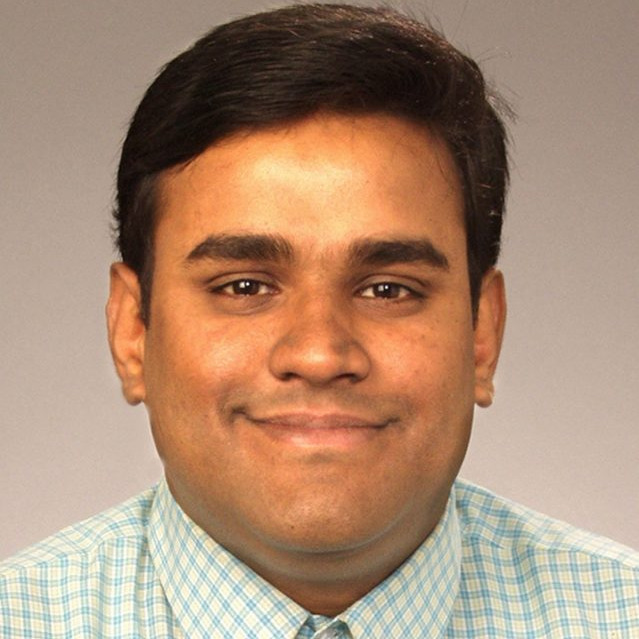
Aerospace Engineering and Aviation School of Engineering, RMIT University;Dr Raj Das leads the ‘Advanced Mechanics and Materials’ group in the Aerospace Engineering and Aviation discipline of the School of Engineering of RMIT University in Australia. He is also an honorary academic in the University of Auckland, New Zealand. Dr Das is a principal investigator of the ‘Sir Lawrence Wackett Aerospace Research Centre’ of RMIT University, and also an adjunct academic of the University of Quebec, Canada. He serves as the Chair of the ‘National Committee on Applied Mechanics’ of Engineers Australia. Dr Raj Das has more than 10 years of experience in design, analysis and optimisation of aerospace materials and structures with a focus on computational simulation, composite structures, failure analysis, and damage tolerance optimisation for civil and defence applications. Dr Das has a PhD from Monash University, Australia in Structural Optimisation and Failure Analysis. Dr Das has previously worked in the University of Auckland, the Commonwealth Scientific and Industrial Research Organisation (CSIRO), and the University of Manchester. Dr Das has published more than 200 papers in international journals and conferences in collaboration with several universities, institutes and industries. Dr Das has been granted several national and international awards and fellowships, including the ‘Jim & Hazel D. Lord Emerging Faculty Fellowship’, ‘Research Excellence Award’, and ‘AUEA Emerging Researcher Award’ by the University of Auckland. He has received the ‘CONICYT award’ from the Government of Chile, ‘Certificate of Merit Award’ from the International Association of Engineers, Hong Kong, ‘UQAC Visiting Fellowship’ from the University of Quebec, Canada, and ‘Visiting Researcher Fellowship’ from the University of Cape Town, South Africa.
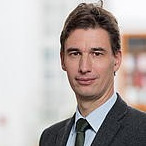
Prof. Christian Hellmich
Institute for Mechanics of Materials and Structures, Vienna University of Technology;Professor Christian Hellmich, Full Professor at the Department of Civil Engineering of the Vienna University of Technology (TU Wien), is the director of the Institute for Mechanics of Materials and Structures. At TU Wien, he received his engineering, PhD, and habilitation degrees (in 1995, 1999, and 2004, respectively). From 2000 to 2002, he was a Max Kade Postdoctoral Fellow in the Department of Civil and Environmental Engineering at the Massachusetts Institute of Technology. His work is strongly focussed on well-validated material and (micro)structural models, in terms of theoretical foundations and applications to concrete, soil, rock, wood, bone, and biomedical implants, up the structural level (tunnels, pipelines, bridges, biological organs such as the skeleton) - with complementary experimental activities if necessary. He has led several projects for the tunnel, railway, and pipeline industries, as well as international research activities sponsored by the European Commission, such as the mixed industryacademia consortium “BIO-CT-EXPLOIT” at the crossroads of numerical simulation and computer tomography, or the cross-domain COST action NAMABIO integrating engineers, physicists, (stem) cell biologists, and medical doctors across the European continent and beyond. He has published more than 130 papers in international refereed scientific journals in the fields of engineering mechanics, materials science, and theoretical biology, more than 25 book chapters, and more than 150 papers in refereed conference proceedings. Dr. Hellmich has served as the Chairman of both the Properties of Materials Committee of the Engineering Mechanics Division of the American Society of Civil Engineers, and the Poromechanics and Biomechanics Committees of the Engineering Mechanics Institute (EMI), as associate editor of the Journal of Engineering Mechanics (ASCE) and as co-editor in Chief of the Journal of Nanomechanics and Micromechanics (ASCE). As community service, he has (co-)chaired and/or supported more than 50 international conferences (including chairmanship of the 20
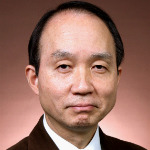
Prof. Zenji Horita
Department of Materials Science and Engineering, Faculty of Engineering, Kyushu University;Prof. Zenji Horita obtained his Bachelor and Master degrees in Kyushu University, Fukuoka, Japan, and received his PhD in 1983 from the University of Southern California, Los Angeles CA, USA. He was a distinguished professor in the Graduate School of Engineering, Kyushu University, and was concurrently appointed a principal investigator of the International Institute for Carbon-Neutral Energy Research (I2CNER) and the director of the International Research Center on Giant Straining for Advanced Materials (IRC-GSAM) in Kyushu University. He was a visiting professor of Arizona State University in USA (1991-1992), the University of Ancona in Italy (2003) and the University of Rouen in France (2010, 2016). He is now the Professor Emeritus of Kyushu University, Fukuoka, Japan, and is currently working as a professor of the Kyushu Institute of Technology, Kitakyushu, Japan and a professor of Saga University, Saga, Japan. His research has been dedicated to materials development using processes of SPD (Severe Plastic Deformation) with evaluation of mechanical properties and microstructural characterization, He has engaged in producing high-performance materials with structural and functional properties well enhanced by SPD processes such as Equal-Channel angular Pressing (ECAP), High-Pressure Torsion (HPT) and High-Pressure Sliding (HPS). He has explored not only the mechanisms for the enhanced properties but also practical application of the SPD-processed materials. Prof. Horita has authored more than 670 papers in refereed journals and is receiving more than 35200 citations with h-index of 93 (Google Scholar Citations). He is the editor-in-chief of Materials Transactions monthly published from the Japan Institute of Metals and Materials (JIM). He is also a member of the JIM, the Japanese Society of Microscopy (JSM), the Iron and Steel Institute of Japan (ISIJ), the Japan Institute of Light Metals (JILM) and The Metallurgical Society (TMS). Prof. Horita was awarded for his achievements in research and development. Among them are the John E. Dorn Mem
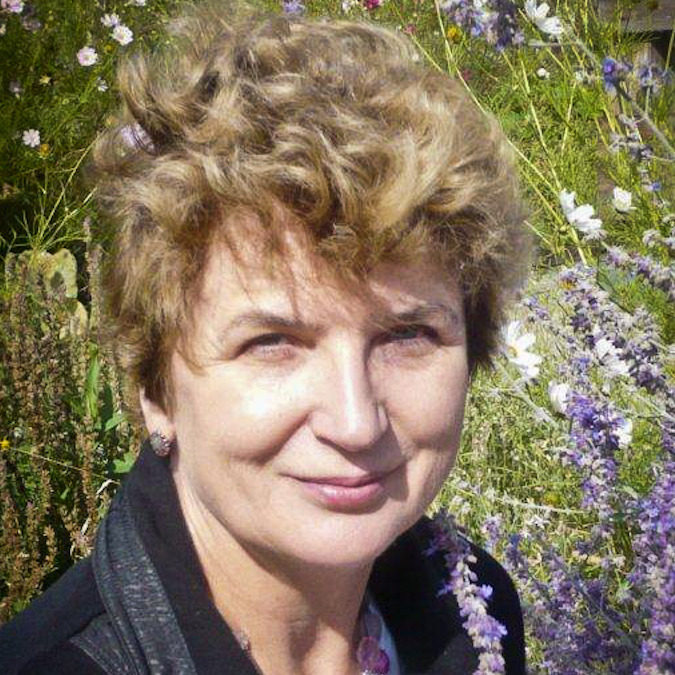
Photonics Engineering Division, Institute of Micromechanics and Photonics, Warsaw University of Technology;Malgorzata Kujawinska PhD DSc., SPIE Fellow, Full Professor of applied optics at Warsaw University of Technology, head of Photonics Engineering Division at Institute of Micromechanics and Photonics. Expert in full-field optical metrology and 3D/4D imaging, hybrid opto-numerical methods in mechanics, image processing, automatic data analysis for metrology and multimedia, design of novel photonics measurement and display systems. She has been involved in the optical metrology topics since 1980 including: development of interferometric, holographic, grating interferometry, digital holography and holographic tomography, digital image correlation and structured light based methods. Recently she is involved in many national and international projects related to the applications ranging from measurements for experimental mechanics, material and optical engineering through art objects and civil engineering structures monitoring, space applications and data content capture for multimedia (3D displays) and biomedicine at cellular level. Author of one monograph, several book chapters and more than 240 papers in highly ranked scientific journals. She had been the SPIE President in 2005, vice-President of ICO-the International Commission for Optics and the Vice-President of European Technology Platform Photonics 21 (2005-2016). She is the recipient of SPIE 2013 Chandra S. Vikram Award in Optical Metrology.
Department of Mechanical Engineering, Imperial College London, UK;He is a Fellow of Royal Academy of Engineering (FREng) and TATA Steel and Royal Academy of Engineering Research Chair. Professor Lin's research expertise is in Materials and Process Modelling, Solid/Computational Mechanics, which includes micro-mechanics modelling, and its application in creep-damage, cyclic-plasticity-damage, viscoplasticity and advanced plasticity manufacturing technologies. He has published over 300 research papers in refereed international journals. He joined Imperial College from the University of Birmingham in 2008 and established a Metal-forming and Materials Modelling Group at Imperial. The Group has an international reputation in developing new metal forming processes, multiscale materials and process modelling. He is a Founder Director of Impression Technologies Ltd and CurvEx Technology Ltd, both of which are Spin-offs of Imperial College are resulted from his patented techniques.
Prof. Alexis Rusinek
Lorraine University, Metz, France;Professor Alexis Rusinek is a full professor first class at Lorraine University in the laboratory Microstructure Studies and Mechanics of Materials in France. He is working since 2000 in the field of the dynamic behaviour of materials coupling experiments, modelling and computing. Prof. A. Rusinek primary research interest is the mechanical behaviour of materials (metals and polymers) with emphasis on the constitutive relation, numerical simulation of material behaviour, and experimental correlation. He is developing for it original set-up allowing to describe the material behaviour for a wider range of applications (temperature, strain rate and large deformation). He is proposing original constitutive relations allowing to define the behaviour of new materials frequently used by industries.
Prof. Błażej Skoczeń
Cracow University of Technology, Kraków, Poland;Professor Błażej Skoczeń (full professor since 2008). Born on December 26, 1960. During more than three decades of research work (since 1984) he worked at the Cracow University of Technology (CUT). In 1992 he became an intern at the Vienna University of Technology, and in 1993 he took an internship at the Toyohashi University of Technology in Japan. In 1994, he took an EU founded internship at the European Organization for Nuclear Research (CERN, Geneva), and during the period 1998-2005 he became an associate and then full-time employee of CERN, where he headed one of the teams working on the Large Hadron Collider (LHC). In 2006, he worked at the French Institute of Advanced Mechanics (Institut Français de Mécanique Avancée, IFMA) in Clermont-Ferrand as visiting professor. Professor Skoczeń is heading since 2007 the Centre for Particle Accelerators Design at the Cracow University of Technology, and in 2009 he became head of the Institute of Applied Mechanics at CUT. In 2010, he obtained the position of full professor, and in 2012 he became member of the Senate of CUT. Since 2007 he is member, and since 2016 vice-chairman of the Committee of Mechanics of the Polish Academy of Sciences (PAS). In 2013 he became head of the Section of Solid Mechanics at the Institute of Applied Mechanics of CUT. Since 2013 he is member of the Committee of Evaluation of Scienti fic Units in Poland, and in 2019 he took the position of chairman of the Science Evaluation Commission at the Ministry of Science and Higher Education. He is member of the scientific committees of numerous conferences, and member of editorial boards of two JCR scientific journals. In 2017 he was appointed member of the General Assembly and the Board of Directors of the International Centre for Mechanical Sciences (CISM, Udine). Also, he is chairman of the Organizing Committee of the Polish Congress of Mechanics, PCM-CMM-2019. Professor Skoczeń participated in many projects worldwide (LHC, FAIR, EUROnu, TIARA), and headed several research projects in Poland. He is the author of more than 150 publication
Prof. Marek Stankiewicz
Jagiellonian University Kraków, Poland;Marek Stankiewicz graduated from Jagiellonian University Department of Physics in 1973. His early research in the field of Atomic and Molecular Physics was concluded with PhD thesis dedicated to phenomenon of quantum beats in forward scattered light. In 1986 he joined the Atomic and Molecular Spectroscopy group at University of Reading (UK) and started synchrotron radiation based research at Daresbury Laboratory. Permanently employed at the Jagiellonian University Institute of Physics he continued very intense international scientific collaboration visiting University of Reading, Royal Institute of Technology (Stockholm), synchrotron centers MAX-lab in Lund (S), Sincrotrone Elettra in Trieste (I) and participating in numerous research projects in the field of atomic and molecular physics using synchrotron radiation. Between 2004-2007 he also participated in the The UK Attosecond Technology Project – devoted to generation of ultra-short, high intensity light pulses and research on their interaction with matter. In 2009 he received a professor title of physics sciences. Lobbying for a long time the construction of a synchrotron light source in Poland, since 2010 he has been contracted as the director of the granted National Synchrotron Radiation Centre SOLARIS which was constructed 2010-2015 and where he continues to date. Member of the Board of Polish Synchrotron Radiation Society. Member of scientific committees of Polish National Center of Nuclear Research and Academic Centre for Materials and Nanotechnology AGH. Member of Board of Directors of the League of European Accelerator-based Photon Sources (LEAPS). Vice chair of the Central European Research Infrastructure Consortium CERIC-ERIC. Delegate of Ministry of Science and Higher Education to ESFRI Working Group for Monitoring of Research Infrastructures.
Prof. Qingping Sun
Department of Mechanical and Aerospace Engineering, Hong Kong University of Science & Technology Clear Water Bay, Kowloon, Hong Kong;Dr. Qingping SUN is the Professor of the Department of Mechanical and Aerospace Engineering and the Director of the Center of Integrated Microsystems at the Hong Kong University of Science and Technology (HKUST). He received PhD in solid mechanics from Tsinghua University, Beijing in 1989 and joined the faculty of HKUST in 1995. His primary research area is the mechanics of phase transitions in materials, with special interests in phase transition process in shape memory alloys, ceramics, nano- and biological materials and systems. The research work covers the experimental, theoretical and modelling aspects in the inter-disciplinary area between mechanics, solid state physics, materials science and engineering. He is an internationally renowned expert in mechanics of shape memory alloys and is distinguished for his contributions in the areas of macro- and nanoscale phase transition and mechanics of multi-scaled processes with multi-field coupling. He has published over 150 research papers in prestigious journals in the fields of mechanics, physics and material science. The awards and recognitions he received include the “State Natural Science Award of China” and the “Citation Classic Award” from SCI. He gave over 40 invited Keynote Lectures and 14 Plenary Lectures in international conferences. He was the visiting professor in universities and CRNS labs of France (Ecole Polytechnique, Ecole Normal Superieur, etc.) and served as the editorial boards for 6 international journals and as chairman of many international conferences.
Department of Civil and Environmental Engineering, Louisiana State University, USA;George Z. Voyiadjis is the Boyd Professor at the Louisiana State University, in the Department of Civil and Environmental Engineering. This is the highest professorial rank awarded by the Louisiana State University System. He is also the holder of the Freeport-MacMoRan Endowed Chair in Engineering. He joined the faculty of Louisiana State University in 1980. He is currently the Chair of the Department of Civil and Environmental Engineering. He holds this position since February of 2001. He also served from 1992 to 1994 as the Acting Associate Dean of the Graduate School. He currently also serves since 2012 as the Director of the Louisiana State University Center for GeoInformatics (LSU C4G; http://c4gnet.lsu.edu/c4g/ ). Voyiadjis is a Member of the European Academy of Sciences, and a Foreign Member of both the Polish Academy of Sciences, Division IV (Technical Sciences) and the National Academy of Engineering of Korea. He is the recipient of the 2008 Nathan M. Newmark Medal of the American Society of Civil Engineers and the 2012 Khan International Medal for outstanding life-long Contribution to the field of Plasticity. He was also the recipient of the Medal for his significant contribution to Continuum Damage Mechanics, presented to him during the Second International Conference on Damage Mechanics (ICDM2), Troyes, France July, 2015. This is sponsored by the International Journal of Damage Mechanics and is held every three years. Voyiadjis was Honored in April of 2012 by the International Symposium on “Modeling Material Behavior at Multiple Scales” sponsored by Hanyang University, Seoul, Korea, chaired by T. Park and X. Chen (with a dedicated special issue in the Journal of Engineering Materials and Technology of the ASME). He was also honored by an International Mini-Symposium on “Multiscale and Mechanism Oriented Models: Computations and Experiments” sponsored by the International Symposium on Plasticity and Its Current Applications, chaired by V. Tomar and X. Chen, in January 2013. He is a Distinguished Member of the American Society of Civil Engin
Institute for Innovation in Sustainable Engineering, University of Derby Derby, UK;Graduating from the University of Aston in 1985 with a good honours degree in mechanical engineering followed by a PhD in the technical field of manufacturing. A career spanning nearly four decades with fifteen years in industry, and twenty two years in collaborative research at the universities of Warwick, Strathclyde and more recently Derby. Notable achievements include the establishment of a centre of competence for high rate testing of materials to service the design of lightweight passenger transport vehicles to ensure compliance to the safety requirements. In 2008, Paul was nominated the principal UK expert by the British Standards Institute and appointed to support the development of a new international standard ISO26203-2 covering servo-hydraulic systems for high rate materials testing and published in 2012. Paul received a generous grant gift from a well-known international automotive company in recognition of his achievements in this field of research. He has an extensive list of publications associated with materials and manufacturing and has supervised several PhD student completions. Paul’s knowledge of materials and manufacturing is extensive covering the thermal and dynamic behaviour of conventional materials, exotic lightweight alloys and high temperature alloys in a wide range of applications. Presently, as director of the IISE, he leads a programme of research in advanced manufacturing with emphasis on selective laser melting and multi-axis CNC machining.