Banner IECBS 2020 hero1.jpg)
1st International Electronic Conference on Brain Sciences
All participants of IECBS2020 are welcome to submit the extended work to the Brain Sciences Special Issue "Selected Papers from the 1st International Electronic Conference on Brain Sciences".
the chair
You are cordially invited to participate in the 1st International Electronic Conference on Brain Sciences. This event aims to bring together researchers working in the field of neuroscience, to present and discuss their recent contributions, without the need for travel. During this e-conference, a live session will also be held on 10 November 2020.
The field of neuroscience is one of the last frontiers in biomedical studies, as many of the details that control brain function are still not well understood. This makes the study of the nervous system very exciting and fast moving. This conference will address a variety of research topics, which reflect some of the current areas of focus. These are organized into seven sessions, and include:
- Clinical Neuroscience
- Cognitive Neuroscience
- Systems Neuroscience
- Molecular and Cellular Neuroscience
- Developmental Neuroscience
- Behavioral Neuroscience
- Environmental Neuroscience
Accepted abstract submissions will be published in the proceedings of the conference, and authors are invited to elaborate their abstracts into full manuscripts that will be considered for publication in Brain Sciences, with a 20% discount on the APC. Brain Sciences is an open access journal from MDPI, in the field of neuroscience. The journal is indexed in the Sciences Citation Indexing Expended (SCIE IF=3.332), Scopus, and other databases. Citations are available in PubMed; full-text archived in PubMed Central (PMC). Please visit the following website for more information.
https://www.mdpi.com/journal/brainsci
Important Dates
• Abstract Submission: 15 September 2020
• Notification of Acceptance: 1st October 2020
• Submission of Full Manuscript to Brain Sciences: 25 October 2020
• Conference Date: 10–25 November 2020
You are welcome both to upload and present your work and to attend the conference completely free of charge.
Please do not hesitate to contact us if you have questions.
Best wishes,
Stephen D. Meriney, PhD
-----------------------------------------------------------------------------------------------------------------------------------------------------------------------------------
If you have any questions, please feel free to contact us:
Conference Secretariat
Ms. Amanda Zhang
Ms. Sammi Wang
Ms. Alexis Liu
MDPI Brain Sciences editorial Office, Beijing
E-Mail: iecbs2020@mdpi.com
Meet Our Chair
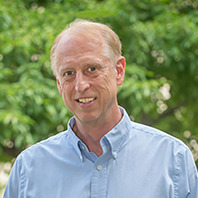
Department of Neuroscience, University of Pittsburgh, USA;Stephen D. Meriney completed his PhD in Physiology/Neuroscience at the University of Connecticut with Dr. Guillermo Pilar in 1986, where he studied the parasympathetic control of intrinsic eye muscles. He then moved to the Jerry Lewis Neuromuscular Research Centre at the University of California, Los Angeles (UCLA) as a postdoctoral fellow, and then became an assistant research physiologist there, with Dr. Alan Grinnell, and studied voltage-gated calcium channels and synaptic mechanisms at the neuromuscular junction. He has been at the University of Pittsburgh since 1993, where he is currently a Professor, and Chair of the Department of Neuroscience, with a secondary appointment in the Department of Psychiatry at the University of Pittsburgh Medical Center. He is currently Editor-in-Chief of the journal Brain Sciences.
Important Dates
15 Sep
2020
1 Oct
2020
25 Oct
2020
Meet Our Speaker
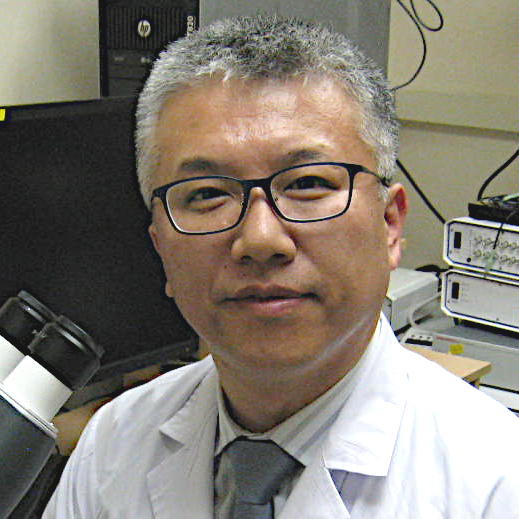
Department of Neurobiology and Anatomy, Drexel University College of Medicine, Philadelphia, Pennsylvania, PA, USA.;Dr. Toyooka is an assistant professor in the Department of Neurobiology & Anatomy at Drexel University College of Medicine. He did postdoctoral fellowships at the University of California San Diego and the University of California San Francisco. He also served on the faculty at Osaka City University School of Medicine in Japan. He was appointed to the faculty in the Department of Neurobiology & Anatomy at the College of Medicine in 2013.

Webinar Information
Webinar Date: 10 November 2020
Time: 9 -10:30 am (US Eastern time) | 15:00 p.m.-16:30 (CET)
Webinar ID: 810 1943 7849
Webinar Secretariat: iecbs2020@mdpi.com

It is well accepted that the last decade has been marked by enormous advances in the field of demyelinating diseases and more specifically multiple sclerosis. A lot of research occurred leading to early diagnosis and discovery of new biomarkers that help with treatment decisions. New therapies emerged and moved from the lab to human trials, to pharmacies and eventually to the patient’s home. Nowadays, diagnosis of MS is not a death sentence. It is viewed as chronic disease that can be managed very well and, given successful treatment, patients can enjoy a high quality of life.
During this webinar, we will focus on two fundamental areas of research in MS. The first presentation by Dr. Mark Haacke will discuss a new imaging method, the MICRO Imaging that can image very small vessels in the brain, including both arteries and veins, and subsequently classify vascular abnormalities, MS-specific.
The second presentation by Dr. Robert Lisak will discuss the role exosomes as mediators of immune regulation in MS and will review evidence about the toxicity of exosome- enriched fractions from B-lymphocytes on oligodendrocytes in people with MS.
The following expert researcher will present and speak:
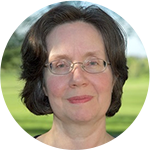
Chair: Dr. Evanthia Bernitsas
Evanthia Triantafylou-Bernitsas, MD joined the Department of Neurology at Wayne State University in 2011. She has completed a neurology residency at Case Western Reserve University and Neuroimmunology Fellowships at the University of Michigan and Baylor College of Medicine. She is the Director of the Multiple Sclerosis Center at Wayne State School of Medicine and an Associate Professor of Neurology.
Her clinical research focuses on aggressive forms of MS, new immunomodulatory therapies and symptomatic interventions. Dr. Bernitsas directs a very active clinical research program and she is the PI on numerous clinical and investigator-initiated trials.
Her laboratory research interests include novel neuroimaging and optical coherence tomography that lead to a better understanding of the disease, pathophysiology and imaging of MS fatigue and the use of biomarkers in neuroprotection and remyelination. Currently, she serves as the Editor-in Chief in the Neuroimaging section of the “Brain Sciences” Journal. She has published extensively and served in several committees and advisory boards.
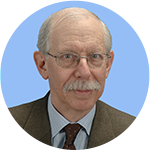
Speaker: Dr. Robert Lisak
It is our honor to present Dr. Robert Lisak in today’s webinar. Dr. Robert Lisak is the Parker Webber endowed Chair in Neurology at Wayne State School of Medicine, a faculty member at the Neurology Department and a world renowned physician scientist. His career spans several decades, starting first at the University of Pennsylvania, where he was faculty, Vice Chair of Neurology and member of the graduate group in Immunology. Then, Dr. Lisak moved to Detroit and became the Chair of the Neurology Department at the Wayne State School of Medicine for 25 years, neurologist in Chief at Detroit Medical Center and Chief of Neurology at Harper Hospital. During his career he has won prestigious awards, served as Editor in Chief in the Journal of the Neurological Sciences and has had funding from NIH, NMS Society, Muscular Dystrophy Association and Myasthenia Gravis Foundation of America, Guillan- Barre/CIDP Foundation and pharma support for multicenter clinical trials and IIT studies. He has authored or co-authored more than 350 peer reviewed paper or reports. Bob, welcome!
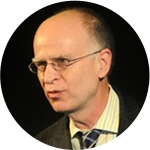
Speaker: Dr. Ewart Mark Haacke
It is our pleasure to present Dr. Ewart Mark Haacke. Dr. E. M. Haacke, PhD is the Director of the MR Research facility and a professor of Radiology and Biomedical Engineering at Wayne State University, Vice Chairman of Biomedical Engineering, a professor of Radiology at Loma Linda University and a Professor of Physics at Case Western Reserve University.
He is a pioneer of the MR angiographic imaging, and he is the first to develop a powerful imaging method, the susceptibility weighted imaging (SWI) that detects micro-hemorrhages and iron. This work later extended to quantitative susceptibility mapping (QSM) that can quantify iron. During his long career, he has served in many committees and won prestigious awards, including the Gold Medal of the International Society for Magnetic Resonance in Medicine. He has more than 40- years experience in the MRI research, trained many residents and fellows, and authored or co-authored more than 300 peer- review papers. Welcome Mark!
Chair: Dr. Evanthia Bernitsas
Speakers: Dr. Robert Lisak and Dr. Ewart Mark Haacke
Date and time: 10 November 2020, 3:00 PM (CET)
Prof. Dr. Stephen D Meriney