The 5th International Electronic Conference on Metabolomics
The IECM 2026 conference registration is now closed.
Join Us Virtually on 14 - 16 October 2026 CEST
All conference sessions will be virtual on Zoom. Registered attendees should have received unique Zoom links to attend the conference. If you have not received any Zoom links the day before the conference, please check your spam folder or contact us at iecm2026@mdpi.com.
Program Details
Click HERE for program details.
Click HERE for the abstract book (registrants only).
For any inquiries, please contact us at iecm2026@mdpi.com.
the chair
In recent years, a series of International Electronic Conferences on Metabolomics (IECM-1, IECM-2, IECM-3 and IECM 2025) have addressed a broad spectrum of topics at the forefront of metabolomics research. The fourth edition, IECM 2025, focused on emerging trends that are transforming the study of metabolic processes, analytical technologies, and systems-level biological insights. Now, IECM 2026 seeks to explore and discuss the latest advancements in metabolomics within an ever-evolving scientific and technological landscape.
IECM 2026 warmly invites researchers from academia, clinical and industrial sectors to present their original research findings, innovative methodologies, conceptual advances, and new applications in metabolomics. Contributions are welcome in, but not limited to, the following thematic areas:
S1. Lipid and Nutrition Metabolomics;
This conference will be conducted entirely in a virtual format, thereby eliminating barriers related to travel and associated expenses for participants across the globe. The online setting provides an inclusive and interactive platform that fosters the timely exchange of cutting-edge research findings, methodological innovations, and emerging concepts in metabolomics and related disciplines.
We extend our sincere appreciation to the global metabolomics community for its continued support, enthusiasm, and engagement. The success of IECM 2026 depends fundamentally on your active participation and valuable contributions. Your involvement not only enriches the scientific dialogue of our conference, but also enables the timely dissemination of research with impact on the metabolomics field.
Kind regards,
Prof. Dr. Hunter N. B. Moseley



Meet Our Chair

Department of Molecular and Cellular Biochemistry, University of Kentucky, Lexington, USA;Hunter N.B. Moseley, Ph.D., is a professor in the Department of Molecular and Cellular Biochemistry at the University of Kentucky. His broad research interest is in developing computational methods, models, and tools for analyzing, integrating, and interpreting many types of biological and biophysical data in a manner that promotes FAIR data sharing and Open Science. These developments enable new understanding of biological systems and related disease processes, using applications from omics (especially metabolomics) data analysis, systems biology, and structural bioinformatics.
Important Dates
17 Jul
2026
17 Aug
2026
8 Oct
2026
Sessions
Explore more detailsMeet Our Speakers
1. International Centre for Genetic Engineering and Biotechnology (ICGEB), Cape Town, South Africa 2. International Centre for Genetic Engineering and Biotechnology, Trieste, Italy;Dr Stefano Cacciatore is a Group Leader of the Bioinformatics Unit at the International Centre for Genetic Engineering and Biotechnology (ICGEB) in Cape Town, South Africa. His research focuses on bioinformatics, machine learning, multi-omics, spatial and single-cell transcriptomics, metabolomics, and computational pathology, with particular emphasis on cancer research and African populations. He is the developer of KODAMA and leads the development of computational methods for analysing complex biomedical and high-dimensional datasets. His work combines methodological innovation with translational research in cancers including hepatocellular, pancreatic, prostate, and paediatric malignancies.
Wageningen University & Research, Wageningen, The Netherlands;Dr. Laura Righetti is Assistant Professor in Analytical Chemistry at Wageningen University and Wageningen Food Safety Research. She holds a MSc degree in Pharmaceutical Chemistry and Technology from Modena and Reggio Emilia University (IT), a PhD degree in Food Chemistry from University of Parma (IT) obtained in 2017, and postdoctoral experience in Analytical Chemistry at the Justus Liebig University Giessen (DE). Her research interest is focus on small molecules (both natural toxins and bioactive metabolites) and on the development of mass spectrometry based methodologies to comprehensive detect them. From an analytical chemistry point of view, the comprehensive analysis of secondary metabolites by liquid chromatography–mass spectrometry remains a challenge because of their chemical diversity, the large number of isomeric forms, and the lack of analytical standards. Therefore I have a specific interest in adding innovative analytical techniques such as ion mobility mass spectrometry and mass spectrometry imaging to the metabolomics workflow to overcome the challenge of comprehensively and spatially characterize the “metabolome” in food.
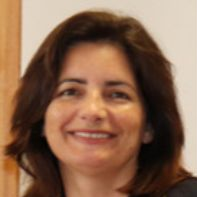
Department of Chemical Engineering, ISEL—Instituto Superior de Engenharia de Lisboa, Instituto Politécnico de Lisboa, Lisbon, Portugal;Cecília R.C. Calado (https://orcid.org/0000-0002-5264-9755 & cecilia.calado@isel.pt) is a Coordinating Professor with Habilitation at the Lisbon Superior Institute of Engineering, Polytechnic University of Lisbon. She is the coordinator of the MSc program in Biomedical Engineering and the R&D Laboratory in Medical Bioengineering. She holds a BSc in Biochemistry (a 5-year university degree), an MSc and a PhD in Biotechnology, and a Habilitation in Biochemistry. Her research combines analytical techniques—used to acquire the molecular fingerprint of biological systems—with machine learning algorithms to develop bioprocess monitoring techniques (in situ, real-time, or high-throughput at-line) as part of Process Analytical Technology (PAT). Additionally, she develops platforms for drug discovery and development, including antibiotics and vaccines, and identifies biomarkers for medical diagnosis and prognosis based on omics.
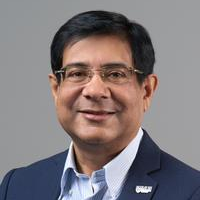
Department of Biological Sciences, Faculty of Science, National University of Singapore (NUS), Singapore, Singapore;Associate Professor Sanjay Swarup is an agriculture and environmental biologist in the Department of Biological Sciences at the National University of Singapore (NUS). He is Deputy Research Director of the Environmental Engineering cluster and Graduate Programme Director at the Singapore Centre for Environmental Life Sciences Engineering (SCELSE), and previously served as Director of the NUS Environmental Research Institute (NERI). His research combines a background in plant breeding, plant pathology and molecular biology to understand complex agricultural and environmental systems. He leads the Agri-Environmental Systems Biology group, which investigates the mechanistic basis of ecosystem functioning across molecular, organismal and landscape scales, with particular emphasis on phytobiomes, microbiomes and biofilms. His group studies how microbial communities interact with plants and their surrounding environments through metabolites, metabolic signals and other ecological processes. The research integrates multidisciplinary approaches including metabolomics, metagenomics, computational biology, high-resolution imaging, hydrology, robotics and artificial intelligence. Current research themes include plant–microbiome interactions, crop-associated microbiomes, sustainable agricultural systems, soil management and regenerative agriculture, with the broader aim of developing science-based solutions for food production and environmental sustainability.
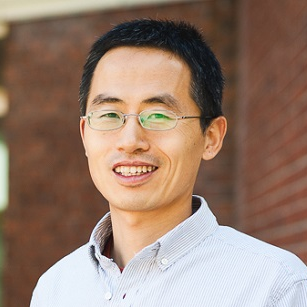
Department of Microbiology and Immunology, McGill University, Montreal, Canada;Jianguo (Jeff) Xia is a Professor and Canada Research Chair in Bioinformatics and Big Data Analytics at McGill University. His group develops widely used omics analysis platforms – including MetaboAnalyst, MicrobiomeAnalyst, and OmicsAnalyst – that are widely by 100,000s researchers worldwide, with a focus on metabolomics, microbiomics, and multi-omics integration. A Web of Science Global Highly Cited Researcher every year since 2019, he has published 142 papers (>55,000 citations, H-index 63), trained 60 HQP, and secured $70M in research funding
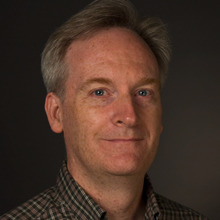
SRI International, Menlo Park, CA, USA;Peter D. Karp is the director of the Bioinformatics Research Group within the Artificial Intelligence Center at SRI International. Dr. Karp has authored 210 publications in bioinformatics and computer science in areas including metabolic pathway bioinformatics, computational genomics, scientific visualization, and scientific databases. He is a Fellow of the American Association for the Advancement of Science and of the International Society for Computational Biology.
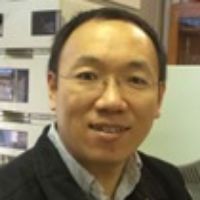
Department of Environmental Sciences and Engineering, University of North Carolina at Chapel Hill, Chapel Hill, USA;Dr. Lu is a Professor in the Department of Environmental Sciences and Engineering at the Gillings School of Global Public Health at the University of North Carolina at Chapel Hill. He also serves as the Scientific Director of the UNC Biomarker Mass Spectrometry Facility. The overarching goal of Dr. Lu’s research is to better understand the health effects of environmental exposures, the human exposome, and interindividual differences in response to these exposures. He has extensive expertise in analytical chemistry, microbiome research, and biomarker development. Dr. Lu’s laboratory investigates a broad range of environmentally relevant chemicals, including heavy metals, pesticides, and other exposures with significant public health impact. His research has been at the forefront of defining exposure–microbiome–host interactions and establishing the gut microbiome as a critical mediator of the adverse effects of environmental exposures. A major focus of his work is understanding how the gut microbiome interacts with environmental exposures and how the microbiome influences disease susceptibility and health outcomes.
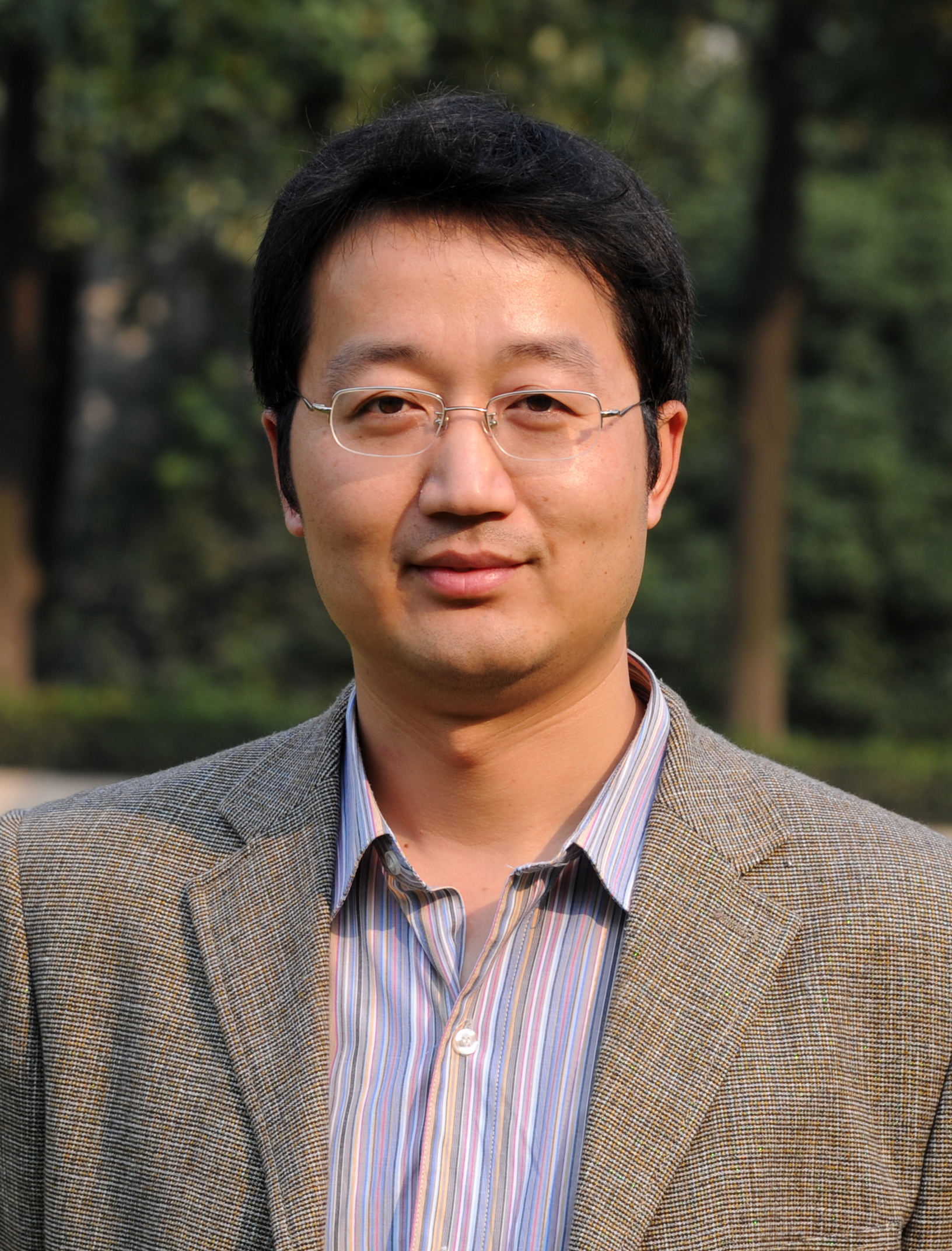
Center for Molecular Metabolism, School of Environmental & Biological Engineering, Nanjing University of Science & Technology, Nanjing, China;



Mrs. Xue Liang
Email: iecm2026@mdpi.com
For inquiries regarding submissions and sponsorship opportunities, please feel free to contact us.