 |
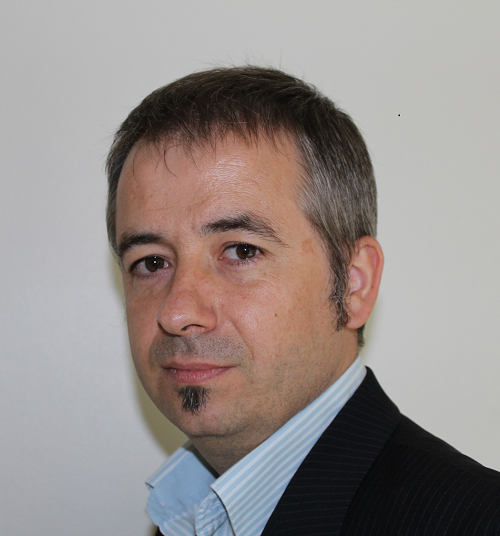
Prof. Dr. Jose A Antonino-Daviu Department of Electrical Engineering, Universitat Politècnica de València, Spain |
Short Bio
Jose Antonino-Daviu received the M.Sc. and Ph.D. degrees in electrical engineering, both from the Universitat Politècnica de València, Valencia, Spain, in 2000 and 2006, respectively. He has worked for IBM, involved in several international projects. He is currently a Full Professor in the Department of Electrical Engineering, Universitat Politècnica de València. He was an Invited Professor at Helsinki University of Technology, Finland, in 2005 and 2007, Michigan State University, USA, in 2010, Korea University, South Korea, in 2014, Université Claude Bernard Lyon 1, France, and Coventry University, U.K., in 2016. He is a coauthor of more than 200 papers published in technical journals and conference proceedings. He is also the coauthor of one international patent.
Dr. Antonino-Daviu is an Associate Editor of the IEEE TRANSACTIONS ON INDUSTRIAL INFORMATICS, IEEE INDUSTRIAL ELECTRONICS MAGAZINE and IEEE Journal of Emerging and Selected Topics in Industrial Electronics. He received the IEEE Second Prize Paper Award of the Electric Machines Committee of the IEEE Industry Applications Society (2013). He also received the Best Paper Award in the conferences IEEE ICEM 2012, IEEE SDEMPED 2011 and IEEE SDEMPED 2019 and the “Highly Commended Recognition” of the IET Innovation Awards in 2014 and in 2016. He was the General Co-Chair of SDEMPED 2013 and is a member of the Steering Committee of IEEE SDEMPED. He is also General Co-Chair of ICEM’2022 and Member of the ICEM Administrative Committee. In 2016, he received the Medal of the Spanish Royal Academy of Engineering (Madrid, Spain) for his contributions in new techniques for predictive maintenance of electric motors. In 2018, he has been awarded with the prestigious ‘Nagamori Award’ from the Nagamori Foundation (Kyoto, Japan). In 2019, he received the SDEMPED diagnostic achievement Award (Toulouse, France) for his contributions to electric motors advanced diagnosis.
Proposed presentation title: Transient-based fault diagnosis of electric motors based on the analysis of electrical signals
Abstract of the speech
Over recent years, traditional methods for condition monitoring of electric motors that rely on the analysis of electric signals (currents or fluxes) under steady-state have been complemented, and in some cases replaced, by modern methodologies relying on the analysis of these signals under steady-state operation of the machine. This talk explains the foundations of these techniques and the main advantages that they can provide (avoidance of false indications, higher reliability…). The main options for the application of transient-based diagnosis methods are exposed and several application examples will be commented.
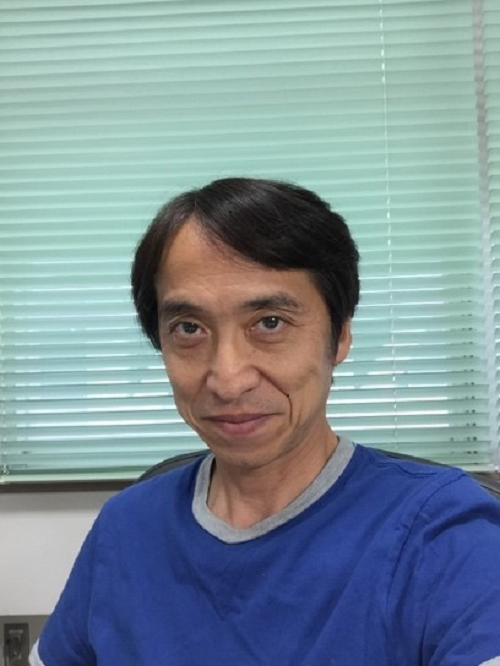 |
Prof. Makoto Iwasaki IEEE Fellow |
Short Bio
Makoto Iwasaki received the B.S., M.S., and Dr. Eng. degrees in electrical and computer engineering from Nagoya Institute of Technology, Nagoya, Japan, in 1986, 1988, and 1991, respectively. Since 1991, he has been with the Department of Computer Science and Engineering, Nagoya Institute of Technology, where he is currently a Professor at the Department of Electrical and Mechanical Engineering.
As professional contributions of the IEEE, he has been an AdCom member of IEEE Industrial Electronics Society (IES) in term of 2010 to 2024, a Technical Editor for IEEE/ASME TMech from 2010 to 2014, an Associate Editor for IEEE TIE since 2014, a Management Committee member of IEEE/ASME TMech (Secretary in 2016 and Treasurer in 2017), a Co-Editors-in-Chief for IEEE TIE since 2016, a Vice President for Planning and Development in term of 2018 to 2021, respectively. He is IEEE fellow class 2015 for "contributions to fast and precise positioning in motion controller design".
He has received the Best Paper Award of Trans of IEE Japan in 2013, the Best Paper Award of Fanuc FA Robot Foundation in 2011, the Technical Development Award of IEE Japan in 2017, the Nagamori Awards in 2017, the Ichimura Prize in Industry for Excellent Achievement of Ichimura Foundation for New Technology in 2018, the Technology Award of the Japan Society for Precision Engineering in 2018, and the Commendation for Science and Technology by the Japanese Minister of Education in 2019, respectively. He is also a fellow of IEE Japan, and a member of Science Council of Japan.
His current research interests are the applications of control theories to linear/nonlinear modeling and precision positioning, through various collaborative research activities with industries.
Proposed presentation title: GA-Based Practical System Identification and Auto-Tuning for Multi-Axis Industrial Robots
Abstract of the speech
Fast-response and high-precision motion control is one of indispensable techniques in a wide variety of high performance mechatronic systems including micro and/or nano scale motion, such as data storage devices, machine tools, manufacturing tools for electronics components, and industrial robots, from the standpoints of high productivity, high quality of products, and total cost reduction. In those applications, the required specifications in the motion performance, e.g. response/settling time, trajectory/settling accuracy, etc., should be sufficiently achieved. In addition, the robustness against disturbances and/or uncertainties, the mechanical vibration suppression, and the adaptation capability against variations in mechanisms should be essential properties to be provided in the performance.
The keynote speech presents a practical auto-tuning technique based on a genetic algorithm (GA) for servo controllers of multi-axis industrial robots. Compared to conventional manual tuning techniques, the auto-tuning technique can save the time and cost of controller tuning by skilled engineers, reduce performance deviation among products, and achieve higher control performance. The technique consists of two main processes: one is an autonomous system identification process, involving the use of actual motion profiles of a typical robot. The other is an autonomous control gain tuning process in the frequency and time domains, involving the use of GA, which satisfies the required tuning control specifications, e.g., control performance, execution time, stability, and practical applicability in industries. The proposed technique has been practically evaluated through experiments performed with an actual six-axis industrial robot.
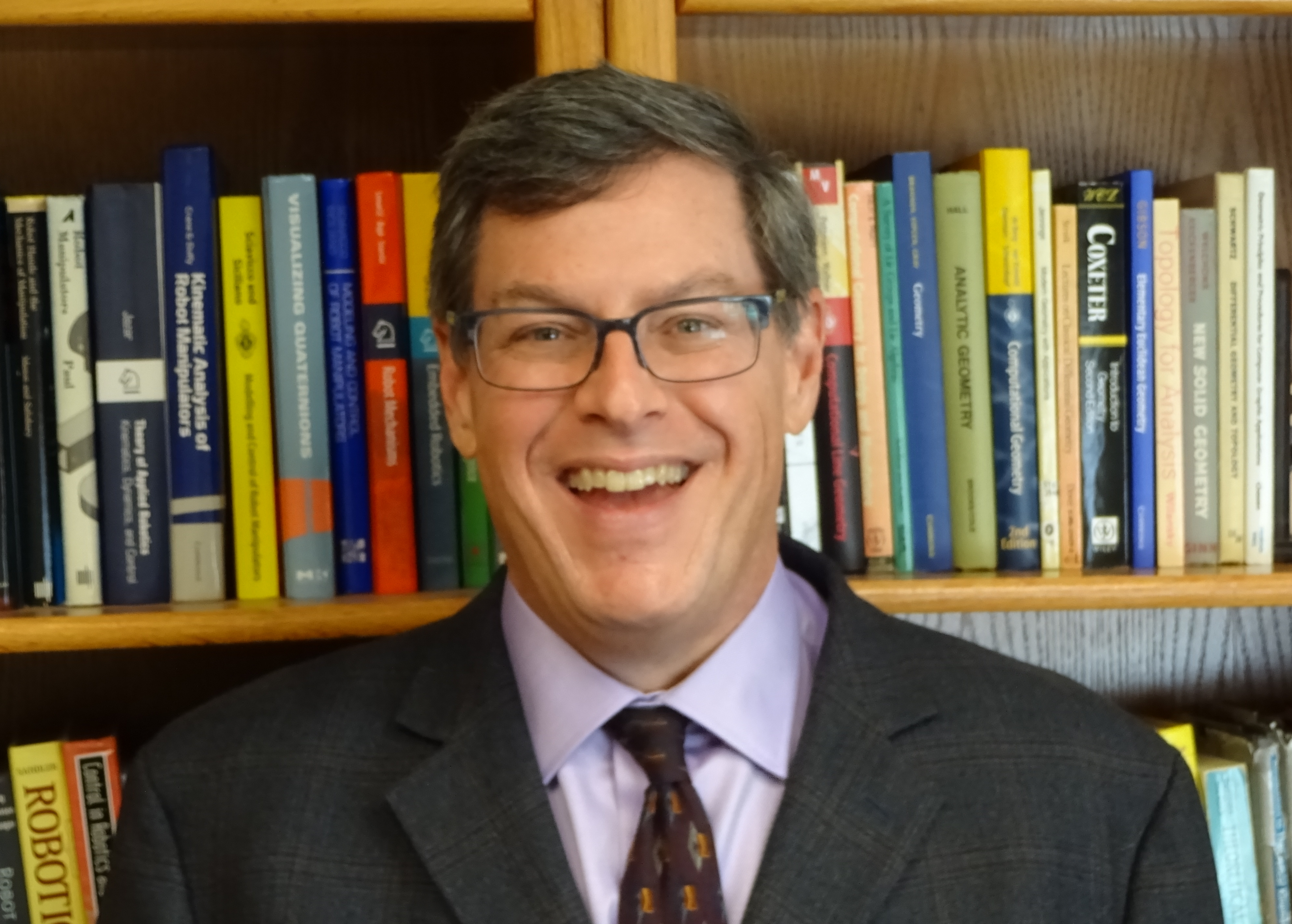 |
Prof. Pierre Larochelle Department Head |
Short Bio
Pierre Larochelle serves as Department Head and Professor of Mechanical Engineering at the South Dakota School of Mines & Technology. Previously he served as an Associate Dean and Professor of Mechanical Engineering at the Florida Institute of Technology. His research focuses on the design of complex robotic mechanical systems and enabling creativity and innovation in design. He is the founding director of the RObotics and Computational Kinematics INnovation (ROCKIN) Laboratory, has over 100 publications, holds three US patents, and serves as a consultant on robotics, automation, machine design, creativity & innovation, and computer-aided design. In 2012 at NASA’s request he created a 3-day short course on Creativity & Innovation. This course has been very well received and he has taught it exclusively more than 30 times at NASA’s various centers and laboratories across the nation to more than 600 of NASA scientists and engineers. He currently serves as the Chair of the U.S. Committee on the Theory of Mechanisms & Machine Science and represents the U.S. in the International Federation for the Promotion of Mechanism & Machine Science (IFToMM) (2016-22). He serves as a founding Associate Editor for the ASME Journal of Autonomous Vehicles and Systems (2020-23). Moreover, he serves on the Executive Committee of ABET’s Engineering Accreditation Commission (EAC) and as an ABET Accreditation Visit Team Chair. He has served as Chair of the ASME Design Engineering Division (2018-2019), the ASME Mechanisms & Robotics Committee (2010-2014), and as an Associate Editor for the ASME Journal of Mechanisms & Robotics (2013-19), the ASME Journal of Mechanical Design (2005-11), and for Mechanics Based Design of Structures & Machines (2006-13). He is a Fellow of the American Society of Mechanical Engineers (ASME), a Senior Member of IEEE, and a member of Tau Beta Pi, Pi Tau Sigma, ASEE, and the Order of the Engineer.
Proposed presentation title: Synthesis of RR and CC Dyads for Pick and Place Tasks with Guiding Locations
Abstract of the speech
A novel dimensional synthesis technique for solving the mixed exact and approximate motion synthesis problem for planar, spherical, and spatial dyads is presented. The methodology uses an analytic representation of the dyad's rigid body constraint equation in combination with an algebraic geometry formulation of the exact synthesis for three prescribed positions to yield designs that exactly reach the prescribed pick & place positions while approximating an arbitrary number of guiding positions. The result is a dimensional synthesis technique for mixed exact and approximate motion generation for planar RR, spherical RR, and spatial CC dyads. A solution dyad may be directly implemented as an open chain or two solution dyads may be combined to form a 4R or 4C closed chain; e.g. a planar four-bar mechanism. The synthesis algorithm only utilizes algebraic geometry and does not require the use of a numerical optimization algorithm or a metric on the elements of SE(2), SO(3), or SE(4); the groups of planar, spherical, and spatial displacements. Two implementations of the synthesis algorithm are presented; computational and graphical construction. Examples of the synthesis of planar four-bar, spherical four-bar, and spatial 4C mechanisms for pick and place tasks are included. Finally, applications and future works are discussed.
 |
Dr. Konstantinos Gyftakis Technical University of Crete, Greece |
Short Bio
K. N. Gyftakis received the Diploma in Electrical and Computer Engineering from the University of Patras, Patras, Greece in 2010. He pursued a Ph.D. in the same institution in the area of electrical machines condition monitoring and fault diagnosis (2010-2014). Furthermore, he worked as a Post-Doctoral Research Assistant in the Dept. of Engineering Science, University of Oxford, UK (2014-2015). Then he worked as Lecturer (2015-2018) and Senior Lecturer (2018-2019) in Coventry University, UK. Between 2015-2022 he worked as a Lecturer in Electrical Machines, University of Edinburgh.
He is currently an Associate Professor with the Technical University of Crete, Greece.
His research interests focus in the fault diagnosis, condition monitoring and degradation of electrical machines. He has authored more than 110 papers in international scientific journals and conferences and chapter for the book: “Diagnosis and Fault Tolerance of Electrical Machines, Power Electronics and Drives”, IET, 2018. Finally, he serves as an Editor for the IEEE Transactions on Energy Conversion.
Proposed presentation title: An overview of electrical machines condition monitoring and fault diagnosis
Abstract of the speech
Electrical machines are key devices for the electric power generation, industrial production and every day life of mankind. Although generally robust, electrical machines may experience faults which if undetected may lead to catastrophic breakdowns with significant negative outcomes. This reality demands the development of reliable condition monitoring. This seminar will cover most major faults in induction motors such as stator inter-turn faults, broken bars and mechanical faults, as well as rotor faults in direct drive permanent magnet generators. The goal of the seminar is to instruct and introduce researchers and engineers in the field of diagnostics covering significant ground and discussing several aspects.
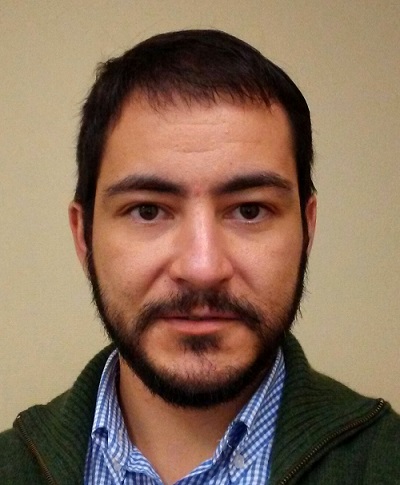 |
Dr. Alejandro Gómez Yepes Applied Power Electronics Technology Research Group, University of Vigo, Spain |
Short Bio
Alejandro Gómez Yepes was born in A Coruña, Spain, in November 1985. He received the M.Sc. and Ph.D degrees in electrical engineering from the University of Vigo, Spain, in January 2009 and December 2011, respectively.
From June 2008 he is working with the Applied Power Electronics Technology Research Group (APET) of the University of Vigo, Spain. From April 2011 to July 2011, he joined the Department of Electronics and Electrical Engineering of Liverpool John Moores University, UK. From August 2016 to June 2018, he joined the Advanced Electric Machines and Power Electronics (EMPE) lab of Texas A&M University, USA. In addition, from September 2018 to October 2018, he joined the Electromechatronic Systems Research Centre (CISE) of the University of Beira Interior, Portugal. He is a Ramon y Cajal research fellow at the University of Vigo, Spain, since January 2020.
His research interests mainly include digital control of power electronics converters, with special focus, currently, on multiphase ac motor drives. He has co-authored more than 100 scientific publications (mostly in journals) in the field of power electronics, with over 5000 citations. He is a recipient of the 2018 First Prize Paper Award and Second Prize Paper Award from the IEEE Industry Applications Society. He currently serves as an Associate Editor of the IEEE Transactions on Industrial Electronics and the IET Electric Power Applications, and as an Editorial Board member of Machines. He has also participated in 7 and 5 R&D projects funded by public and private entities, respectively.
Presentation title: Fault Tolerance in Multiphase Electric Machine Drives
Abstract of the speech
Multiphase drives offer enhanced fault-tolerant capabilities compared with conventional three-phase ones. Their phase redundancy makes them able to continue running in the event of faults in certain phases, such as open- or short-circuit ones. Moreover, their greater number of degrees of freedom permits improving the performance not only under faults affecting individual phases, but also under those affecting the machine/drive as a whole. That is the case of failures in the dc link, resolver/encoder, control unit, cooling system, etc. Accordingly, multiphase drives are becoming remarkable contenders for applications where high reliability is required, such as electric vehicles and standalone/off-shore generation. Actually, the literature on the subject has grown exponentially in recent years. This keynote speech presents an overview about the state-of-the-art regarding fault tolerance in multiphase drives. The most important recent advances, emerging trends and open challenges are highlighted.
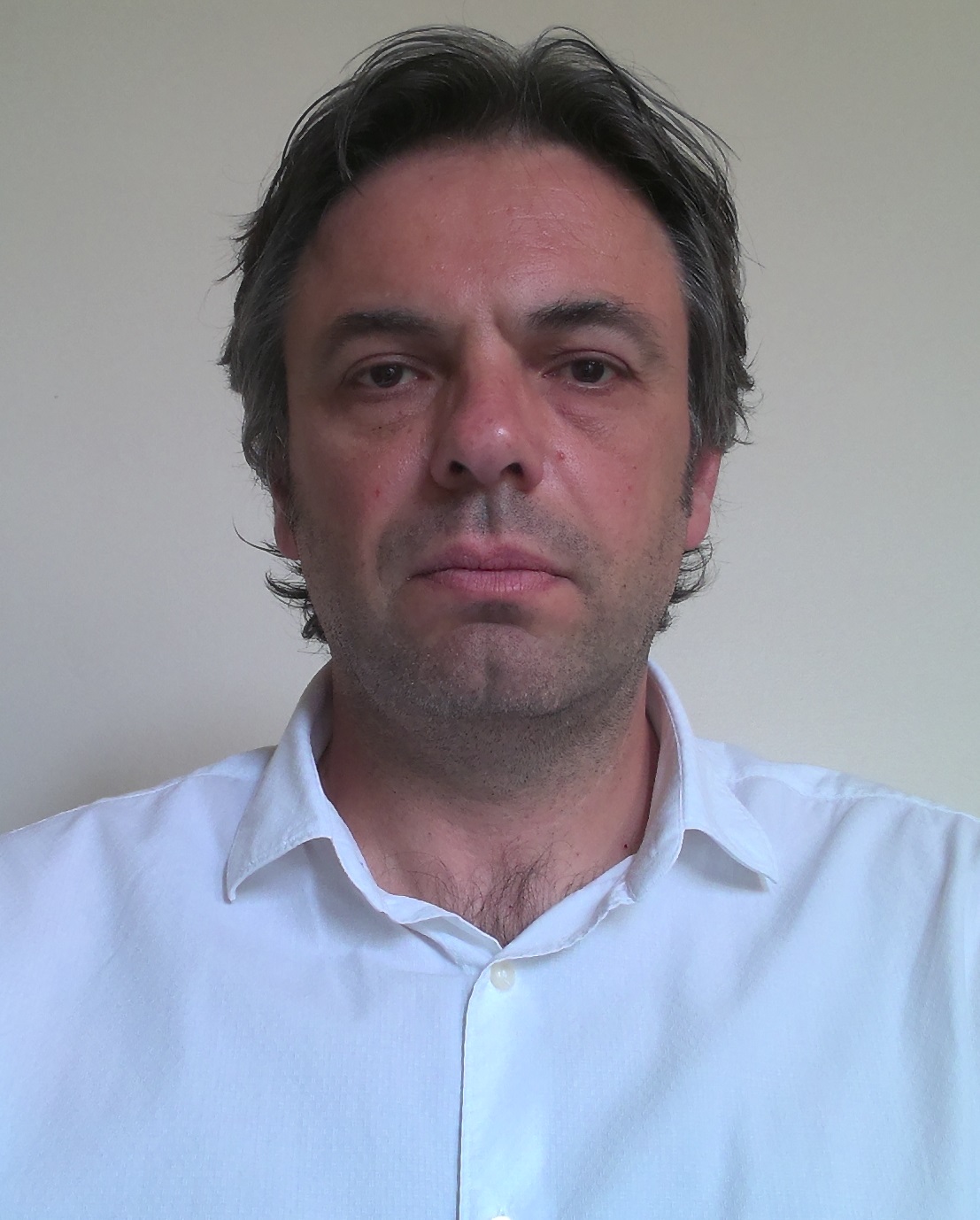 |
Dr. Efstathios Velenis Reader in Vehicle Dynamics and Control |
Short Bio
Dr Velenis is a Reader at the Advanced Vehicle Engineering Centre at Cranfield University. His research interests include vehicle dynamics and control, optimal, nonlinear, model predictive control, active chassis control, control of autonomous vehicles, vehicle limit handling, modelling of expert driving techniques. Dr Velenis received his MSc and PhD degrees from the School of Aerospace Engineering at Georgia Institute of Technology in 2000 and 2006 respectively and his Mechanical Engineering Diploma from the National Technical University of Athens in 1999. In 2006 he was awarded the Luther Long award for the best PhD dissertation in Engineering Mechanics at GeorgiaTech. Following his PhD, Efstathios held a Post-doctoral researcher position at GeorgiaTech and was a visiting researcher at Ford Motor Company in MI, USA. Prior to joining Cranfield he was a lecturer in Mechanical Engineering at Brunel University London. He has co-authored over 80 research papers in peer-reviewed journals and conferences and is an associate editor of the IEEE Transactions on Vehicular Technology.
Presentation title: Expert Vehicle Control at The Limits of Handling
Abstract of the speech
Active chassis-control/safety systems have had an enormous impact in the global society and economy by achieving significant reduction of road traffic accidents, injuries and deaths. Several of these systems aim at delivering a stable, predictable and intuitive response of the vehicle for the average human driver. At the same time, expert human drivers in the field of motorsport, routinely operate their vehicles outside the envelope enforced by such active safety systems, to fully exploit the performance of the vehicle. In this presentation we discuss research work which aims to shed light into the optimality properties and performance benefits of driving techniques used by race drivers including extreme operating conditions which require expert skills. We also present a framework for the development of control algorithms able to stabilise the vehicle dynamics in such extreme conditions. Inspired by expert driving techniques a driver assist system concept for evasive manoeuvring is presented. Finally, in the context of driverless vehicles, the requirement for predictable and intuitive response of the vehicle for the average human driver becomes irrelevant. We envision that autonomous vehicle controllers will use expert skills to control the vehicle dynamics and operate outside the envelope enforced by current active safety systems if necessary. We present recent results in the development of autonomous vehicle controllers able to operate the vehicle at the limits of handling including their implementation on a prototype vehicle platform.
 |
Dr. Hai Wang College of Science, Health, Engineering and Education, Murdoch University, Australia |
Short Bio
Hai Wang (M’13–SM’19) received his PhD degree from Swinburne University of Technology (SUT), Australia, in 2013, in electrical and electronic engineering. From 2014 to 2015, he was the Postdoc Research Fellow in the Faculty of Sciences, Engineering and Technology, at SUT, Australia. From 2015 to 2019, he was with the School of Electrical and Automation Engineering at Hefei University of Technology, China, where he served as the Full Professor (Huangshan Young Scholar) and the Deputy Discipline Head of Automation. Hai is currently the Senior Lecturer of Electrical Engineering, Academic Chair of Intelligent Industrial Control & Autonomous Systems Engineering (IICASE), and Director of Advanced Mechatronics, Robotics, and Controls Laboratory, in Discipline of Engineering and Energy, at Murdoch University, Perth, Australia. His research interests are in sliding mode control and observer, adaptive control, robotics and mechatronics, neural networks, nonlinear systems, and vehicle dynamics & control. Dr. Wang was the Chair of IEEE Industrial Electronics Society Western Australia Chapter in 2020. He currently serves as the Section EiC of Actuators, Associate Editor of Computers and Electrical Engineering, ASME-Journal of Autonomous Vehicles and Systems, Leading Guest Editors of Neural Computing and Applications, Computers and Electrical Engineering, Actuators, etc.
Presentation title: Modelling and robust control for steer-by-wire vehicles via sliding mode methodologies
Abstract of the speech
For automotive steer-by-wire (SbW) systems, system parametric uncertainties, nonlinearities (frictions, etc) and external disturbances (tyre self-aligning torque from road surfaces) exist and greatly make the control design to be quite challenging and difficult. In this talk, the mathematical modelling of the SbW system will be further explored and presented by an equivalent second-order dynamical system. Next, based on the derived simplified model of SbW system, a series of robust control schemes via sliding mode control (SMC) methodologies will be introduced, such that the robustness, good convergence property of steering tracking, and excellent disturbance rejection ability of the closed-loop SbW control system can be well obtained. Further, novel SMC-based yaw stability control schemes including upper and lower controllers are developed for SbW vehicles to improve the vehicle manoeuvrability and yaw stability performance. Hardware-in-the-loop and vehicle platforms are established, where fruitful real-time experiments are presented in support of the remarkable performance and effectiveness of the proposed schemes. Practical concerns surrounding the gaps between academia and industry on this topic are also reported.
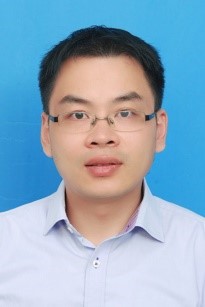 |
Prof. Dr. Ming Yu School of Electrical Engineering and Automation, Hefei University of Technology, China |
Short Bio
Ming Yu (M’12) received the B.E. and M.E. degrees in automobile engineering from Hefei University of Technology, Anhui, China, in 2001 and 2004, respectively, and the Ph.D. degree in electrical and electronic engineering from Nanyang Technological University, Singapore, in 2012. From 2013 to 2014, he was a Research Fellow in the Rolls-Royce@NTU Corporate Lab, Nanyang Technological University. Since 2014, he has been with the School of Electrical and Automation Engineering, Hefei University of Technology, Hefei, China, as a Professor. His research interests include fault diagnosis and prognosis of mechatronic systems, hybrid system modeling, and evolutionary algorithms, computational optimal control.He has more than 80 refereed journal and conference proceedings papers in related areas. He was a guest editor of Actuators.
Presentation title: Fault diagnosis and prognosis of steer-by-wire system based on finite state machine and extreme learning machine
Abstract of the speech
In this work, an integrated condition monitoring method combining model-based fault diagnosis and data-driven prognosis is proposed for steer-by-wire (SBW) system. First, the SBW system is modeled by bond graph (BG) technique and a twodegree-of-freedom (2-DOF) state-space model of the vehicle is built. Based on the 2-DOF model, the estimated selfaligning torque is used for the control of feedback motor. The fault detection is carried out by evaluating the analytical redundancy relations derived from the BG model. Since the fault isolation performance is essential to subsequent fault estimation process, a new fault isolation method based on finite state machine is developed to improve the isolation ability by combining the dependent and independent analytical redundancy relations, where the number of potential faults could be decreased. In order to refine the possible fault set to determine the true fault, a cuckoo search (CS)–particle filter is developed for fault estimation. Based on the estimated true fault, prognosis can be implemented which is important to achieve failure prevention and prolong system lifespan. To this end, an optimized extreme learning machine (OELM) is proposed where the input weights and hidden layer biases are optimized by CS. Based on data representing fault values obtained from the fault identification, the OELM model is trained for remaining useful life prediction of failing component. Finally, the proposed methodologies are validated by simulations.