
Insect Migration and Radar Aeroecology
16–19 October 2026, Nanjing, China
31 August 2026
10 September 2026
30 September 2026
15 July 2026
16 October 2026
Insect Migration, Flight Behaviour, Physiological Regulation, Beneficial insect, Integrated Pest Management, Navigation
- Go to the Sessions
- Event Details
Invited Honorary Guest
Dr. Alistair Drake
Dr. Don Reynolds
Keynote Speakers
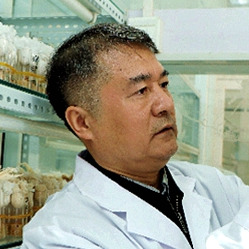
A member of the Chinese Academy of Engineering and a renowned agricultural entomologist. He has long been engaged in research on the monitoring, early warning, and control of major migratory pests such as cotton bollworm and fall armyworm. His current work focuses on the establishment of monitoring networks and integrated management technologies for migratory pests. He formerly served as the President of the Chinese Academy of Agricultural Sciences (CAAS). He currently serves as Chinese Co-Chair of the MARA-CABI Joint Laboratory for Biosafety and Vice Chair of the FAO's Global Steering Committee on Fall Armyworm.
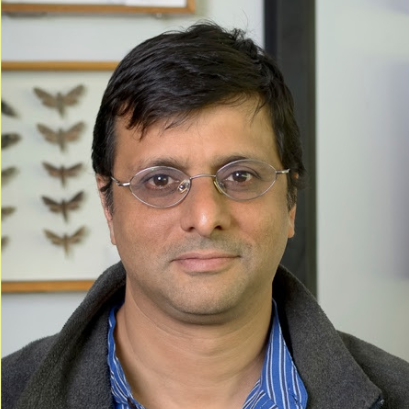
National Centre for Biological Sciences, India
A Fellow of the Indian National Science Academy (INSA), and has made seminal contributions to the biology of insect flight by integrating neural circuitry analysis, biomechanics and sensory physiology.

University of Amsterdam, Netherlands
Professor of animal movement ecology and head of the interdisciplinary department Theoretical and Computational Ecology, at the Institute for Biodiversity and Ecosystem Dynamics. The aim of her research is to understand how intrinsic and external factors influence animal movement at different scales in space and time and what the consequences of movement strategies are for individuals, populations and species.

PI at the School of Life Sciences, Peking University, where she leads research on evolutionary genomics using butterflies as a model system. She is a recipient of the National Science Fund for Distinguished Young Scholars (杰青) in China.

University of Oldenburg, Germany
Beyond migration: the role of the magnetic sense for insect navigation
PI in the International Cluster of Excellence for the Sensory Basis, Mechanisms, and Impacts of Animal Navigation (NaviSense) and the Booster Uni Project, Animal and Human Navigation in the Ancient Southern Levant: An Interdisciplinary Project on Spatial Perception, Route Formation, and Orientation between Environmental Knowledge and Textual Tradition (Iron Age to Roman Imperial Period)

University of Haifa, Israel
His group study biomechanical, behavioral, physiological, evolutionary, and ecological aspects of flight in birds, bats, and insects using diverse approaches. They track flying organisms with GPS, radio telemetry, multi-sensor geolocators, and radars. They conduct controlled lab experiments on nutrition and lipid management in migratory passerines, use high-speed photography for flight kinematics, and investigate life-history traits including feather moult and migration patterns.

His research focuses on radar signal processing, where he has established a refined signal processing framework for micro-feature measurement. His work supports China's migratory pest monitoring, landslide disaster monitoring, and new remote sensing system development. He served as General Chair of the IET International Radar Conference 2018 and ICSIDP 2024. He is a recipient of the National Science Fund for Distinguished Young Scholars (杰青) and Fellow of the Institution of Engineering and Technology (IET Fellow).
Invited Speakers
Swiss Federal Institute for Forest, Snow and Landscape Research, Switzerland
University of Queensland, Australia
University of Leeds, UK
University of Lund, Sweden
Swiss Bird Radar Solution AG, Switzerland
University of Lund, Sweden
James Cook University, Australia
University of Oldenburg, Germany
Natural Sciences Museum of Granollers, Spain
University of Haifa, Israel
University of Exeter, UK
University of Queensland, Australia
Welcome from the Chairs
Migration is one of the most remarkable and complex biological phenomena in nature. Insect migration occurs on a massive scale and has profound impacts on natural ecosystems and human society. Migratory insects may cause regional outbreaks as agricultural pests, transmit human, animal, or plant diseases, or provide important ecosystem services as pollinators and natural enemies.
With the rapid development of insect radar, modern molecular biology, artificial intelligence, and related technologies, significant progress has been made in the monitoring and forecasting, orientation and navigation, physiological regulation, and population management of migratory insects. This conference aims to showcase recent advances in the field and promote international exchange and collaboration among researchers, industry representatives, and graduate students.
Event Schedule
| Oct 16 | Oct 17 | Oct 18 |
|---|---|---|
|
12:00 - 23:00
Registration and Arrival
|
08:00 - 17:00
Opening ceremony and plenary lectures
|
08:00 - 17:00
Thematic sessions
|
Registration
Bank Transfer In RMB
Account Name: Nanjing Agricultural University
Account Number: 4301010609001097041
Bank: Industrial and Commercial Bank of China, Nanjing Xiaolingwei Branch
Please include “IMaRA + Full Name + Affiliation” in the payment remarks.
Bank Transfer In USD
Account Name: Nanjing Agricultural University
Account Number: 4301010609001097041
SWIFT Code: ICBKCNBJNJG
Address: No. 101 Xiaolingwei Street, Nanjing, Jiangsu, China
Please include “IMaRA + Full Name + Affiliation” in the payment remarks.
|
Early Bird Until 15 July 2026 |
Regular Until 16 October 2026 |
Supported documents | |
|---|---|---|---|
| Generic | 1000.00 CNY | 1200.00 CNY | |
| Student | 800.00 CNY | 1000.00 CNY |
Student ID |
Payment methods
Wire transfer
Venue, Travel and Accommodation
The designated conference hotel is HUALUXE Nanjing Yangtze River, located at No. 504 Binjiang Avenue, Pukou District, Nanjing, China.
Conference rates:
- EVEN Hotel room: RMB 380 per room per night, including breakfast for two
- HUALUXE room: RMB 500 per room per night, including breakfast for two
Rooms will be reserved with priority for participants who complete early registration and payment. Domestic participants may book accommodation through the conference website or by scanning the designated QR code.
Accommodation booking deadline: 30 September 2026
Event Organizers
Nanjing Agricultural University
Located in the well-endowed historic and cultural city of Nanjing, Nanjing Agricultural University (NAU) is a national key institution of higher learning, directly affiliated to the Chinese Ministry of Education. Famously known for its established disciplines in agriculture and life sciences, NAU also offers balanced, comprehensive programs in diverse branches of learning, including sciences, economics, management, engineering, humanities and law. NAU is a university covered by the 211 Program and has been selected as one of the Innovation Platforms for Outstanding Disciplines listed under the National 985 Excellence Initiative Project as well as one of the institutions of higher education chosen to develop world-class disciplines under China’s Double First-class University Project. NAU’s Party Secretary is Prof. Wang Chunchun; President, Prof. Chen Fadi.
The history of NAU can be traced back to its predecessors – the Sanjiang Normal School, a teacher training center in Nanjing founded in 1902, and the Faculty of Agriculture of Private University of Nanking, which was founded in 1914. In 1952, Nanjing Agricultural College was founded through the merger of the two agricultural faculties of University of Nanking (today’s Nanjing University) and National Central University along with several departments of the Agricultural College of Zhejiang University. In 1963, the college was recognized as one of the two key institutions of higher agricultural education in China. In 1972, it was relocated to Yangzhou, where it was merged with the Agricultural College of Northern Jiangsu to form the Agricultural College of Jiangsu. In 1979, it was relocated back to Nanjing under its previous name. In 1984, the college was renamed Nanjing Agricultural University. In 2000, NAU was transferred from the Ministry of Agriculture to the Ministry of Education.
NAU consists of 18 colleges plus one department, including College of Agriculture, College of Engineering, College of Plant Protection, College of Resources & Environmental Sciences, College of Horticulture, College of Animal Science and Technology (including Wuxi Fisheries College), College of Veterinary Medicine, College of Food Science and Technology, School of Economics and Management, College of Public Administration, College of Humanities & Social Sciences, College of Life Sciences, College of Science, College of Information Science and Technology, College of Foreign Studies, College of Finance, College of Prataculture, College of General Education on Political Science, and Department of Physical Education.
NAU offers undergraduate programs in 62 specialties, first-level master’s programs in 31 disciplines, professional degree programs in 15 specialties and doctoral programs in 17 first-level disciplines, as well as 15 postdoctoral programs. The university has more than 2,700 faculty and staff members and over 25,500 full-time students, including more than 17,000 undergraduates and over 8,500 postgraduates. Among the faculty and staff are 2 academicians of the Chinese Academy of Engineering, 27 people who either have been recruited through China’s Recruitment Program of Global Experts, or have been honored with “Changjiang (Yangtze River) Scholar” or “National Science Fund for Distinguished Young Scholars.” Eight faculty members have been nationally and provincially recognized for their exceptional teaching accomplishments and five have received honors such as “National Outstanding Teacher”, “National Model Teacher” and “Model Educational Worker.” More than 100 people have been included in other national talent projects or programs. Besides, NAU is also home to 6 national/provincial-level teaching teams and 3 teams listed as part of the Innovation Team Development Program under the Ministry of Education.
The university currently offers education programs of various levels ranging from undergraduate to postgraduate in addition to programs for international students and leadership development. NAU has been chosen as the host of a national center for culture-oriented education for college students, a national training center for research and teaching talent in basic sciences, a national training center for life science and technology talent, and a national experiment and teaching center for virtual simulation of plant production, animal science and agricultural biology. The university was among the first group of universities in China that were recognized as an outstanding provider of undergraduate education. In 2000, the university was approved by the Ministry of Education to build the NAU Graduate School and in 2014, it was listed among the first pilot universities under China’s Excellent Agricultural and Forestry Talent Education and Training Program.
NAU hosts four national first-level key disciplines (including Crop Science, Agricultural Resources and Environmental Science, Plant Protection and Veterinary Medicine), three national second-level key disciplines (including Olericulture, Agricultural Economics and Management and Land Resources & Management), and one discipline prioritized by the state for development (Food Science). In the fourth round of China’s national assessment of disciplines, four of NAU’s first-level disciplines, including Crop Science, Agricultural Resources and Environmental Science, Plant Protection and Agricultural and Forestry Economics & Management, were rated “A+”, while another three first-level disciplines—Public Administration, Food Science and Engineering, and Horticulture—were rated “A”. Eight disciplines are included in Jiangsu Province’s Advantageous Discipline Development Program. Seven disciplines—Agricultural Science, Botany and Zoology, Environmental Science and Ecology, Biology and Biochemistry, Engineering, Microbiology, and Molecular Biology and Genetics— are among the world’s 1% according to Essential Science Indicators (ESI) rankings. In particular, Agricultural Science and Botany and Zoology are among the world’s top 0.1%, placing NAU at the global forefront in these fields.
The university is now home to 66 provincial-, ministerial- and national-level research platforms, including the State Key Laboratory of Crop Genetics & Germplasm Enhancement, the National Center of Meat Quality and Safety Control, the National Engineering and Technology Center for IT-based Agriculture, the National Center for Soybean Improvement, the National Engineering Research Center for Organic-based Fertilizers, the National-Local Joint Engineering Research Center for Rural Land Utilization and Remediation and the National-Local Joint Engineering Research Center for Green Pesticide Invention and Application. During the Five-Year Plan period (2011-15), NAU’s spending on research exceeded RMB 2.6 billion and the university won over 100 provincial-, ministerial- and national-level scientific and technological awards, including 8 national science and technology awards recognizing NAU as a lead organization. Backed by its strong research capabilities, NAU has been active in contributing back to society and addressing challenges facing China’s rural communities, agriculture and farmers. Thanks to the tremendous economic and social benefits it has created, NAU has repeatedly been honored a national model in contributing to the national strategy of revitalizing agriculture through science and education.
NAU has been increasingly active in international exchange and cooperation. Currently, NAU maintains partnerships with over 150 universities and research institutes in over 30 countries or territories through joint education programs, academic exchanges and collaborative research programs. For example, NAU has launched dozens of joint education programs (including exchange of visits, dual undergraduate degree programs and dual undergraduate/graduate degree programs) in collaboration with world-renowned universities like UC Davis (USA), Reading University (UK), the University of Western Australia (Australia) and Massey University (New Zealand). Besides, NAU has established a number of international collaborative research platforms on its campus, including the Sino-US Joint Research Center for Food Safety and Quality, the NAU-Cornell International Technology Transfer Center and International Reference Laboratory for Swine Streptococcus Disease Diagnosis. In 2007, NAU was added to the List of Chinese Institutions of Higher Education Enrolling International Students under the Chinese Government Scholarship Program. In 2008, NAU was designated by the Ministry of Education as an Educational Aid Center for Africa and Asia. In 2012, NAU was approved to help set up the world’s first Confucius Institute specialized in agriculture at Egerton University in Kenya. In the same year, NAU created the World Agriculture Prize, which has been awarded in the past five years to scholars from Cornell University (USA), University of Bonn (Germany), UC Davis (USA), University of Alberta (Canada) and Ghent University (Belgium). In 2014, NAU entered into an agreement with UC Davis to jointly set up the NAU-UCDavis One Health Center. In the same year, NAU was approved by the Chinese Ministry of Science and Technology to build the Kenya-China Joint Laboratory for Crop Molecular Biology, and by the Chinese Ministry of Foreign Affairs and the Ministry of Education to establish the China-ASEAN Education and Training Center.
NAU has three well-equipped and picturesque campuses, which cover a combined area of 9 sq km, with a gross built area of 740,000 square meters. NAU’s libraries hold approximately 2.35 million volumes of books, over 5 million Chinese e-books, and more than 10,000 international periodicals.
Over the course of its century-long history, NAU has always been committed its motto of “Integrity, Simplicity, Diligence and Benevolence” and its values of “Putting Students First, Upholding Moral Standards, Promoting Scholarship and Contributing to the Community”. With these values in mind, the university has produced more than 200,000 exceptional graduates, 54 of whom have become academicians.
Looking into the future, NAU as a pioneer in higher agricultural education in modern and contemporary China will be focused on the goal of transforming itself into one of the best agricultural universities in the world—by placing talent as the foundation, strengthening disciplines as the priority, improving the quality of education as the lifeline, developing innovative technologies as the driving force, contributing back to society as the duty, and preserving culture as the mission.
yumengwang@njau.edu.cn
China Society of Plant Protection
China Society of Plant Protection (CSPP), founded in 1962, is a member of the China Association for Science and Technology(CAST) and a nongovernmental and academic organization for plant protection in China. The goals of the CSPP are to unite the plant protection scholars throughout China to contribute to the advancement of the science and the technology, to further the development of plant protection and to promote collaboration and exchange of information in the research and the extension in the plant protection sciences and technology among her members.
CSPP has played an important role in bridging for communication, promulgation and development of science and technology in plant protection since the founding of CSPP 50 years ago. CSPP has been pursuing her mission by organizing domestic and international academic exchanges, presiding over the publication of periodicals, undertaking trainings in plant protection, providing advisory services and disseminating plant protection knowledge. More recently, CSPP carries out peer reviewing and approving of science and technology awards in plant protection and recommends talented scientists or young scientists to China Association for Science and Technology, Chinese Academy of Sciences, Chinese Academy of Engineering or other institutions or organizations.
Now, CSPP has more than 20,000 individual members who work in universities/colleges, scientific research institutions, extension services and enterprises. The Society is composed of 19 working committees, sub-societies and professional committees and has close collaboration with 31 provincial (local) societies for plant protection.
cspp62@163.com
Conference Secretariat
Assoc. Prof. Dr. Yumeng WANG
Dr. Xueyang ZHANG
TEL: +86-25-84399880
Email: icipm@njau.edu.cn
For inquiries regarding submissions and sponsorship opportunities, please feel free to contact us.