

Insect Migration and Radar Aeroecology
the chairs
Migration is one of the most remarkable and complex biological phenomena in nature. Insect migration occurs on a massive scale and has profound impacts on natural ecosystems and human society. Migratory insects may cause regional outbreaks as agricultural pests, transmit human, animal, or plant diseases, or provide important ecosystem services as pollinators and natural enemies.
With the rapid development of insect radar, modern molecular biology, artificial intelligence, and related technologies, significant progress has been made in the monitoring and forecasting, orientation and navigation, physiological regulation, and population management of migratory insects. This conference aims to showcase recent advances in the field and promote international exchange and collaboration among researchers, industry representatives, and graduate students.
Meet Our Chairs

Nanjing Agricultural University (<a href="https://www.njau.edu.cn/)">Website</a>;

Nanjing Agricultural University (<a href="https://www.njau.edu.cn/)">Website</a>;

National Agro-Tech Extension and Service Center;

The Institute of Plant Protection, CAAS (<a href="http://www.ippcaas.cn/)">Website</a>;
Important Dates
15 Jul
2026
31 Aug
2026
10 Sep
2026
30 Sep
2026
16 Oct
2026
Meet Our Speakers
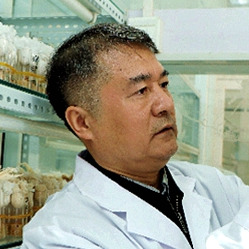
China Academy of Agricultural Sciences, China;A member of the Chinese Academy of Engineering and a renowned agricultural entomologist. He has long been engaged in research on the monitoring, early warning, and control of major migratory pests such as cotton bollworm and fall armyworm. His current work focuses on the establishment of monitoring networks and integrated management technologies for migratory pests. He formerly served as the President of the Chinese Academy of Agricultural Sciences (CAAS). He currently serves as Chinese Co-Chair of the MARA-CABI Joint Laboratory for Biosafety and Vice Chair of the FAO's Global Steering Committee on Fall Armyworm.
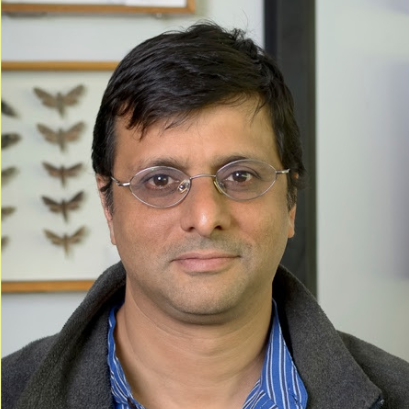
Prof. Dr. Sanjay Sane
National Centre for Biological Sciences, India;A Fellow of the Indian National Science Academy (INSA), and has made seminal contributions to the biology of insect flight by integrating neural circuitry analysis, biomechanics and sensory physiology.

Prof. Dr. Judy Shamoun-Baranes
University of Amsterdam, Netherlands;Professor of animal movement ecology and head of the interdisciplinary department Theoretical and Computational Ecology, at the Institute for Biodiversity and Ecosystem Dynamics. The aim of her research is to understand how intrinsic and external factors influence animal movement at different scales in space and time and what the consequences of movement strategies are for individuals, populations and species.

Peking University, China;PI at the School of Life Sciences, Peking University, where she leads research on evolutionary genomics using butterflies as a model system. She is a recipient of the National Science Fund for Distinguished Young Scholars (杰青) in China.

Dr. Pauline N. Fleischmann
University of Oldenburg, Germany;PI in the International Cluster of Excellence for the Sensory Basis, Mechanisms, and Impacts of Animal Navigation (NaviSense) and the Booster Uni Project, Animal and Human Navigation in the Ancient Southern Levant: An Interdisciplinary Project on Spatial Perception, Route Formation, and Orientation between Environmental Knowledge and Textual Tradition (Iron Age to Roman Imperial Period)

Prof. Dr. Nir Sapir
University of Haifa, Israel;His group study biomechanical, behavioral, physiological, evolutionary, and ecological aspects of flight in birds, bats, and insects using diverse approaches. They track flying organisms with GPS, radio telemetry, multi-sensor geolocators, and radars. They conduct controlled lab experiments on nutrition and lipid management in migratory passerines, use high-speed photography for flight kinematics, and investigate life-history traits including feather moult and migration patterns.

Beijing Institute of Technology, China;His research focuses on radar signal processing, where he has established a refined signal processing framework for micro-feature measurement. His work supports China's migratory pest monitoring, landslide disaster monitoring, and new remote sensing system development. He served as General Chair of the IET International Radar Conference 2018 and ICSIDP 2024. He is a recipient of the National Science Fund for Distinguished Young Scholars (杰青) and Fellow of the Institution of Engineering and Technology (IET Fellow).





Assoc. Prof. Dr. Yumeng WANG
Dr. Xueyang ZHANG
TEL: +86-25-84399880
Email: icipm@njau.edu.cn
For inquiries regarding submissions and sponsorship opportunities, please feel free to contact us.