The 1st International Online Conference on Atoms
Announcements:
Thank you for attending IOCAT 2026!
The IOCAT 2026 Best Oral Presentation Award and Best Poster Award
have been announced in the Award Winners Announcement section!
the chair
Dear Colleagues,
S2. Atomic collisions: Theory and experiment;
S3. Atomic data: applications to astrophysical and laboratory plasmas;
S4. Cold atoms and atom based quantum technology;
S5. Artificial intelligence for atomic physics.
Kind regards,
Prof. Dr. Pascal Quinet
Atomic Physics and Astrophysics, University of Mons, Belgium.
Follow the conference organizer on Social Media



Meet Our Chair
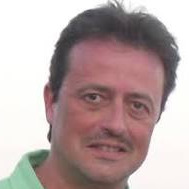
F.R.S.-FNRS Research Director, Lecturer Head of the Department of Atomic Physics and Astrophysics, University of Mons, Belgium;Department of Physics, Faculty of Science, University of Liege, Belgium;
Important Dates
24 Nov
2025
20 Dec
2025
26 Jan
2026
Meet Our Speakers
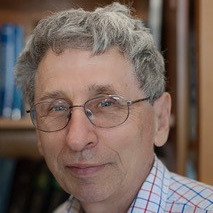
Professor of theoretical physics, School of Physics, University of New South Wales, Sydney, Australia;Prof. Flambaum has produced 576 publications in atomic, nuclear, particle, molecular, condensed matter, statistical physics, astrophysics and general relativity. He started his scientific career at the Institute of Nuclear Physics, Novosibirsk, Russia, where he attained his PhD and Doctor of Science degrees and appointed as a Junior, then promoted to Senior and Leading Scientist. Simultaneously, he was appointed at the Novosibirsk University as an Assistant, Docent, then Professor. Since 1991 Flambaum is Professor of Theoretical physics at University of New South Wales, Sydney, Australia.
Dr. Yuri Ralchenko
Department of Astronomy | NASA GSFC, USA;University of Maryland at College Park, USA;Dr. Ralchenko's research is focused on spectroscopy of highly-charged ions, analysis of atomic processes in plasmas with emphasis on accurate modeling of plasma population kinetics, development of Internet atomic databases, and other aspects of plasma and atomic spectroscopy. This work includes collisional-radiative modeling of diverse plasmas (including non-Maxwellian and transient ones), production and assessment of accurate atomic data (energies, oscillator strengths, collisional cross sections, etc.), and development of methods and standards for uncertainty quantification and dissemination of scientific data. Dr. Ralchenko is an Editorial Board member of several scientific journals, has authored over 150 scientific publications, and has been a speaker at numerous national and international conferences.
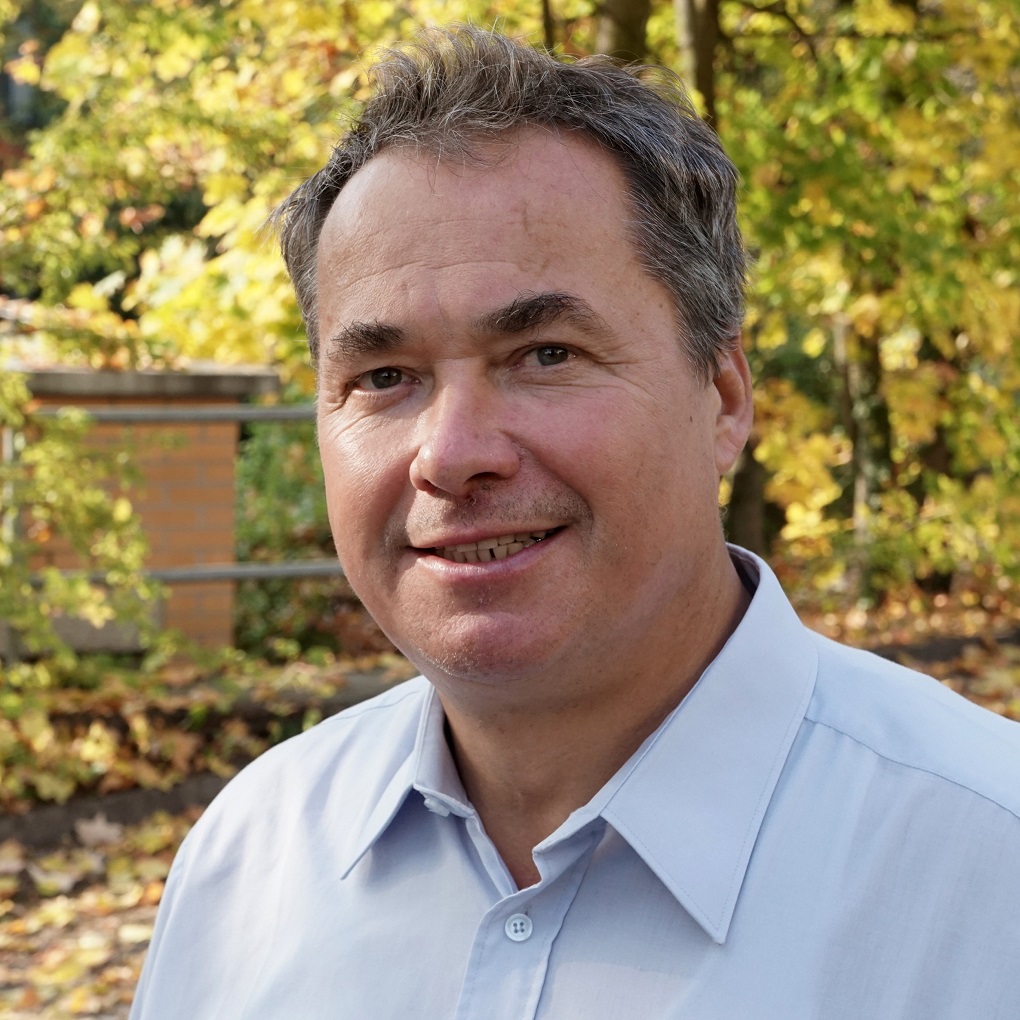
Helmholtz Institute Jena, University of Jena, Germany;Prof. Dr. Stephan Fritzsche is head of the theory group at the Helmholtz-Institute Jena and professor for theoretical physics, with focus on quantum systems in intense fields. Emphasis is placed in his work upon the relativistic theory of atoms and ions, a good number of atomic processes as well as the hierarchy of different atom-light interactions in intense fields.
Department of Materials Science and Applied Mathematics, Faculty of Technology and Society, Malmö University, Malmö, Sweden;Prof. Per Jönsson's research focuses on scientific computing applied to quantum structure. He develops computational methods for solving non-relativistic and relativistic wave equations in atomic systems, enabling the determination of energy levels, hyperfine structure, isotope shifts, transition rates, and magnetic-field effects. This work supports astrophysical and fusion plasma modeling and contributes to nuclear property studies. He collaborates with leading research groups worldwide, is a member of the international COMPAS collaboration, and is a founding member of the LUMCAS center for atomic and astrophysical research. He also works with satellite-derived environmental data, particularly AVHRR and Sentinel sensors, in collaboration with Lund University’s Ecosystem Analysis group. His work has led to new methods for processing satellite time series, implemented in the widely used software package TIMESAT. These methods support studies of vegetation seasonality and long- and short-term ecosystem change, including current research on phenology and climate impacts on Swedish forests. In addition, he is active in education and technology, has led the Mathematics for the Digital Generation project funded by the Wallenberg Foundation, and has served on the board of the national research school in science and mathematics education (FontD).
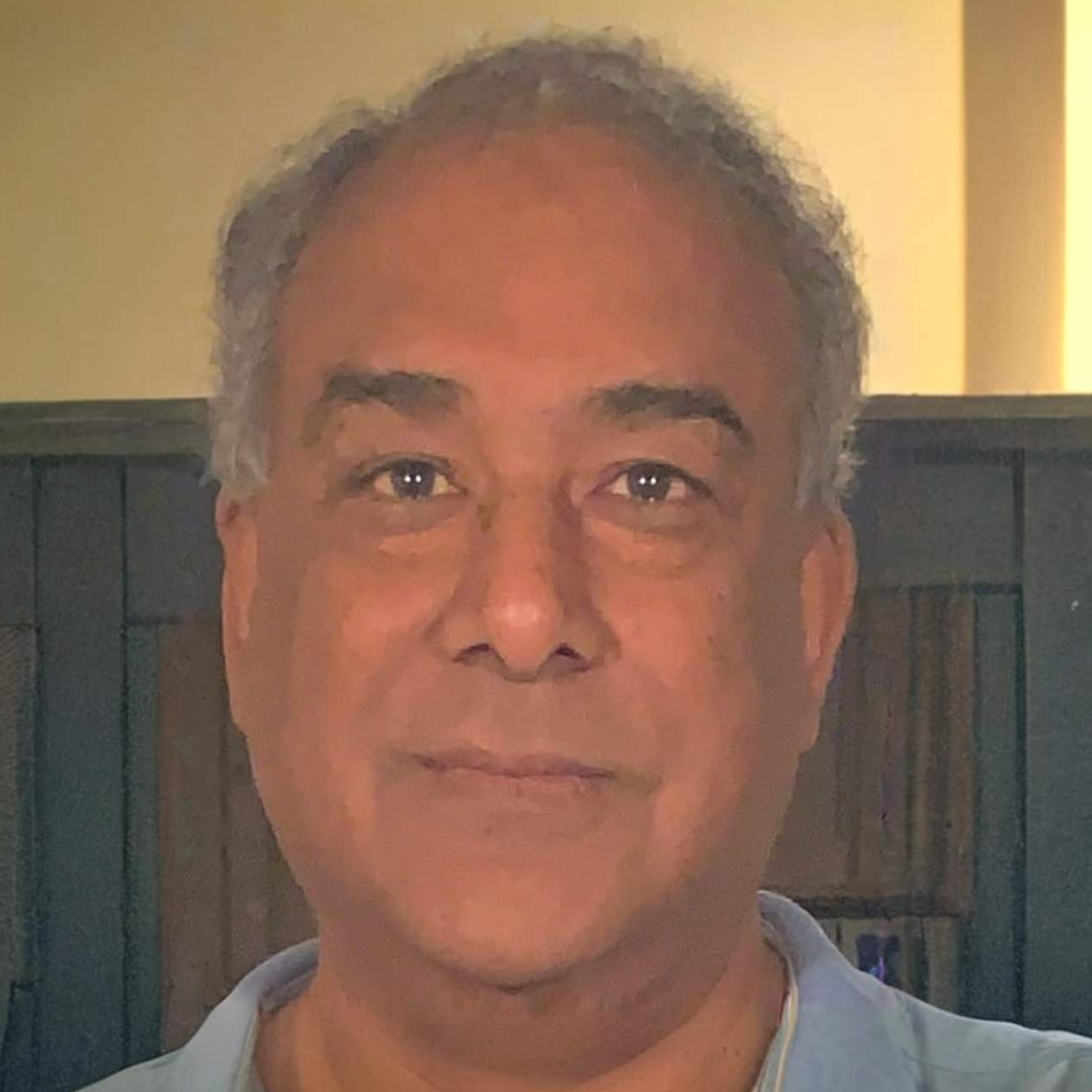
Department of Astronomy, The Ohio State University, Columbus, USA;Anil Pradhan is professor of astronomy, chemical physics, and biophysics at the Ohio State University in Columbus Ohio USA. He specializes in atomic astrophysics and applications to astronomy and plasma fusion diagnostics. Other works also include nanobiotechnology using radiation therapy and diagnostics (theranostics). He has over 300 publications and co-author of the textbook "Atomic Astrophysics and Spectroscopy" with Sultana Nahar (Cambridge University Press 2011). He is member of two major international projects, the Opacity Project and the Iron Project.
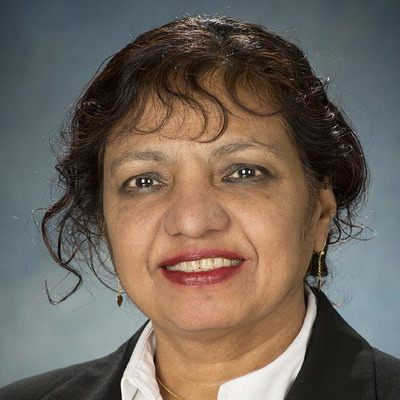
Department of Astronomy, The Ohio State University, Columbus, USA;Prof. Sultana Nurun Nahar is a Bangladeshi-American physicist. She is a research scientist in the Department of Astronomy at Ohio State University. Her research is on atomic processes of photoionization, electron-ion recombination, photoexcitation, collision. Her contributions include development of the unified method for total electron-ion recombination, theoretical spectroscopy for Breit-Pauli R-matrix method, resonant nano-plasma theranostics (RNPT) method for cancer treatment.


On behalf of the Event Chair and Organizing Committee of IOCAT 2026, we are pleased to announce the winners of the Best Oral Presentation Award and Best Poster Award.
The Best Oral Presentation Award have been awarded to:
|
ID |
Title |
Presenter |
| sciforum-155679 |
Bayesian optimization of atomic structure for collisional calculations |
Alejandra Mendez |
The Best Poster Award have been awarded to:
|
ID |
Title |
Authors |
| sciforum-155988 | Systematic calculations of Electron-Impact Excitation of Lanthanides for Collision-Radiative Modelling |
Luís Leitão & Ricardo Alexandre Pinto Ferreira da Silva |
Q1. Is it still possible to submit an abstract for an oral or poster presentation at this time?
No, the abstract submission period closed on 24 November 2025.
Q2. I have been selected for an oral/poster presentation. When will it take place, and how can I join?
You can check the exact schedule on the conference program available on the official website. Within one week before the conference, you will receive multiple reminders with the login link and session details. Please make sure to check your email regularly.
Q3. My abstract was accepted as a poster presentation. How should the Poster Presentation be?
Poster presentations will be conducted online in the “Flash Poster Session” format, which includes a 5-minute live presentation to share your screen and quickly present your poster, without a Q&A session.
Q4. I cannot find the option or link to upload my poster. When and how can I upload it?
Only the submitting author has access to the “upload” function on Sciforum. If you cannot upload your file, please send it along with your Sciforum ID to iocat2026@mdpi.com.
Please upload your file to the Sciforum platform before the conference begins (before 29 January 2026).
Q5. Will I receive a Certificate of Participation? How and when will the certificates be issued?
Yes. All participants at the event and attendees to the live session are entitled to a certificate after the conference. Certificates will be available for download in the My Certificates section on Sciforum after conference closing, and you will be notified by email once they are ready.
Q6. My abstract has been accepted, but I did not receive a notification for an oral or poster presentation. Can I still present my work?
Due to limited time slots, not all accepted abstracts can be included as oral or poster presentations, which are selected by the scientific committee. However, all accepted abstracts are eligible to upload a poster via your author dashboard. All uploaded posters will be displayed in the Poster Gallery section on the conference website from the start of the event, where participants can view and comment during the conference.
The 1st International Online Conference on Atoms
Day 1
Session 2. Atomic collisions: Theory and experiment
Session 1. Atomic structure and spectra: Theory and experiment
Day 2
Flash Poster Session
Session 4. Cold atoms and atom based quantum technology
Session 3. Atomic data: applications to astrophysical and laboratory plasmas
Session 5. Artificial intelligence for atomic physics
Ms. Teodora Sandru, PhD
Mr. Ionut Spatar
Mr. Russell Wang
Email: iocat2026@mdpi.com
For inquiries regarding submissions and sponsorship opportunities, please feel free to contact us.