Sessions & Session Chairs
Sessions
S1. AI and Big Data in Earth Science
S2. Coastal & Ocean Systems: Ecology, Resources & Conservation
S3. Climate Dynamics, Variability and Change
S4. Water in a Changing World: Hydrology, Hydro-AI & Resources
S5. Natural Hazards and Risk
S6. Landscapes, Geoheritage & Human Interactions
S7. Air Quality and Climate Pollutants
S8. Geothermal & Geo-resources for the Energy Transition

Department of Industrial and Information Engineering and Economics, University of L'Aquila, L'Aquila, Italy
Eliseo Clementini is Full Professor of Information Processing Systems at the University of L’Aquila, Italy. He graduated in Electronics Engineering (1990) at L’Aquila and earned a Ph.D. in Computer Science at INSA Lyon (France). His research focuses on modelling geographical space — especially on topological and positional relations — at the intersection of spatial databases, qualitative spatial reasoning, and cognitive approaches. Notably, he co-developed the DE-9IM model for representing topological relations between geometries — a foundational standard widely used in GIS and spatial-database systems worldwide. In more recent years, his interests have expanded to applying spatial reasoning and database modelling to new challenges, such as integrating GIS with remote sensing, data interoperability, and indoor navigation. He currently serves as Associate Editor of ISPRS International Journal of Geo-Information (IJGI). Through his ongoing work, Eliseo continues to contribute to advances in spatial information science and foster collaboration across research and applied GIS communities.
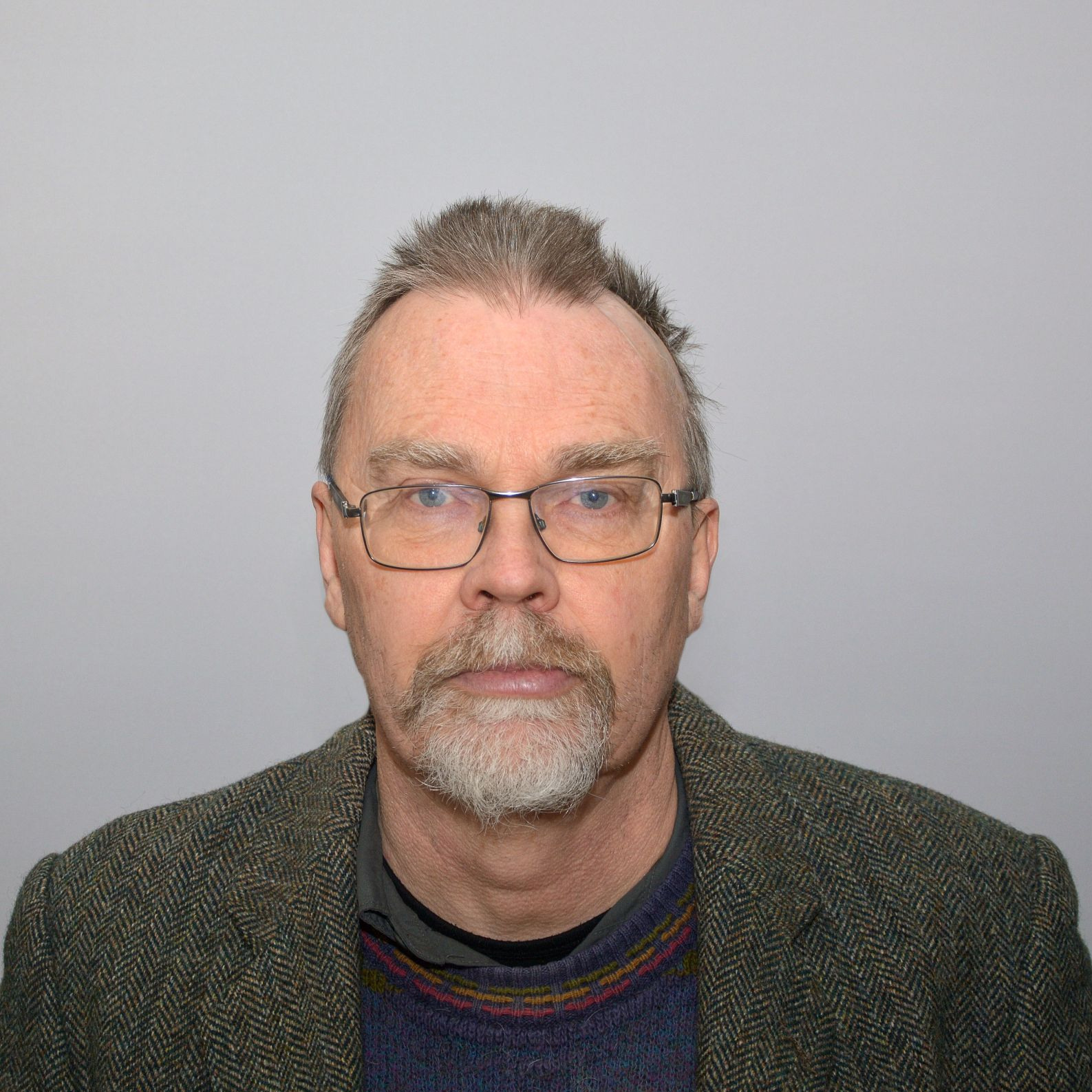
International Centre for Island Technology, Heriot-Watt University, Orkney, UK
David is a physics graduate who has worked in marine sciences for over 40 years. His PhD in Physical Oceanography (National University of Ireland) focused on breaking waves and their role in geochemical processes and that has been an enduring interest. Through his academic career at University of Southampton, University of Highlands and Islands and Heriot-Watt University, he has engaged in a wide variety of research including air–sea interaction, marine Earth Observation, regional climate change and coastal ocean modeling. In the last twenty years, based in Scotland, he has observed the climatic challenges and accelerating industrialization of the surrounding seas. That experience has motivated a broadening interest in the ocean as a system that supports climatic stability, biodiversity and multiple industries.
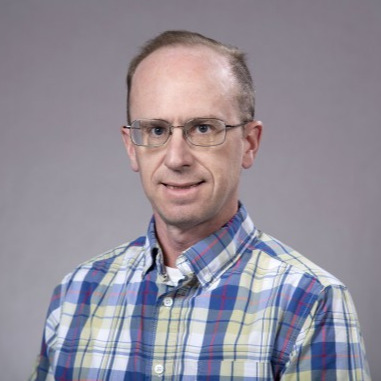
Department of Atmospheric and Environmental Sciences, University at Albany, Albany, USA
Dr. Roundy’s research focuses on tropical atmospheric and oceanic waves, their interactions with one another and with deep atmospheric moist convection, and how these processes influence global weather and climate. His research emphasizes the analysis of observations to understand how convectively coupled waves and intraseasonal oscillations modulate tropical cyclogenesis and the El Nino/Southern Oscillation (ENSO).

Department of Civil Engineering, University of Thessaly, Volos, Greece
Dr. Lampros Vasiliades is an Assistant Professor of Engineering Hydrology at the Department of Civil Engineering, University of Thessaly, Greece. His research focuses on the modelling of extreme events (floods and droughts), deterministic and stochastic hydrological and hydrodynamic modeling, water resources management and the application of hydro-informatics in hydrology, water resources and hydrosystems. He has authored over 100 publications in scientific journals and conference proceedings with more than 3,600 citations (Google Scholar). Currently, he serves on the Editorial Boards of Water, Earth, and Frontiers in Environmental Science and actively participates in various European research projects and COST Actions.

School of Agriculture, Aristotle University of Thessaloniki, Thessaloniki, Greece
Ioannis Panagopoulos graduated from the Agricultural University of Athens and acquired a PhD in Hydrology and Non-Point Water Pollution from the National Technical University of Athens (NTUA). This was followed by postdoctoral research at NTUA, Iowa State University and the Inland Waters Institute of the Hellenic Centre for Marine Research, on agricultural water management and agricultural water pollution, management of aquatic ecosystems and development of infrastructure for the monitoring of Greece’s inland waters. Since 2022, he is Assistant Professor of Agricultural Hydraulics and Environmental Hydrology at the School of Agriculture of the Aristotle University of Thessaloniki.

Department of Earth Sciences, Western University, London, Ontario, Canada, Department of Statistical and Actuarial Sciences, Western University, London, Ontario, Canada
Dr. Katsuichiro Goda is a Canada Research Chair in Multi-hazard Risk Assessment at Western University, Canada. He has developed an international reputation for unique natural hazard research spanning a broad range of academic fields, including seismology, earthquake engineering, tsunami engineering, financial risk analysis, and uncertainty quantification. He tackles the global challenge of developing an integrated multi-hazard framework through the disaster cycle approach of mitigation, preparedness, response, and recovery. His research advances the understanding of possible future scenarios that may unfold from different hazard-risk drivers (e.g., changing climate, population, urbanization, and social vulnerability), and offers essential interfaces with other disciplines, such as social sciences, economics, and disaster policies.

Graduate School of Media and Governance, Keio University, Fujisawa, Japan
Rajib Shaw is the professor in Graduate School of Media and Governance of Keio University, Japan. He is co-founder of a Delhi based social entrepreneur startup, Resilience Innovation Knowledge Academy (RIKA), and is the chair of United Nations Asia Pacific Science Technology Advisory Group (AP-STAG) for disaster risk reduction. He is IPCC CLA for Asia Chapter of Working Group 2 for 6th Assessment Report. His specialization is disaster risk governance, urban resilience, climate change adaptation and emerging technologies in disaster and climate change. He is the recipient of Pravasi Bhartiya Samman Award (PBSA) of 2021 in Education Sector from the President of India. He also received United Nations Sasakawa Award for disaster risk reduction as a lifetime achievement and for his contribution to global disaster resilience initiatives in 2022. He published 86 books and over 450 research papers. His scholarly influence is reflected by over 31,000 citations and an H-index of 81 on Google Scholar, underscoring his global leadership in disaster resilience and sustainability studies.

Institute of Earth Physics and Space Science, Lithosphere Research Group, Sopron, Hungary, Saudi Geological Survey, National Program of Earthquakes and Volcanoes, Jeddah, Saudi Arabia, School of Agriculture and Environment, Massey University, Palmerston North, New Zealand, The Geoconservation Trust Aotearoa Pacific, Opotiki, New Zealand
Károly Németh is a Doctor of the Hungarian Academy of Sciences and is affiliated with the Institute of Earth Physics and Space Sciences in Sopron, Hungary. He also serves as a Technical Advisor in Geohazards for the Saudi Geological Survey. Additionally, he holds an Adjunct Professorship in Geology at Massey University, New Zealand. Dr. Németh chairs the Geoconservation Trust Aotearoa Pacific and currently leads the Subcommission on Geological Sites of the International Union of Geological Sciences. Previously, he was a member of the Executive Committee for the International Association of Volcanology and Chemistry of the Earth's Interior and served as Vice President of the International Association of Sedimentologists. His research covers monogenetic volcanoes, volcanic field evolution, geoheritage, and geodiversity. He has worked in countries across South America, Europe, Asia, Oceania, and Africa. He currently serves on editorial boards of multiple journals including the Journal of Volcanology and Geothermal Research and is Series Editor of Springer's Advances in Volcanology. His contributions have earned him global recognition, and since 2020, he has been consistently ranked among the world’s top 2% of scientists in the Stanford/Elsevier Top 2% Scientists List.

Department of Agroforestry Engineering, University of Santiago de Compostela, Campus Terra, Lugo, Spain
PhD in Forestry Engineering from the School of Forestry Engineering at the Polytechnic University of Madrid, Spain. His research interests include Forest Ecology and Sustainable Management, Forest Biodiversity and Ecosystems Services, and Landscape Ecology. He has co-authored more than 50 articles in journals indexed in the Web of Science database, as well as several books, book chapters, and conference/congress papers, both national and international. He has directed and participated in various research projects and supervised six doctoral theses. I would like to highlight his research stays at various universities, most recently at the Czech University of Life Sciences Prague (CZU), which lasted five months.

Niels Bohr Institute, University of Copenhagen, Copenhagen, Denmark
Alexander Baklanov is a Professor in Climate and Geophysics at the Niels Bohr Institute of the University of Copenhagen, Denmark, and a Research Director at the Institute for Atmospheric & Earth System Research (INAR), University of Helsinki, Finland. During last 10 years, he worked in the Science and Innovation department of the World Meteorological Organization (WMO) in Geneva, Switzerland, where he was responsible for urban cross-cutting and sand-and-dust-storm research activities and programs. He has also been a visiting professor in several universities across Europe and Asia. He is a member of the International Eurasian Academy of Sciences and the Academia Europaea, Founding Editor of the Urban Climate journal, a Lead Author for IPCC SR on Climate Change and Cities, and co-chair of GEO Resilient Cities and Human Settlements WG. He has led a number of international projects on urban climate and environmental risk (e.g. ArcticRISK, NordRisk, FUMAPEX, MEGAPOLI, EnviroRISKS, EuMetChem, EnviroHIRLAM, PEEX MP, IMTECC, IUS4CRC), and he is a Member of the Board of the International Association for Urban Climate, Science Advisory Board of the WCRP CORDEX URB-RCC, EU projects CARMINE, RI-URBANS, etc. He has published about 400 scientific publications, including 15 books and about 300 peer-reviewed journal papers, h-index = 61, and has supervised 15 PhD students.

Graduate School of Energy Science, Kyoto University, Kyoto, Japan
Professor Benjamin McLellan has been working at Kyoto University’s Graduate School of Energy Science since 2010. His research focuses on the resources-energy nexus, particularly on the critical materials required for energy transition, including new technologies and the social, economic, and environmental implications. He is Editor-in-Chief of Resources (MDPI).