The 3rd International Online Conference on Energies
Part of the International Online Conference on Energies series
12–15 May 2026
9 February 2026
9 March 2026
7 May 2026
Energy Sources, Energy Conversion, Energy Policy, Energy Fundamentals, Smart Energy
- Go to the Sessions
-
- S1. Energy Sources (Fossil & Renewable)
- S2. Energy Conversion (Heat and Mass Transfer, Combustion, Thermodynamics, Entropy & Exergy Analysis)
- S3. Energy and Environment. Sustainable Transition
- S4. Smart Cities and Urban Management
- S5. Advanced Energy Materials
- S6. Electrical Power Systems
- S7. Energy Economics and Policy (Thermo-Economics, Exergy Economics)
- S8. AI Applications to Energy Conversion Systems
- Event Details
-
- Welcome from the Chair
- Program Overview
- IOCEN 2026 Program (DAY 1)
- IOCEN 2026 Program (DAY 2)
- IOCEN 2026 Program (DAY 3)
- IOCEN 2026 Program (DAY 4)
- Event Chairs
- Event Speakers
- Sessions
- Registration
- Instructions for Authors
- Publication Opportunities
- Event Awards
- Sponsors and Partners
- Conference Secretariat
- Events in series IOCEN
The full conference programme is now online!
There’s still time to register until 7 May, and participation is FREE. We look forward to having you join us!
Click here to register.
For any inquiries, please contact us at iocen2026@mdpi.com.
Welcome from the Chair
Dear Colleagues,
We are excited to announce the 3rd International Online Conference on Energies (IOCEN 2026), which will be held virtually from 12 to 15 May 2026.
This conference will showcase the latest research and advancements in energy resource management, focusing on areas such as energy sources, energy conversion, energy policy, energy fundamentals, smart energy, and other energy innovations, with an eye open towards sustainable use of resources. We aim to explore the current landscape, address existing challenges, and identify opportunities.
We warmly invite all energy researchers, professionals, and innovators to participate and share their expertise in the following thematic areas and related topics:
S1. Energy Sources (Fossil & Renewable);
S2. Energy Conversion (Heat and Mass Transfer, Combustion, Thermodynamics, Entropy & Exergy Analysis);
S3. Energy and Environment. Sustainable Transition;
S4. Smart Cities and Urban Management;
S5. Advanced Energy Materials;
S6. Electrical Power Systems;
S7. Energy Economics and Policy (Thermo-Economics, Exergy Economics);
S8. AI Applications to Energy Conversion Systems.
The conference committee will review the submitted abstracts. All accepted abstracts will be available online in open access format on Sciforum.net during and after the conference. Following the conference, selected contributions will be invited for submission to the Energies journal (ISSN 1996-1073, Impact Factor: 3.2), with a 20% discount on the publication fee.
We look forward to your participation in this inspiring event.
Best regards,
Prof. Dr. Enrico Sciubba
University Niccolò Cusano, Italy
Chair of the 3rd International Online Conference on Energies

Program Overview
12 May Morning |
13 May
|
14 May
|
15 May
|
S3. Energy and Environment. Sustainable Transition |
S8. AI Applications to Energy Conversion Systems |
S4. Smart Cities and Urban Management |
S7. Energy Economics and Policy (Thermo-Economics, Exergy Economics) |
12 MayAfternoon |
13 MayAfternoon |
14 MayAfternoon |
15 May
|
S6. Electrical Power Systems |
S5. Advanced Energy Materials |
S2. Energy Conversion (Heat and Mass Transfer, Combustion, Thermodynamics, Entropy & Exergy Analysis) |
S1. Energy Sources (Fossil & Renewable)
|
IOCEN 2026 Program (DAY 1)
IOCEN 2026 DAY 1
S3. Energy and Environment. Sustainable Transitio
Date: 12 May 2026 (Tuesday)
Time: 9:00 (CEST, Basel) | 03:00 (EDT, New York) | 15:00 (CST Asia, Beijing)
| Time (CEST) |
Speaker | Title |
| 9:00-9:10 |
Prof. Dr. Enrico Sciubba |
Welcome & Opening Remarks |
| 9:10-9:20 |
Prof. Dr. José Ramón Fernández Sesion Chair |
Welcome from the Session Chair |
| 9:20-9:45 | Prof. Dr. Syed Zaheer Abbas Keynote Speaker |
Advancing sustainable transition through Chemical Looping Reverse Water Gas Shift for industrial CO₂ utilization |
| 9:45-10:00 | Rebeca María Simion Selected Speaker |
Electrochemical Behavior and Surface Activation of Ni200 Electrodes under Dynamic Alkaline Electrolysis: Effects on Hydrogen and Oxygen Evolution with Renewable Power Supply |
| 10:00-10:15 | Arturo Barragán Alonso Selected Speaker |
Experimental Validation of Steam-Enhanced Calcium Looping for CO₂ Capture |
| 10:15-10:30 | Encarnación Cruz Sánchez Selected Speaker |
CO2 valorization in portable pilot plants for e-fuel production |
| 10:30-10:45 | Noelia Díaz Navarro Selected Speaker |
Symmetric SOECs based on PrBaMn2O5+δ electrodes for co-electrolysis processes |
| 10:45-11:00 | Alejandro Cánovas Sánchez Selected Speaker |
E-fuel production from lignocellulosic biomass oxy-gasification |
| 11:00-11:15 | Pedro Juan Martínez Román Selected Speaker |
SIMULATION AND OPTIMISATION OF METHANOL PRODUCTION AND FICHER–TROSCH PROCESS FROM BIOGAS METHANE REFORMING |
| 11:15-11:30 | Elena Duque Rivera Selected Speaker |
Meat industry waste as raw materials for renewable gases production |
| 11:30-11:45 | Lorena Sánchez-Relaño Selected Speaker |
Comprehensive Life Cycle Assessment (LCA) of the Spanish Electricity Mix: Evaluating Environmental Trade-offs in the Energy Transition |
| 11:45-12:00 | Basudeb Saha Selected Speaker |
Turning Tyre Waste into Energy: Sustainable Valorisation via Microwave-Induced Plasma Gasification |
| 12:00-12:15 | Roberto García Selected Speaker |
Recent advances in Direct Air Capture (DAC) using Ca-solid forms |
| 12:15-12:30 | Mana Dastoum Selected Speaker |
Practical Implications of Tessellated Geometric Façades for Optimal Daylighting Performance |
S6. Electrical Power Systems
Date: 12 May 2026 (Tuesday)
Time: 14:00 (CEST, Basel) | 09:00 (EDT, New York) | 21:00 (CST Asia, Beijing)
| Time (CEST) |
Speaker | Title |
| 14:00-14:10 |
Prof. Dr. Antonio Zuorro |
Welcome from the Session Chair |
| 14:10-14:40 | Dr. Michele De Santis Keynote Speaker |
|
| 14:40-14:55 | Martina Totaro Selected Speaker |
A Universal ECM Parameter Estimation Algorithm Developed from Multi-C-Rate Modified HPPC Tests |
| 14:55-15:10 | Wei Lu Selected Speaker |
A Two-Stage Random Forest Analysis Framework for Electricity Price Forecasting and Spike Driver Interpretation |
| 15:10-15:25 | Mana Dastoum Selected Speaker |
Practical Implications of Tessellated Geometric Façades for Optimal Daylighting Performance |
| 15:25-15:35 | Daniel Sanin-Villa Selected Speaker |
Population-Based Genetic Algorithm for Loss and CO2 Emission Reduction in AC Microgrids with Distributed Energy Resources |
| 15:35-15:50 | Himmat Singh Selected Speaker |
Optimal Reactive Power Dispatch Management of Renewable Energy integration Using Improved Salp Swarm Algorithm |
| 15:50-16:05 | Abhishek Bajirao Katkar Selected Speaker |
A Resilient Multi-Objective MOABC–NSGA-II Optimization approach for Fault Location and Restoration Time Reduction in Wind-integrated Power Grid Networks |
| 16:05-16:20 | Mohamed Louzazni Selected Speaker |
Non-Iterative Lagrange Multiplier Approach for Maximum Power Point Tracking in Photovoltaic Systems |
IOCEN 2026 Program (DAY 2)
IOCEN 2026 DAY 2
S8. AI Applications to Energy Conversion Systems
Date: 13 May 2026 (Wednesday)
Time: 9:00 (CEST, Basel) | 03:00 (EDT, New York) | 15:00 (CST Asia, Beijing)
| Time (CEST) |
Speaker | Title |
| 9:00-9:10 |
Prof. Dr. Ramiro S. Barbosa Session Chair |
Welcome & Opening Remarks |
| 9:10-9:25 |
Sanjith Balamurali Selected Speaker |
AI-Optimized Pyrolysis: A Machine Learning Framework for Predictive Waste-to-Energy Conversion |
| 9:25-9:40 |
Prashant Steele Selected Speaker
|
Machine Learning–Based Predictive Maintenance Framework for Performance Degradation Detection in Energy Conversion Systems |
| 9:40-9:55 |
Gabriel Jaime Osorio-Hernandez Selected Speaker |
Data Driven Prediction of DC Current in an Inverter Free Photovoltaic Battery System for Telecommunication Antenna Applications |
| 9:55-10:10 |
Jasmina Elmurodova Selected Speaker |
A Machine Learning Regression Model for Early-Stage Prediction of Biogas Production |
| 10:10-10:25 |
Hafsa Khayrane Selected Speaker |
Integrating Electro-Thermal Dynamics into SOC Estimation through Internal Resistance and Thermal Loss Regularization |
| 10:25-10:40 |
Oussama Khouili Selected Speaker |
Benchmarking Deep Learning Techniques for Photovoltaic Output Prediction: A Case Study of PV Systems in China |
| 10:40-10:55 |
Blessed Olalekan Oyebola Selected Speaker |
AI-Driven Multi-Modal Integration for Structural Health Monitoring of Photovoltaic Systems: A Nigerian Context |
| 10:55-11:10 |
Blessed Olalekan Oyebola Selected Speaker |
Optimizing Remaining Useful Life Prediction in Photovoltaic Systems Using AI-Enhanced LSTM Models |
| 11:10-11:25 |
Oumaima Echab Selected Speaker |
An Optimized Hybrid Artificial Intelligence-based Control Strategy for Standalone Photovoltaic Systems under Complex Partial Shading Conditions |
| 11:25-11:40 |
Dr. Tegar Septyan Hidayat Selected Speaker |
IuditAR: A Pilot Study on Overcoming Indonesia’s Household Energy Waste via AI-driven Game-As-Reality (GAR) Audits |
| 11:40-11:55 |
Abhishek Bajirao Katkar Selected Speaker |
A Hybrid Artificial Bee Colony with Adaptive Neighborhood Search and Gaussian Perturbation Integrated NSGA-II for Multi-Objective Probabilistic Optimal Power Flow Considering Solar, Wind, Electric Vehicles, and FACTS Devices |
| 11:55-12:10 |
Sulyman Taofeeq Opeyemi Selected Speaker |
Adaptive State of Energy Estimation for Lithium-Ion Batteries Using an Improved Sage–Husa Extended Kalman Filter |
S5. Advanced Energy Materials
Date: 13 May 2026 (Wednesday)
Time: 14:00 (CEST, Basel) | 09:00 (EDT, New York) | 21:00 (CST Asia, Beijing)
| Time (CEST) |
Speaker | Title |
| 14:00-14:10 |
Dr. Elisa Sani Session Chair |
Welcome & Opening Remarks |
| 14:10-14:35 |
Dr. Mattia Bartoli Keynote Speaker |
|
| 14:35-15:00 |
Dr. Roby Soni Keynote Speaker
|
Lithium–Sulfur Batteries: Solution is in the Electrolyte |
| 15:00-15:15 |
Yue Xian Selected Speaker |
Interfacial Engineering and Upscaling Strategy for Aluminum Foil Substrates Flexible Perovskite Solar Cells |
| 15:15-15:30 |
Jakkapan Kumsi Selected Speaker |
Experimental and computational insights into CO₂ adsorption in biomass-derived activated carbons |
| 15:30-15:45 | Manel Mabrouk Selected Speaker |
Theoretical study of hybrid architectures combining graphene substrate with single-molecule magnets |
| 15:45-16:00 | Yusuf Kepir Selected Speaker |
Numerical Evaluation of Monolithic Aerogel as a Transparent Insulation Layer for Building-Integrated Natural Convection Solar Air Collectors |
| 16:00-16:15 | Claudiu Gorea Selected Speaker |
Phase Change Materials in Energy Applications: Classification and Usually Evaluation Methods |
| 16:15-16:30 | Ayob Zanberi Selected Speaker |
TiSiO4 as a Catalytic Dopant for Lowering the Decomposition Temperature and Improve Kinetics of AlH3 for Solid-State Hydrogen Storage |
| 16:30-16:45 | Abdisa Sisay Mekonnin Selected Speaker |
Cryogenic Mechanical Properties of AISI 304 Stainless Steel for Hydrogen Storage |
| 16:45-17:00 | Javier E. Durantini Selected Speaker |
Structurally Engineered EDOT–Porphyrin Electropolymers for Stable and High-Performance Pseudocapacitive Energy Storage |
| 17:00-17:15 | Yacine Kouhlane Selected Speaker |
Spectrally Resolved OCVD Investigation of Surface and Bulk Recombination in Silicon Photovoltaic Materials |
IOCEN 2026 Program (DAY 3)
IOCEN 2026 DAY 3
S4. Smart Cities and Urban Management
Date: 14 May 2026 (Thursday)
Time: 9:00 (CEST, Basel) | 03:00 (EDT, New York) | 15:00 (CST Asia, Beijing)
| Time (CEST) |
Speaker | Title |
| 9:00-9:10 | Dr. Marco Pasetti Session Chair |
Welcome & Opening Remarks |
| 9:10-9:25 | Mirela Panait Selected Speaker |
Social responsibility of energy companies under the sign of the twin transition. The European perspective |
| 9:25-9:40 | LEANDRO TEÓFILO PINTO DOS REIS Selected Speaker |
ISO-Based Smart City Assessment as an Urban Management Tool: Comparing the Connected Smart Cities Frameworks of 2024 and 2025 |
| 9:40-9:55 | Cristian Mateo Hernandez Selected Speaker |
Energy-Aware Route Planning for Differential-Drive Mobile Robots in Polygonal Urban Environments via Feasibility-First Metaheuristic Optimization |
| 9:55-10:10 | Miguel Iglesias Selected Speaker |
AIoT-Driven Smart Public Lighting as a Cybernetic Infrastructure for Environmental and Climate Justice |
| 10:10-10:25 | Luis Fernando Grisales-Noreña Selected Speaker |
Parallel Metaheuristic-Based Optimization for Electric Vehicle Charging Station Integration and Sizing in Distribution Systems |
| 10:25-10:40 | Mirela Panait Selected Speaker |
Universities as key actors in the green transition ecosystem. Romanian perspective |
S2. Energy Conversion (Heat and Mass Transfer, Combustion, Thermodynamics, Entropy & Exergy Analysis)
Date: 14 May 2026 (Thursday)
Time: 14:00 (CEST, Basel) | 09:00 (EDT, New York) | 21:00 (CST Asia, Beijing)
| Time (CEST) |
Speaker | Title |
| 14:00-14:10 | Prof.Tassos Stamatelos and Prof.Efstathios Michaelides Session Chairs |
Welcome & Opening Remarks |
| 14:10-14:35 | Dr. Andrew Dicks Keynote Speaker |
|
| 14:35-14:50 | Christi K. Madsen Selected Speaker |
Fresnel Lens-Based Concentrated Solar Thermal System for Compact High-Temperature Processing |
| 14:50-15:05 | Fatema Tarannum Selected Speaker |
Graphene functionalization strategies for enhanced thermal management performance in polyetherimide composites |
| 15:05-15:20 | Vandana Kumari Jha Selected Speaker |
Geometric Design Innovations for Enhanced Energy Recovery in Helical Configuration-based Thermal Systems |
| 15:20-15:35 | Pedro Gabana Selected Speaker |
Study of emissions formation in a spark‑ignition engine fuelled with natural‑gas–hydrogen blends |
| 15:35-15:50 | Svetlana Boshnakova Selected Speaker |
Heat Exchanger Optimization with Comparison of Plate-Joining Techniques |
| 15:50-16:05 | Christian Dewin Nery Selected Speaker |
Influence of Torrefaction Temperature and Residence Time on the Physicochemical Properties and Structural Transformation of Market Waste-Derived Torrefied Solid Fuel |
| 16:05-16:20 | Helal Uddin Selected Speaker |
Optimization of Heat and Mass Transport in Mechanical Devices for Hybrid Solar–Thermal Energy Harvesting |
| 16:20-16:35 | Aicha EDDEMANI Selected Speaker |
CFD-Based Evaluation of the Effect of Storage Material Size on Heat Transfer and Flow Characteristics in Packed Beds |
| 16:35-16:50 | Hayat El Baamrani Selected Speaker |
Experimental Investigation of Heat Transfer and Evaporation Characteristics of a Falling Liquid Film on a Vertical Plate |
| 17:00-17:15 | Anthony Nathaniel Selected Speaker |
3E (ENERGY, EXERGY, AND ENVIRONMENT) ANALYSIS OF WASTE HEAT RECOVERY GAS ENGINE POWER PLANT WITH ORGANIC RANKINE CYCLE MODEL |
IOCEN 2026 Program (DAY 4)
IOCEN 2026 DAY 4
S7. Energy Economics and Policy (Thermo-Economics, Exergy Economics)
Date: 15 May 2026 (Friday)
Time: 9:00 (CEST, Basel) | 03:00 (EDT, New York) | 15:00 (CST Asia, Beijing)
| Time (CEST) |
Speaker | Title |
| 9:00-9:10 | Prof. Dr. Benjamin McLellan Session Chair |
Welcome & Opening Remarks |
| 9:10-9:25 | Mulikat Abdulrahman Selected Speaker |
Infrastructure Reliability as a Gatekeeper for Productive Electricity Use—Evidence from Rural Nigeria and Policy Implications |
| 9:25-9:40 | Chukwuemeka Valentine Okolo Selected Speaker |
When Do Credit Prices Drive Decarbonization? Credit-Price Thresholds and EV Charging Infrastructure in Oregon’s Clean Fuels Program |
| 9:40-9:55 | Sonia Rozbiewska Selected Speaker |
Global Energy Security at Risk: Maritime Piracy and Supply Chain Disruptions in the Context of Middle East Conflict (2026) |
| 9:55-10:10 | Georgios Anagnostopoulos Selected Speaker |
Renewable Energy Cooperatives in the Just Transition in Greece: Barriers and possibilities |
| 10:10-10:25 | Srikant Shaw Selected Speaker |
Coping with Grid Failure: An Economic Analysis of Household Inverter Adoption as a Proxy for Future Storage Demand in Rural India |
| 10:25-10:40 | Suresh Baral Selected Speaker |
Global Assessment of Low-Cost Green Hydrogen Production Potential Using Machine Learning Models |
| 10:40-10:55 | BINI KOFFI ACHILLE BOUO Selected Speaker |
CO₂ Emissions Mitigation Through Renewable Energy in West Africa: Evidence from Bilateral Green Finance |
| 10:55-11:10 | Michal Thlon Selected Speaker |
Market Security Index (MSI): A pioneering framework for measuring and enhancing EU energy market resilience |
| 11:10-11:25 | Silmara Furtado da Silva Selected Speaker |
A Thermo-Economic and Exergy-Based Analysis of Sustainable Aviation Fuel Production in Brazil: Policy, Efficiency, and Decarbonization Pathways |
| 11:25-11:40 |
Victor José Olivero |
Mapping Energy Governance in the Global Energy Transition: An Evidence-Based Topic Modeling Approach |
| 11:40-11:55 |
|
Distributed Generation in Mexico’s Energy Transition: Regulatory Change, Institutional Tensions and Policy Implications |
S1. Energy Sources (Fossil & Renewable)
Date: 15 May 2026 (Friday)
Time: 14:00 (CEST, Basel) | 09:00 (EDT, New York) | 21:00 (CST Asia, Beijing)
| Time (CEST) |
Speaker | Title |
| 14:00-14:10 | Prof. Dr. Adrian Ilinca and Prof. Dr. Giovanni Esposito Sesion Chairs |
Welcome & Opening Remarks |
| 14:10-14:35 | Dr. Md Ohirul Qays Kyenote Speaker |
Addressing System Strength Sthortfall in Renewable Energy-Integrated Grid Systems |
| 14:35-14:50 | Shaik Nasrullah Shareef Selected Speaker |
Hybrid Biomass Energy Systems for Rural Communities: A Case Study of Grenada County |
| 14:50-15:05 | Hassan Abdullahi Sheikhdon Selected Speaker |
Design and Techno-Economic Analysis of a Resilient Hybrid Solar-Diesel Battery Microgrid for Rural Electrification in Conflict-Affected Regions: A Case Study in Somalia |
| 15:05-15:20 | Joseph-Kantole Basakay Selected Speaker |
Bayesian Optimization-Based Performance Enhancement of Pneumatic-Hybrid Diesel Generators for Remote Power Systems |
| 15:20-15:35 | Carolina Amparo Santamarta Ballesteros Selected Speaker |
Techno-Economic Analysis of Biomass Gasification for Decentralized Sustainable Aviation Fuel (SAF) Production |
| 15:35-15:50 | Eudes-Tshitshonu Kabeya Selected Speaker |
From Firm Capacity to Flexible Adequacy: Rethinking Capacity Metrics for Renewable-Dominant Power Systems |
| 15:50-16:05 | Nkechi Miriam Nwaogaraku Selected Speaker |
Sustainable Bioconversion of Biomass-Derived Butyric Acid to Butanol Using Clostridium Species: Metabolic Engineering, Process Optimization, and Environmental Implications |
| 16:05-16:20 | Pascal Kilunji Mwenge Selected Speaker |
Biodiesel Production from Waste Cooking Oil Catalysed by a Calcium Oxide Heterogeneous Catalyst: Kinetics, Simulation, and Life Cycle Assessment |
| 16:20-16:35 | Rotimi Abiodun Afe Selected Speaker |
Comparative Techno-Economic and Lifecycle Assessment of Diesel and Solar Storage Portfolios for Nigeria Towerco Low-Carbon Energy Supply in Weak Grid and Off-Grid Locations |
| 16:35-16:50 | Christian Agu Selected Speaker |
Renewables for Resilience: Do Renewable Capacity Additions Improve Energy Security and Cut Emissions? Panel Evidence From 12 African Countries |
| 16:50-17:05 | Sana Abbas Selected Speaker |
Unveiling the Role of Donor–Acceptor Attachment Sites in Molecular Design for High-Performance Organic Solar Cells: A Theoretical Study |
Event Chair
Department of Mechanical and Industrial Engineering, University Niccolò Cusano, 00166 Roma, Italy
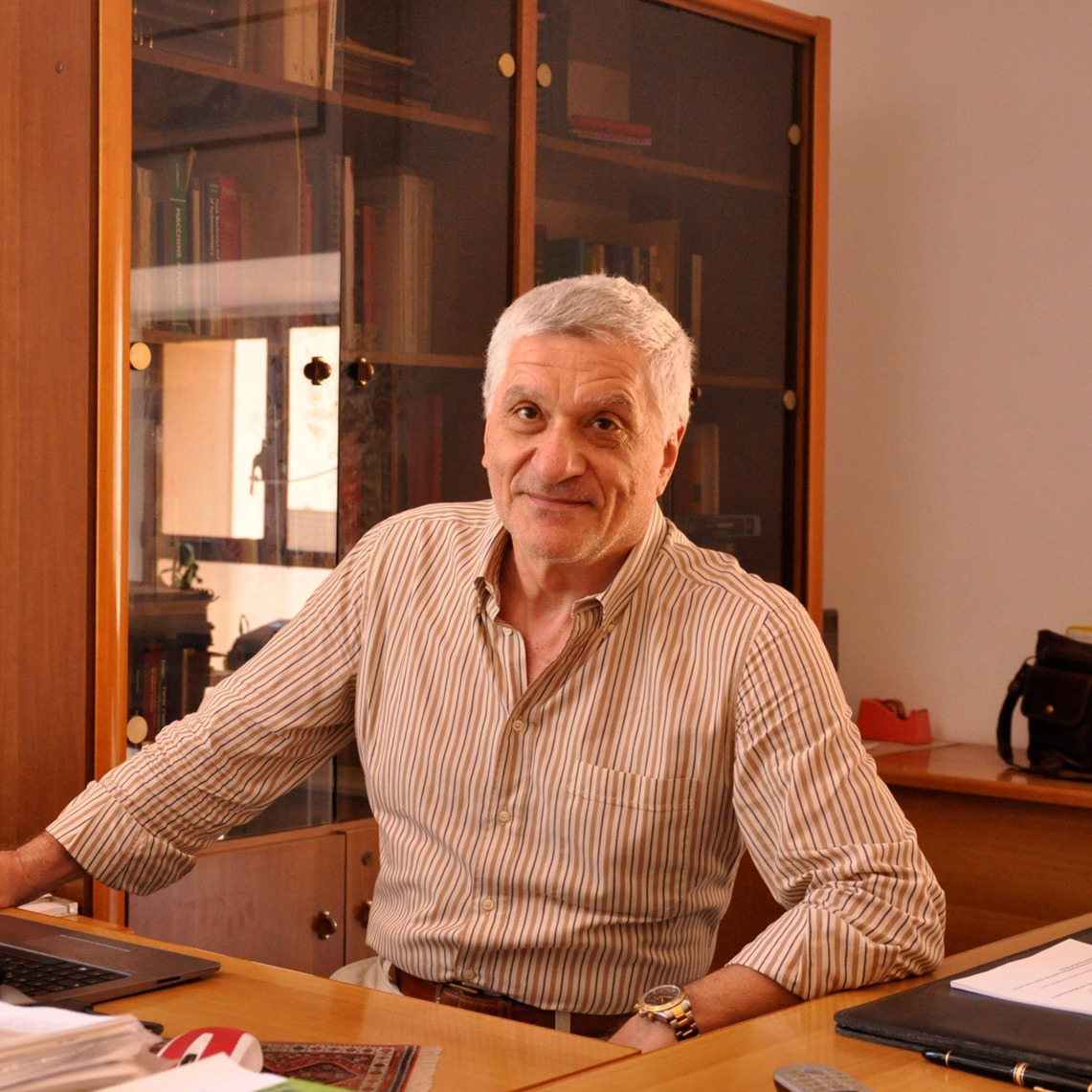
Dr. Enrico Sciubba (M.Eng. Roma 1972, Ph.D. Rutgers, NJ 1981) is Professor of Turbomachinery & Energy Systems in the Dept. of Mechanical & Industrial Engineering of the Niccolò Cusano University of Roma. From 1986 through 2019 he held the same position at the University of Roma Sapienza. He has held industrial positions in Germany (1973-75) and Italy (1975-78) and taught in the field of Thermal Sciences at Rutgers University (1980) and Catholic U. of America (1981-85). He was a Fulbright scholar (1978-1981), and holds two honorary Doctoral Degrees, from the U. of Galati and from Ovidius University (Romania). His currently active research topics are the exergy analysis of complex systems, from single processes to industrial Sectors to entire Societies; the study of the links between Thermodynamics and Sustainability; the CFD-aided optimization of energy-conversion components; the design and prototyping of ultra-micro gas-turbines for hybrid vehicles and as portable power generators. He has authored or co-authored 4 books (2 in english) and over 200 scientific papers. Professor Sciubba is an ASME Fellow, a member of several international Engineering Societies. He is the General Secretary of the ECOS International Society, a community dedicated to the improvement of the efficient and sustainable resource-to-final use conversion. He is the Editor-in-Chief of the Journal Energies (https://www.mdpi.com/journal/energies).
Session Chairs
Prof. Tassos Stamatelos
Mechanical Engineering Department, University of Thessaly, 38334 Volos, Greece
Dr. Tassos Stamatelos is a Professor of Internal Combustion Engines, and Head of the Laboratory of Thermodynamics & Thermal Engines (LTTE), at the Mechanical Engineering Department, University of Thessaly at Volos, Greece. His research interests include the Thermodynamics, Heat Transfer and Gas Dynamics of the Internal Combustion Engine, the theory and practice of catalytic automotive Exhaust after-treatment systems, and the analysis, simulation and design optimization of a variety of energy systems, including building HVAC and PV systems. During the past 40 years, he authored more than 100 journal publications, and numerous conference papers on the above subjects. He holds a Diploma in Mechanical Engineering (1984) from Aristotle University Thessaloniki and a PhD in Mechanical Engineering (1988) from the same University.
Prof. Dr. Benjamin McLellan
Kyoto University, Kyoto, Japan
Prof. Dr. Benjamin Craig McLellan has been at Kyoto University’s Graduate School of Energy Science since 2010. He received his Ph.D. degree in Chemical Engineering from the University of Queensland (Brisbane, Australia) in May 2007. He served as a Research Fellow at the Sustainable Minerals Institute, University of Queensland, from July 2009 to July 2010. His research is in sustainability broadly, with a focus on industrial ecology and the lifecycle implications of energy technologies and sustainability in the minerals sector. He has experience in energy modeling and the nexus of energy systems with various other resource systems. Currently, his research interest is in the resources–energy nexus and critical minerals, deep-sea mining, and just energy and resource transitions.
Prof. Efstathios Michaelides
Department of Engineering, Texas Christian University (TCU) College of Science & Engineering, Fort Worth, Texas, USA
Professor Michaelides holds the Tex Moncrief Chair of Engineering at TCU. Among other honors, he was awarded the Lee Johnson award for teaching excellence at Tulane; a Senior Fulbright Fellowship; the ASME Freeman Scholar award; the Outstanding Researcher award at Tulane; the ASME Fluids Engineering award; the ASME 90th Anniversary FED Medal; the ASME Edwin Church Medal (2021) and the James Harry Potter award (2024 for eminent achievement in the science of thermodynamics and its application in mechanical engineering). Professor Michaelides has authored more than 190 journal papers; gave more than 300 presentations in national and international conferences; and has authored nine books.
Prof. Dr. Adrian Ilinca
Mechanical Engineering Department, Laboratoire Énergie Durable - ÉTS, Canada
Adrian Ilinca is a professor in Mechanical Engineering at École de Technologie Supérieure. He was a professor, founder, and director of the Wind Energy Research Laboratory at Université du Québec à Rimouski. He completed a PhD in Mechanical Engineering at École Polytechnique de Montréal. His areas of interest include the aerodynamics and aeroelasticity of wind turbines, the effects of icing on wind turbines with anti-icing and de-icing techniques, and wind-diesel systems with compressed air energy storage.
Prof. Dr. Giovanni Esposito
Department of Civil, Architectural and Environmental Engineering, University of Naples Federico II, Italy
Giovanni Esposito is full professor of Sanitary and Environmental Engineering at the University of Napoli Federico II. In the framework of several national and international projects, he has leaded the training of early-stage researchers through both education and research in environmental technologies, mainly focusing on developing, modelling and engineering innovative biotechnologies for energy and resources recovery from waste and wastewater. He has co-authored more than 300 peer-reviewed publications in the environmental technology field, with more than 16000 citations and h-index 65 (Scopus source).
Dr. José Ramón Fernández
INCAR-CSIC – Institute of Carbon Science and Technology, Spanish National Research Council, Asturias, Spain
José Ramón Fernández García is a tenured scientist at the Carbon Science and Technology Institute (INCAR), part of the Spanish National Research Council (CSIC). He obtained his Ph.D. in Chemical Engineering from the University of Oviedo in 2009 and works in the CO₂ Capture research group since then. His research focuses on developing and optimizing advanced CO₂ capture technologies, including calcium looping, chemical looping combustion and sorption-enhanced hydrogen production. His work combines laboratory- and pilot-scale experimentation with detailed process modeling and simulation, aimed at improving efficiency, reducing energy penalties, and facilitating industrial-scale deployment. Author of over 55 publications with more than 3,600 citations, he collaborates in European projects to advance industrial decarbonization.
Prof. Dr. Ramiro S. Barbosa
Institute of Engineering – Polytechnic of Porto (ISEP/IPP), Porto, Portugal
Ramiro S. Barbosa received MSc and the PhD degree in Electrical and Computer Engineering from the Faculty of Engineering of the University of Porto (FEUP), Portugal, in 2000 and 2005, respectively. He is currently Coordinator Professor in the Department of Electrical Engineering, Institute of Engineering – Polytechnic of Porto (ISEP/IPP). His research interests include modeling, control, simulation, fractional calculus, fractional-order systems, artificial intelligence, evolutionary algorithms, and robotics.
Prof. Dr. Josep M. Guerrero
Center for Research on Microgrids, Huanjiang Lab, Zhejiang University, China
Josep M. Guerrero received the B.Sc. degree in telecommunications engineering, the M.Sc. degree in electronics engineering, and the Ph.D. degree from the Technical University of Catalonia, Barcelona, Spain. He is a Full Professor at Aalborg University, Denmark, where he leads the Microgrid Research Program and is the Founder and Director of the Center for Research on Microgrids (CROM). He is also affiliated with Zhejiang University, China, and the University of Valladolid, Spain. His research focuses on microgrids, distributed and cyber-physical energy systems, renewable energy integration, cybersecurity, and neuroscience-inspired artificial intelligence for energy applications. Prof. Guerrero has published over 1,000 journal papers with more than 120,000 citations. He is an IEEE Fellow, Associate Editor of several IEEE Transactions, a nine-time Highly Cited Researcher, and recipient of multiple IEEE awards for his contributions to microgrid systems.
Prof. Dr. Marco Pasetti
University of Brescia, Italy
I received the M.Sc. degree in Industrial Engineering and the Ph.D. degree in Mechanical Engineering from the University of Brescia, Italy, in 2008 and 2013, respectively. Currently I am Associate Professor of electrical energy systems at the Department of Information Engineering of the University of Brescia, where I carry out research activities in the field of energy systems and distributed generation, with specific focus on the modelling and management of distributed energy resources and on their integration into distribution networks. My main research interests include: energy systems, distributed generation, renewable energy sources, solar engineering, photovoltaics, energy storage, distributed measurements, demand-side management, EV charging systems, energy management systems, supervisory control and data acquisition, energy policies, smart grids, and micro-grids.
Prof. Dr. Elisa Sani
National Institute of Optics, Department of Physical Sciences and Technologies of Matter, National Research Council (CNR), Italy
Elisa Sani, PhD. (ORCID ID: 0000-0001-9854-2892), is Researcher at National Institute of Optics, National Research Council of Italy (INO-CNR), where is reference person of the Solar Energy & Smart Materials Laboratory. Her main research interests span from solids for high-temperature solar thermodynamic plants, colloidal suspensions for mid-temperature solar thermal plants, optical property tailoring of surfaces, fundamental optical constants of liquids, as well as nonlinear optical phenomena in liquids and colloids and solar-enabled hybrid power generation in different materials and by different effects. Dr. Sani is co-author of more than 110 papers in peer-reviewed international journals, 2 book chapters and holds 3 patents. She serves as member of Editorial Board of the journals Scientific Reports (Nature Publishing Group), Energies, Applied Sciences (MDPI Publishing Group), Energy Storage and Saving (Elsevier-KeAI).
Prof. Dr. Antonio Zuorro
Department of Chemical Engineering, Materials & Environment, Sapienza – University of Rome, Italy
Prof. Antonio Zuorro is a Professor and Researcher at the Department of Chemical Engineering, Materials, Environment of Sapienza at the University of Rome, in the scientific disciplinary sector ING-IND/24 (Principles of Chemical Engineering), in which he obtained the National Scientific Qualification in 2014. He graduated in Chemical Engineering (specialization in Biochemical Engineering) at the University of Rome "La Sapienza", he subsequently obtained, with an "excellent" evaluation, the PhD in Chemical Engineering for the Environment and Safety. His research activity has developed in different sectors, including catalysis, chemical thermodynamics, enzymatic kinetics, protein engineering, and transport phenomena in microencapsulated systems.
Event Committee
CSIC – Instituto de Ciencia y Tecnología del Carbono (INCAR), Oviedo, Spain
Energy Engineering Department, ETSII-UPM, Universidad Politécnica de Madrid, Spain
Department of Chemical Engineering, Materials & Environment, Sapienza – University of Rome, Italy
Director of the Sustainable Energy and Power Systems Research Centre
Chair and Head of the Sustainable and Renewable Energy Engineering (SREE) Department
Professor, Research Institute of Sciences & Engineering (RISE), United Arab Emirates
Department: School of Engineering, Lancaster University, Lancaster, United Kingdom
University of Salento , President of the National Energy Technological District, Italy
University of Rome Tor Vergata, National Research Council , Italy
Sapienza University of Rome, Italy
Texas A&M University, Electrical and Computer Engineering, United States of America
EAFIT University., Medellin, Colombia
Department of Mechanical Engineering and Construction, Jaume I University Castelló de la Plana, Spain
University of Milan–Bicocca, Italy
Pennsylvania State University, United States
National Research Council (CNR), Italy
National Institute of Optics, Department of Physical Sciences and Technologies of Matter, National Research Council (CNR), Italy
University of Catania, Italy
University of Calabria, Rende, Italy
Keynote Speakers
University of Southampton, UK
Italian Institute of Technology, Genoa, Italy
University of Campania “Luigi Vanvitelli”, Naples, Italy
Griffith University, Australia
CQUniversity, Gladstone Marina, Australia
University College London, United Kingdom
Sessions
S2. Energy Conversion (Heat and Mass Transfer, Combustion, Thermodynamics, Entropy & Exergy Analysis)
S3. Energy and Environment. Sustainable Transition
S4. Smart Cities and Urban Management
S5. Advanced Energy Materials
S6. Electrical Power Systems
S7. Energy Economics and Policy (Thermo-Economics, Exergy Economics)
S8. AI Applications to Energy Conversion Systems
Registration
If you are registering several people under the same registration, please do not use the same email address for each person, but their individual university email addresses. Thank you for your understanding.
Please note that the submission and registration are two separate parts. Only scholars who registered can receive a link to access the conference live streaming. The deadline for registration is 7 May 2026.
Instructions for Authors
Procedure for Submission
IOCEN2026 will accept abstracts only. The accepted abstracts will be available online on Sciforum.net during and after the conference.
Important Deadlines
1. Deadline for abstract acceptance notification: 9 March 2026.
Please note:
An abstract acceptance email only confirms that your abstract has been accepted. Oral or poster presentation invitations are determined separately by the conference chairs, and you will receive an additional email with the presentation result.
The accepted abstracts will be available online on Sciforum.net during and after the conference.
2.Abstract Submissions
If you do not have an account, please register at www.sciforum.net. After logging in, submit your abstract using the “Submit Abstract” button on the conference homepage. No template is required.
Abstract Requirements
1. Types of Submissions
- Accepted: Original research abstracts; systematic reviews or meta-analyses abstracts(must comply with PRISMA 2020).
- Not accepted: Narrative, scoping, comparative, perspective, opinion, or essay-style reviews
2.Content Requirements
- - Length: 200–300 words
- Structure: Introduction, Methods, Results, Conclusions
- Language: Clear, publication-ready English
- Originality: Must be original and unpublished; previously published abstracts will not be considered
3.Authorship
- The submitting author must ensure all co-authors approve the content.
- Authors may submit multiple abstracts, but only one abstract per author may be selected for an oral presentation.
Presentation Requirements
- Each abstract must designate one presenter. To change the presenter, please contact us after you receive the oral/poster presentation invitation.
2. Only live presentations are accepted.
3. Presenters who do not attend the live session will not be eligible for awards or presentation certificates.
Oral Presentation and Slides Preparation
The slot for the oral presentation is 15 mins. We advise that your presentation lasts for a maximum of 12 mins, leaving at least 3 mins for the Q&A session.
Authors are encouraged to prepare a presentation in PowerPoint or similar software, to be displayed online along with the abstract. Slides, if available, will be displayed directly on the website using the proprietary slide viewer at Sciforum.net. Slides can be prepared in exactly the same way as for any traditional conference where research results are presented. Slides should be converted to PDF format prior to submission so that they can be converted for online display.
Poster Presentation
- Should include the title, authors, contact details and main research findings, as well as tables, figures and graphs where necessary.
- Size in pixel: 1080 width x 1536 height–portrait orientation.
- Size in cm: 38,1 width x 54,2 height–portrait orientation.
- Font size: ≥16.
- Examples of successful submissions can be viewed here at the following links: (1), (2), (3).
- You can use our free template to create your poster.
The poster template can be downloaded HERE. We will reach out to you closer to the dates of the conference with more information.
Potential Conflicts of Interest
It is the author's responsibility to identify and declare any personal circumstances or interests that may be perceived as inappropriately influencing the representation or interpretation of clinical research. If there is no conflict, please state "The authors declare no conflicts of interest." This should be conveyed in a separate "Conflict of Interest" statement preceding the "Acknowledgments" and "References" sections at the end of the manuscript. Any financial support for the study must be fully disclosed in the "Acknowledgments" section.
Copyright
MDPI, the publisher of the Sciforum.net platform, is an open access publisher. We believe authors should retain the copyright to their scholarly works. Hence, by submitting an abstract to this conference, you retain the copyright to the work, but you grant MDPI the non-exclusive right to publish this abstract online on the Sciforum.net platform. This means you can easily submit your full paper (with the abstract) to any scientific journal at a later stage and transfer the copyright to its publisher if required.
Publication Opportunities
Participants in this conference are cordially invited to contribute a research article to the Special Issue, published in Energies (ISSN: 1996-1073, Impact Factor: 3.2), with a 20% discount on the publication fee. All submitted papers will undergo MDPI’s standard peer-review procedure. The abstracts should be cited and noted on the first page of the paper.
Please note if you have IOAP/association discounts, conference discounts will be combined with IOAP/association discounts. Conference discounts cannot be combined with reviewer vouchers.
All accepted abstracts will be published in the conference report of the 3rd International Online Conference on Energies (IOCEN 2026) in the Engineering Proceedings journal (ISSN: 2673-4591); if you wish to publish an extended proceeding paper (4-8 pages), please submit it to the same journal after the conference.

Authors are asked to disclose that it is a proceeding paper of the IOCEN 2026 conference paper in their cover letter. Carefully read the rules outlined in the "Instructions for Authors" on the journal’s website and ensure that your submission adheres to these guidelines.
Proceedings submission deadline: 30 June 2026.
Please click HERE to submit your proceeding paper to the Engineering Proceedings
IOCEN 2026 Proceedings Paper Template
Publication Notice: Conference report and proceeding papers will undergo peer-review procedure. Acceptance at the conference does not ensure final publication.
Event Awards

To acknowledge the support of the conference's esteemed authors and recognize their outstanding scientific accomplishments, we are pleased to announce that the conference will provide 6 awards including Best Oral Presentation Award and Best Poster Award.
The Awards
Number of Awards Available: 6
Number of Awards Available: 3
Eligibility: Open to all authors selected as oral speakers who have delivered their presentation. Failure to present, delegation of the presentation to another person, or use of AI-generated voice or similar substitutes will result in disqualification.
Criteria: Evaluation considers scientific rigor (clear, literature-supported research question or hypothesis, appropriate methodology, robust analysis and critical discussion of the results), IMRaD/field-appropriate structure, clarity of presented data (clear, well-labeled figures and tables), presentation skills and audience engagement, demonstrated scientific novelty and impact.
Prize: An award of CHF 200 and a certificate in recognition of your outstanding contribution.
Number of Awards Available: 3
Eligibility: Open to all authors who have presented their work through posters. Failure to present, delegation of the presentation to another person, or use of AI-generated voice or similar substitutes will result in disqualification.
Criteria: Evaluation considers scientific rigor (clear, literature-supported research question or hypothesis, appropriate methodology, robust analysis, and critical discussion of the results), IMRaD/field-appropriate structure enabling independent understanding, clarity of presented data (clear, well-labeled figures and tables), presentation skills (if orally presented), demonstrated scientific novelty and impact.
Prize: An award of CHF 200 and a certificate in recognition of your outstanding contribution.
The nominator of the winning abstract will receive: A certificate of recognition for their contribution.
Sponsors and Partners
For information regarding sponsorship and exhibition opportunities, please click here.
Organizers
Media Partners
Conference Secretariat
Ms. Miruna Adelina Nicolcioiu
Mr. Ionut Spatar
Mr. Russell Wang
For inquiries regarding submissions and sponsorship opportunities, please feel free to contact us.
Email: iocen2026@mdpi.com
S1. Energy Sources (Fossil & Renewable)
This session will focus on the fundamental differences between fossil energy, produced from finite resources like coal, oil, and natural gas, and renewable energy, produced from inexhaustible sources such as solar, wind, hydropower, and geothermal sources. Their different applications as well as the associated environmental and economic impacts will be discussed. The session will also cover the different challenges in terms of energy source storage, transportation and electricity generation, taking into account the sustainability issues of each source. The ecological versus economic constraints in the transition from fossil to renewable energies will also be considered.
Session Chairs
Prof. Dr. Adrian Ilinca, Mechanical Engineering Department, Laboratoire Énergie Durable - ÉTS, École de technologie supérieure (ÉTS)
Prof. Dr. Giovanni Esposito, Department of Civil, Architectural and Environmental Engineering, University of Naples Federico II, Via Claudio, 21, 80125 Naples, Italy
Show all accepted abstracts (27) Hide accepted abstracts (27)
List of Accepted Abstracts (27) Toggle list
S2. Energy Conversion (Heat and Mass Transfer, Combustion, Thermodynamics, Entropy & Exergy Analysis)
This session will address key technological and scientific advancements in energy conversion technologies, with the following thematic areas: Heat and mass transfer fundamentals and applications, Combustion technologies and emissions, Thermodynamic cycle analysis and optimization, Exergy analysis and Exergoeconomics. Application areas covered include: Combustion, Alternative and Green Fuels, Power generation and cogeneration systems, Renewables (solar thermal, biomass, geothermal, energy harvesting), Industrial processes and waste heat recovery, Emerging technologies (hydrogen, fuel cells, advanced cycles).
This session aims to highlight innovative research and engineering solutions that increase efficiency and reduce thermal and pollutant emissions in a large variety of energy conversion systems.
Papers and presentations will include experiments, quantitative analyses, CFD, pilot-scale demonstrations, or novel methodological approaches that can support the design and optimization of advanced energy conversion systems.
Keywords
Combustion
Pollutant formation
Emissions control
Energy efficiency
Exergy analysis
Waste heat recovery
Combined heat and power
Heat exchangers
Thermal management
Solar thermal energy
Geothermal energy
Biomass energy
Hydrogen combustion
Fuel Cells
Alternative fuels
Session Chairs
Professor Tassos Stamatelos, Mechanical Engineering Department, University of Thessaly, 38334 Volos, Greece
Professor Efstathios Michaelides, Department of Engineering, Texas Christian University (TCU) College of Science & Engineering, Fort Worth, Texas, USA
Show all accepted abstracts (15) Hide accepted abstracts (15)
List of Accepted Abstracts (15) Toggle list
S3. Energy and Environment. Sustainable Transition
This session will address the key technological and scientific advances driving the sustainable transition of the energy and industrial sectors. Topics include industrial decarbonization pathways, renewable energy integration, carbon capture and utilization technologies, and energy efficiency improvements across manufacturing processes. Contributions are also welcome on systems modelling, life cycle assessment, and the role of emerging technologies in achieving net-zero emissions. The session aims to highlight innovative research and engineering solutions that enable a cost-effective and environmentally responsible transition toward a low-carbon energy system.
Authors are encouraged to focus on quantitative analyses, pilot-scale demonstrations, or novel methodological approaches that can support the large-scale deployment of sustainable energy technologies.
Keywords
• Industrial decarbonization
• Renewable energy integration
• Carbon capture and utilization
• Energy efficiency
• Sustainable transition
• Low-carbon technologies
• Systems modeling
• Policy and techno-economic assessment
Session Chair
Prof. Dr. José Ramón Fernández, INCAR-CSIC – Institute of Carbon Science and Technology, Spanish National Research Council, Asturias, Spain
Show all accepted abstracts (62) Hide accepted abstracts (62)
List of Accepted Abstracts (62) Toggle list
S4. Smart Cities and Urban Management
Session Chair
Dr. Marco Pasetti, University of Brescia, Italy
Show all accepted abstracts (11) Hide accepted abstracts (11)
List of Accepted Abstracts (11) Toggle list
S5. Advanced Energy Materials
Session Chair
Mr. Elisa Sani, National Institute of Optics, Department of Physical Sciences and Technologies of Matter, National Research Council (CNR), Italy
Show all accepted abstracts (27) Hide accepted abstracts (27)
List of Accepted Abstracts (27) Toggle list
S6. Electrical Power Systems
Session Chairs
Prof. Dr. Josep M. Guerrero, Center for Research on Microgrids, Huanjiang Lab, Zhejiang University, China
Prof. Dr. Antonio Zuorro, Department of Chemical Engineering, Materials & Environment, Sapienza – University of Rome, Italy
Show all accepted abstracts (12) Hide accepted abstracts (12)
List of Accepted Abstracts (12) Toggle list
S7. Energy Economics and Policy (Thermo-Economics, Exergy Economics)
Session Chair
Prof. Dr. Benjamin McLellan, Kyoto University, Kyoto, Japan
Show all accepted abstracts (15) Hide accepted abstracts (15)
List of Accepted Abstracts (15) Toggle list
S8. AI Applications to Energy Conversion Systems
Session Chair
Prof. Dr. Ramiro S. Barbosa, Institute of Engineering – Polytechnic of Porto (ISEP/IPP), Porto, Portugal
Show all accepted abstracts (22) Hide accepted abstracts (22)
List of Accepted Abstracts (22) Toggle list