
Sessions & Session Chairs
Sessions
1. Viral Pathogens: Replication, Pathogenesis, and Antiviral Strategies
2. Bacterial Pathogens: Virulence Mechanisms and Resistance
3. Parasitic Pathogens: Host Adaptation and Disease Control
4. Fungal Pathogens: Pathogenicity and Emerging Threats
5. Immunological Responses to Infection: From Innate Immunity to Immunopathology
6. Next‑Generation Vaccines and Therapeutics Across Pathogen Kingdoms
7. Vector‑Borne and Zoonotic Diseases: Ticks and Beyond
8. Epidemiology and Outbreak Analytics for Emerging Infectious Diseases

Prof. Julian G. Hurdle
Center for Infectious and Inflammatory Diseases, Texas A&M Institute of Biosciences and Technology, Texas, USA, Department of Translational Medical Sciences, Texas A&M University Naresh K. Vashisht College of Medicine, Texas, USA
Julian G. Hurdle, PhD, is Professor of Microbiology, Director of the Center for Infectious and Inflammatory Diseases at the Texas A&M Institute of Biosciences and Technology, and Interim Head of the Department of Translational Medical Sciences at the Texas A&M University Naresh K. Vashisht College of Medicine. His translational research focuses on antibiotic resistance, microbial pathogenesis, and drug discovery for anaerobic pathogens, with an emphasis on Clostridioides difficile, a leading cause of healthcare-associated diarrhea. His laboratory defines how evolving antibiotic resistance mechanisms affect pathogenesis and patient treatment outcomes and translates these discoveries into microbiome-sparing therapeutic strategies.
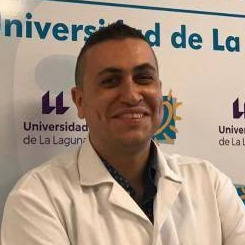
1. Departamento de Obstetricia, Ginecología, Pediatría, Medicina Preventiva y Salud Pública, Toxicología, Medicina Legal y Forense y Parasitología, Universidad de La Laguna (ULL), Tenerife, Spain; 2. Instituto Universitario de Enfermedades Tropicales Y Salud Pública de Canarias de la Universidad de La Laguna, Tenerife, Spain
Jacob Lorenzo Morales has been working on free living amoebae (FLA) for the last ten years. His main research field focuses on novel therapeutic agents against FLA infections. During the past years, he has been working on diagnosis of SARS-Cov2 as well as elucidation of novel antiviral devices and agents. With more than 15 years’ experience in tropical diseases and emerging pathogens, he has participated as organizer of international congresses and workshops in the field of Free Living Amoebae. In 2013 he was granted the individual prize "Joven Canarias 2013" and second prize in 2015 of the edition "Premios Talento y Compromiso de Cajasiete" and in 2020, the Internationalization award of the University of La Laguna. He has supervised 25 PhD thesis and 20 Masters thesis.

National Research Institute for Agriculture, Food and Environment (INRAE), France
Alejandro Cabezas-Cruz, DVM, MSc, PhD, HDR, is a Principal Investigator and Head of the microbioTick Laboratory at UMR BIPAR (INRAE, ANSES, École Nationale Vétérinaire d’Alfort), France. His research focuses on vector-associated microbiomes, host–microbiota–pathogen interactions, vector competence, pathogen transmission, and the development of microbiome-based strategies for disease control. He and his team have pioneered the concept and application of anti-microbiota vaccines and have contributed extensively to understanding the ecological and functional roles of microbial communities associated with ticks and other arthropod vectors. He has authored more than 280 peer-reviewed scientific publications and has an h-index of 50.