Keynote Talk
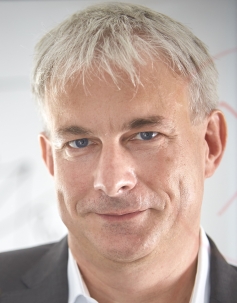
Understanding Through Models: Stories, Networks, and Coherence
Time: Monday, October 26, 2026 | 13:00 – 14:00 CET
Abstract
Scientific models, in the representational rather than the logician's sense, are idealised stand-ins for their targets. They are rarely derived from a theory, and they rarely travel alone: they come with stories, informal accounts of what a model represents, what it leaves out, and why that is acceptable.
Representing a model and its story as a Bayesian network, I prove two results in probability theory: telling the story changes no probability, and no prediction about interventions on what is already represented. What it does change is coherence, by exactly the degree to which our existing beliefs support the story. This explains why post hoc stories feel compelling, and why coherence diagnoses a story but never justifies a model. I close with consequences for understanding, for the integration of disciplines, and for philosophical method.
Keynote Discussion
Does formalization deepen understanding? Models, theories, and stories in philosophy and science
Time: Monday, October 26, 2026 | 14:00 – 15:00 CET
Guiding Questions for Discussion
· Can a formal model deliver philosophical understanding, or only precision?
· Are models, theories, and stories rival routes to understanding, or complementary ones?
· Is coherence a guide to truth, to understanding, or to neither?
Confirmed Panelist
Borut Trpin (Department of Philosophy, Faculty of Arts, University of Ljubljana)

Keynote Talk
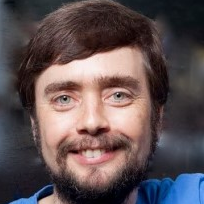
The origin, transformation, and scaling of understanders: where do embodied minds come from?
Time: Thursday, October 29, 2026 | 13:00 – 14:00 CET
Abstract
TBA
Keynote Discussion
The way to understanding - natural process or suddenly emerging invented artefact
Time: Thursday, October 29, 2026 | 14:00 – 15:00 CET
Confirmed Panelist
Gordana Dodig Crnkovic (1. Senior Professor of Computer Science, Mälardalen University, 2. Professor Emerita of Interaction Design, Chalmers University of Technology, Gothenburg, Sweden)
Invited Talk
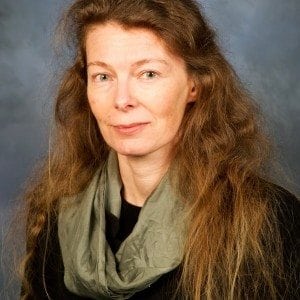
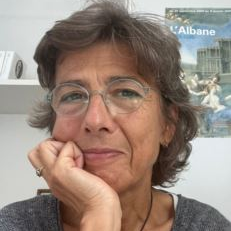
Understanding Otherwise: Intercultural Philosophy and the Transformation of the Knower
Time: Tuesday, October 27, 2026 | 13:00 – 13:30 CET
Abstract
Understanding is often treated as an epistemic achievement whose criteria are sufficiently clear to allow us to ask whether a person, theory, or perhaps an artificial system possesses it. But what kind of achievement is understanding? Intercultural philosophy exposes a difficulty for accounts that identify understanding primarily with accurate representation, explanation, or modelling. In attempting to understand concepts embedded within unfamiliar philosophical traditions, the interpreter necessarily begins with existing conceptual resources; yet successful understanding may require those very resources to be revised. The standards through which an object first becomes intelligible may therefore themselves be transformed in the process of understanding it. Drawing on problems of translation, hermeneutical dialogue, and the understanding of concepts embodied in practices and exemplars, I develop an account of understanding as situated, potentially transformative, and corrigible. This raises a further problem: if understanding can transform the conceptual resources through which its adequacy is assessed, what distinguishes increased understanding from mere conceptual change? I argue that transformation counts as epistemic improvement not simply because the interpreter has changed, but insofar as the resulting understanding becomes more answerable to what is being understood: more capable of registering distinctions, practices, and forms of significance that the interpreter’s initial conceptual framework obscured. Intercultural inquiry thus provides an especially revealing case for reconsidering both the nature and the normativity of understanding as an epistemic achievement.
Invited Talk
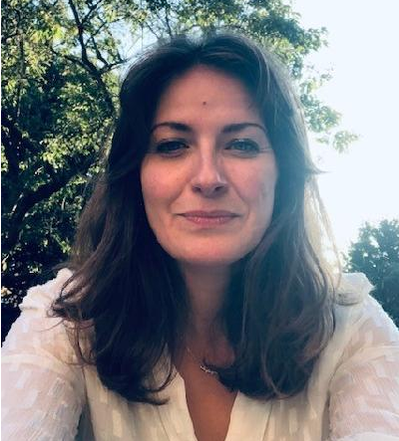
At Home in the Universe.The Pursuit of Truth and Understanding beyond the Science-Religion Divide
Time: Tuesday, October 27, 2026 | 13:30 – 14:00 CET
Abstract
Drawing on Albert Einstein’s observation that “science without religion is lame, religion without science is blind,” this paper reconsiders how the pursuit of truth and understanding has been both a driving force in science and religion and a primary source of tension between them. It explores whether this tension may have its roots in a distinctive Western way of thinking and examines whether the “logic of place” proposed by the Japanese philosopher Nishida Kitarō might offer conceptual resources for moving beyond the divide. Through a mathematical reflection on the notions of “truth” and “harmony,” the paper seeks to establish a basis for comparing Eastern and Western views of the relationship between the infinite and the finite, between subjective and objective reality, between “places” of awareness and physical experience. Finally, an intriguing question concerns whether a quantum worldview might open new possibilities for intercultural dialogue and help articulate what it means to be “at home in the universe.” By extending the idea of “complementarity” – which finds a suggestive resonance in Nishida’s “contradictory self-identity” – from observable aspects of physical phenomena to cognitive and religious experiences, it points toward a new “philosophy of nature” still in the making.
Invited Talk
TBA
Time: Wednesday, October 28, 2026 | 13:00 – 13:30 CET
Invited Talk
Aesthetics as a Dynamic Mode of Inquiry: From Aesthetic Objects to Processes of Experience
Time: Wednesday, October 28, 2026 | 13:30 – 14:00 CET
Abstract
Aesthetics is commonly treated as a domain in which philosophy formulates questions about beauty, art, and taste, while empirical science investigates the perceptual, cognitive, affective, and neural mechanisms underlying aesthetic responses. I argue that this division is too restrictive. Aesthetics can itself function as a particularly powerful tool of philosophical and scientific inquiry, because aesthetic experience exposes fundamental properties of human cognition that become less visible in conventional experimental settings: context sensitivity, temporal dynamics, interpretative instability, and the continuous interaction between perceiver and perceived.
Building on a dynamic and interactionist account of aesthetic experience, I challenge the assumption that aesthetic value can be adequately explained by stable properties of an “aesthetic object.” Empirical findings on individual taste, historical Zeitgeist, rapid adaptation, the Aesthetic Aha, and semantic instability demonstrate that aesthetic evaluation can change across decades, minutes, or even moments. The relevant unit of analysis is therefore not the isolated stimulus, but the evolving relation among object, perceiver, previous experience, cultural context, expectations, and ongoing processes of sense-making.
This perspective also raises a methodological challenge. Increasingly sophisticated neuroscientific techniques permit precise measurement while often imposing artificial environments and strongly reduced stimuli. Such experimental control can obscure precisely those contextual and recursive processes that constitute a genuine aesthetic experience. I therefore propose that aesthetic inquiry should systematically incorporate time, context, recurrent processing, and ecological validity, balancing controlled experimentation against the phenomenological richness of experience.
Aesthetics thus offers more than a phenomenon to be explained: it provides a model case for investigating how humans construct meaning, revise evaluations, and transform experience. In this sense, aesthetics becomes a methodological bridge between philosophical analysis and empirical science—and a particularly revealing laboratory for studying the dynamic nature of human cognition.
Invited Talk
Semantic Field Theory in the Context of Large Language Models
Time: Friday, October 30, 2026 | 12:30 – 13:00 CET
Abstract
The full abstract is available here.
Invited Talk
Philosophy of Vibecoding: How AI-produced computer models can contribute to psychological and philosophical understanding
Time: Friday, October 30, 2026 | 13:00 – 13:30 CET
Abstract
In the 1980s, I pioneered the use of computer programs for philosophical purposes. But now artificial intelligence makes it easy to produce such programs in a matter of minutes. This talk will discuss the legitimacy of such programs and how they can be evaluated and used for both scientific and philosophical purposes. Illustrations will come from understanding psychological and philosophical issues connected with the uses of Ozempic-type drugs for diabetes and obesity.
Invited Talk
Do 21st-Century AIs Understand Imagistic Content? They Do Not (Worse: They Don’t Understand That They Don’t Understand It)
Time: Friday, October 30, 2026 | 13:30 – 14:00 CET
Abstract
TBA