JCM Webinar | Hemodiafiltration in Clinical Practice: Integrating Advanced Dialysis Strategies for Improved Patient Care
the chair
35th JCM Webinar
Hemodiafiltration in Clinical Practice: Integrating Advanced Dialysis Strategies for Improved Patient Care
High-volume hemodiafiltration (HVHDF) is increasingly recognized as an important evolution in maintenance dialysis therapy, reflecting the growing understanding that conventional hemodialysis incompletely removes several biologically relevant uremic solutes, particularly larger middle molecules. By integrating diffusive and convective transport within the same treatment, HDF enhances the clearance of a broader spectrum of uremic toxins while preserving efficient small-solute removal. Over the past two decades, evidence from randomized clinical trials, individual participant data meta-analyses, and large observational studies has suggested that adequately delivered HVHDF may improve middle-molecule clearance, intradialytic hemodynamic tolerance, patient recovery, and selected clinical outcomes.
As clinical experience with HVHDF continues to expand worldwide, attention has increasingly focused on individualized dialysis strategies aimed not only at achieving conventional adequacy targets but also at improving patient-centered outcomes and quality of life.
In this webinar, internationally recognized experts will discuss contemporary clinical applications of HDF, including individualized dialysis prescription, intradialytic hemodynamic management, care of patients awaiting kidney transplantation, and practical aspects of advanced dialysis therapies.
The webinar aims to provide an updated scientific overview of current evidence supporting HVHDF and to discuss ongoing challenges and future directions in maintenance dialysis.
Date: 24 June 2026
Time: 10:00 am EDT | 3:00 pm BST | 4:00 pm CEST | 10:00 pm CST Asia
Webinar ID: 898 2125 7733
Webinar Secretariat: journal.webinar@mdpi.com
Meet Our Chair

Fresenius Medical Care Europe/Middle East/Africa, Palazzo Pignano, Italy;Stefano Stuard, MD, PhD, is Senior Vice President and Global Chief Clinical Officer for Hemodiafiltration at Fresenius Medical Care. Having served with the company for more than 15 years, he has held several senior international leadership positions and has played a key role in advancing clinical excellence, therapeutic innovation, and evidence-based kidney care across the organization. Dr. Stuard works closely with regional medical leadership teams worldwide to promote clinical excellence, improve end stage kidney disease patient outcomes. Previously, he served as Senior Vice President and Chief Clinical Officer for the EMEA region, where he led clinical and therapeutic governance initiatives across 28 countries and helped drive significant improvements in quality of care throughout Fresenius Medical Care’s network. Before joining Fresenius Medical Care, Dr. Stuard held senior clinical positions in Italy, including Director of Nephrology and Dialysis Services. He is internationally recognized for his expertise in dialysis therapies, clinical governance, and the development of innovative approaches to kidney care. A respected researcher and educator, Dr. Stuard has authored more than 170 peer-reviewed scientific publications and book chapters and is a frequent invited speaker at major international nephrology and dialysis conferences. Dr. Stuard earned his Doctor of Medicine degree and specialty certification in Nephrology from the University of Chieti, Italy, and his PhD in Nephrology from the University of Bologna, Italy.
The full recording can be found below. In order to learn about future webinars, you can sign up to our newsletter by clicking “Subscribe” at the top of the page.
Meet Our Speakers
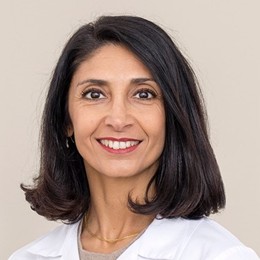
Dr. Nilufar Mohebbi
Division of Nephrology, University Hospital Zurich, Zurich, Switzerland;Nilufar Mohebbi, MD is an attending physician in General Internal Medicine and Nephrology at the Praxis und Dialysezentrum Zürich‑City, and a full member of the Zurich Kidney Center (ZKC), a research network that brings together leading specialists in experimental and clinical nephrology in Zurich. In addition, Professor Mohebbi is a Country Medical Director for Fresenius NephroCare Switzerland, a Professor at the University of Zurich, and a Fellow of the European Renal Association (ERA). Professor Mohebbi studied medicine at Johannes Gutenberg University in Mainz, Germany, and completed nephrology training at the Charité in Berlin under Prof. Friedrich Luft. She pursued postdoctoral training in renal physiology at the Institute of Physiology at the University of Zurich, where her research focus centered on tubular physiology and acid–base homeostasis. Her basic science work on tubular diseases, including renal tubular acidosis, was subsequently translated into an SNF‑funded multicenter interventional clinical trial at University Hospital Zurich examining the impact of metabolic acidosis on kidney graft function in transplant recipients. In addition to her clinical and research activities, she is strongly committed to the education of medical students, interns, and fellows.

Dr. Benjamin Hippen
Fresenius Medical Care, Transplant Medicine and Emerging Capabilities, Waltham, Massachusetts, USA;A board‑certified general and transplant nephrologist, Dr. Hippen brings nearly two decades of clinical experience caring for patients across the full spectrum of kidney disease prior to joining Fresenius Medical Care in 2021. With a background in bioethics, public policy, and value-based care payment models, Dr. Hippen has authored or co-authored more than seventy peer reviewed papers, position statements, and policy viewpoints for professional and lay audiences. In his current role, Dr. Hippen leads global efforts to improve clinical quality and patient safety for patients receiving dialysis, as well as expanding access to kidney transplantation.

Prof. Sandip Mitra
Manchester University NHS Foundation Trust, Manchester, England, UK;Sandip Mitra, MBBS, MD, FRCP, is Professor of Medicine at The University of Manchester and a Consultant Nephrologist at Manchester Royal Infirmary, part of Manchester University NHS Foundation Trust. With more than 35 years of experience in nephrology, Prof. Mitra is internationally recognized for his expertise in chronic kidney disease, acute kidney injury, hypertension, and renal replacement therapies, and he leads one of Europe’s largest home hemodialysis programs. He qualified in medicine in India in 1990 and received his MD from University College London, with specialist nephrology training across Oxford, London, and Manchester. Prof. Mitra holds numerous national and international leadership roles, including Vice Chair of the European Dialysis Board and Advisor to NHS England, and has made significant contributions to kidney research through extensive publications, clinical trials, and innovation in dialysis care.

Renal Research Institute (RRI), New York, NY, USA;Peter Kotanko, MD, FASN, has held the role of Research Director of the Renal Research Institute (RRI) and Senior Vice President of Global Research Development at Fresenius Medical Care. An internationally recognized physician‑scientist, Dr. Kotanko led translational and clinical research initiatives focused on improving outcomes and quality of life for patients with kidney disease. He has also served as Adjunct Professor of Medicine and Nephrology at the Icahn School of Medicine at Mount Sinai in New York City and holds a teaching appointment at the Medical University of Innsbruck. Dr. Kotanko has authored and co‑authored more than 450 peer‑reviewed publications and book chapters, and he holds over 170 patents in the kidney space. His research spans precision dialysis, outcomes science, and innovative analytical approaches to kidney care. He is a Fellow of the American and International Societies of Nephrology.


Redefining Hemodialysis: Beyond Diffusion to Precision Therapy
Edited by Dr. Stefano Stuard and Dr. Sagar Nigwekar
Deadline for manuscript submissions: 15 August 2026
Why High-Volume Post-Dilution Hemodiafiltration Should Be the New Standard in Dialysis Care: A Comprehensive Review of Clinical Outcomes and Mechanisms
Stefano Stuard, Franklin W. Maddux, and Bernard Canaud
J. Clin. Med. 2025, 14(14), 4860; https://doi.org/10.3390/jcm14144860