
JMSE Webinar | The Place of Offshore Renewable Energy in the Transition for a Low Carbon Future
the chair
15th JMSE Webinar
The Place of Offshore Renewable Energy in the Transition for a Low Carbon Future
Climate change has visible effects with a growing dynamics in the last decades and it becomes quite obvious that more effective measures have to be taken for achieving the transition to a low carbon society. While the global energy demand is growing, an important step in reducing the CO2 emissions is represented by replacing the traditional sources based on fossil fuels with carbon neutral sources. From this perspective and in order to maintain the target to limit the global warming below 2°C, established in 2015 by the United Nations Framework Convention for Climate Change, Paris Climate Agreement, there is an increased interest to add more renewable energy resources to the energy systems. At this point it has to be also noticed that according to a recent study made by the International Renewable Energy Agency, based on data provided by previous reports, the CO2 emissions have increased by 1% per year in the last decade.
While a drastic reduction of the CO2 emissions represents an issue of highly increasing importance, offshore renewable energy (ORE) sources are abundant, and the amount of energy that can be generated using the existent technologies varies from site-to-site and day-to-day, depending on the location and weather conditions. A correct evaluation of the resources and of their expected future dynamics as well as the technologies currently associated with the extraction of offshore renewable energy are highly important for achieving the expected targets in terms of energy efficiency and environmental protection. On the other hand, although significant advances have been noticed in the recent years, with regards to extracting ocean energy, there are still important challenges related to the implementation of cost-effective technologies that could survive in the harsh marine environment. From this perspective, the main target of this webinar, entitled “The place of offshore renewable energy in the transition for a low carbon future”, is to contribute to the renewable energy agenda, aiming to improve knowledge and performance in harvesting offshore renewable energy and to identify some of the main advances and challenges associated. ORE includes several forms of energy and the most common and successful offshore technologies developed so far are based on wind, waves, tides and floating solar panels.
Finally, it has to be also highlighted that this topic, targeting advances and challenges in extraction of offshore renewable energy, remains an open one, especially if we take into account the great expectations from ocean energy in short and medium term, expectations requiring very rapid advances while at the same time significant challenges have to be faced.
Date: 11 July 2024
Time: 16:00 CEST
Webinar ID: 819 2853 7167
Webinar Secretariat: journal.webinar@mdpi.com
Meet Our Chair
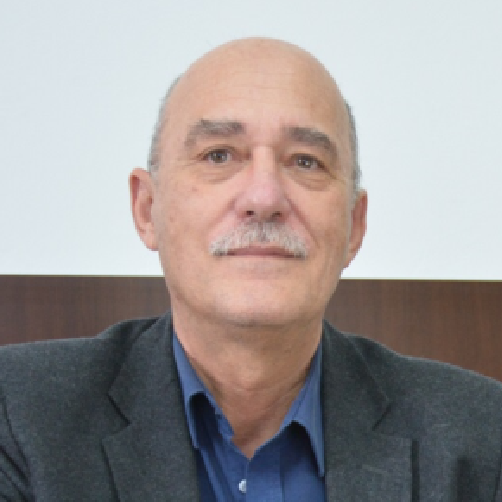
University Dunarea de Jos of Galati, Romania;Eugen Rusu received a diploma in Naval Architecture (1982) and a Ph.D. in Mechanical Engineering (1997). Between 1999 and 2004, he worked as a post-doc fellow at the at Hydrographical Institute of the Portuguese Navy, where he was responsible for wave modelling and provided environmental support for some major situations such as: the accident of the M/V Prestige (2002) and the NATO exercises Unified Odyssey (2002) and ‘Swordfish’ (2003). Eugen Rusu worked as a consulting Scientist at the NATO Centre for Maritime Research and Experimentation, La Spezia, Italy (2005), having modelling coastal waves and surf zone processes as main tasks. Starting in 2006, in parallel with his activity as professor at the University Dunarea de Jos of Galati, he has been working as a professor collaborator at CENTEC (Centre for Marine Technology and Ocean Engineering) http://www.centec.ist.utl.pt/en/centec/personnel.aspx?id=1, University of Lisbon, Portugal. Since 2012, he has also acted as an expert for the European Commission. Eugen Rusu has published more than 150 works in the fields of renewable energy and marine engineering and he received awards including Doctor Honoris Causa (2015) at the Maritime University of Constanta, Romania Outstanding Contribution in Reviewing, Renewable Energy (2015) and Ocean Engineering (2016) journals; and Top 1% World Reviewers in the field of engineering (2018 and 2019). He is also the President of the Council of the Doctoral Schools in Galati University and of the Romanian National Commission of Mechanical Engineering. Since 2018, he has been a corresponding member of the Romanian Academy, the highest level scientific and cultural forum in Romania.
Meet Our Speakers
University Dunarea de Jos of Galati, Romania;Eugen Rusu received a diploma in Naval Architecture (1982) and a Ph.D. in Mechanical Engineering (1997). Between 1999 and 2004, he worked as a post-doc fellow at the at Hydrographical Institute of the Portuguese Navy, where he was responsible for wave modelling and provided environmental support for some major situations such as: the accident of the M/V Prestige (2002) and the NATO exercises Unified Odyssey (2002) and ‘Swordfish’ (2003). Eugen Rusu worked as a consulting Scientist at the NATO Centre for Maritime Research and Experimentation, La Spezia, Italy (2005), having modelling coastal waves and surf zone processes as main tasks. Starting in 2006, in parallel with his activity as professor at the University Dunarea de Jos of Galati, he has been working as a professor collaborator at CENTEC (Centre for Marine Technology and Ocean Engineering) http://www.centec.ist.utl.pt/en/centec/personnel.aspx?id=1, University of Lisbon, Portugal. Since 2012, he has also acted as an expert for the European Commission. Eugen Rusu has published more than 150 works in the fields of renewable energy and marine engineering and he received awards including Doctor Honoris Causa (2015) at the Maritime University of Constanta, Romania Outstanding Contribution in Reviewing, Renewable Energy (2015) and Ocean Engineering (2016) journals; and Top 1% World Reviewers in the field of engineering (2018 and 2019). He is also the President of the Council of the Doctoral Schools in Galati University and of the Romanian National Commission of Mechanical Engineering. Since 2018, he has been a corresponding member of the Romanian Academy, the highest level scientific and cultural forum in Romania.
Heliopolis University, Cairo, Egypt;Hady Habib Fayek received his Ph.D. degree in 2019 at the age of 29 years old, in Electrical Power Engineering, from Helwan University, Egypt including associated research with Texas A&M University, USA. He obtained his B.Sc. degree in 2011, and his M.Sc. degree in 2014 from Helwan University. He is currently working as an Associate Professor in the Energy Engineering Programmes, Faculty of Engineering, Heliopolis University for Sustainable Development (HUSD). He is the chairman of IEEE Industrial Electronics Egypt Chapter; he was the main organiser of many international conferences about smart cities, marine energy, and sustainable electrical engineering. He published more than 50 research papers on recent advances in renewable energy, WEF nexus, and smart grids sectors in many highly ranked international conferences and journals. Hady is a guest editor and reviewer in many IEEE, Tech-science, MDPI, Elsevier and IET transactions, journals and conferences. He is also a keynote speaker in many conferences and webinars. He received many research awards such as best chapter award in 2023 from IEEE Industrial Electronics Society, best paper award in the 2024 IEEE International Conference on Machine Intelligence and Smart Innovation, best second inter-chapter paper from IEEE Industrial Electronics Society and third inter-student branch competition from IEEE Industrial Electronics Society. He got best PhD paper award that integrate renewable energy, sustainable water management and organic agriculture from EU Trinex joint funded project.
Innovative Technologies Laboratory, University of Picardie Jules Verne, France;Laboratory of Inorganic Materials for Sustainable Energy Technology (LIMSET), Université Mohammed VI Polytechnique, Morocco;He earned his Ph.D. in Mechanical Engineering from ENSTA Bretagne, France, in 2019 and his M.Sc. in Renewable Energy and Energy Systems from the University of Hassan II Casablanca in 2016. In 2019, he was a temporary teaching and research assistant at the University of Bordeaux and the Institute of Mechanics and Engineering (I2M). In December 2020, he joined ENSAM Campus Metz as an Associate Professor at LEM3 Research Lab and an R&D Engineer at CETIM Grand Est, a French RTO, promoting cooperation by developing projects on recycled thermoplastic composites. In September 2022, he became the R&D Manager at S VERTICAL Company, enhancing WoundSim software for hydrogen storage vessels. Since March 2024, he has been an Assistant Professor at UM6P. He has authored over 65 peer-reviewed articles and presented more than 12 papers at international conferences. He reviews for over 20 journals, including Composite Structures and Renewable Energy. His work has advanced understanding of composite materials. He has received six awards, including the "IAAM Young Scientist Medal 2022," the "Peer Prize for Climate," the "French Navy, Amirale Daveluy" award, the "University Research Competition and Innovation" prize, the "Innovation in Science and Technology of the Francophonie" award, and the "Future Projects 2018 - BPGO." He has supervised two Ph.D. and six Master's students in renewable marine energy and materials mechanics. He has extensive project coordination experience, leading the Horizon Europe project "Hybrid Twin of Green Hydrogen Value Chain for Energy Efficiency and Process Flexibility (InnovH2)" with a budget of €8M (15 partners) and the Europe-Africa LEAP-RE project "A Data-Driven Digital Twin for Improved Hydrogen Storage Vessels" with a budget of €690K (6 partners). He also coordinates a Marie-Curie Program project with ENSTA Bretagne on "3D Printed Composite for Eco-friendly and Sustainable Hydrogen Storage Vessel" (€212K).
NATO Maritime GEOMETOC Centre of Excellence, Lisbon, Portugal;Laurențiu-Florin Constantinoiu: Diploma in Maritime Engineering, from the Romanian Naval Academy (2009) and MSc in Naval Engineering and Navigation (2011) from the Maritime University of Constanta, Romania. Florin achieved the IHO category B hydrographic surveyor (2018) from the Royal Navy Flag Officer Sea Training and University of Plymouth, as the top student of this international course. In 2020 he achieved the IHO category A hydrographic surveyor from the Royal Navy Flag Officer Sea Training and University of Plymouth. From 2011 to 2021, he held various positions within the Romanian Maritime Hydrographic Directorate, serving in the hydrography, oceanography, and mine warfare departments. From May 2021 he is the Romanian delegate at the NATO Maritime Geospatial Meteorological and Oceanographic Centre of Excellence in Portugal – posted as the Hydrography and Oceanography staff officer. He is a PhD student at the Department of Mechanical Engineering, Dunărea de Jos University of Galati, Romania, with the topic: "Studies concerning the dynamics of the environmental matrix in coastal areas using maritime unmanned systems and innovative solutions.", supervised by Prof. Eugen Rusu. His main scientific interests include underwater research and maritime unmanned systems development. https://www.mgeometoc-coe.org/


The webinar was hosted via Zoom and required registration to attend. The full recording can be found below. In order to learn about future webinars, you can sign up to our newsletter by clicking “Subscribe” at the top of the page.
Marine Renewable Energy and the Transition to a Low Carbon Future 2nd Edition
Edited by Eugen Rusu
Submission Deadline: 25 August 2024