
JMSE Webinar | Advances in Ships and Marine Structures
the chair
16th JMSE Webinar
Advances in Ships and Marine Structures
The marine environment is a harsh environment. Extra care is required for marine structures due to fatigue loading, corrosive environment, etc.; otherwise, undesired consequences can occur and cause human life losses, economical losses, and environmental pollution. To minimise such risks and take necessary actions before catastrophic consequences occur, it is important to continuously monitor the health of marine structures by using sensors located at different parts of structures and establishing their “digital twin”. There are various structural health monitoring approaches available for this purpose. In this webinar, a new methodology, known as the inverse finite element method (iFEM), will be presented. The iFEM has various advantages; it is fast and robust, which makes it suitable for real-time monitoring. Moreover, it is not necessary to measure the loads acting on the structure, which may not be an easy task under operational conditions. The iFEM has been utilised for different marine structure types, which will be demonstrated as part of this webinar. In addition, the importance of the location and number of sensors will be highlighted.
While the iFEM is a useful technique for detecting damage in a structure, it is also important to predict how damage can evolve with time. Fracture and failure prediction is a challenging research area. There are various methods available for this purpose, including the well-known finite element (FE) method. The FE method is a powerful technique for the deformation and stress analysis of structures. However, it has various disadvantages in predicting failure due to its mathematical structure. In order to overcome this problem, a new computational technique, peridynamics, has been introduced. Peridynamics is a meshless approach, and it is well suited for predicting crack initiation and propagation in structures subjected to different types of loading and environmental conditions. In this webinar, various applications of peridynamics for marine structures will be demonstrated. Moreover, the homogenisation of polycrystalline ice by using peridynamics will be presented. Finally, the utilisation of offshore renewable energy for resolving the water scarcity problem will be discussed.
Date: 19 November 2024 at 10.00 a.m. CET |4:00 a.m. EST | 5:00 p.m. CST Asia
Webinar ID: 837 3222 3307
Webinar Secretariat: journal.webinar@mdpi.com
Meet Our Chair
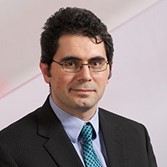
Department of Naval Architecture, Ocean and Marine Engineering at University of Strathclyde, United Kingdom;Prof. Erkan Oterkus is a professor in the department of Naval Architecture, Ocean and Marine Engineering of the University of Strathclyde. He is also the director of PeriDynamics Research Centre (PDRC) and Ocean Energy Research Unit (OERU). He received his PhD from the University of Arizona, USA, and was a researcher at the NASA Langley Research Center, USA, before joining the University of Strathclyde. His research is mainly focused on the computational mechanics of materials and structures by using state-of-the-art techniques including peridynamics and the inverse finite element method. Some of his recent research focuses on multiscale modelling of stress corrosion cracking, underwater shock response of marine composite structures, failure analysis of electronic packages, collision and grounding of ships, and real-time monitoring of ship structures. His research has been supported by various organisations including the European Union, Defence Science and Technology Laboratory (DSTL), British Council, U.S. Air Force Research Laboratory, Samsung Electronics, Lloyd’s Register, Babcock, QinetiQ, ORE Catapult, KIAT, and Tubitak. He is the co-author of numerous publications including journal and conference papers and the first of book on peridynamics. Prof. Oterkus was a Visiting Professor at Stanford University (USA), University of Padova (Italy), Otto von Guericke University (Germany), and Nihon University (Japan).
Meet Our Speakers
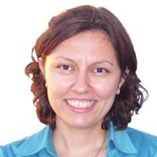
Department of Naval Architecture, Ocean and Marine Engineering, University of Strathclyde, Glasgow, United Kingdom;Application of Peridynamics for Marine Structures
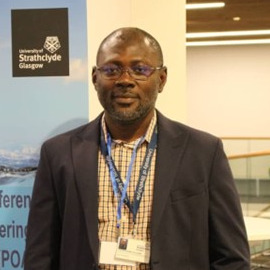
Dr. Yakubu Kasimu Galadima
Naval Architecture, Ocean and Marine Engineering, University of Strathclyde, Glasgow, United Kingdom;Civil Engineering Department, Ahmadu Bello University Zaria, Zaria, Nigeria;Dr. Yakubu Kasimu Galadima is a researcher specialising in advanced mechanics, particularly the application of peridynamic theory to model complex material behaviours. He holds a PhD in Naval Architecture, Ocean and Marine Engineering from the University of Strathclyde, where his work focused on developing multiscale frameworks for elastic and viscoelastic materials. Currently, he is part of the CoTide project, contributing to cutting-edge research in tidal energy systems. Dr. Galadima has published extensively on computational modelling techniques, with a particular emphasis on the application of Peridynamic Computational Homogenisation Theory (PDCHT) and Non-Ordinary State-Based Peridynamics (NOSBPD). His research has been presented at multiple international conferences, and he continues to drive innovation in structural reliability and material degradation in offshore environments.
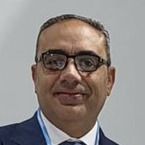
Prof. Islam Amin
Naval Architecture, Ocean and Marine Engineering, University of Port Said, Port Said, Egypt.;Naval Architecture, Ferguson Marine LTD, United Kingdom;Consulting Engineering Bureau LTD, United Kingdom & Egypt;Prof. Islam Amin is a Principal Naval Architect at Ferguson Marine LTD, Glasgow, UK; a professor with the Naval Architecture and Marine Engineering Department (NAME), Faculty of Engineering, Port Said University; and a Research Fellow with the Naval Architecture, Ocean and Marine Engineering Department (NAOME), Strathclyde University, UK. His PhD dissertation focussed on hydrodynamic design of high-speed marine craft. After earning his PhD in 2012, he joined the Renewable Energy Research Group of Strathclyde University, UK. He has many publications on offshore structure, marine renewable energy, water resources, and water treatment. He has conducted research on the hydrodynamics performance of many renewable energy devices such as wind, current, and wave converters. He is also a reviewer for many high-ranking journals such as the journal Ocean Engineering . He has joined different research projects in the fields of renewable energy, climate changes mitigation, water treatment, and water desalination. He is a consultant of well-known marine companies in Egypt and the UK and has many consultant services in the marine industry through Consulting Engineering Bureau – Universal’s offices in Egypt and the UK. He has worked closely with many shipyards in Egypt and the UK, such as Ferguson Marine in Scotland and The Arab Contractors in Cairo for shipbuilding . He has led strategic projects with Dover Harbour in England and the Ministry of Transportation – Damietta Port in Egypt. He has also worked closely with many institutions on marine renewable energy and climate change, such as the University of Strathclyde, Desert Research Center, Nile Research Center, Holding Company for Water and Wastewater , and Renewable Energy Center.


On Tuesday, 19 November 2024, MDPI and JMSE organized a webinar entitled "Advances in Ships and Marine Structures".
Please find the closing summary by our Chair, Prof. Erkan Oterkus, below.
This webinar presents advances in ships and marine structures. After the introduction by the chair, Prof. Erkan Oterkus, briefly discussing digital twin, structural health monitoring and iFEM, our first speaker, Prof. Selda Oterkus, demonstrated the application of peridynamics for marine structures. Next, Dr. Yakubu Kasimu Galadima explained the homogenization of polycrystalline ice using peridynamics. Finally, Prof. Islam Amin showed how offshore renewable energy can be utilised to resolve the water scarcity problem.
The webinar was hosted via Zoom and required prior registration to attend. The full recording can be accessed below. In order to learn about future webinars, you can sign up for our newsletter by clicking “Subscribe” at the top of the page.
Advances in Ships and Marine Structures
Guest Editor: Prof. Dr. Erkan Oterkus
Deadline for manuscript submissions: 5 February 2025