
Life Webinar | NAMs (New Approach Methodologies) as Alternatives to Animal Experiments
the chair
7th Life Webinar
NAMs (New Approach Methodologies) as Alternatives to Animal Experiments
The field of toxicology is undergoing a major transformation, driven by scientific advances and the growing need for more predictive, human-relevant, and innovative approaches to chemical safety assessment. New Approach Methodologies (NAMs) are at the forefront of this transformation, offering new opportunities to rethink how we investigate biological responses, predict potential adverse effects, and support the assessment of chemical safety.
This webinar will explore the evolving landscape of NAMs, highlighting the diversity of approaches currently being developed and their potential to shape the future of toxicology. From mechanistic methods that improve our understanding of chemical–biological interactions to advanced in vitro models that better reproduce human physiology, these innovations are opening new avenues towards more informative and scientifically robust safety assessments.
Through three complementary presentations, our speakers will address key aspects of this rapidly advancing field. We will explore the transition from traditional toxicology towards a new paradigm, examine how chemical reactivity can contribute to more meaningful predictions of skin sensitisation, and discover how microphysiological systems and organ-on-chip technologies are helping to recreate the complexity of human tissues in the laboratory.
By bringing together these perspectives, the webinar aims to provide a broader understanding of the opportunities offered by NAMs, the scientific principles underpinning their development, and the challenges that must be addressed to support their wider adoption.
Whether you are a researcher, toxicologist, regulatory scientist, industry professional, or simply interested in the future of chemical safety assessment, this webinar will offer an opportunity to discover emerging approaches, explore new scientific directions, and reflect on how NAMs are helping to shape the next generation of toxicological assessment.
Date: 16 November 2026
Time: 3:00 pm CET | 9:00 am EDT | 9:00 pm CST (Asia)
Webinar ID: 811 5339 1674
Webinar Secretariat: journal.webinar@mdpi.com
Meet Our Chair

Department of Biochemistry and Physiology and Institute of Nanoscience and Nanotechnology (IN2UB), Universitat de Barcelona, 08007 Barcelona, Spain;Emeritus Professor at the Faculty of Pharmacy and Food Sciences of the University of Barcelona and Toxicologist registered with Eurotox. Since the 1990s, his research has focused on the development and application of in vitro models to evaluate the safety of different chemical compounds such as surfactants, sunscreens, or antioxidants obtained from natural products. She was a member of the Scientific Committee on Consumer Safety (SCCS) of the European Commission. She is currently a member of the Expert Group on Skin Sensitization of the Organization for Economic Co-operation and Development (OECD), as well as the OECD Expert Group on Eye and Skin Irritation. She has participated as a member of the organizing committee of different international congresses related to alternative methods to animal experimentation and has been invited to give different conferences. She has directed and taught courses on alternatives to animal experimentation in countries such as Argentina, Chile, Colombia, Cuba, Mexico and Spain. She has currently published more than 200 articles in national and international journals, most of them in high-impact journals, with an H-index of 45.
Meet Our Speakers
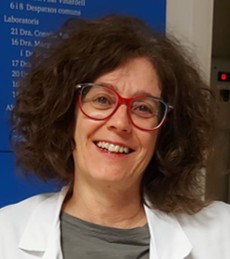
Physiology, Department of Biochemistry and Physiology, Universitat de Barcelona, 08028 Barcelona, Spain;Tenured Professor at Faculty of Pharmacy and Food Sciences, Universitat de Barcelona. She collaborates since 1997 with Prof. M. Pilar Vinardell focusing her research on preclinical toxicology and the application of 3Rs concept. Currently her research is focused in developing new in vitro methodologies to discriminate photoirritants from photoallergens. Moreover, her new projects are intended to develop NAMs to identify thyroid disruption and integrating the different endpoints in an integrated testing strategy. She also collaborates with Universidade Federal de Santa Maria (Brasil) to evaluate the biological activity (efficacy, toxicity, drug delivery) of nanoparticles. Member of the Spanish Society of Toxicology and European Society of In vitro Toxicology. Member of Ethics committee on Animal Experimentation of Universitat de Barcelona. She has given and participated in different courses and seminars to pregraduate, doctoral and professional students, explaining the concepts of 3Rs and specific application cases. Among them, she was invited at the 12th virtual 3Rs Symposium, organized by different organizations as the Johns Hopkins University Center for Alternatives to Animal Testing (CAAT). She is author of more than 125 articles in national and international journals, most of them in high-impact journals, with an H-index of 42.
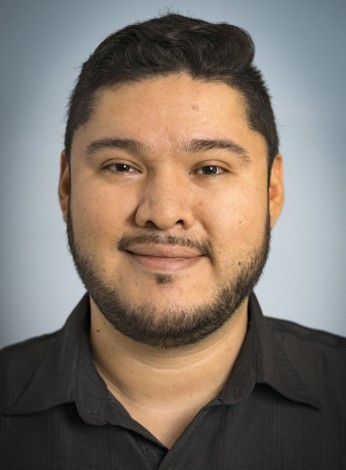
Institute for In Vitro Sciences, Inc., 30 W Watkins Mill Road #100, Gaithersburg, MD 20878, USA ;Dr. Argel Islas-Robles earned his Ph.D. in Pharmacology and Toxicology from the University of Arizona. He is a board-certified toxicologist and Study Director at the Institute for In Vitro Sciences (IIVS) in Maryland, where he leads the Skin Sensitization Program. Since joining IIVS in 2019, Dr. Islas-Robles has specialized in the development, validation, technology transfer, and implementation of in vitro methods for skin sensitization testing, medical device biocompatibility, and other dermal safety assessments. He works closely with industry, regulatory agencies, and scientific organizations to advance the adoption and regulatory acceptance of New Approach Methodologies (NAMs) as alternatives to animal testing. In addition to his research and study director responsibilities, Dr. Islas-Robles is actively involved in scientific training and education through workshops, courses, and invited lectures. He has a particular interest in supporting the implementation and regulatory acceptance of NAMs across Latin America.
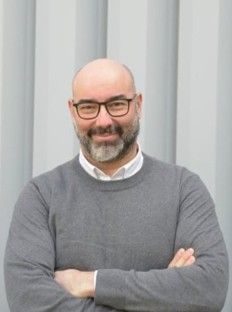
Tissue Microenvironment Lab (TME), Aragón Institute of Engineering Research (I3A), University of Zaragoza, 50018 Zaragoza, Spain Institute for Health Research Aragon (IIS Aragón), 50009 Zaragoza, Spain. Biomedical Research Networking center in Bioengin;Dr. Ignacio Ochoa holds degrees in Biology (1999) and Biochemistry (2003) and a PhD in Histology and Pathological Anatomy (2004) from the University of Navarra. He subsequently joined the Group of Structural Mechanics and Materials Modelling (GEMM) at the University of Zaragoza, where he established an experimental bioengineering laboratory as a postdoctoral researcher at CIBER-BBN. His research focuses on the mechanical properties of biological tissues and the effects of mechanical stimuli on cellular behaviour, from tissue engineering to microfluidics and organ-on-chip technologies. In 2015, he joined the University of Zaragoza’s Department of Human Anatomy and Histology, where he is now Associate Professor of Histology and accredited for appointment as Full Professor. He leads the Tissue Microenvironment Lab (TME Lab), affiliated with I3A and IIS Aragón, and co-leads CIBER-BBN Group 069. Since March 2023, he has served as Scientific Director of the Joint Scientific and Technical Services of IACS and the University of Zaragoza, and Director of the Biomedical Division of the University’s General Research Support Service (SAI). He is a founding member and President of the Spanish Society for Microphysiological Systems and Organ-on-Chip (SESMOoC), established in 2024. Dr. Ochoa has authored over 75 peer-reviewed publications, delivered invited presentations at national and international conferences, and led six European-funded research projects while participating in three others. His translational research includes two knowledge transfer agreements and over 10 patents, five of which have been licensed. He has co-founded five companies, including University of Zaragoza spin-offs EBERS, specialising in bioreactors and extracorporeal organ preservation systems, and BEONCHIP, developing microfluidic devices for organ-on-chip applications.
This is a FREE webinar. After registering, you will receive a confirmation email containing information on how to join the webinar. Registrations with academic institutional email addresses will be prioritized.
Certificates of attendance will be delivered to those who attend the live webinar.
Can't attend? Register anyway and we'll let you know when the recording is available to watch.
-6adf810757637.png)