
MDPI Topic Editor Club 2026—Chemistry & Materials Science Session
the chair
Topic Editor Club 2026
Chemistry & Materials Science Session
Dear colleagues,
MDPI warmly invites you to the 2026 MDPI Topic Editor Club webinar series. This global platform connects worldwide Topic Editors, featuring emerging research themes, practical editorial experience sharing and academic communication. MDPI Topics are interdisciplinary thematic paper collections published across multiple MDPI journals. Led by professional Topic Editor teams and supported by MDPI’s efficient open access publishing workflow, they facilitate academic collaboration and help research reach broader global audiences.
Focusing on Chemistry & Materials, this session brings together discipline Topic Editors to showcase editorial work, discuss the successes and challenges of Topic development, and share innovative strategies for building high-impact Topics. It offers a great chance for peer learning and cross-disciplinary collaboration to advance open access research in this field.
We welcome your participation in the 2026 MDPI Topic Editor Club, and look forward to your insights and questions during the live Q&A session.
Date: 16 October 2026
Time: 2:00 pm CEST | 8:00 am EDT | 8:00 pm CST Asia
Webinar ID: 846 8390 2553
Webinar Secretariat: webinar@mdpi.com
Meet Our Speakers
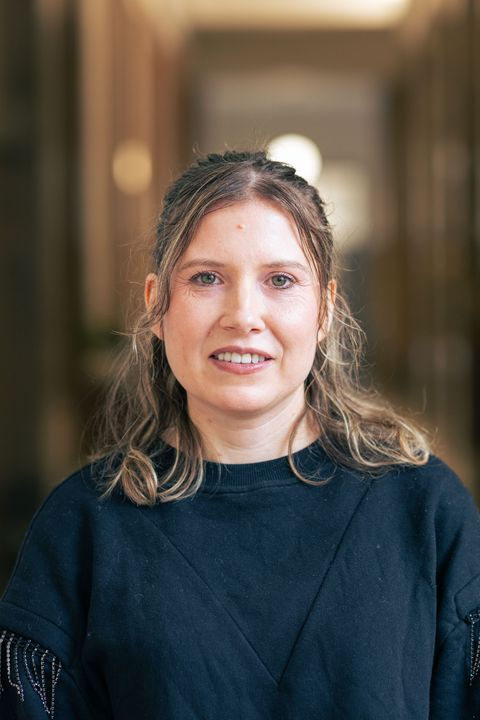
Department of Bioengineering (DBE), Instituto Superior Técnico (IST), University of Lisbon, Portugal;Sandra N. Pinto is currently an Assistant Researcher at i4HB/iBB and Invited Assistant Professor at the Department of Bioengineering (DBE), Instituto Superior Técnico (IST), University of Lisbon. She graduated in Biochemistry from the Universidade da Beira Interior (2006) and earned her PhD in Chemistry from IST (2013, with distinction), during which she completed a research secondment at the Weizmann Institute of Science (Israel). She subsequently held a competitive FCT postdoctoral fellowship (2013–2018) at iMM-Lisboa and IST. Her research addresses how the molecular organization of interfaces, such as microbial biofilms or biological membranes, shapes both the action of antimicrobial agents and the mechanisms by which cells resist them. Building on this, she has established an independent research line focused on innovative strategies against drug resistance, making significant contributions to understanding the matrix and physiological mechanisms responsible for biofilm-associated antimicrobial resistance, and translating this mechanistic knowledge into the rational design of therapeutics that directly target those same resistance-conferring components of bacterial biofilms. She has authored over 60 peer-reviewed publications (h-index 25, Google Scholar; h-index 22, Web of Science; ResearcherID H-8446-2016), including work published in Science, and holds 1 national patent arising from her antimicrobial nanotechnology research. Furthermore, she serves as an Associate Editor for Frontiers in Cellular and Infection Microbiology and on the Editorial Board for Antibiotics. She is a regular research grant reviewer for international agencies, and she is actively engaged in peer-reviewing for international journals. She has also been a member of two COST Action Working Groups (EuroMicropH, EURESTOP) and is an elected member of the Lisbon Regional Delegation of the Portuguese Chemical Society (SPQ).

Dept. of Chemistry, Session of Inorganic and Analytical Chemistry, Lab. of Analytical Chemistry, NRSL - NMR Centre, University of Ioannina , Ioannina, Greece;Constantinos (Konstantinos) G. Tsiafoulis is a chemist (BSc, Aristotle University of Thessaloniki, Greece) and holds a PhD in Chemistry (Dept. of Chemistry, University of Ioannina, Greece). He serves as a Laboratory Teaching Personnel, Grade A, in RSN, NMR Centre, Lab. of Analytical Chemistry, Dept. of Chemistry, Univ. of Ioannina, Greece and is also a Collaborative Educational Personnel at the Hellenic Open University, Patras, Greece. He has 33 publications with more than 1,200 citations having an H-index of 18 and has been a reviewer at more than 35 journals. During the last years, he served and serves as a guest and topic editor in MDPI journals (Molecules, Separations, Chemosensors, Foods, Beverages, Nutrients). His research focuses on the development of methods and their application in the analysis of food matrices studying the food content, authenticity, quality, and safety. He is also interested in determination and characterization of pharmaceuticals and of biologically important compounds in biological matrices. He is particularly interested in Nuclear Magnetic Resonance spectroscopic methods, in -omics approach and multivariate data analysis. His recent work focused on method development, application and analysis on food matrices as long as biological matrices. More specific, on extra virgin olive oil - its phenolic compounds and classification through secoiridoids-, on milk authentication through NMR based metabolomics of the lipid fraction and on characterization and determination of New Psychoactive Substances (NPS) in biological fluid. His two last works on secoiridoids (doi: 10.1002/jsfa.13139) and on NPS (doi: 10.1002/mrc.5500) have been ranked within the top 10% of most-viewed papers published by JSFA and MRC of Wiley, for the years 2023 and on 2025 (for the 2024), respectively.

Dept Civil Engineering and Architecture, University of Pavia, Pavia, Italy;Giulia Scalet is Associate Professor of Structural Mechanics at the Department of Civil Engineering and Architecture of the University of Pavia (Italy). She is Founder and Director of the Laboratory of Programmable Materials and Structures (ProMast Lab, www.promastlab.com). She received a Ph.D. (2014) in Civil and Environmental Engineering from the University of Bologna. She has been a postdoctoral researcher at Ecole Polytechnique (France) and at the University of Pavia as well as assistant professor at the University of Pavia. She visited several international institutions, among the others, the Texas A&M University (US), the University of Houston (US), and the RWTH Aachen University (Germany). She is Principal Investigator of the ERC Starting Grant 2021 for the project CoDe4Bio and of various national projects. She has been involved also in successful collaborations with companies. She won the “Junior Researcher Award 2022 in Mechanics of Solids and Structures” from the Italian Association of Theoretical and Applied Mechanics, the “Actuators 2022 Best Paper Award” from MDPI Actuators, the “2020 Young Researchers Prize” in the Engineering sector, instituted by the 2003 Group for Scientific Research, the “Best PhD Thesis 2014 in Computational Solid Mechanics” Award by the Italian Group of Computational Mechanics, and the prize “Best Graduated Women of the Engineering and Chemistry Faculties of the University of Bologna” by Unindustria et al. in 2011. She has been TEDx speaker in Pavia. She has mentored 4 postdocs, 4 PhDs (among the others, 1 MSCA COFUND, 1 Executive with industry), and 20+ BSc/MSc students. She is expert in smart materials, 4D printing and biofabrication, solid and computational mechanics for industrial applications, and fatigue modeling. She published over 50 peer-reviewed papers, 5 book chapters, 3 journal covers, several conference proceedings, and a patent pending.

Center for Fluorescence Spectroscopy, Department of Biochemistry and Molecular Biology, University of Maryland School of Medicine, USA;Dr. Kundan Sivashanmugan is an assistant director and junior faculty at the Center for Fluorescence Spectroscopy, Department of Biochemistry and Molecular Biology, University of Maryland School of Medicine, USA. His research interests include fluorescence spectroscopy, biosensing, plasmonics, surface enhanced Raman scattering (SERS), nanomaterial based diagnostic technologies, and currently contact lens based fluorescence sensing for non-invasive tear analysis. He was formerly Assistant Professor at the Kanazawa University, Japan. Dr. Sivashanmugan has more than 60 publications in peer-reviewed journals and conferences and has been a Guest Editor and reviewer for multiple scientific journals. His editorial activity at MDPI includes Raman spectroscopy, plasmonic sensors and interd isciplinary nanomaterial-based biosensing.
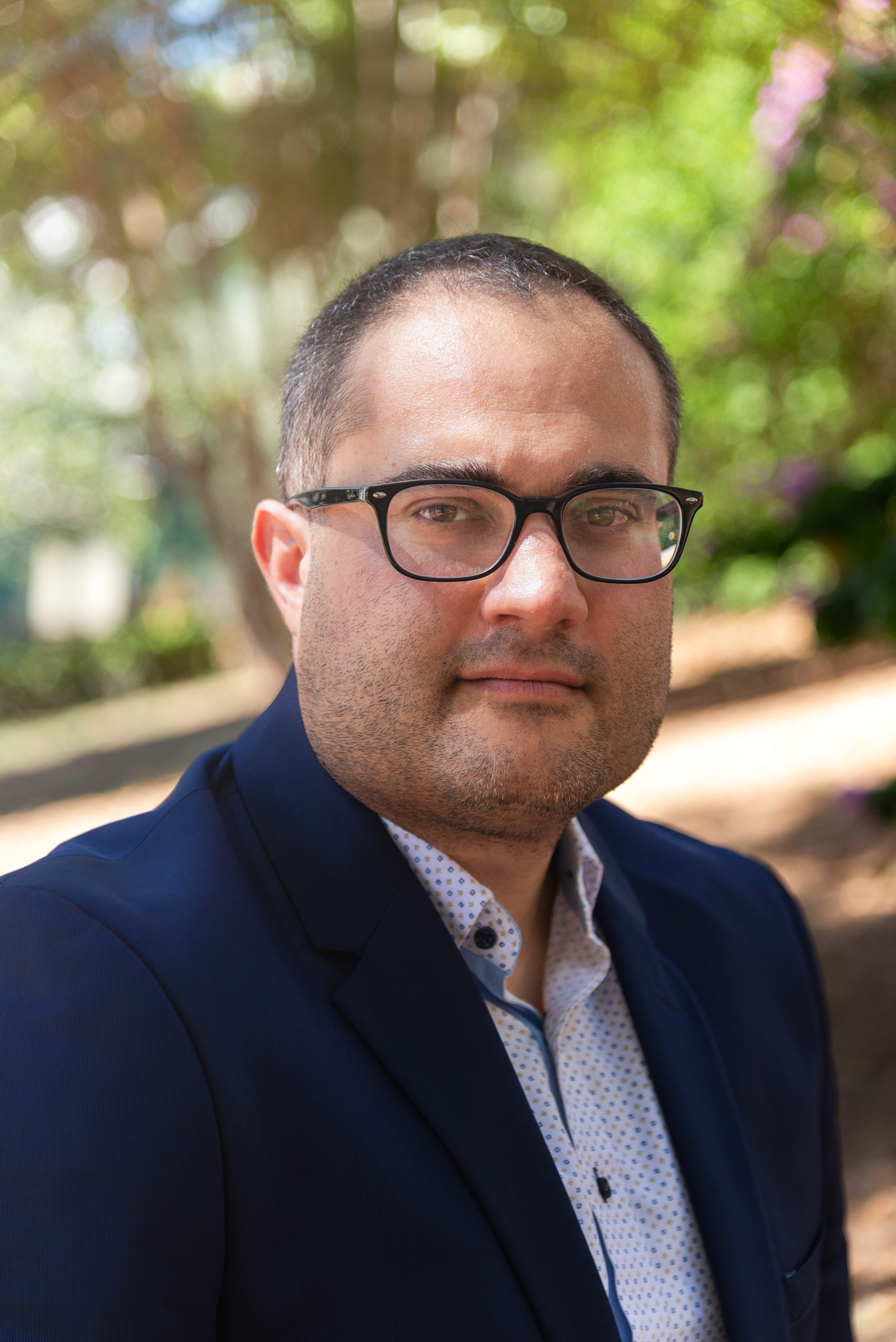
School of Pharmacy, University of Camerino, Camerino, Italy ;Dr. Diego Romano Perinelli is currently an Associate Professor of Pharmaceutical Technology at the School of Pharmacy, University of Camerino. He obtained his Master’s degree in Pharmacy in 2010 and his Master’s degree in Industrial Pharmacy in 2011 from the University of Camerino. In 2015, he was awarded a Ph.D. in Pharmaceutical Sciences from the University of Camerino. During his academic career, he has undertaken several research stays abroad as a visiting Ph.D. student and postdoctoral researcher at internationally recognized institutions, including the University of Nottingham (2012), the University of Hong Kong (2013), King’s College London (2014), the University of Lincoln (2015–2016), and University College Dublin (2017 and 2019). His research activity focuses on the design, development, and physicochemical characterization of surfactants and amphiphilic systems for pharmaceutical, biomedical, and agricultural applications. His research particularly explores the development of innovative surfactants obtained either through the extraction and valorization of natural sources or by chemical synthesis, with the aim of exploiting their functional properties in advanced delivery and formulation systems.

MDPI;Deputy Managing Editor at MDPI Romania She completed her bachelor’s degree in chemical engineering at the Faculty of Engineering in Foreign Languages, University Politehnica of Bucharest. She has a Master's Degree in Biomaterials for Tissue Engineering from the Faculty of Engineering in Foreign Languages, University Politehnica of Bucharest She has joined MDPI in 2020 as an Assistant Editor. In 2022, started working as a Deputy Managing Editor, focusing on building strong, trusting relationships with journal collaborators, handling external and ethical requests, and representing MDPI at events.
This is a FREE webinar. After registering, you will receive a confirmation email containing information on how to join the webinar. Registrations with academic institutional email addresses will be prioritized.
Certificates of attendance will be delivered to those who attend the live webinar.
Can’t attend? Register anyway and we’ll let you know when the recording is available to watch.