
MDPI World AMR Awareness Week Webinar
the chair
In support of World Antimicrobial Resistance Awareness Week (WAAW) 2025, MDPI is delighted to invite you to our webinar series, “MDPI World AMR Awareness Week Webinar 2025.”
This year’s theme, “Act Now: Protect Our Present, Secure Our Future,” serves as a powerful call to immediate action against one of the most pressing global health threats — antimicrobial resistance (AMR). Through this webinar, we aim to highlight the latest research, innovations, and cross-sector collaborations addressing AMR. We hope these discussions will inspire collective action to promote the prudent use of antimicrobials, strengthen prevention and surveillance systems, and accelerate global efforts to safeguard human, animal, and environmental health.
Thank you for joining us as we raise awareness, exchange insights, and reaffirm our shared commitment to a healthier, more resilient future.
Date: 21 November 2025
Time: 9:00 am CET | 4:00 pm CST (Asia)
Webinar ID: 883 6849 1341
Webinar Secretariat: journal.webinar@mdpi.com
Meet Our Chair
'%3e%3cpath%20d='M12.6647%2010.9104C12.4176%2010.325%2012.0589%209.7933%2011.6088%209.34485C11.16%208.89511%2010.6283%208.53653%2010.0432%208.28891C10.038%208.28629%2010.0327%208.28498%2010.0275%208.28236C10.8437%207.69282%2011.3743%206.73252%2011.3743%205.64907C11.3743%203.85423%209.92005%202.40002%208.12522%202.40002C6.33038%202.40002%204.87618%203.85423%204.87618%205.64907C4.87618%206.73252%205.40677%207.69282%206.22296%208.28367C6.21772%208.28629%206.21248%208.2876%206.20724%208.29022C5.62031%208.53783%205.09365%208.89287%204.64167%209.34616C4.19192%209.79496%203.83334%2010.3266%203.58573%2010.9117C3.34247%2011.4846%203.21128%2012.0987%203.19925%2012.721C3.1989%2012.735%203.20135%2012.7489%203.20646%2012.7619C3.21157%2012.7749%203.21924%2012.7868%203.22901%2012.7968C3.23877%2012.8068%203.25045%2012.8148%203.26334%2012.8202C3.27623%2012.8256%203.29007%2012.8284%203.30406%2012.8284H4.09012C4.14776%2012.8284%204.19362%2012.7825%204.19493%2012.7262C4.22113%2011.7148%204.62726%2010.7676%205.34519%2010.0497C6.08802%209.30686%207.07452%208.89811%208.12522%208.89811C9.17592%208.89811%2010.1624%209.30686%2010.9052%2010.0497C11.6232%2010.7676%2012.0293%2011.7148%2012.0555%2012.7262C12.0568%2012.7839%2012.1027%2012.8284%2012.1603%2012.8284H12.9464C12.9604%2012.8284%2012.9742%2012.8256%2012.9871%2012.8202C13%2012.8148%2013.0117%2012.8068%2013.0214%2012.7968C13.0312%2012.7868%2013.0389%2012.7749%2013.044%2012.7619C13.0491%2012.7489%2013.0515%2012.735%2013.0512%2012.721C13.0381%2012.0947%2012.9084%2011.4856%2012.6647%2010.9104ZM8.12522%207.90243C7.52388%207.90243%206.95792%207.66793%206.53214%207.24215C6.10636%206.81636%205.87185%206.2504%205.87185%205.64907C5.87185%205.04773%206.10636%204.48177%206.53214%204.05599C6.95792%203.63021%207.52388%203.3957%208.12522%203.3957C8.72655%203.3957%209.29252%203.63021%209.7183%204.05599C10.1441%204.48177%2010.3786%205.04773%2010.3786%205.64907C10.3786%206.2504%2010.1441%206.81636%209.7183%207.24215C9.29252%207.66793%208.72655%207.90243%208.12522%207.90243Z'%20fill='%235D1EE1'/%3e%3c/g%3e%3c/svg%3e)
MDPI;/
Important Dates
21 Nov
2025
Meet Our Speakers
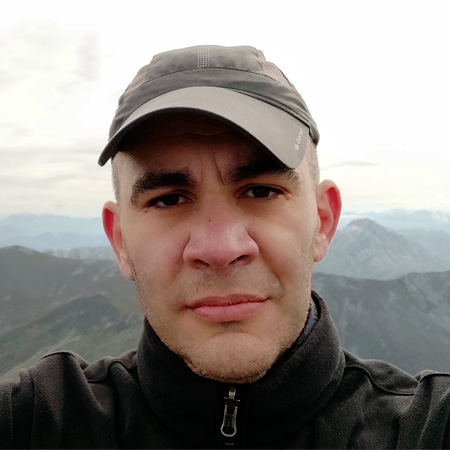
Department of Food Hygiene and Technology, University of Leon, Spain;Dr. José F. Cobo-Díaz is Tenured Professor at the Department of Food Hygiene and Technology at University of Leon (Spain). He has developed his scientific and bioinformatic career since he made the PhD in the Spanish National Research Council, finalized at 2013. During last 6 years in Leon, he has become an expert on microbiome and AMR spread analysis on food industry environments using both genomic and metagenomic data. He has more than 50 scientific publications, including high quality journals such as Nature Microbiology, Nature Protocols, Microbiome and Cell, and more than 60 communications in National and International Congresses. Finally, he is also the co-director of 2 PhD students, he organizes a bioinformatic workshop (including genome and metagenome analysis) per year at the University of Leon, and he is co-IP of a project entitled “Unleashing Food Microbiome applications through cataloguing and mining unexplored biodiversity”.

National Microbiology Center, Carlos III Health Institute, Spain;Ana Alastruey-Izquierdo is a Senior Scientist at the Mycology Reference Laboratory of Spain. She serves on the Scientific Advisory Board of the Joint Program Initiative on Antimicrobial Resistance (JPIAMR) and is the President of the Spanish Society for Mycology (AEM), representing Spain on the European Confederation of Medical Mycology Council. She chaired the technical expert group responsible for developing the first Fungal Priority Pathogens List, published by WHO in 2022. Ana led the Fungal Infection Study Group (EFISG) of ESCMID until May 2024 and directed the Latin American programs for GAFFI until 2023. She is a fellow of both ESCMID and ECMM. Her primary research interests include public health mycology, diagnostics, epidemiology, and antifungal resistance. She has authored over 180 peer-reviewed articles in scientific journals, including several guidelines for diagnosing and treating fungal infections. Ana also serves as an editor for Clinical Microbiology and Infection and the Journal of Fungi. She collaborates with international agencies such as the CDC, ECDC, and WHO, contributing to risk assessments, guideline development, and other projects related to public and global health.
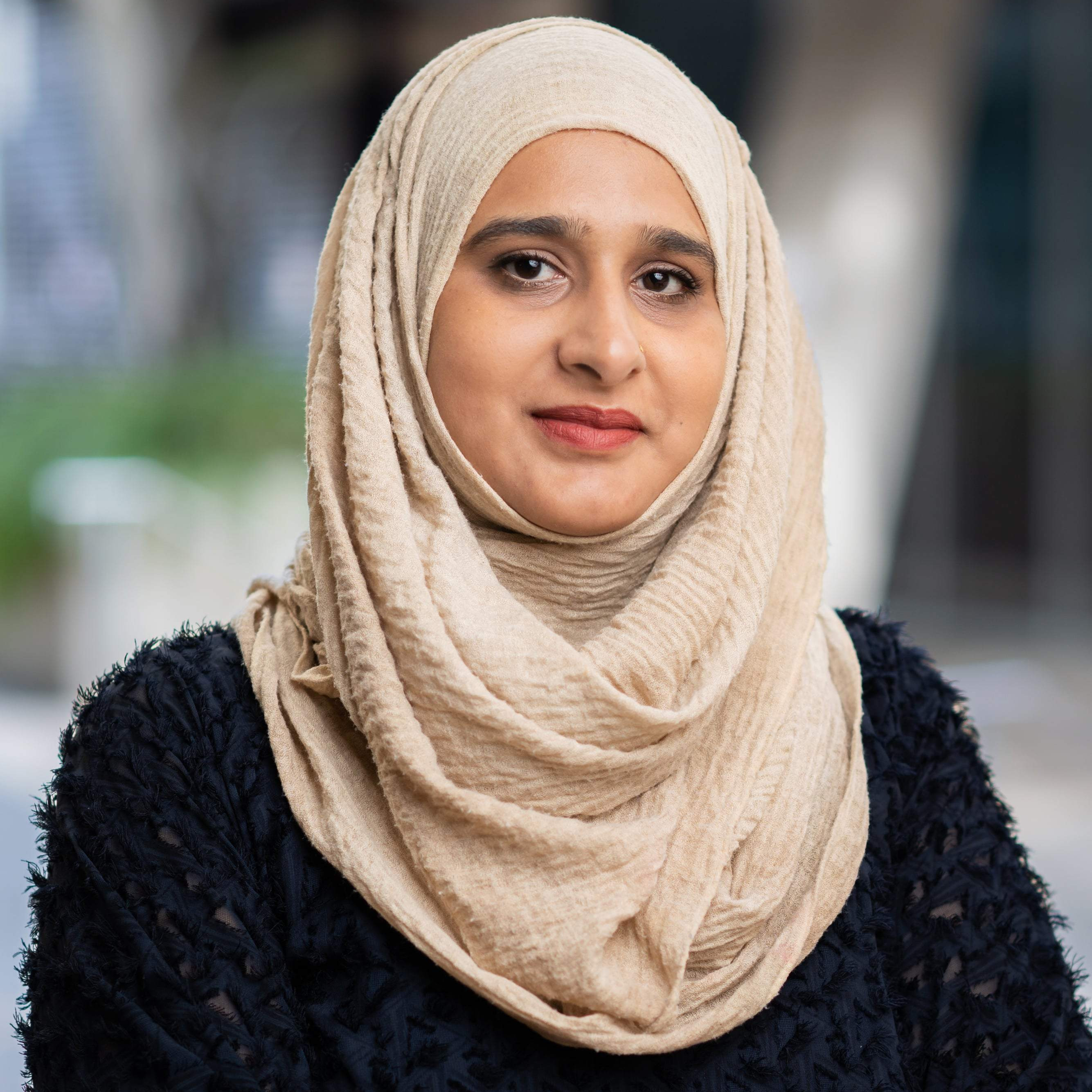
Clinical & Health Sciences / Centre for Pharmaceutical Innovation, University of South Australia, Australia;Dr. Anam Ahsan is a PhD candidate in Pharmaceutical Sciences at the University of South Australia, specialising in lipid-based nanomedicine for antimicrobial resistance (AMR) and biofilm-related infections. Her research focuses on the in vitro evaluation of liquid crystalline nanoparticles and enzyme–antibiotic combinations to disrupt bacterial biofilms and enhance antimicrobial efficacy. She also investigates biofilm-associated chronic wound models as part of a broader effort to develop translational nanotherapeutics for infection management. Dr. Ahsan holds a Pharm-D and M.Phil. in Pharmacology, a PhD in Veterinary Medicine, and has published extensively in drug delivery and infection therapeutics. She also serves as a Guest Editor for the MDPI Bioengineering Special Issue “Bioengineering Platforms for Drug Delivery.”

Medical University of Innsbruck (MUI), Institute of Hygiene and Medical Microbiology (HMM), Austria;Univ. Prof. Priv.-Doz. Mag. Dr. rer. nat. Michaela Lackner is a globally recognized expert in Medical Mycology and a strong advocate for the One Health approach. As University Professor for Experimental Mycology and Deputy Director of the Institute of Hygiene and Medical Microbiology at the Medical University of Innsbruck, she leads cutting-edge research on fungal pathogens, antifungal resistance, and improved diagnostics and therapies. Her work spans basic science to clinical implementation, aligned with the One Health mission to address health challenges at the human–animal–environment interface. Prof. Lackner has authored over 120 peer-reviewed publications, including major diagnostic and treatment guidelines, and is a Fellow of the European Confederation of Medical Mycology ECMM). She coordinates the MYCOS PhD training program (mui-mycos.at), preparing future scientists in antimicrobial resistance and One Health. A major focus of her research addresses the Dual Usage of azoles in medicine and agriculture, a critical driver of antifungal resistance. She promotes cross-sector collaboration among scientists, policymakers, healthcare providers, and agricultural stakeholders to implement sustainable, evidence-based mitigation strategies. Additionally, she serves as chairwoman of the Gender and Equity Board (AKGl) at the Medical University of Innsbruck, promoting inclusive practices and equitable career advancement. As a recognized leader in antifungal resistance and One Health innovation, Prof. Lackner plays a vital role in shaping global strategies to combat antimicrobial resistance.

Department of Biology, University of Florence, Italy;Dr. Elena Perrin graduated in 2009 in Cellular and Molecular biology at the University of Florence, where, in 2014, she obtained a doctorate in Genetic, Microbiology and Bioinformatic sciences. She is currently a researcher at Department of Biology of the University of Florence. Her primary research focus is microbial genetics, with particular interest in the evolution of bacterial genomes. Dr Perrin's work explores the development of antibiotic resistance, quorum sensing, and metabolic adaptation to environmental changes.

The webinar was hosted via Zoom and required registration to attend. The full recording can be found below. In order to learn about future webinars, you can sign up to our newsletter by clicking “Subscribe” at the top of the page.
Watch the full recording below:
| Speaker / Presentation | Time (CET) | Time (CST Asia) |
|---|---|---|
| Introduction | 9:00 – 9:10 am | 4:00 – 4:10 pm |
| Prof. Dr. José F. Cobo-Díaz Antimicrobial Resistance Spread on Food Chain: A Focus on Food Production Environments |
9:10 – 9:30 am | 4:10 – 4:30 pm |
| Dr. Ana Alastruey-Izquierdo Antifungal Resistance: Current Epidemiology and Emerging Challenges |
9:30 – 9:50 am | 4:30 – 4:50 pm |
| Dr. Anam Ahsan Nanomedicine Strategies to Overcome Biofilm-Associated Antimicrobial Resistance |
9:50 – 10:10 am | 4:50 – 5:10 pm |
| Prof. Dr. Michaela Lackner A One Health Framework for Tackling Antimycotic Resistance |
10:10 – 10:30 am | 5:10 – 5:30 pm |
|
Dr. Elena Perrin |
10:30 – 10:50 am | 5:30 – 5:50 pm |
| Q&A | 10:50 – 11:15 am | 5:50 – 6:15 pm |
| Closing of Webinar | 11:15 – 11:20 am | 6:15 – 6:20 pm |
Journal of Fungi
“Fungal Infections and Antifungals”
Guest Editor: Prof. Dr. Rejane Pereira Neves
Deadline for manuscript submissions: 31 December 2025
Biomolecules
“Novel Mechanisms of Bacterial Antibiotic Resistance”
Guest Editor: Dr. Dorothea K. Thompson
Deadline for manuscript submissions: 31 December 2025
Genes
“Unraveling Genomic Mechanisms of Stress Tolerance and Antimicrobial Resistance in Foodborne Pathogens”
Guest Editors: Dr. Eduardo Eustáquio de Souza Figueiredo and Dr. Vinicius Silva Castro
Deadline for manuscript submissions: 25 January 2026
Pharmaceuticals
“Development of Antibacterial Drugs to Combat Drug-Resistant Bacteria: 2nd Edition”
Guest Editors: Dr. Adriána Liptáková and Dr. Iryna Voronkina
Deadline for manuscript submissions: 31 January 2026
Bioengineering
“Targeting Biofilm-Associated Infections: Mechanistic Insights, Challenges, and Therapeutic Innovations”
Guest Editors: Dr. Zhaojun Jia and Dr. Jianglong Yan
Deadline for manuscript submissions: 31 January 2026
Journal of Clinical Medicine
“Hospital-Acquired Infections: Evolving Threats and Epidemiological Insights”
Guest Editor: Dr. Amir Nutman
Deadline for manuscript submissions: 25 February 2026
Microorganisms
“Next-Generation Sequencing in Antimicrobial Resistance”
Guest Editors: Prof. Dr. Efthymia Petinaki and Prof. Dr. Artemis G. Hatzigeorgiou
Deadline for manuscript submissions: 28 February 2026
Antibiotics
“Combating Antimicrobial Resistance Spread in Food and Drinks Using Bacteriophage Technologies”
Guest Editor: Dr. Janet Nale
Deadline for manuscript submissions: 31 March 2026
“Global Partnerships in Response to Antimicrobial Resistance: From Policy to Practice”
Guest Editor: Dr. Helena Rosado
Deadline for manuscript submissions: 31 March 2026
Journal of Personalized Medicine
“Combating Antimicrobial Resistance: Translational Science to Clinical Practice”
Guest Editors: Dr. Giovanni Gherardi and Dr. Roberta Creti
Deadline for manuscript submissions: 15 July 2026
Diseases
“Microbiota in Human Disease”
Guest Editors: Dr. Rossella Cianci and Dr. Pierluigi Rio
Deadline for manuscript submissions: 31 August 2026