Mathematics Webinar | Stochastic Processes and Applications
the chair
Stochastic system dynamics modelling mainly involves stochastic processes, both continuous-time and discrete-time (time series). The talks planned today are heterogeneous in content but share as common denominator the analysis of the stochastic evolution of phenomena common to many models. Motivated by modelling issues in different fields, in this webinar E. Di Nardo will cover topics within the First Passage Time (FPT) problem, consisting in finding the distribution of the random variable representing the time a stochastic process crosses a threshold for the first time. S. Herrmann will introduce a new technique for the path approximation of one-dimensional stochastic processes. The results apply to the Brownian motion and to some families of stochastic differential equations whose distributions could be represented as a function of a time-changed Brownian motion (usually known as L and G-classes). L.A. Gil-Alana will focus on fractional integration methods to obtain new evidence on polar amplification. The adopted modelling framework is very general since it allows the differencing parameter to take any real value, including fractional ones, and provides useful information on both the short and the long run. Finally O.S. Yaya will investigate cointegration and dynamic connectedness in market volatility of cryptocurrency pairs within an updated cointegration framework.
Date: 31 October 2024
Time: 09:00 am CET | 04:00 pm CST (Asia)
Webinar ID: 849 2546 3316
Webinar Secretariat: journal.webinar@mdpi.com
Meet Our Chair

Department of Mathematics, University of Torino, Italy;Prof. Dr. Elvira Di Nardo has been Associate Professor in Probability and Mathematical Statistics at University of Turin since 2015. She obtained the title of PhD in Applied Mathematics and Computer Science in 1996 at the University of Naples. She has been visiting professor at the University of Chicago (USA) and Centro des Estruturas Lineares e Combinatorias (Lisboa) and has been the research advisor of international students and researchers. She is in the PhD board in Modeling and Data Science at University of Turin. She has participated at the Italian Scientific Evaluation for the period 2014-2019. Her research interests include stochastic modeling, theory and simulation of stochastic processes with applications, applications of symbolic methods in probability and statistics. She co-organized international meetings and participated in several international scientific meetings, especially in applications of probability and symbolic methods. She is the author of more than 50 scientific papers.
Meet Our Speakers
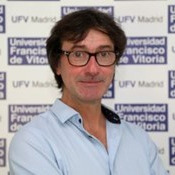
Faculty of Economics and ICS, University of Navarra, Spain;Prof. Dr. Luis Alberiko Gil-Alkana is Professor in Econometrics at the Faculty of Economics at the University of Navarra, in Pamplona, Spain. He is also Senior Researcher at the Navarra Centre for International Development, NCID at the same University and at the Universidad Francisco de Vitoria, in Madrid, Spain. He completed his Ph.D. at the London School of Economics, LSE, in London, UK. He has also been Visiting Professor at the European University Institute, EUI, IN Florence, Italy; at the London Business School, LBS, in London, UK; at Humboldt Universitat, in Berlin, Germany, and at the University of Turin, in Turin, Italy. He works on theoretical and applied econometrics and has published more than 400 academic papers in international reviewed journals such as Journal of Econometrics, Journal of Applied Econometrics, Journal of Financial Econometrics, Journal of Banking and Finance, Oxford Bulletin of Economics and Statistics, etc. His applied research deals not only with Economics and Finance but also other disciplines line Climatology, Environmental Studies, Sismography, Tourism, Energy, Development, etc.
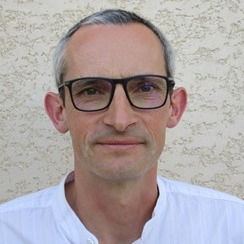
Prof. Dr. Samuel Herrmann
Institut de Mathématiques de Bourgogne (IMB), University of Burgundy, France;Prof. Dr. Samuel Herrmann is currently Professor of Applied Mathematics at the Institut de Mathématiques de Bourgogne in Dijon (France). He obtained his PhD in probability theory in Nancy, spent a year as a researcher in Berlin (Germany) before becoming a lecturer at the Ecole des Mines in Nancy (engineering school). For several years, he managed a master's degree in applied mathematics and is currently head of the mathematics teaching department at the University of Burgundy. His research focuses on the analysis of continuous stochastic processes (large deviations, chaos propagation in particle systems), approximation schemes and exact simulation of random trajectories (trajectories of diffusion processes). He has contributed to a book on the mathematical viewpoint of the stochastic resonance phenomenon.

Department of Statistics, Faculty of Science, University of Ibadan, Nigeria;Dr OlaOluwa S. Yaya holds a PhD in Time Series Econometrics from the University of Ibadan, Nigeria. He is a Senior Lecturer at the University of Ibadan, Nigeria & University Professor & Doctoral Advisor, Global Humanistic University (GHU), Curacao. He holds various international and local research fellowships such as the Postgraduate Doctoral Research Fellowship at the North-West University, South Africa; University of Economics Ho Chi Minh City, Vietnam; ILMA University, Karachi, Pakistan; Global Humanistic University, Curacao; KMU Akademie, Austria; and as the Deputy Director & Research Fellow, Centre for Econometrics and Applied Research (CEAR), Ibadan, Nigeria. He is a Statistician Consultant to Central Bank of Nigeria, West African Institute of Financial and Economic Management and National Mathematical Centre, Nigeria. He has published widely in reputable local and international journals (such as Oxford Bulletin of Economics and Statistics, Physica A: Statistical Mechanics and its Applications; Journal of Applied Statistics; Resources Policy, Energy Policy, Economic Modelling, International Journal of Finance & Economics) in the areas of Economic and Finance Statistics, Environment Statistics, and Computational Statistics. He has over 100 article publications and two books to his credit. He is a member of Editorial Board of Modern Finance journal. He is a Member of Accreditation Team, Chattered Institute of Statistician of Nigeria (CISON), and Associate Editor, Journal of CISON.


The webinar on Stochastic processes and Applications, presented by researchers from the University of Turin (Italy), the University of Navarra (Spain) and the Institut de Mathématiques de Bourgogne (France), explored latest research in the area of stochastic modeling of dynamic systems that evolve over time. Stochastic system dynamics modelling mainly involves stochastic processes, both continuous-time and discrete-time. The talks planned today are heterogeneous in content but share as common denominator the analysis of the stochastic evolution of certain phenomena common to many models and the employment of computational methods to get information on the modelling. It began with a method useful in approximating first passage time probability density of a suitable class of stochastic processes, offering insights into a new acceptance-rejection method to sample instances from the density. Next, fractional integration methods are presented to obtain new evidence on polar amplification providing useful information on both the short and the long run. The session ends introducing a new technique for the path approximation of one-dimensional stochastic processes. The results apply to the Brownian motion and to some families of stochastic differential equations whose distributions could be represented as a function of a time-changed Brownian motion. These insights are expected to inspire further research and collaborations.
The webinar was hosted via Zoom and required registration to attend. The full recording can be found below. In order to learn about future webinars, you can sign up to our newsletter by clicking “Subscribe” at the top of the page.
Stochastic Processes and Its Applications
Edited by Dr. Elvira Di Nardo and Prof. Dr. Luis Alberiko Gil-Alana
Deadline for submission: 31 May 2025