Mathematics Webinar | Non-Equilibrium Dynamics and Weak Chaos in Hamiltonian and Driven Systems
the chair
Understanding the long-term behaviour of complex systems far from equilibrium remains one of the central challenges in nonlinear science. This workshop brings together recent advances in the study of non-equilibrium dynamics and weak chaos in both Hamiltonian many-body systems and externally driven (non-autonomous) models. Topics will include ergodicity breaking, metastable and quasi-stationary states, energy localisation, and anomalous transport, as well as the use of diagnostic tools such as Lyapunov exponents and SALI to characterise dynamical behaviour. Particular emphasis will be placed on systems with long-range interactions and mean-field models that exhibit integrable-like features in the thermodynamic limit, and on periodically forced systems where scattering, resonance, and sensitivity to external parameters play key roles in trajectory evolution. By exploring the interplay between structure, stability, and weak forms of chaos, this workshop aims to deepen our understanding of how order and unpredictability coexist in nonlinear dynamical systems. We invite researchers working across mathematical physics, dynamical systems theory, and computational modelling to attend, with the goal of fostering interdisciplinary dialogue and identifying new directions for research.
Date: 7 July 2025
Time: 2:00 pm CEST | 8:00 pm CST Asia | 8:00 am EDT
Webinar ID: 843 5663 2066
Webinar Secretariat: journal.webinar@mdpi.com
Meet Our Chair
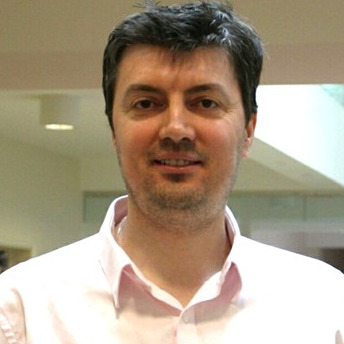
School of Mathematics, Statistics and Actuarial Science (SMSAS), University of Essex <a href="https://www.essex.ac.uk/people/anton17606/chris-antonopoulos">Website</a>;Dr. Chris G. Antonopoulos is a Lecturer at the School of Mathematics, Statistics and Actuarial Science (SMSAS), University of Essex. He obtained his BSc in Mathematics from the University of Crete (1999), and his MSc (2002) and PhD (2007) in Applied Mathematics from the University of Patras, Greece. His PhD focused on the stability and chaos in multi-dimensional Hamiltonian systems and their transition to Statistical Mechanics. He was a postdoctoral researcher at Université Libre de Bruxelles in Prof. P. Gaspard’s group, where he published work on Hamiltonian systems and Statistical Mechanics. He later joined Profs. K. van der Weele and T. Bountis’ group at the University of Patras under the European “Complex Matter” programme. From 2012, he was an EPSRC Research Fellow at the University of Aberdeen’s ICSMB, working on information-dynamical approaches to complex systems. Since 2015, he has taught and conducted research at the University of Essex, focusing on dynamical systems, chaos theory, information theory, computational neuroscience, and complex networks, with applications to brain dynamics and epidemic modelling (e.g., COVID-19). He is a member of the LMS and IMA and serves as editor for Scientific Reports (Nature), Frontiers in Computational Neuroscience, and Open Physics. Dr. Chris G. Antonopoulos has authored 59 journal publications, 9 conference papers/book chapters, and delivered 59 talks (19 invited). He has organised sessions at BAMC, DDCA, and CHAOS conferences, and taught advanced courses on complex systems at summer schools and PhD programmes. With an h-index of 24 and over 2,800 citations, he currently supervises three PhD students and collaborates internationally to advance mathematical modelling of complex systems.
Important Dates
7 Jul
2025
Meet Our Speakers
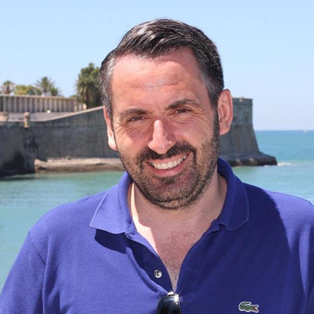
Nonlinear Dynamics, Chaos and Complex Systems Group, Departamento de Biología y Geología, Física y Química Inorgánica, Universidad Rey Juan Carlos, Madrid, Spain;Dr. Jesús M. Seoane earned his degree in Physical Sciences from UNED in 2002 and joined the Nonlinear Dynamics, Chaos, and Complex Systems Group at URJC in 2003. He completed his PhD in 2007 with highest honours (Sobresaliente cum laude, Extraordinary Doctorate Award), focusing on weak perturbations in chaotic scattering, under the supervision of Prof. M. A. F. Sanjuán and in collaboration with Prof. Ying-Cheng Lai (Arizona State University). His thesis results were published in top journals including Physical Review, Chaos, and New Journal of Physics. Dr. Seoane has held several international research positions, including postdoctoral work at Arizona State University and research stays in Italy, where he worked on chaos control and synchronisation in biological systems. His collaboration with Prof. Arecchi and Meucci further broadened his interdisciplinary expertise. He has since expanded his research into areas such as mechanical systems, fractal structures, and more recently, cancer physics. In collaboration with researchers from Portugal and Brazil, this new line of work has resulted in numerous Q1 journal publications. He has co-authored over 80 student theses, supervised 7 doctoral dissertations, and participated in 12 competitive research projects. Dr. Seoane regularly reviews 15–20 articles annually for leading journals (e.g., PRE, Chaos, Scientific Reports) and serves as an editor for PLOS ONE. He has presented his work at over 60 conferences worldwide and remains active in academic leadership, currently serving as the Coordinator of the Doctoral Program in Science at URJC. He has also held roles as an Academic Secretary, a PAU exam coordinator, and a tutor in experimental sciences.

Nonlinear Dynamics, Chaos and Complex Systems Group, Departamento de Biología y Geología, Física y Química Inorgánica, Universidad Rey Juan Carlos, Madrid, Spain;Dr. Juan C. Vallejo is an astrophysicist specialised in numerical modelling, nonlinear dynamics and processing of space observatories data. He received his degree in Physics (Astrophysics) from University Complutense of Madrid (UCM) and competed his PhD thesis at University Rey Juan Carlos (URJC). He has been an Associate Professor at URJC since 2024. He is member of the Nonlinear Dynamics, Chaos and Complex Systems Group at URJC. The research at URJC focuses on analysing the impact of chaotic dynamics in numerical simulations in astronomy, mainly by using finite-time Lyapunov exponent distributions to study the predictability of orbits in galactic systems. Another parallel research line is the analysis of chaotic scattering phenomena in stellar systems. From 2017 until 2023, he was also a member of the AEGORA research group at UCM. The main focus of research at UCM was on the analysis of protoplanetary discs around young stars and the impact of X-ray and UV radiation on their evolution. Juan C. Vallejo has broad experience in the field of aerospace, focusing on the development and operation of space telescopes and their associated data processing systems. From 1997 until 2016, he worked in the science operations centres of the European Space Agency (ESA) observatories ISO and XMM-Newton. His areas of expertise include flight dynamics systems, mission operations centres and science operations centres.
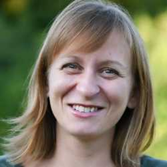
Dr. Helen Christodoulidi
School of Mathematics and Physics, University of Lincoln (Brayford Pool Campus), Lincoln, UK;Energy Localisation And Dynamics of a Mean-Field Model With Non-Linear Dispersion


This webinar brought together contributions exploring the interplay between chaos, non-equilibrium states, and weakly chaotic dynamics in Hamiltonian and driven systems.
Prof. Jesús Seoane presented work on chaotic scattering in periodically driven systems, investigating how particle escape dynamics vary with the frequency and amplitude of external forcing. The study extended into relativistic regimes and proposed the use of indicators such as SALI and finite-time Lyapunov exponents to characterise trajectory behaviour in these non-autonomous settings.
Dr Juan Carlos Vallejo addressed the numerical challenges in studying chaotic behaviour in astronomical systems. He introduced a predictability index based on the distribution of finite-time Lyapunov exponents over extended time windows, offering a framework with which to evaluate the shadowing properties and long-term reliability of numerical simulations in celestial dynamics.
Dr Helen Christodoulidi focused on ergodicity breaking and long-lived non-equilibrium states in many-body Hamiltonian systems with long-range interactions. Using a mean-field model with nonlinear dispersion, she demonstrated strong energy localisation and revealed that the maximum Lyapunov exponent decays as a power law with system size, suggesting integrable-like behaviour in the thermodynamic limit.
The webinar was hosted via Zoom and required registration to attend. The full recording can be found below. In order to learn about future webinars, you can sign up to our newsletter by clicking “Subscribe” at the top of the page.
Watch the full recording below:
| Speaker/Presentation | Time in CEST | Time in EST | Time in CST |
|---|---|---|---|
| Dr. Chris G. Antonopoulos Chair Introduction |
14:00–14:10 | 08:00–08:10 | 20:00–20:10 |
| Prof. Dr. Jesús M. Seoane Forced Chaotic Scattering |
14:10–14:40 | 08:10–08:40 | 20:10–20:40 |
| Q&A Session | 14:40–15:00 | 08:40–09:00 | 20:40–21:00 |
| Dr. Juan C. Vallejo Characterising Chaotic Dynamics in Some Astronomical Systems |
15:00–15:30 | 09:00–09:30 | 21:00–21:30 |
| Q&A Session | 15:30–15:50 | 09:30–09:50 | 21:30–21:50 |
| Dr Helen Christodoulidi Energy Localisation and Dynamics of a Mean-Field Model With Non-Linear Dispersion |
15:50–16:20 | 09:50–10:20 | 21:50–22:20 |
| Q&A Session | 16:20–16:40 | 10:20–10:40 | 22:20–22:40 |
| Dr Chris G. Antonopoulos Closing of Webinar |
16:40–16:50 | 10:40–10:50 | 22:40–22:50 |